
A weeknight friendly herbes de Provence duck sausage sheet pan dinner with tender vegetables and fragrant herbs!

Jump to:
Every year when winter starts to soften its grip on Montreal, I find myself drawn back to the familiar stretch of stalls at Atwater Market. The pavement still glistens from melting snow, yet the first colors of the season begin to return. I can picture Lin balanced on one hip and Leo darting after pigeons the way he always does.
Something about the greetings from the vendors and the steady rhythm of shoppers makes the place feel like the markets I grew up with. There is a comfort in that familiarity, almost like stepping into the kitchens of my past.
There is one vendor I always look for first. He keeps duck sausage tucked inside a small cooler under his counter, and he has watched both kids grow from stroller naps to asking him questions about every basket on the table.

Over the years he has heard about many dishes from our home. The citrusy duck a l'orange that fills our holiday table. The Korean-style duck in wine sauce that I make when the weather demands something slow and steady. And the trays of duck fat roasted vegetables that warm our kitchen all winter long.
During one visit, our talk shifted toward the kind of weeknight meals we rely on when the day has been busy and two small kids are hungry. I told him I had been reading about Herbes de Provence and how they season everything from grilled meats to vegetable stews to fresh cheese rolled in their fragrant mix. They shine in vinaigrettes and grow even more aromatic when mixed with oil.

Later that week, with duck sausage in hand, those herbs stayed on my mind. I tossed potatoes and mushrooms with olive oil, Dijon, and a spoon of Herbes de Provence, then scattered everything on a sheet pan. When it came out of the oven, caramelized and golden, the scent in the kitchen felt both familiar and new. A simple 30-minute dinner that settled in beside all our other duck favorites.
When I returned to the vendor and shared the story, he laughed, handed me another pack with a friendly discount, and asked what I was cooking next. And that is how this sheet pan dinner became part of our rotation, carrying a little of the market home with us each time it reaches the table.
Ingredients

- Duck Sausage - Duck sausage carries richness that pairs naturally with Mediterranean herbs. It is also the reason this dinner feels complete on its own. Chicken sausage can step in, but the flavor will be lighter.
- Mushrooms - Mushrooms bring depth and softness to the tray. I like using cremini or baby bellas because they keep their structure in high heat. White mushrooms work too, though they release more moisture.
- Baby Potatoes - Baby potatoes roast into crisp edges with tender centers, perfect for quick weeknight dinners and for any sausage and veggies style tray bake. I reach for baby potatoes because they cook evenly without extra prep. Yukon Golds cut into small chunks can stand in if needed.
- Herbes de Provence - If you do not have herbes de Provence, a mix of thyme, rosemary, and oregano can work, but the lavender notes in the original blend make a real difference here.
See the recipe card for full list and exact quantities.
How to Make a Herbes de Provence Duck Sausage Sheet Pan Dinner

If you're looking for a weeknight dinner that feels comforting without taking much out of you, this sheet pan meal brings that balance to the table. The mix of herbs, tender vegetables, and rich duck sausage creates a dish that settles in easily beside the other recipes my family loves. It also works as a more elevated version of a classic sausage sheet pan supper. Here's how to make this recipe:
Heat the Oven and Prepare the Sheet Pan
- Set your oven to 425°F. Line a large baking sheet with parchment. The parchment keeps the potatoes from sticking and helps them color evenly. If the tray is too small or the vegetables pile up, they will steam instead of browning, so choose a pan with enough space for everything to sit flat.
Cut the Potatoes for Even Cooking

- Clean the mushrooms and slice them into sturdy pieces. Thin slices collapse in the heat and release too much liquid, which keeps the tray from browning. A thicker cut holds texture and gives the herbs something to cling to.
Parboil Until Slightly Tender
- Bring a pot of salted water to a boil and lower in the potatoes. After 8 to 10 minutes, check one with the tip of a knife. It should slide in easily but meet a bit of resistance in the center. Overcooking at this stage causes the potatoes to break apart on the tray later. Drain them well, and let them steam off for a few minutes so moisture doesn't water down the seasoning.
Whisk the Seasoning Mixture

- The mixture should look glossy and slightly thick from the mustard. This thickness is important. It helps the seasoning coat the vegetables rather than sliding off during roasting.
Toss the Vegetables Until Fully Coated


- If the potatoes feel wet from boiling, pat them dry first so the seasoning sticks. A dry potato browns better and develops a crisp edge that complements the duck sausage.
Spread the Vegetables in a Single Layer

- Crowding the tray causes steaming, which prevents the golden edges you want. Leave small gaps between the pieces so hot air can move freely.
Roast Until Golden and Caramelized

- When you open the oven, the potatoes should have deep golden sides, and the mushrooms will look reduced, glossy, and caramelized around the edges. If you see moisture pooling on the pan, return it to the oven for a few more minutes to concentrate the flavors.
Serve While Hot

- This is the moment to bring the tray to the table, especially if you are serving it alongside duck sausage or one of your favorite duck mains.
Storage

Store leftovers in an airtight container in the fridge for up to three days. The potatoes stay firm and the mushrooms keep their flavor, though the edges soften a bit. A quick reheat in a hot oven or skillet brings back some of that nice crispness.
For longer storage, you can freeze the vegetables. The texture softens once thawed, but the flavors still hold up well. Let everything cool completely, pack it into a freezer-safe container, and freeze for up to a month. Thaw in the fridge overnight and warm in the oven for the best results.
Top Tips
Dry the potatoes well after parboiling - any lingering moisture keeps the potatoes from browning. I drain them, then let them steam off in the pot for a minute until the surface looks matte. This small step makes the difference between soft edges and the crisp roasted texture that holds up well beside duck sausage
Slice the mushrooms thicker than you think - thin slices collapse and release too much liquid, which can keep the whole tray from coloring. Thick, sturdy slices hold their shape and caramelize at the edges. This also helps the herbes de Provence cling instead of sliding off
Use a large sheet pan for proper browning - a crowded pan behaves like a steamer. Spread everything out for the best sheet pan sausage style result
Recipe
Tried and loved this recipe? Please leave a 5-star review below! Your reviews mean a lot to me, so if you've got any questions, please let me know in a comment.
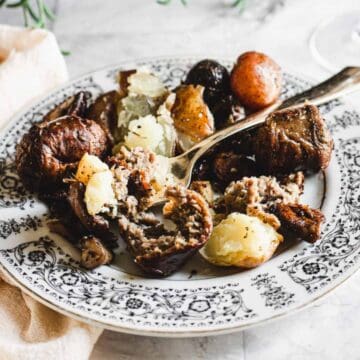
Herbes de Provence Duck Sausage Sheet Pan Dinner
Equipment
- Large baking sheet
- Knife
Ingredients
- 1 lb mushrooms sliced thick
- 2 lbs baby potatoes halved (or quartered if large)
- 2 tablespoon olive oil
- 2 teaspoon Dijon mustard
- 1 teaspoon herbes de Provence
- Salt to taste
- Pepper to taste
Instructions
Heat the oven and pan
- Preheat your oven to 425°F (220°C) and line a large sheet pan with parchment. This helps the potatoes brown without sticking.
Prep the potatoes
- Rinse the baby potatoes and cut them in half. If any are much larger, cut them into quarters so the pieces are similar in size and cook evenly.
Parboil for a head start
- Add the potatoes to a pot of salted boiling water and cook for 8-10 minutes. They should be slightly tender on the outside but still firm in the center when pierced with a knife. Drain well and let them sit for a few minutes so steam can escape.
Prepare and slice
- Clean the mushrooms and slice them into thick pieces. Aim for sturdy slices so they keep their shape and caramelize instead of shrinking into thin, watery pieces.
Make the seasoning mixture
- In a large bowl, whisk together the olive oil, Dijon mustard, and herbes de Provence. The mixture should look smooth and lightly thickened from the mustard so it clings to the vegetables.
Toss everything together
- Add the parboiled potatoes and sliced mushrooms to the bowl. Toss until every surface looks lightly coated with the herb mixture. Sprinkle with salt and pepper to taste.
Spread on the sheet pan
- Transfer the vegetables to the prepared pan and spread them into a single layer. Leave small gaps between pieces so the heat can circulate and encourage browning.
Roast until golden
- Roast for about 30 minutes, stirring once halfway through. The potatoes are ready when they are deeply golden at the edges and the mushrooms look browned and slightly crisp in spots. Serve hot.
Nutrition