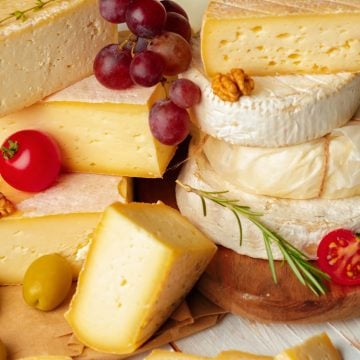
Fat content is a key factor shaping how cheese tastes and feels. Some cheeses are rich and creamy, while others are lighter and firmer. Knowing which cheeses have more fat can help you decide what works best for your plate or recipe. This is why it's important to know the 15 cheese types ranked, so you can make picking cheeses easier and more fun.
This list breaks down a variety of popular cheeses by their fat content, ranking them from the most to the least fatty. The goal is to give you simple, useful information without any complicated jargon. If you want to know which cheeses bring richness or which ones are lighter, this guide will help you get there. It's a straightforward look at cheese that can help with your next snack or meal.
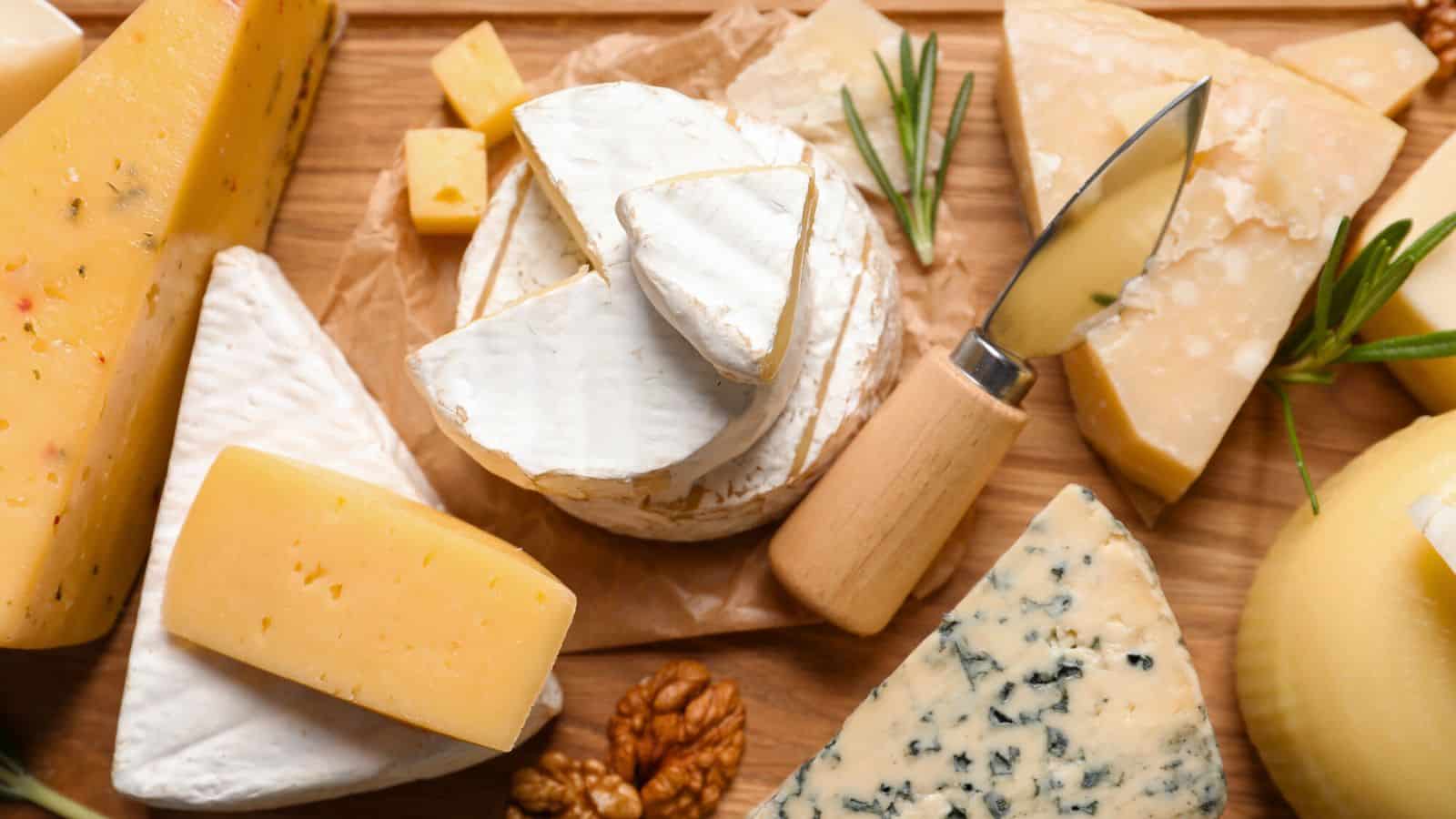
15. Triple Cream Brie
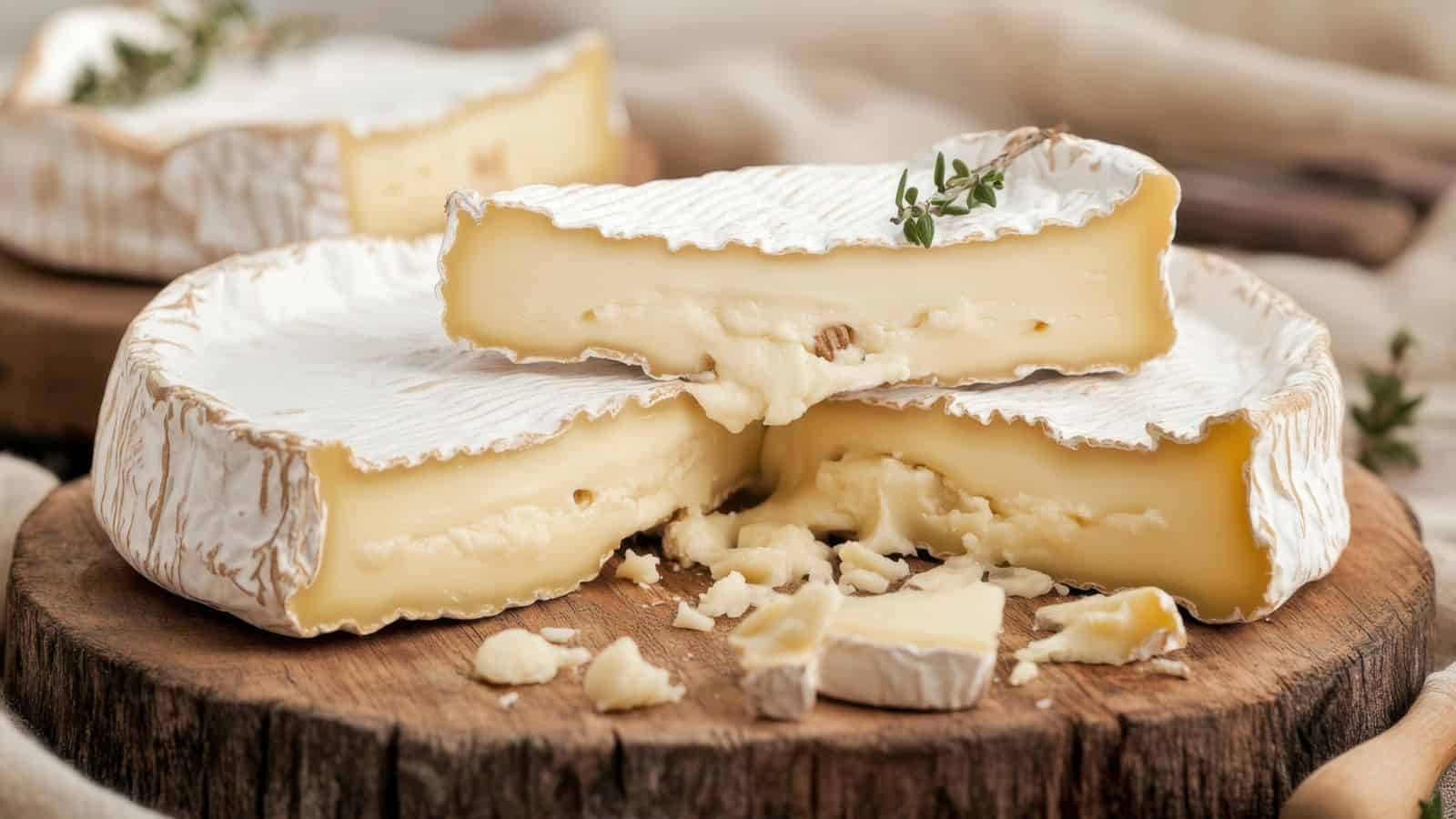
With a fat content of around 75% in dry matter, this cheese is one of the richest you'll find. Extra cream is added during its making, which creates a silky, buttery texture that practically melts in your mouth. A soft, bloomy rind surrounds a smooth interior with subtle earthy notes. Its richness makes it perfect for spreading on bread or crackers. When warmed, it melts beautifully, adding a creamy layer to any dish. This cheese is a great pick for those who love a decadent, creamy experience.
14. Mascarpone
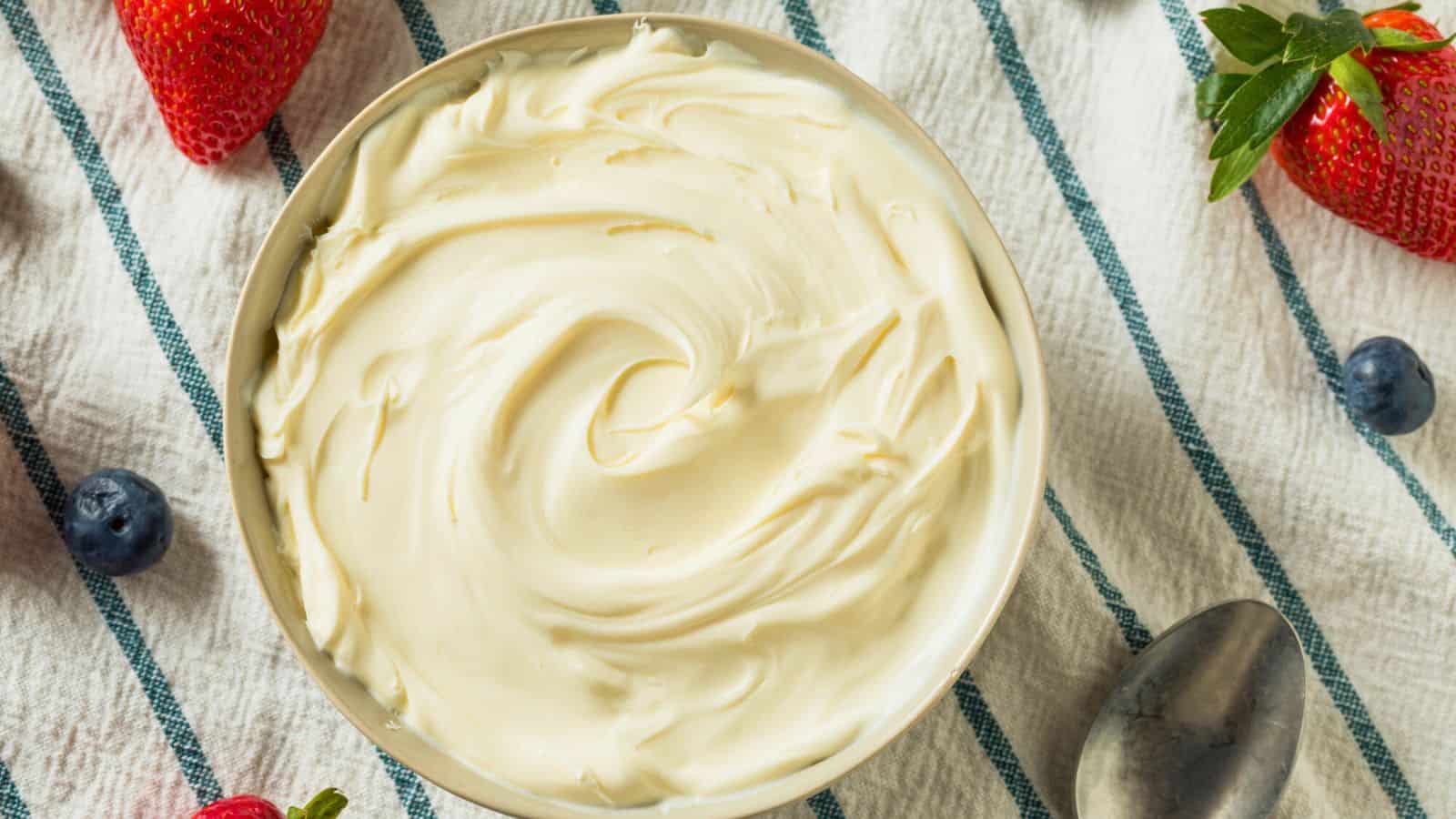
This Italian cheese is known for its high fat content, often between 60 and 75%. It's made by curdling cream with acids like citric or tartaric acid, resulting in a thick, velvety texture. Mild and slightly sweet, it's often used in desserts and creamy sauces. The richness gives it a buttery taste without sharpness or tang. Mascarpone's creamy density makes it easy to blend into recipes, adding smoothness and depth without overwhelming other flavors. It's a favorite when a dense, creamy texture is needed.
13. Cream Cheese
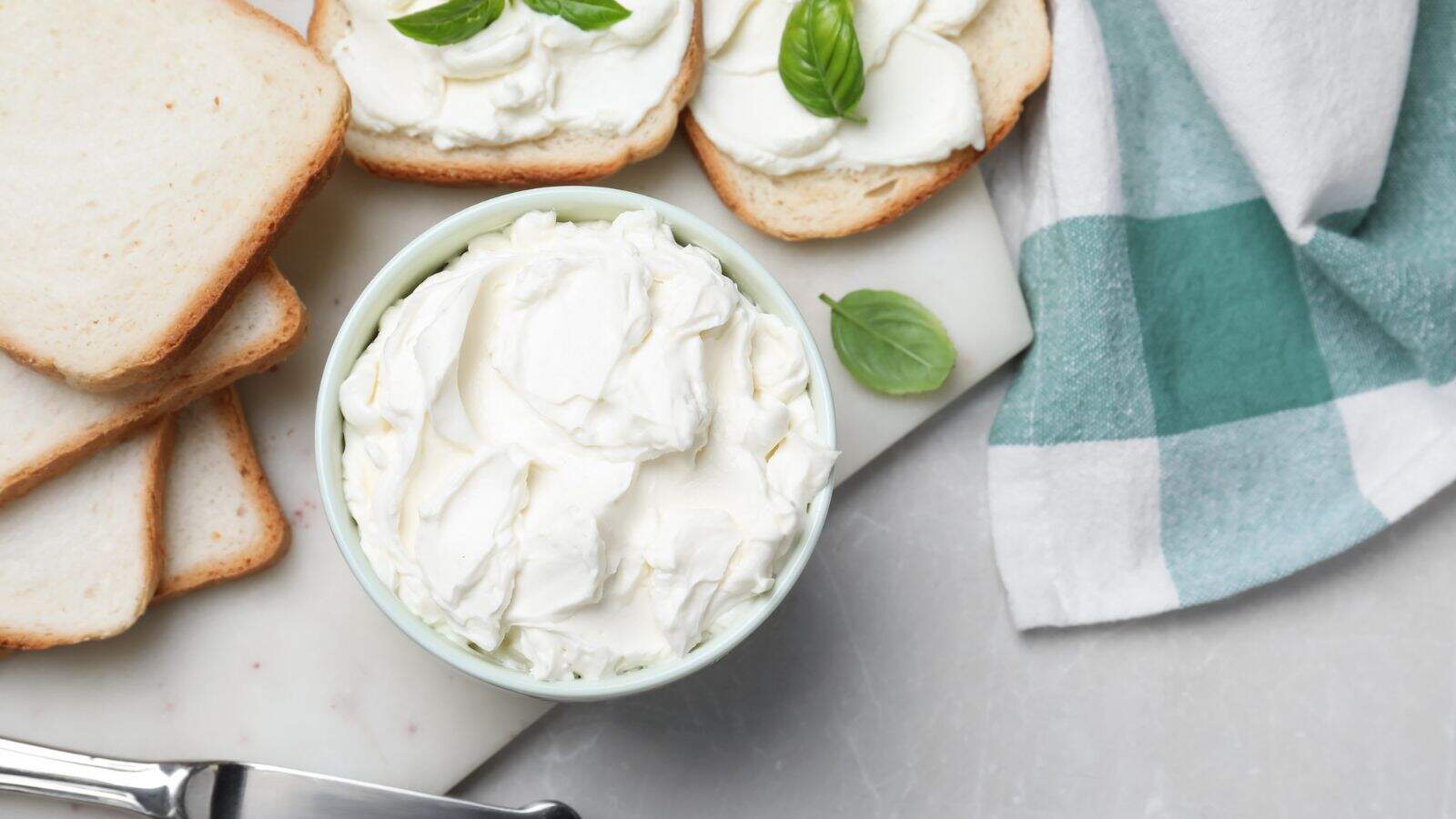
Cream Cheese contains about 33 to 35% fat and is soft, spreadable, and fresh. Made from milk and cream, it has a mild tang that balances its richness. Since it's not aged, the flavor stays clean and fresh. Often used as a base for dips, spreads, and frostings, it adds moisture and creaminess to many dishes. Its smooth texture and gentle flavor make it versatile for sweet and savory uses alike. Cream Cheese is a popular choice when you want richness without sharp or strong flavors.
12. Double Gloucester
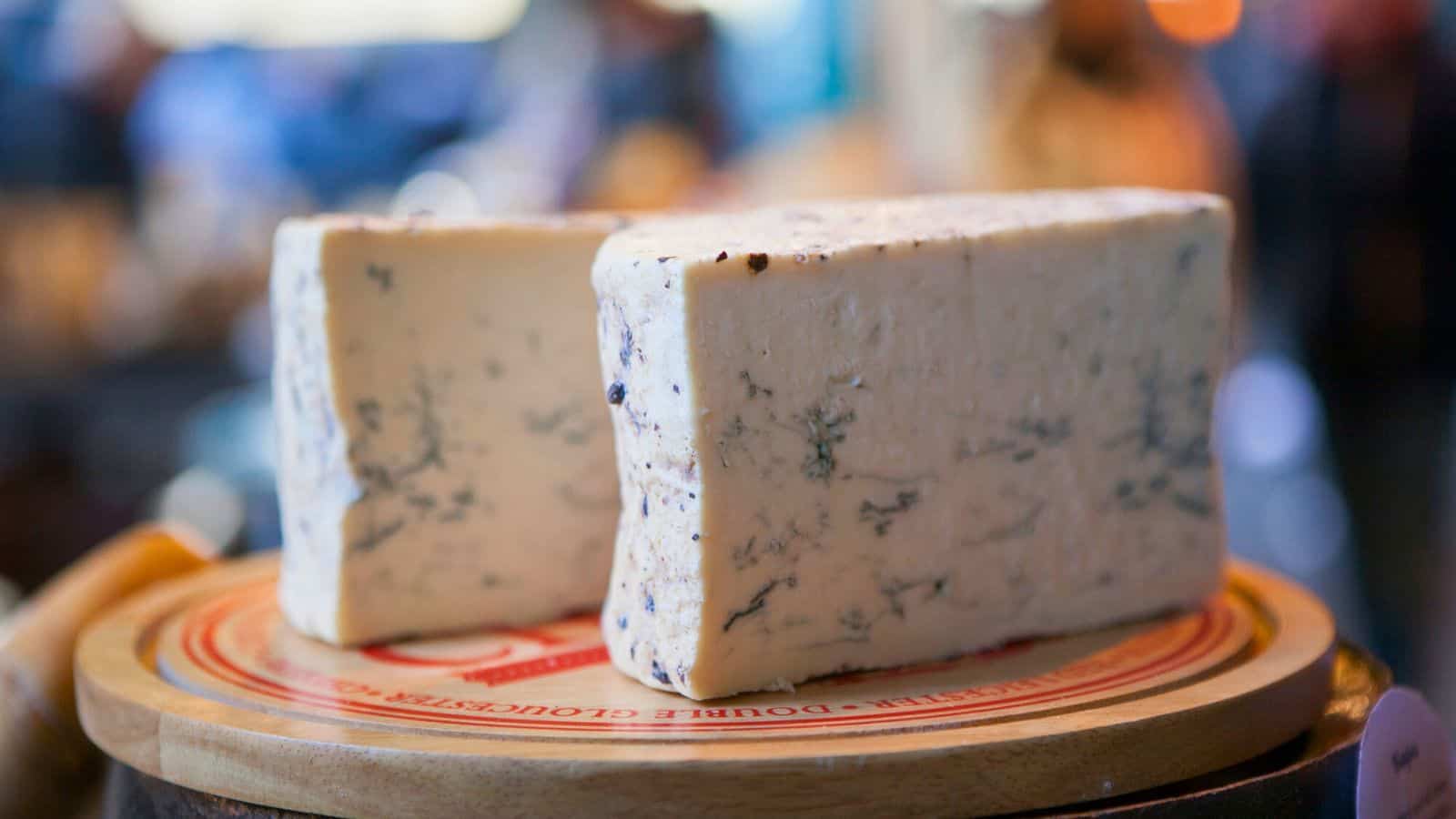
This traditional English cheese has roughly 33% fat and features a firm yet creamy texture. Its flavor is slightly nutty and buttery, developing more depth with aging. The bright orange color often comes from natural annatto. It melts well and slices cleanly, making it great for sandwiches, cooking, or cheese boards. The fat content supports a rich mouthfeel while keeping the flavor mellow. Double Gloucester strikes a nice balance between firmness and creaminess, appealing to those who like a rich but not overpowering cheese.
11. Camembert

Camembert is a soft-ripened cheese from Normandy, France, containing about 30 to 35% fat. It has a creamy interior beneath a white, bloomy rind with a subtle earthy aroma. The texture is smooth and buttery, with mild tangy notes. As it ages, it softens and develops mushroomy flavors. Served at room temperature, it spreads easily and pairs well with fruits or bread. Camembert is popular for those who enjoy a creamy, rich cheese with gentle complexity and a smooth mouthfeel.
10. Gorgonzola
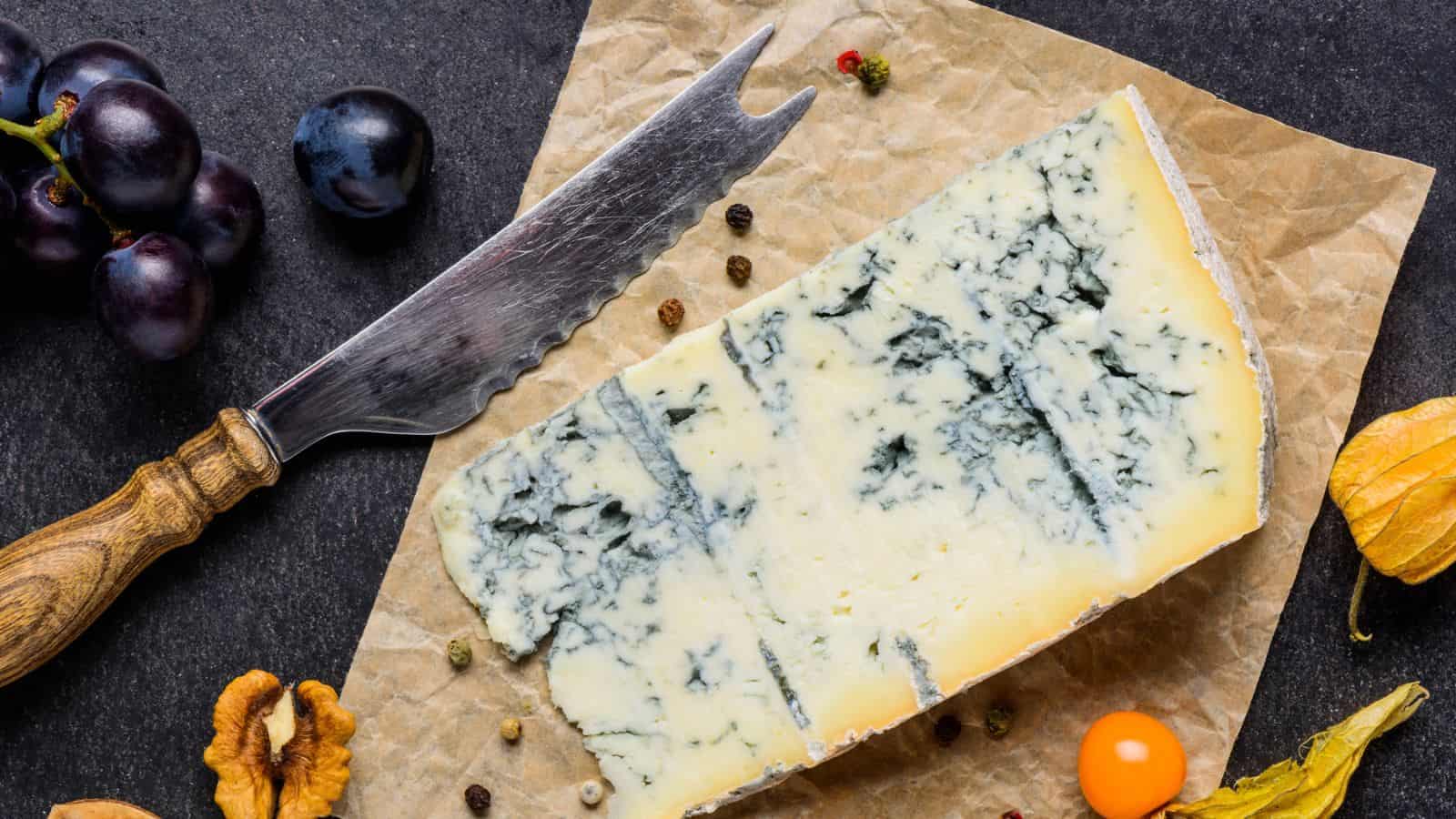
This Italian blue cheese has a fat content between 30 and 35%. Depending on age, its texture ranges from crumbly to soft and creamy. The fat adds richness, balancing the sharp, tangy, and slightly spicy blue mold flavor. It's often crumbled over salads, stirred into sauces, or served on its own. The creamy fat content helps mellow the intense blue notes, creating a complex but approachable flavor. Gorgonzola's balance of richness and piquancy makes it a versatile cheese for many dishes.
9. Cheddar
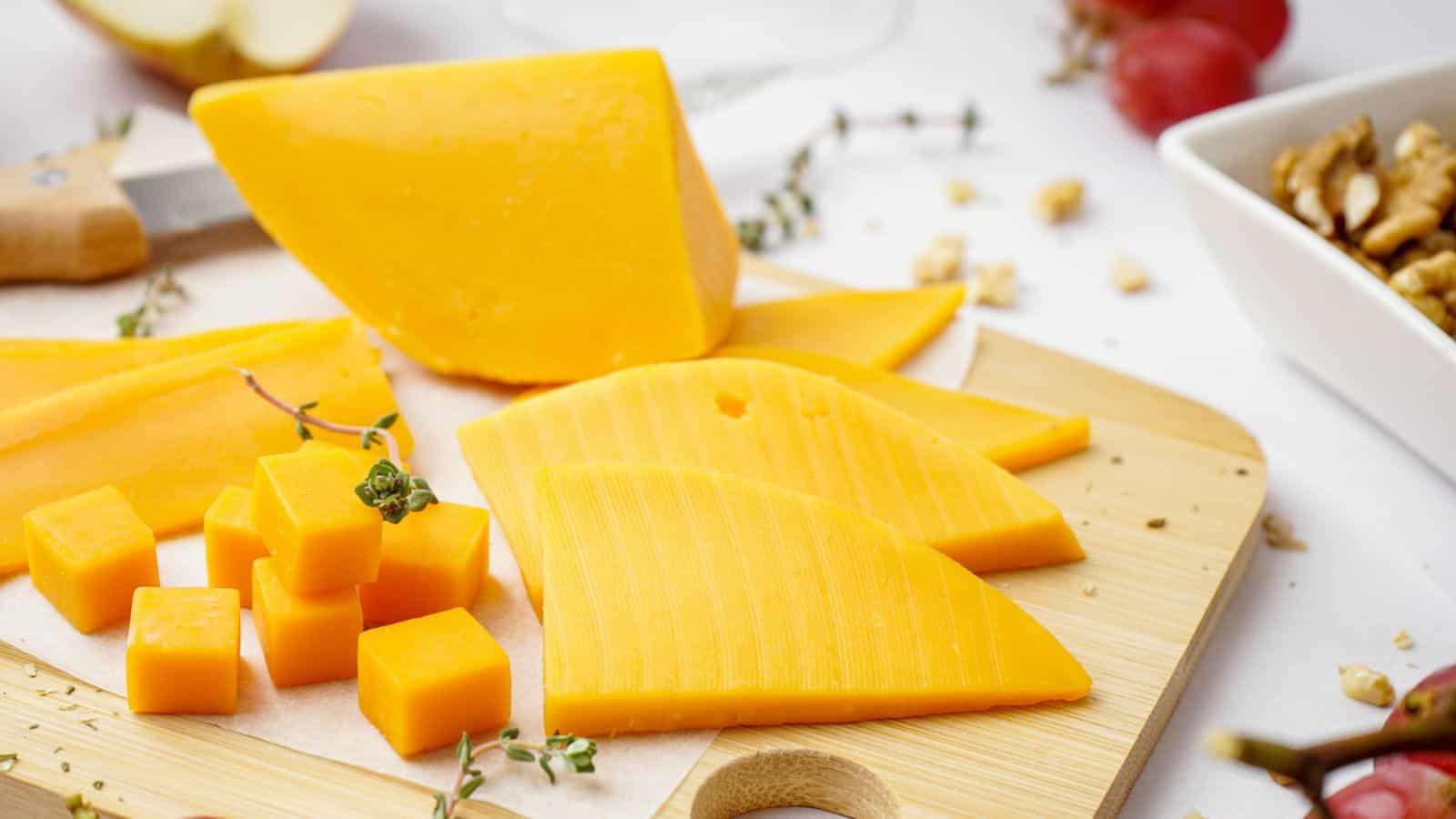
Cheddar typically contains 30 to 33% fat and is known for its firm texture and sharp, tangy flavor that intensifies with age. The process of cheddaring creates a dense structure, and the fat adds a smooth, rich mouthfeel. Versatile in cooking, sandwiches, and cheese boards, it melts well and balances bold flavor with creamy texture. Cheddar is a reliable choice for those who want a cheese with depth and richness without being overly soft or mild.
8. Gruyère
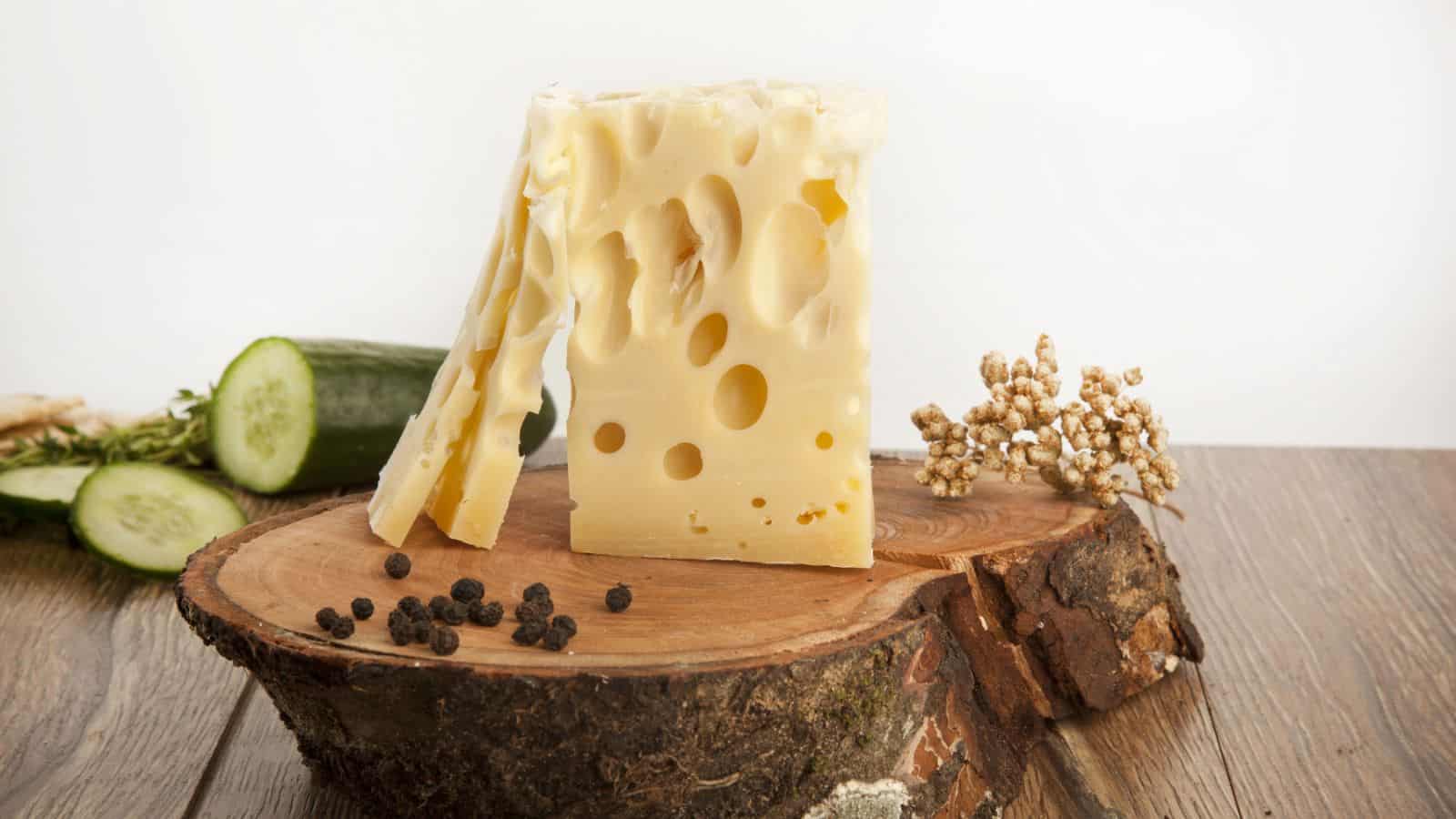
This Swiss cheese has about 30% fat and is prized for its smooth, firm texture and slightly nutty, sweet flavor. Aged for several months, it develops a complex taste and creamy consistency. The fat contributes to a rich mouthfeel that balances savory and fruity notes. Known for melting evenly, it's a staple in dishes like fondue and French onion soup. Gruyère's ability to be sliced or grated makes it versatile, with a well-rounded flavor and texture that works well in many recipes.
7. Emmental
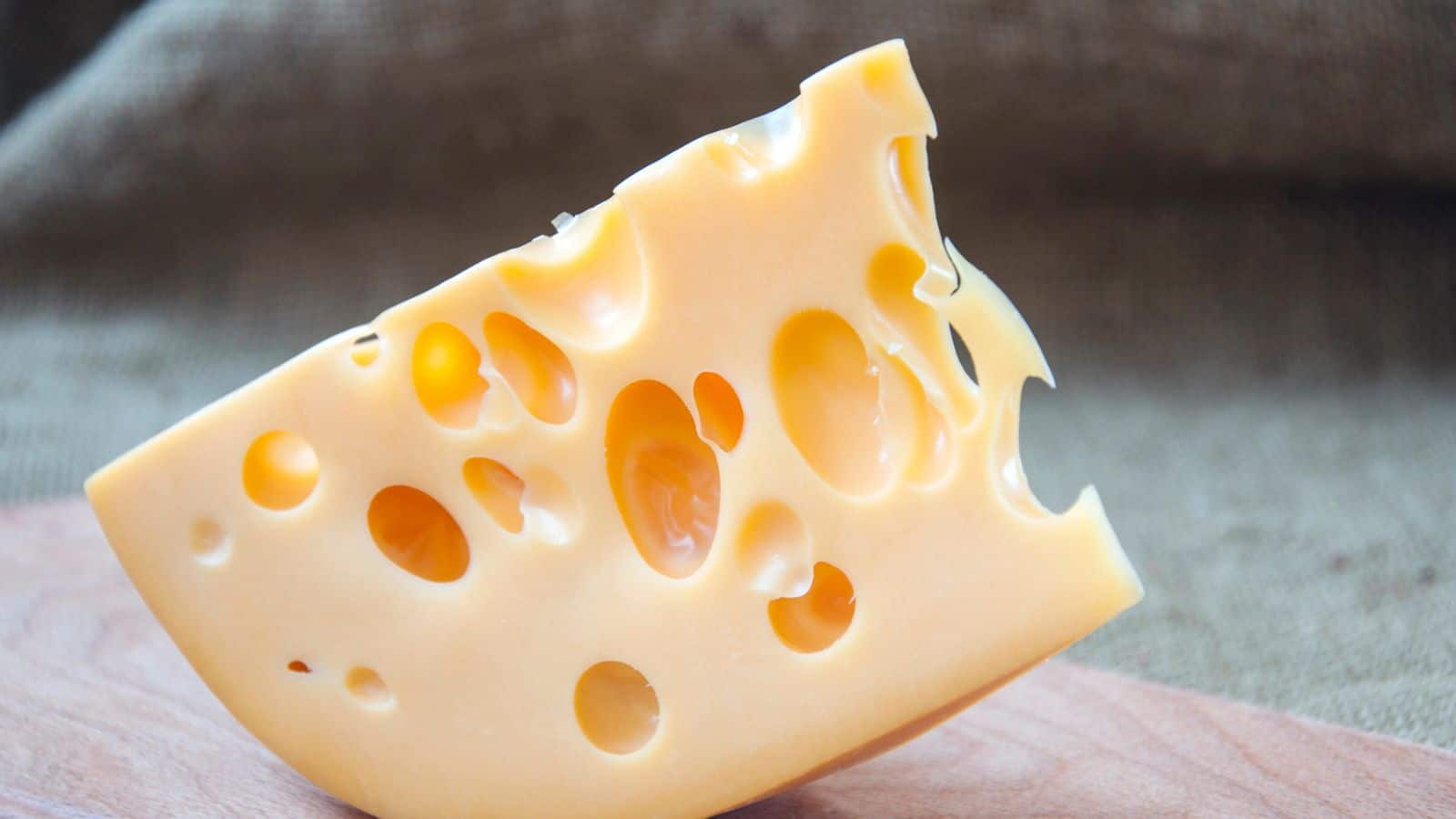
Famous for its holes or "eyes," Emmental contains around 28 to 30% fat. It has a firm yet springy texture and a slightly nutty flavor. The fat creates a creamy mouthfeel that contrasts nicely with its bouncy consistency. Aging enhances sweet and savory notes. Emmental is flexible for slicing, melting, or grating and is commonly used in sandwiches, fondues, and gratins. Its balanced richness and gentle flavor appeal to a wide range of tastes.
6. Edam
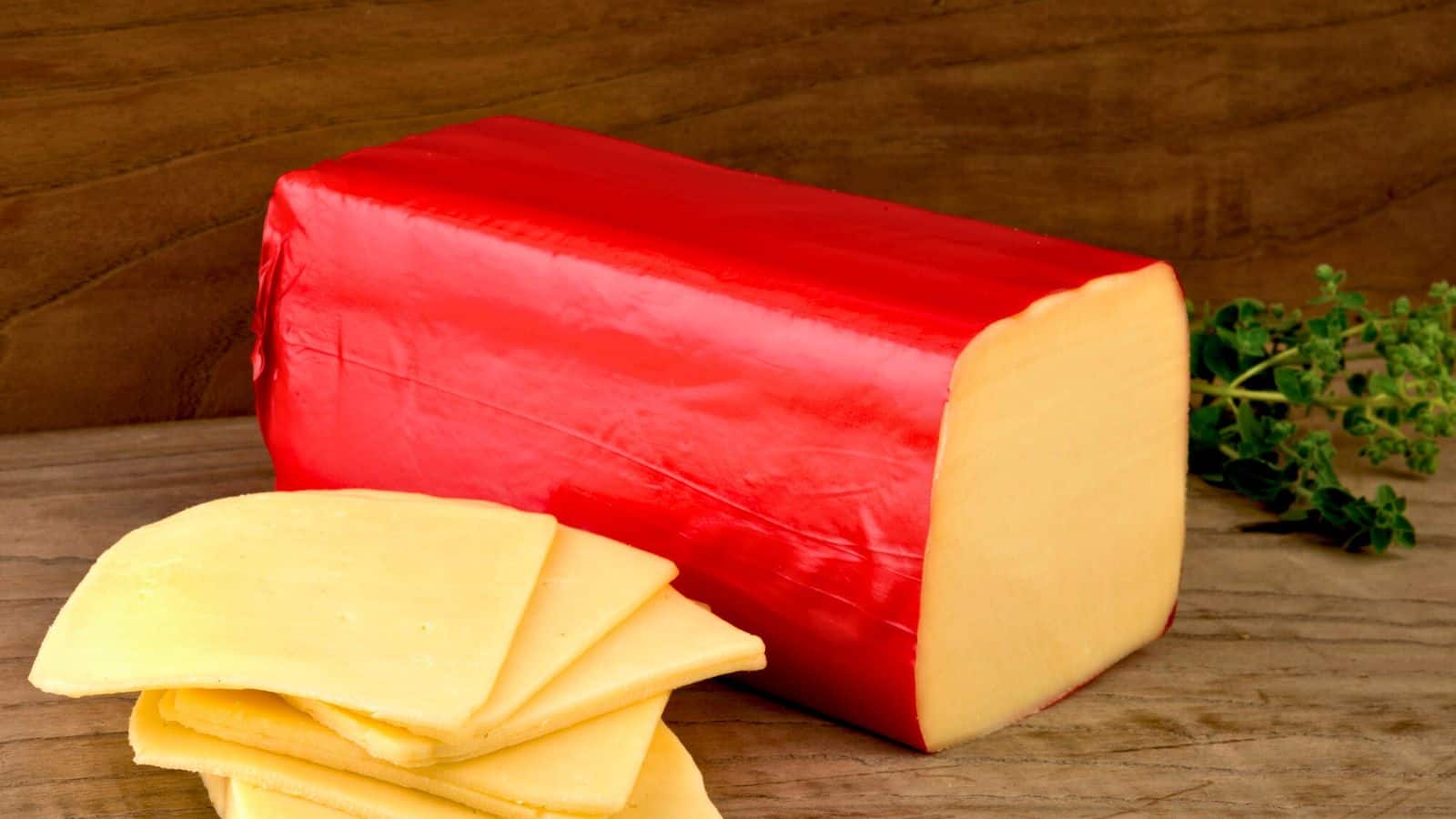
Edam is a semi-hard cheese from the Netherlands with a fat content of around 28%. It's known for its smooth, firm texture and mild, slightly nutty flavor that becomes more complex with aging. Traditionally coated in red wax, this protects the cheese and helps it age gracefully. The moderate fat level gives Edam a creamy mouthfeel without heaviness, making it approachable for many palates. It slices easily and melts well, which makes it a versatile choice for snacking, cooking, or adding to cheese boards where a less intense, mellow option is preferred. Its mild flavor pairs nicely with fruits and nuts, making it a balanced choice for various occasions.
5. Fontina
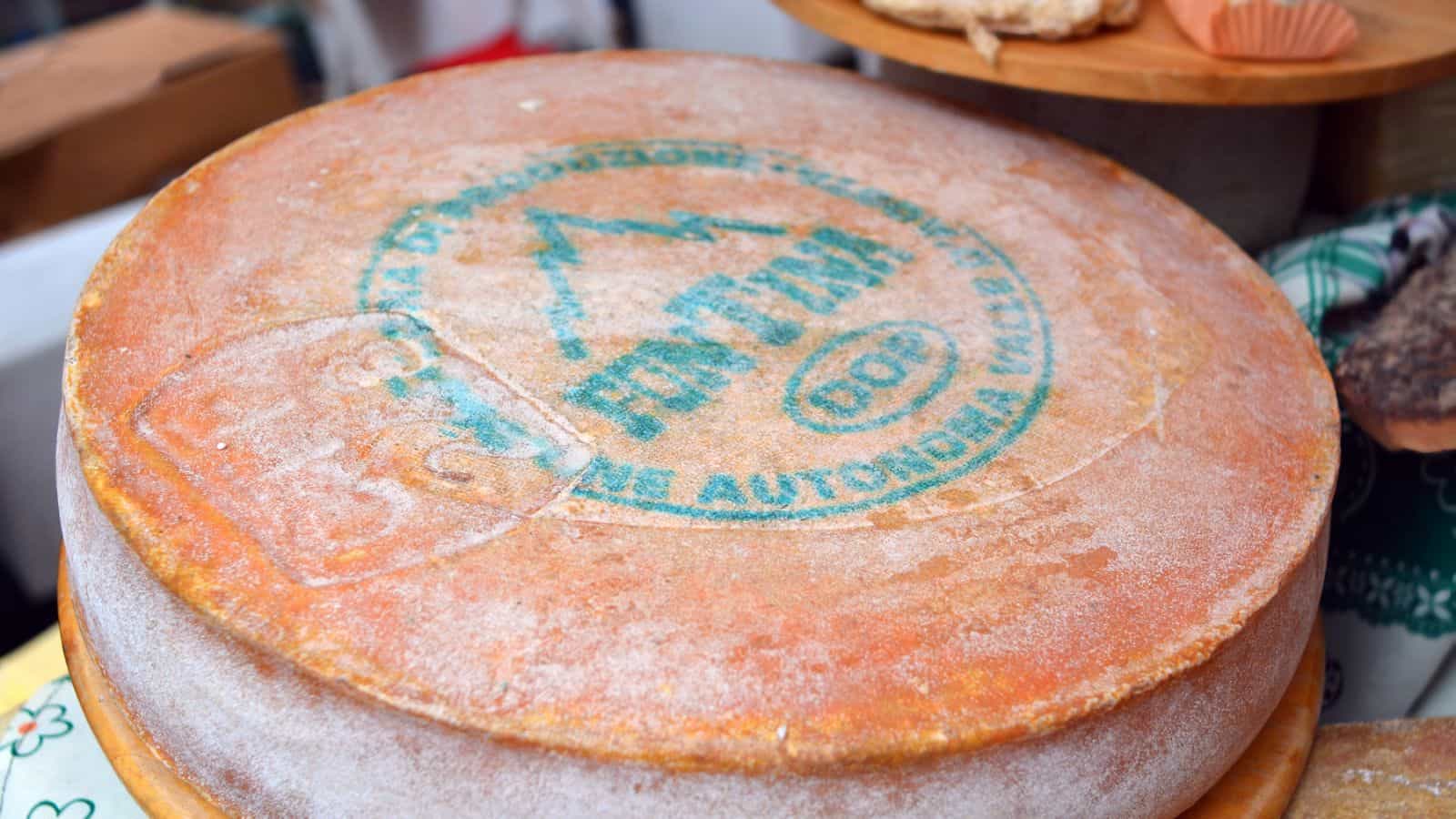
Fontina is an Italian cheese with about 28% fat that has a rich, creamy texture which softens as it ages. Its flavor profile is mild with earthy and nutty undertones that develop more depth over time. The fat content contributes to its smoothness and excellent meltability, qualities that make it a popular choice for baked dishes, sauces, and fondues. Fontina's supple texture allows it to be sliced or melted without losing structure, making it highly versatile in the kitchen. It pairs well with both bold and delicate ingredients, adding richness without overwhelming other flavors. This cheese stands out for its balance of creaminess and subtle complexity.
4. Provolone
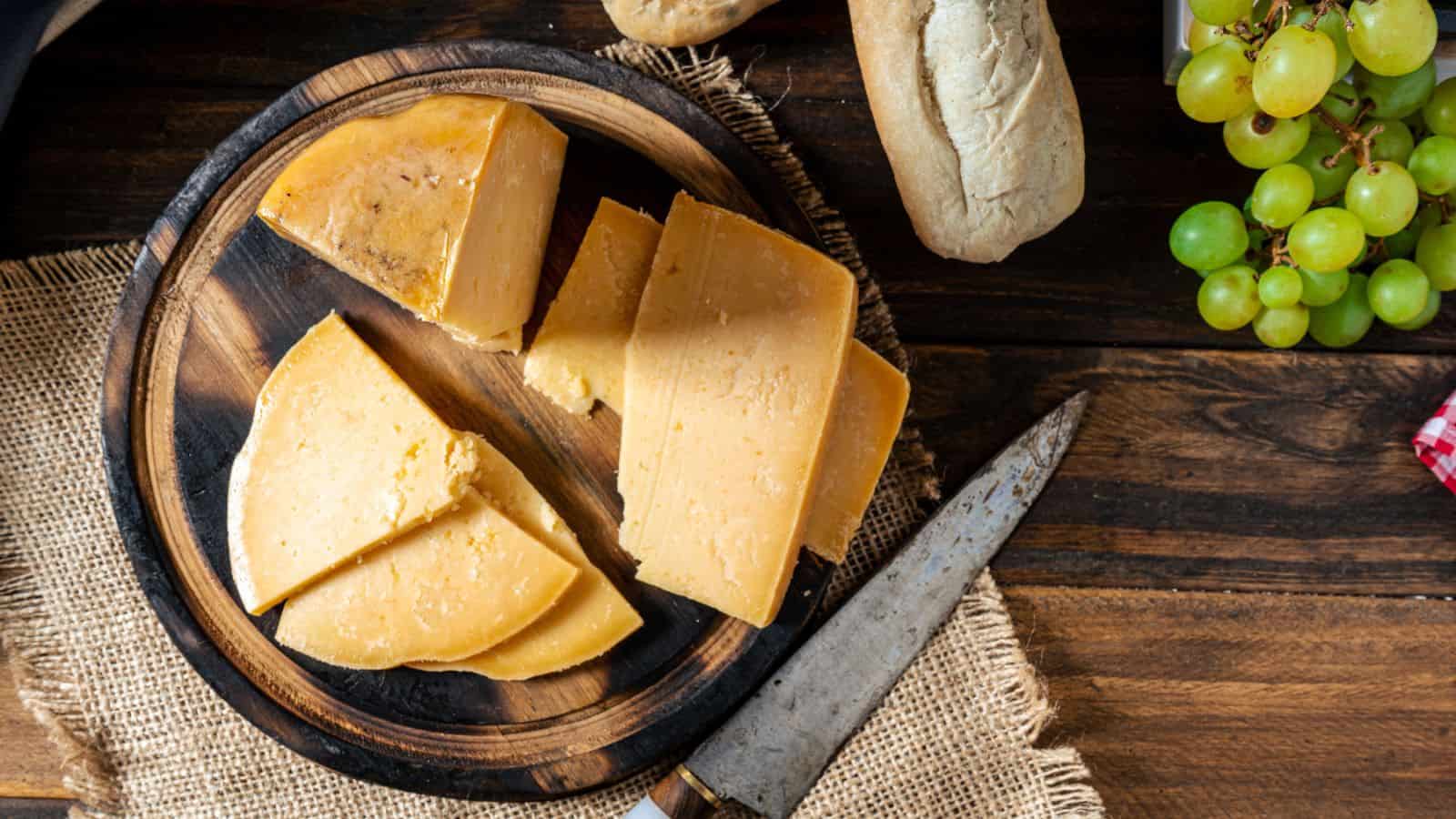
Provolone is a semi-hard Italian cheese containing 25 to 28% fat, known for its smooth, elastic texture and variable flavor depending on aging. Young provolone tends to be mild, sweet, and creamy, while aged varieties develop sharper, tangier notes. The fat content supports a creamy mouthfeel and helps the cheese melt smoothly, making it a popular choice for sandwiches, cooking, and melting on pizzas. Its adaptability means it works well in a variety of dishes, from cold cuts to hot entrees. Provolone's flavor can range from gentle to bold, offering options for different tastes and uses.
3. Swiss Cheese
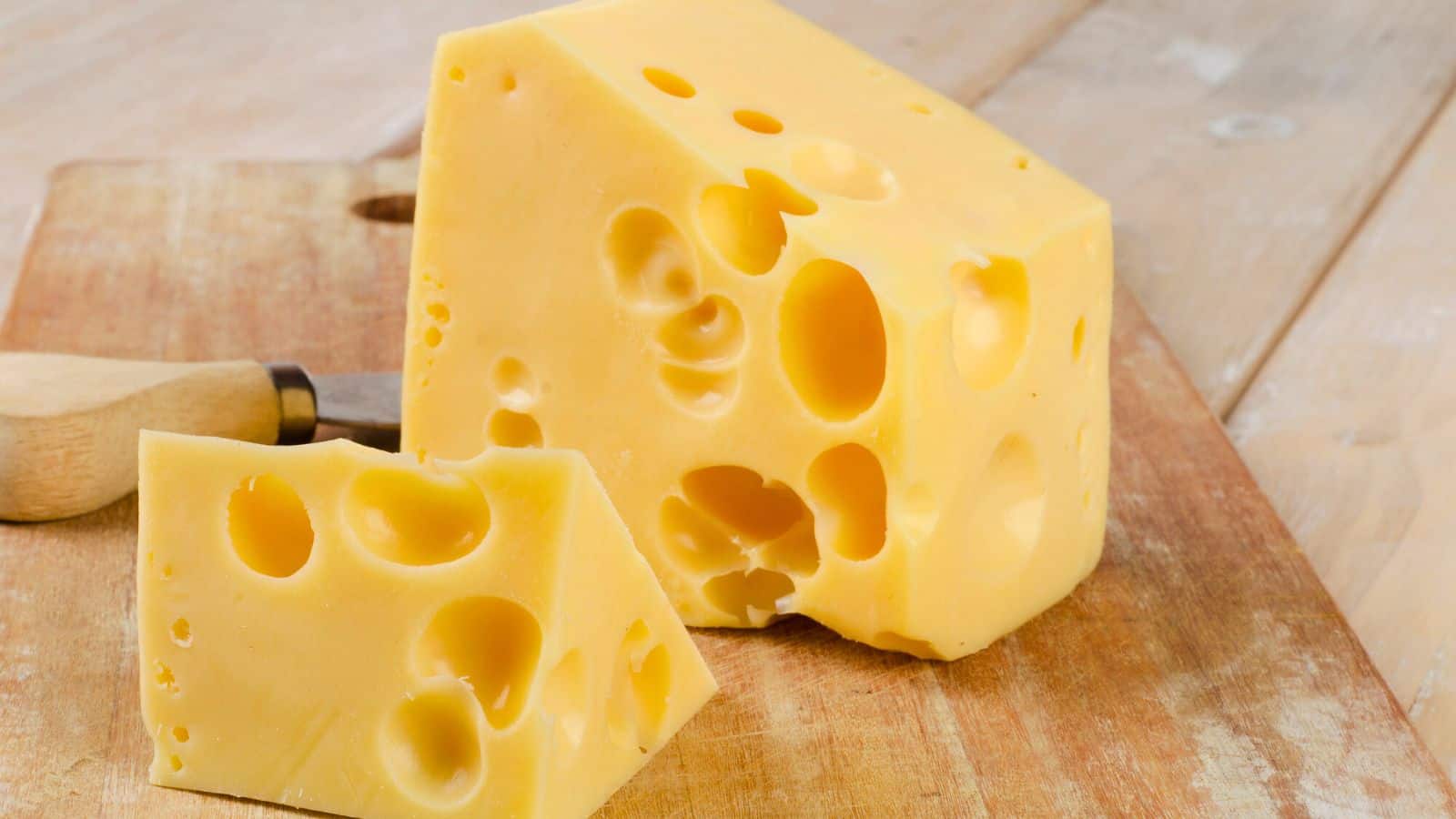
Swiss cheese often refers to Emmental-style cheeses and contains about 27% fat. It has a firm texture characterized by large holes or "eyes" and a mild, nutty flavor with subtle sweetness and a light tang. The fat content contributes to a creamy mouthfeel that balances these flavor notes. It melts evenly, making it popular for sandwiches, fondues, gratins, and other warm dishes. Swiss cheese's moderate fat content keeps it rich without being heavy, appealing to those who want a smooth, approachable cheese that performs well both cold and melted. Its gentle flavor pairs well with many foods.
2. Mozzarella (whole milk)
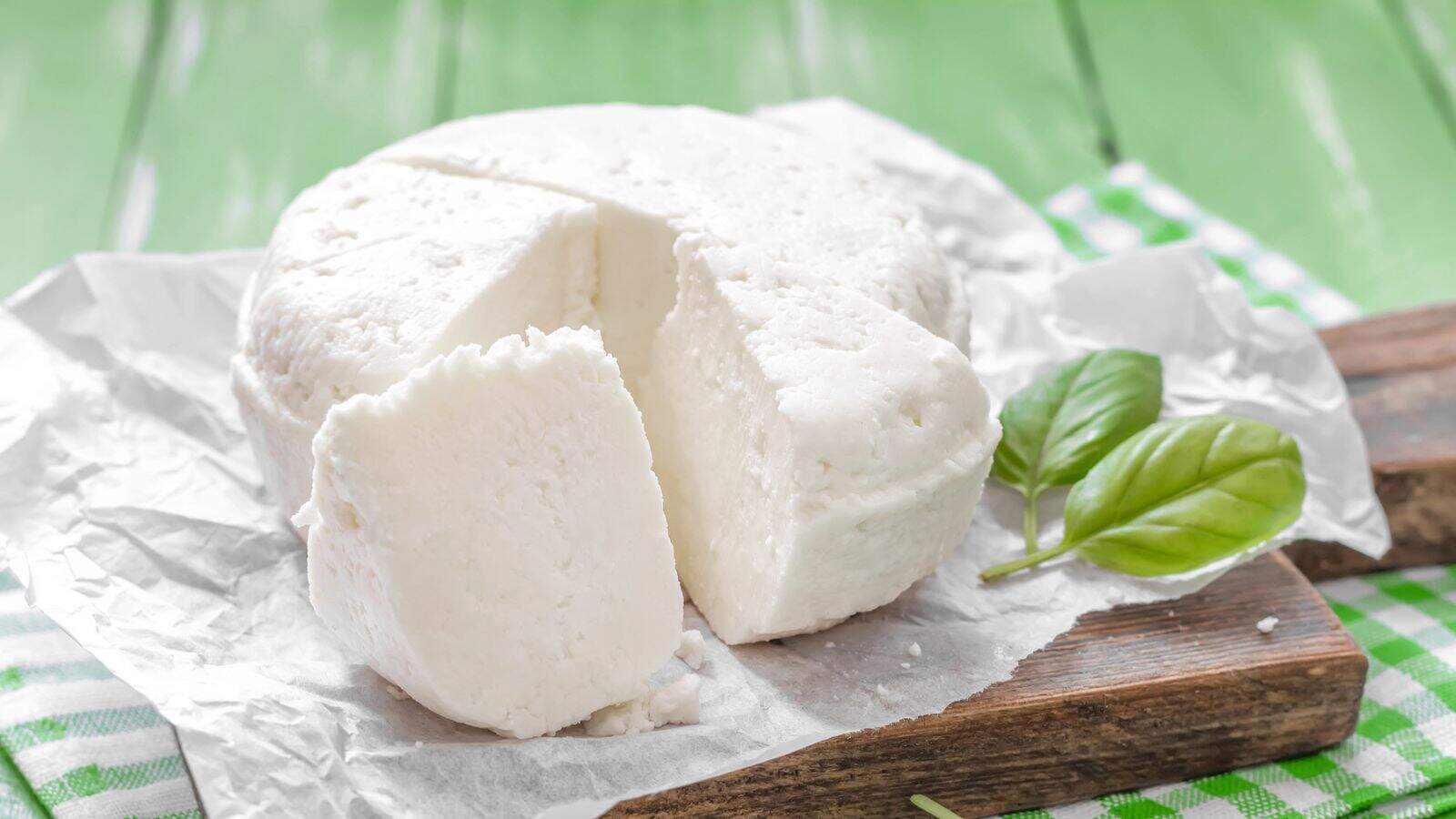
Whole milk Mozzarella contains about 20 to 22% fat and is prized for its soft, moist texture and mild, milky flavor. Traditionally made from water buffalo or cow's milk, it's known for its elasticity and stretch when melted. The fat content guarantees a creamy, smooth consistency that complements the delicate taste without overpowering it. Mozzarella is a staple in Italian cooking, especially on pizzas and in salads, where its melting quality and mild flavor shine. Compared to many aged cheeses, it has a lighter mouthfeel, making it a refreshing, versatile choice for a wide range of dishes.
1. Ricotta (part-skim)
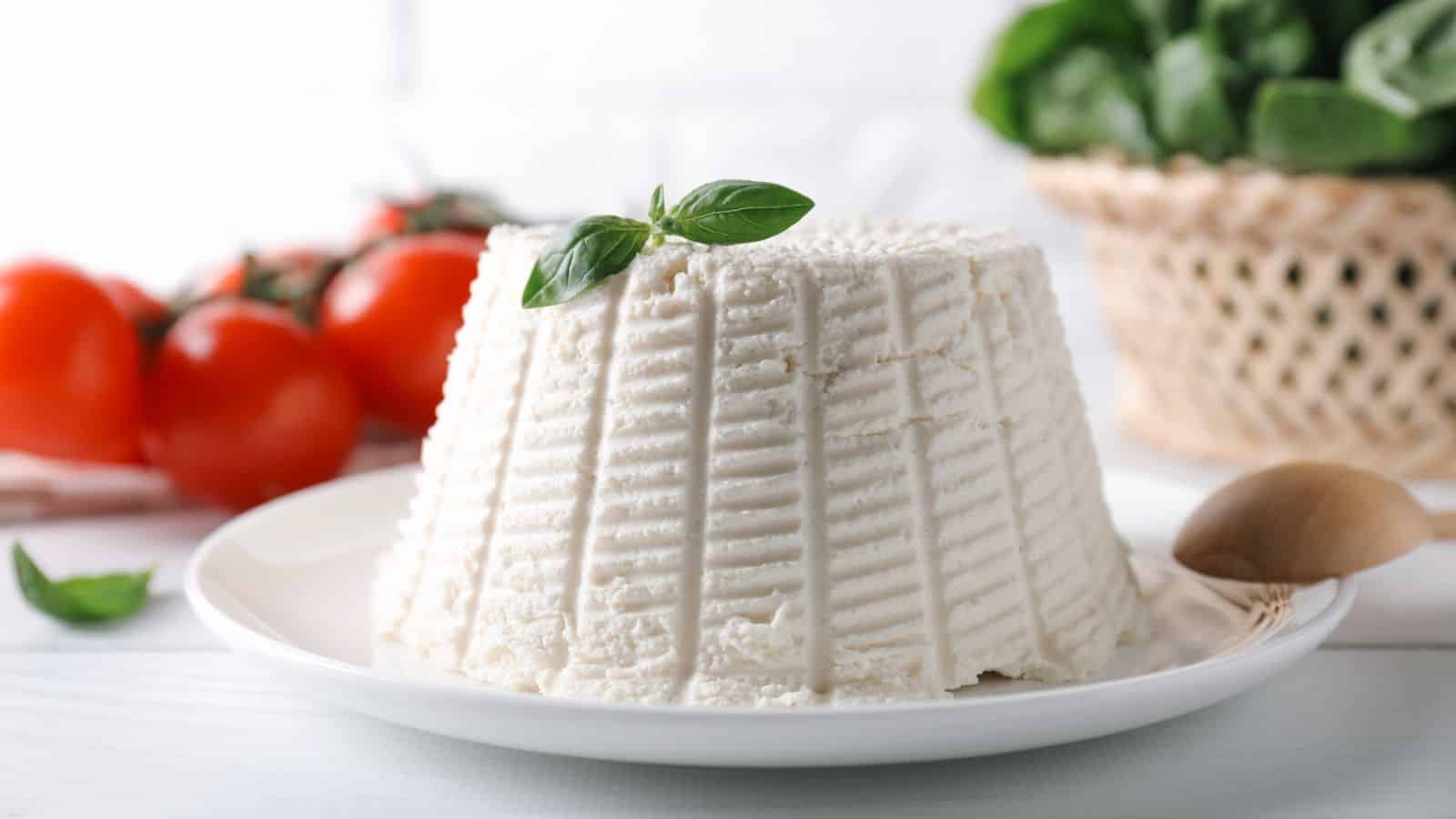
Part-skim Ricotta contains about 10 to 15% fat, making it one of the leanest cheeses here. It is made from whey and has a grainy, slightly fluffy texture and a mild, sweet flavor. The lower fat results in a lighter mouthfeel for sweet and savory dishes. Ricotta is often used in fillings, desserts, and as a topping. Its fresh, delicate nature allows it to absorb other flavors well without overpowering them, making it a versatile and lighter cheese option.
Cheese Your Way Wisely

Understanding the fat content in cheese can change the way you choose and enjoy it. Whether you want something rich and creamy or something lighter, knowing which cheeses have more or less fat helps you make better decisions. It's not just about taste-fat affects texture, melting, and how the cheese feels when you eat it. This is why it's important to know the 15 cheese types ranked.
At the end of the day, cheese comes in many styles and flavors, and fat content is just one part of the story. This ranking clearly shows where different cheeses stand when it comes to fat, making it simpler to find what fits your preferences. So next time you're at the store or planning a meal, you'll have a better idea of what to reach for, whether you want something rich or something lighter.
Top Healthiest Cheese Options that You Can Enjoy Without Worrying

Cheese gets a bad rap sometimes, like it's the villain in the story of healthy eating. But let's be real: life's better with a little cheese. Not all cheeses are created equal, though. These top ten healthiest cheeses, in particular, are like the superheroes of the dairy world, sneaking in protein and calcium while keeping the sneaky calories and fat in check.
Read it Here: Top 10 Healthiest Cheese Options that You Can Enjoy Without Worrying
Running Out of Goat Cheese? Here Are Great Substitutes to Use Instead

If you're out of goat cheese or just not into its tangy flavor, don't worry. There are plenty of great options that can step in and do the job just as well. Whether you're making a salad, a sandwich, or a baked dish, these goat cheese substitutes bring their own unique qualities to the table. Each alternative has its own texture and flavor, so you can find one that matches what you need.
Read it Here: Running Out of Goat Cheese? Here Are 11 Great Substitutes to Use Instead