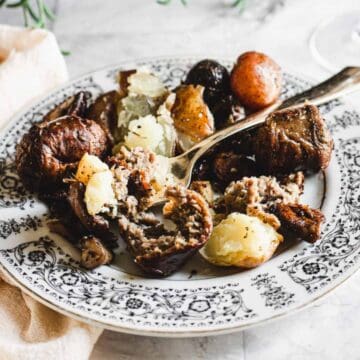
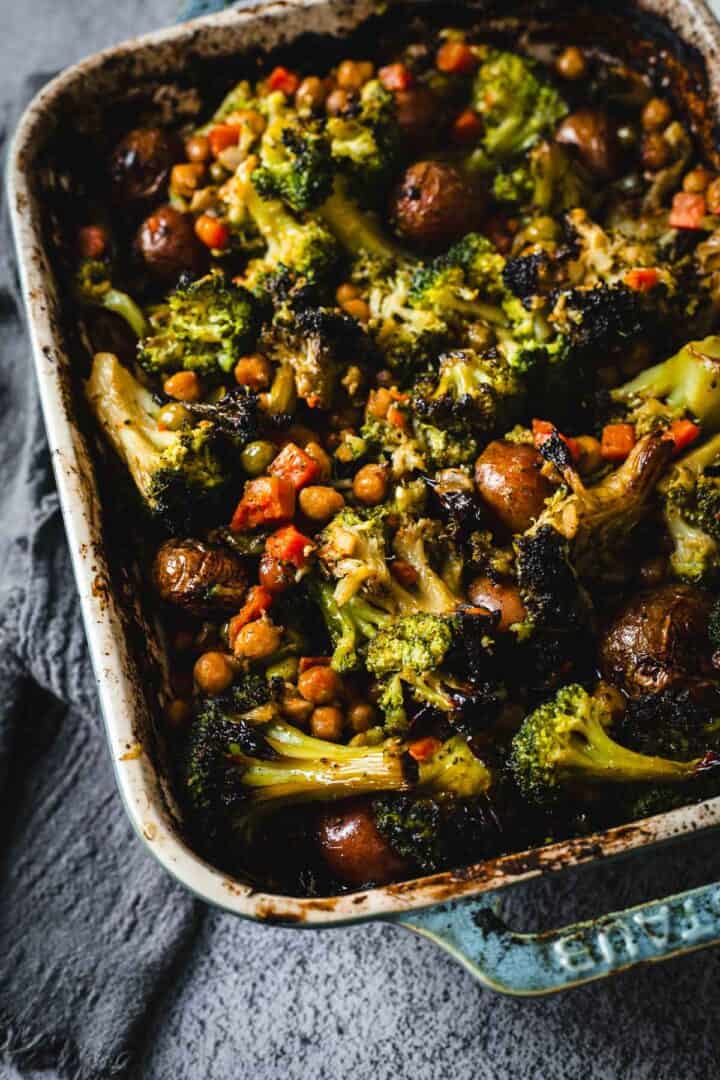
Duck fat roasted vegetables cooked until crisp and tender, a holiday staple shaped by old kitchen habits and new family traditions.
One Christmas, after years of cooking duck for our little family, I found myself alone in the kitchen for a rare quiet hour. The duck for dinner was already in the oven, its skin slowly crisping, the air rich with citrus and herbs from a tray of Duck à l'Orange I had tended to for hours.
On the stove, a small pot of rendered fat sat off the heat, pale and glossy, catching the light. For a moment I thought of pouring it into a jar for "later," the way my grandmother used to tuck jars of fat into the fridge door.
Instead, I looked at the counter, cluttered with half-prepped vegetables meant for dinner. A bowl of baby potatoes, a bag of frozen carrots and peas the kids love, a head of broccoli, and a can of chickpeas waiting to be opened.
I reached for the duck fat and felt something click into place, like I was linking old kitchens and new ones. If this fat could carry Duck à l'Orange, or pan fried duck breast with berry apple compote on winter nights, or even Korean style duck in wine sauce for bigger gatherings, then it could easily carry a tray of vegetables.
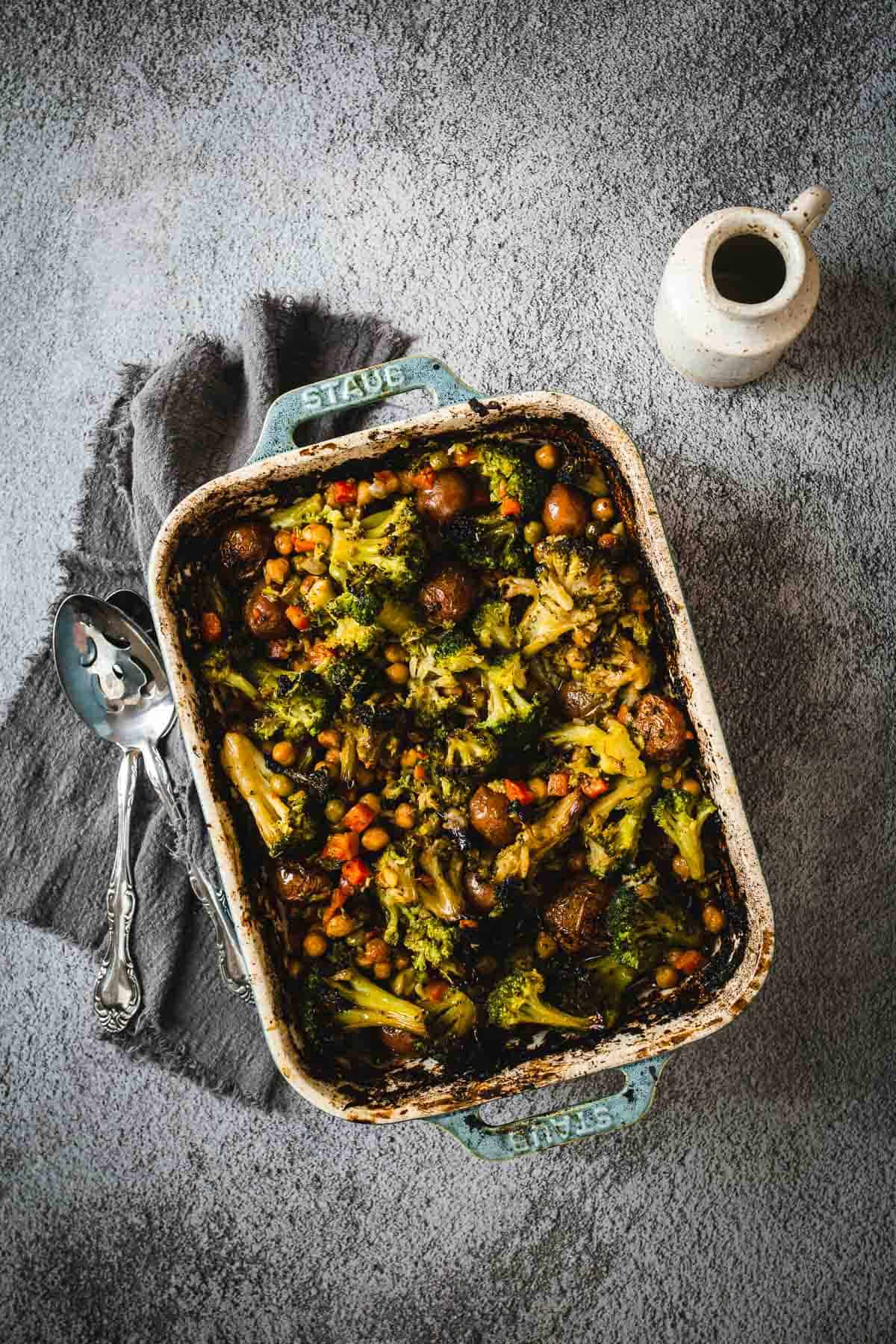
I poured the melted fat over the vegetables in a deep casserole dish and tossed until every potato, pea, and chickpea glistened. The pan went into the oven beside the duck. By the time the main was ready, the vegetables had softened and browned, the broccoli florets curled at the tips.
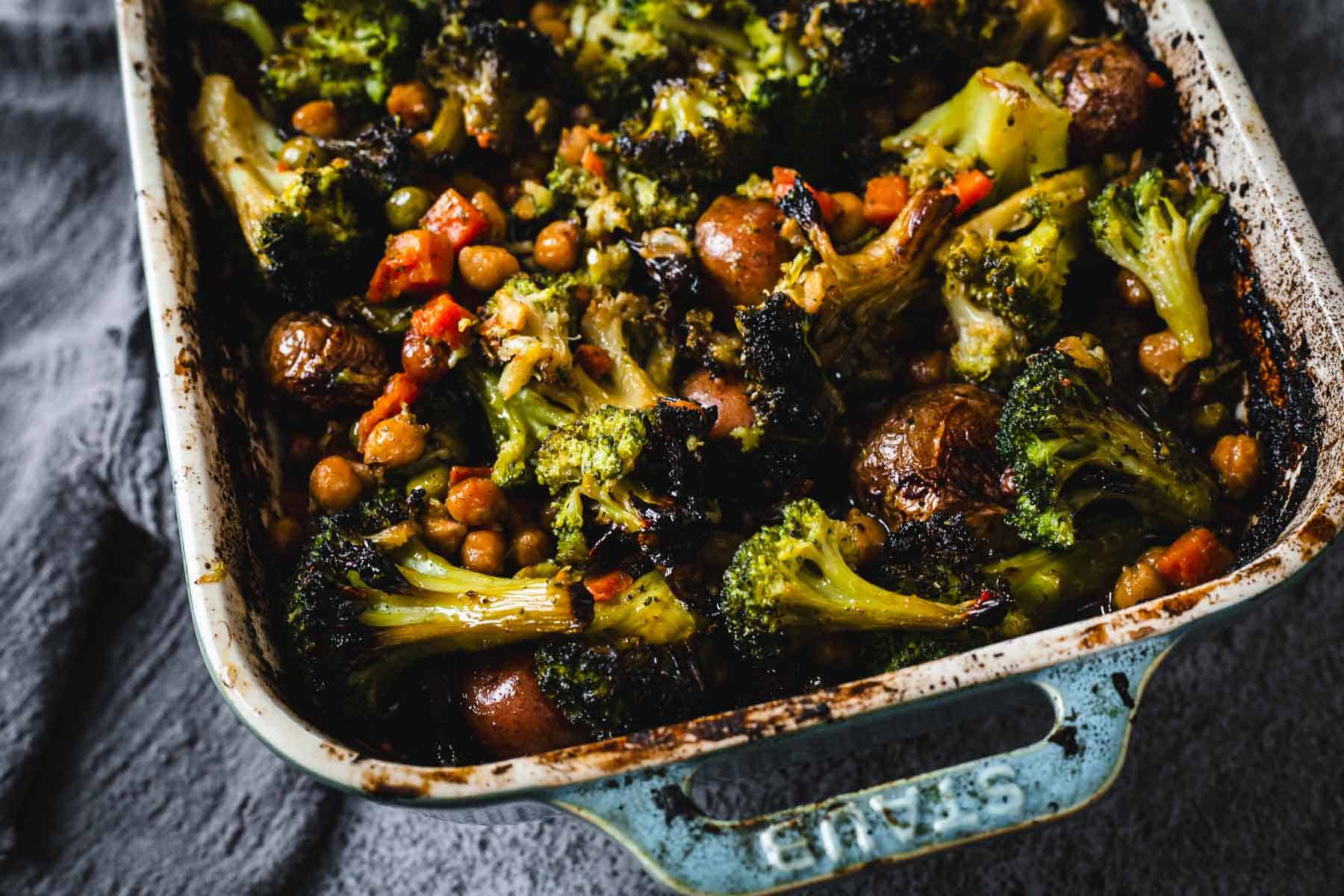
Chickpeas turned crisp and nutty, potatoes were tender throughout, peas and carrots tasted rich with fat. Leo speared potatoes, Lin picked chickpeas, my husband kept going back for the charred edges of broccoli. That was the first year duck fat roasted vegetables earned a place on our December table, next to whatever duck I am making.
It felt like a link between my grandmother's jars of schmaltz, those early years learning duck in Quebec, and the life my husband, the kids, and I are building one tray at a time.
Ingredients
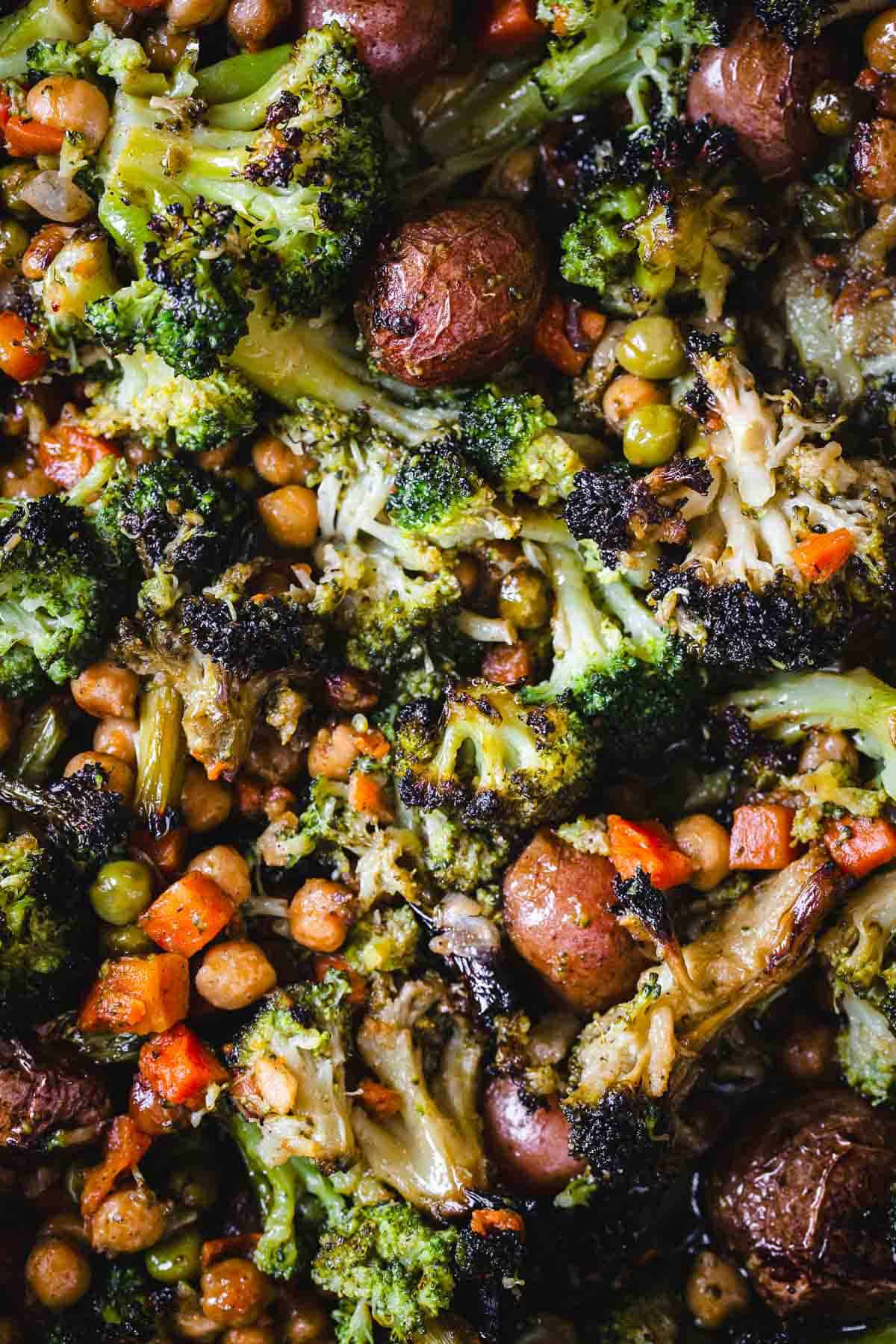
- Duck Fat - Duck fat is the backbone here, giving the vegetables crisp edges and rich depth that stands up to duck mains. If you do not have leftover duck fat, good quality store bought duck fat works well, and in a pinch you can mix a little ghee with olive oil, though it will not have quite the same depth.
- Baby Red Potatoes - Baby red potatoes hold their shape, roast evenly, and give creamy centers with crisp skins. Any waxy potato works: Yukon Gold, yellow potatoes, or small new potatoes cut into similar chunks. Avoid very floury baking potatoes, which break down and mash instead of staying in neat roasted pieces.
- Broccoli Florets - Broccoli brings color and a faint bitterness that balances all the richness from the duck fat and potatoes. You can swap some or all of the broccoli for cauliflower florets if that is what is in your fridge, the timing stays almost the same.
- Frozen Diced Carrots and Peas - Frozen carrots and peas are my shortcut when the main course already needs attention. They roast well, turn sweeter in duck fat, and feel familiar for the kids. Fresh carrots cut into small cubes and fresh or thawed peas work nicely too. Mixed frozen vegetables can step in, though firm roots may need a few extra minutes.
- Chickpeas - Chickpeas make this side more substantial, especially for guests who like extra protein beside their duck. Canned chickpeas are easiest; well drained cooked-from-dry chickpeas, or even firm cannellini beans, can be used the same way.
See the recipe card for full list and exact quantities.
How to Make Duck Fat Roasted Vegetables Recipe
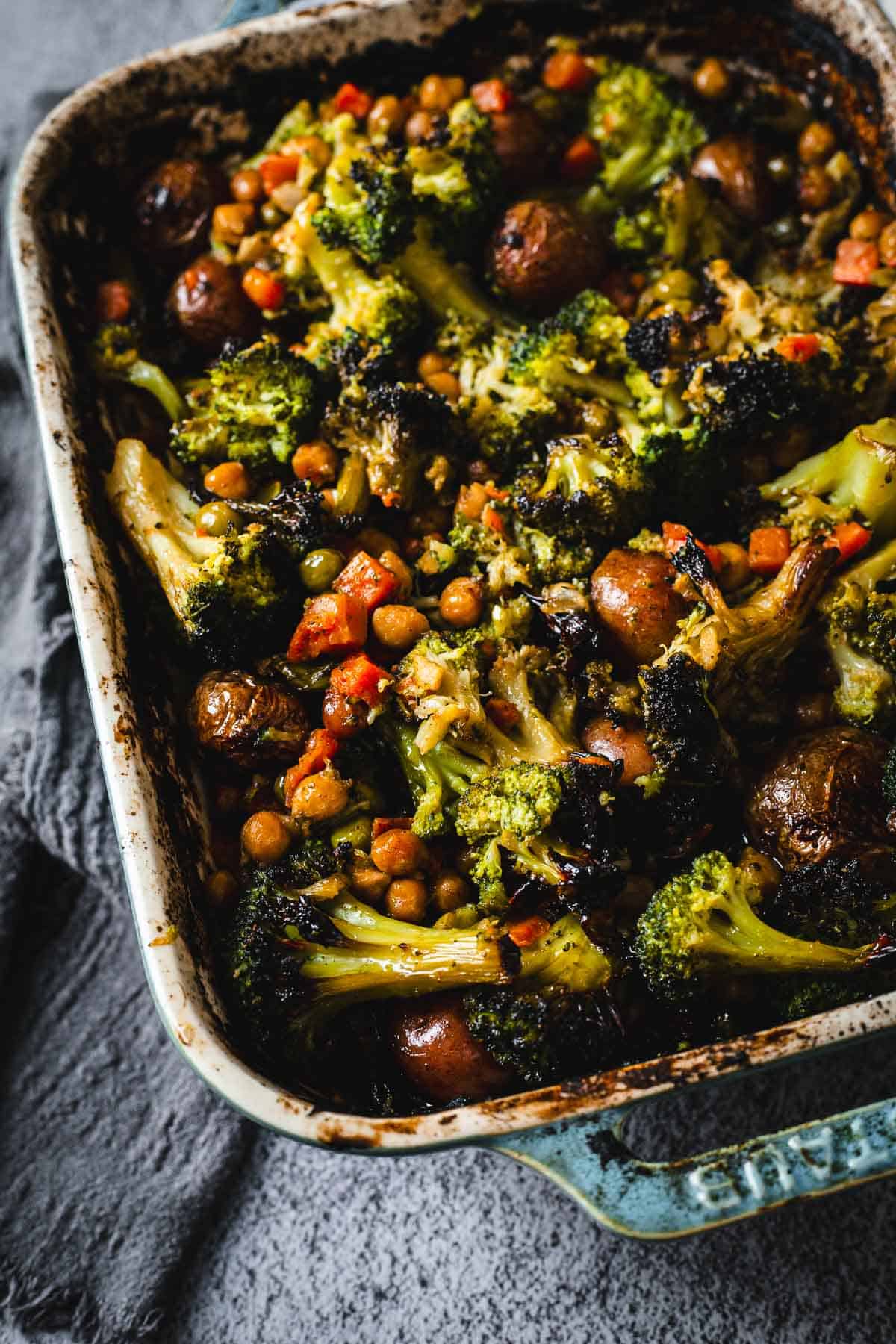
If your holiday vegetables usually feel like an afterthought, this pan of duck fat roasted vegetables changes that. The duck fat brings everything together! From crisp potatoes to sweet peas and chickpeas, in a way that feels right beside any duck main. Here is how to make this recipe:
Combine the vegetables with duck fat
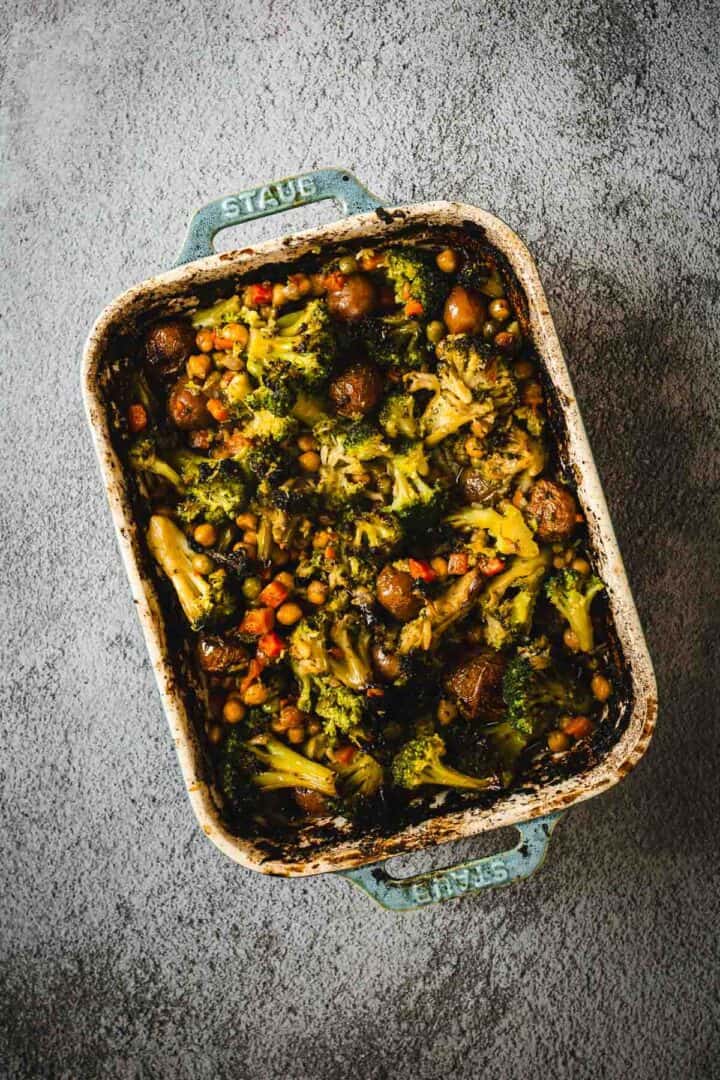
Every piece should have a light sheen, with no puddles of fat sitting at the bottom. If you see a pool forming, add a few more vegetables or spoon out a little fat, otherwise the tray can feel greasy and the vegetables might stew instead of roast. Spread everything into an even layer, with most pieces in a single layer rather than stacked high.
Bake at 350°F, then raise the heat to 400°F
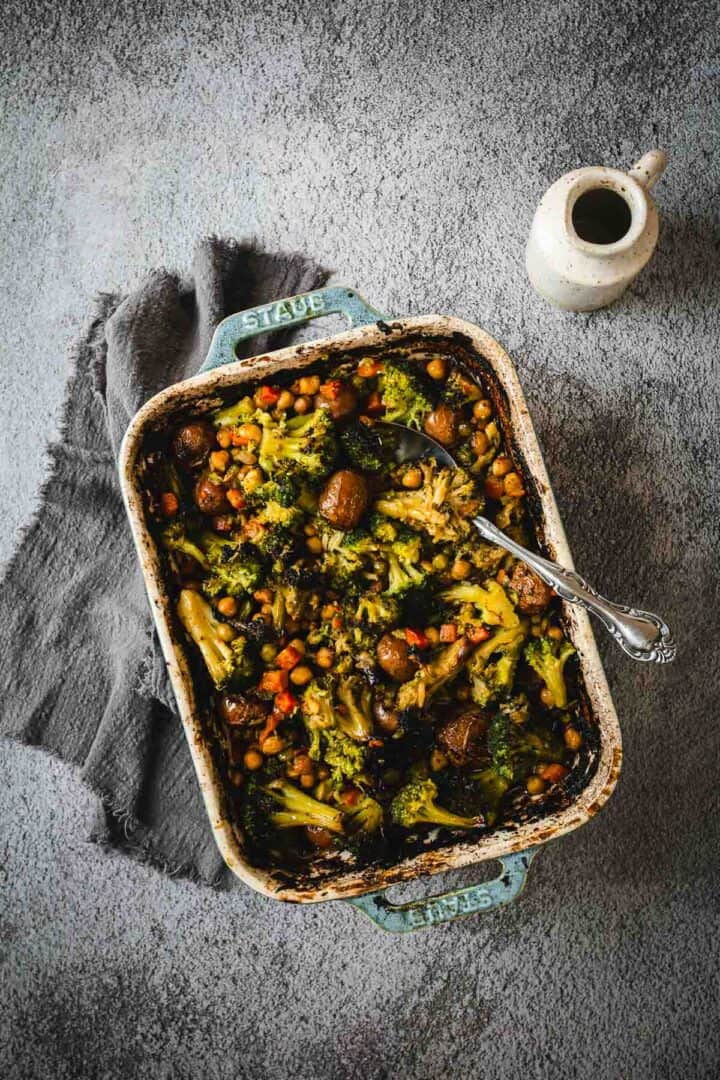
After 20 minutes, shake the pan or stir to prevent sticking. By 30 minutes, the potatoes should be tender but still pale, and the broccoli stems should be softening. If things look too dark, reduce the next stage.
Increase the oven temperature to 400°F (200°C) and bake for an additional 20 minutes. The vegetables will brown, crisp, and caramelize. Stir halfway through to expose fresh surfaces to the hot pan. By the end, everything should be tender with crispy edges but not blackened. If the edges darken too fast, pull the dish early.
Season and serve
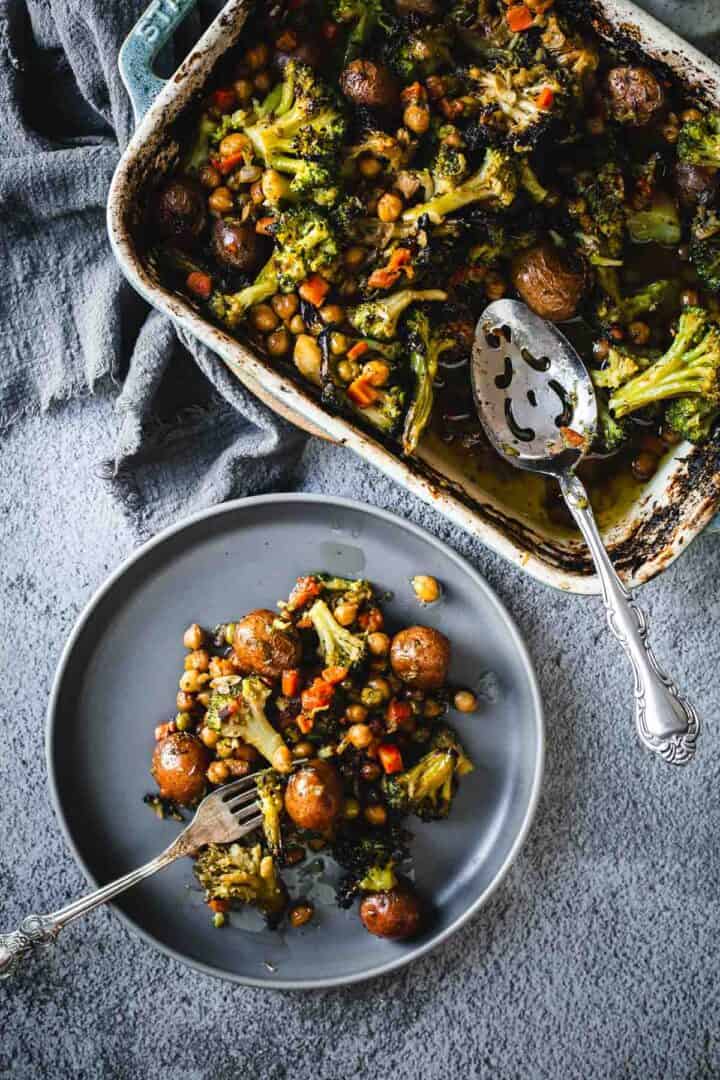
Taste a potato before seasoning, as duck fat already adds depth. Serve while hot, when the edges are crisp and the centers are still tender.
Storage
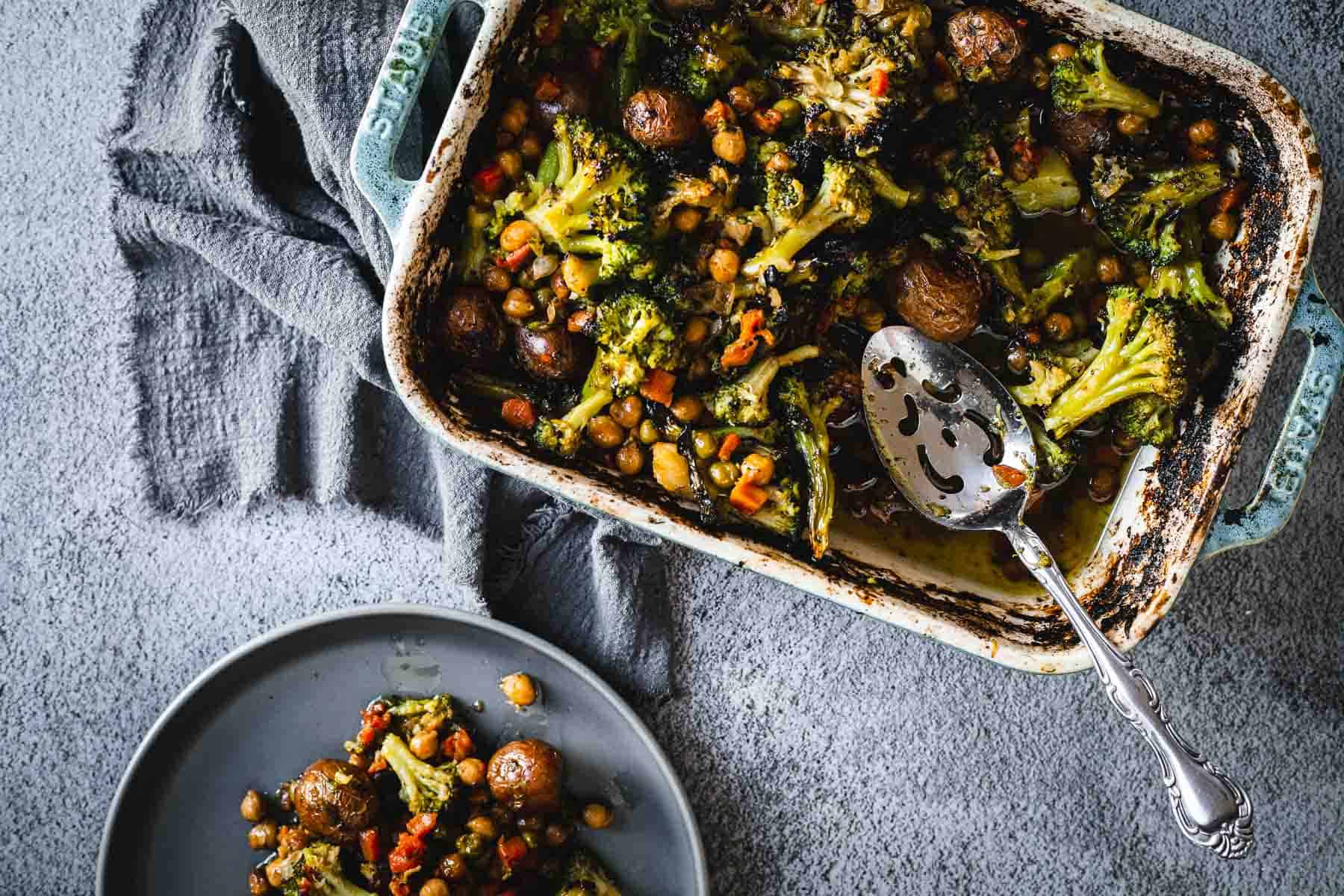
Once the vegetables cool, move them into an airtight container. Store them in the fridge for up to four days. The potatoes will firm a bit, and the chickpeas will lose some crispness. The flavor settles nicely overnight, so the dish still tastes rich the next day.
For reheating, I prefer the oven because it restores some of the roasted edges. A hot skillet works well for small portions and gives a quick sear. I avoid the microwave since it softens everything too much. Leftovers often turn into a simple lunch. I mix them into cooked grains or add them to an omelet when the day feels busy.
Top Tips
Dry ingredients roast better than damp ones - if the chickpeas or broccoli hold extra moisture, they steam instead of crisping. Pat the chickpeas dry and shake any water from the broccoli before tossing with duck fat. This small step helps the vegetables take on color instead of softening unevenly.
Right size pan for best browning - crowding leads to steaming, which keeps the potatoes pale and the chickpeas soft. I use a wide casserole dish or split everything between two pans when cooking for a bigger group. A single layer gives the best browning and the charred edges my husband always reaches for first.
Recipe
Tried and loved this recipe? Please leave a 5-star review below! Your reviews mean a lot to me, so if you've got any questions, please let me know in a comment.
Duck Fat Roasted Vegetables
Equipment
- Large casserole dish
- Mixing spoon
- Knife
Ingredients
- 1 cup duck fat melted
- 2 cups baby red potatoes halved or quartered
- 2 cups broccoli florets
- 1 cup frozen diced carrots and peas
- 1 can (15 oz) chickpeas drained and rinsed
Instructions
- Add the potatoes, broccoli, carrots, peas, and chickpeas to a large casserole dish. Spoon in the melted duck fat and toss until everything glistens. Spread the vegetables into an even layer so they roast evenly.
- Place the dish in the oven and bake for 30 minutes. The vegetables will soften and begin to release their natural sweetness.
- Increase the oven temperature to 400°F (200°C) and continue baking for 20 minutes. The potatoes should be tender inside, the chickpeas lightly crisped, and the broccoli tips slightly charred.
- Remove from the oven, season lightly with salt and pepper, and serve while hot.