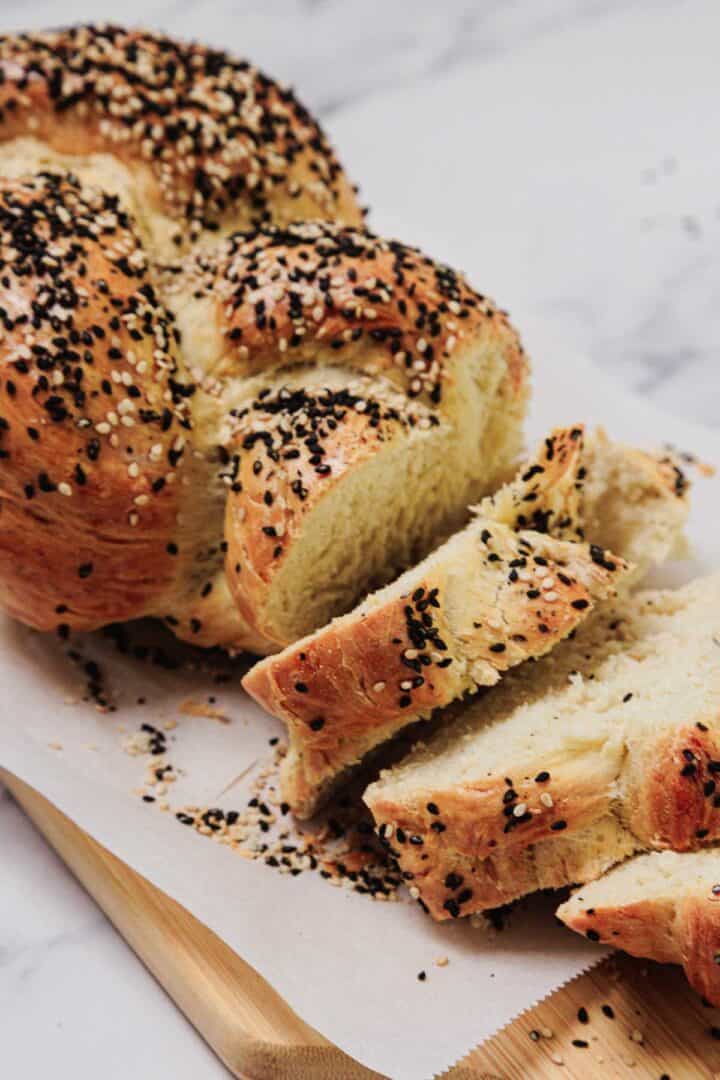
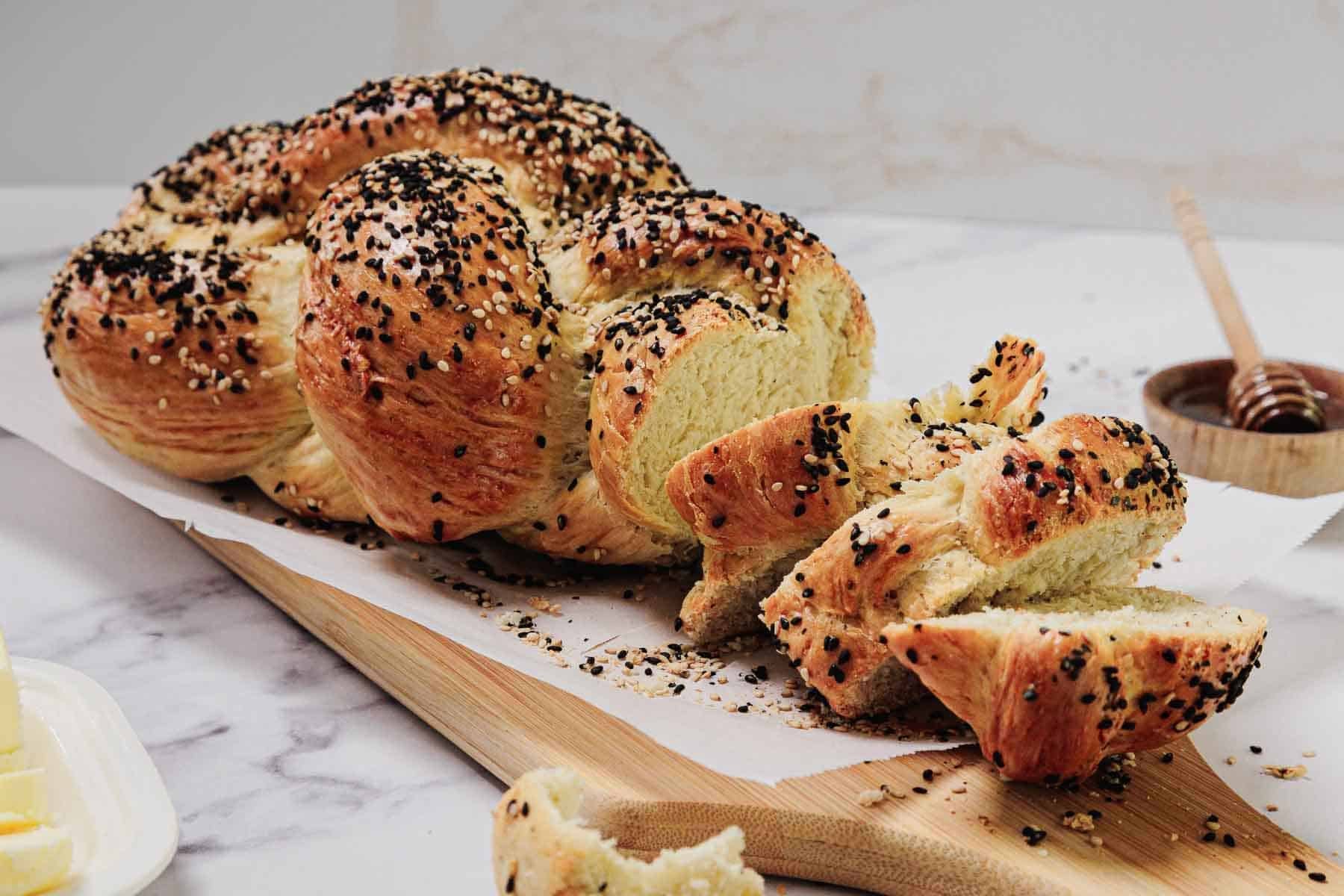
Easy no-egg challah that disappears in minutes! Simple to braid, deeply tied to family, and a recipe I've carried since childhood.
Jump to:
My sister always had her odd tastes. Being the younger one gave her that freedom, while I often carried the heavier role of being the older sibling. We didn't always get along when we were kids. Some days ended in arguments, slammed doors, or the kind of silence that stretched through dinner. But there were also afternoons when her presence drew other people into the house, changing the rhythm of things in a way that softened me.
One of those afternoons stands out. Her best friend had come over to our house in Israel. The house was buzzing in that familiar way it did whenever guests arrived, with the smell of food drifting from the kitchen and voices carrying down the hallway.
At some point the conversation turned to bread. Maybe it was because our family always had bread on the table, from simple white loaves to heavier rye. Whatever the reason, I found myself leaning in, curious, as my sister's best friend started describing how her family made challah.
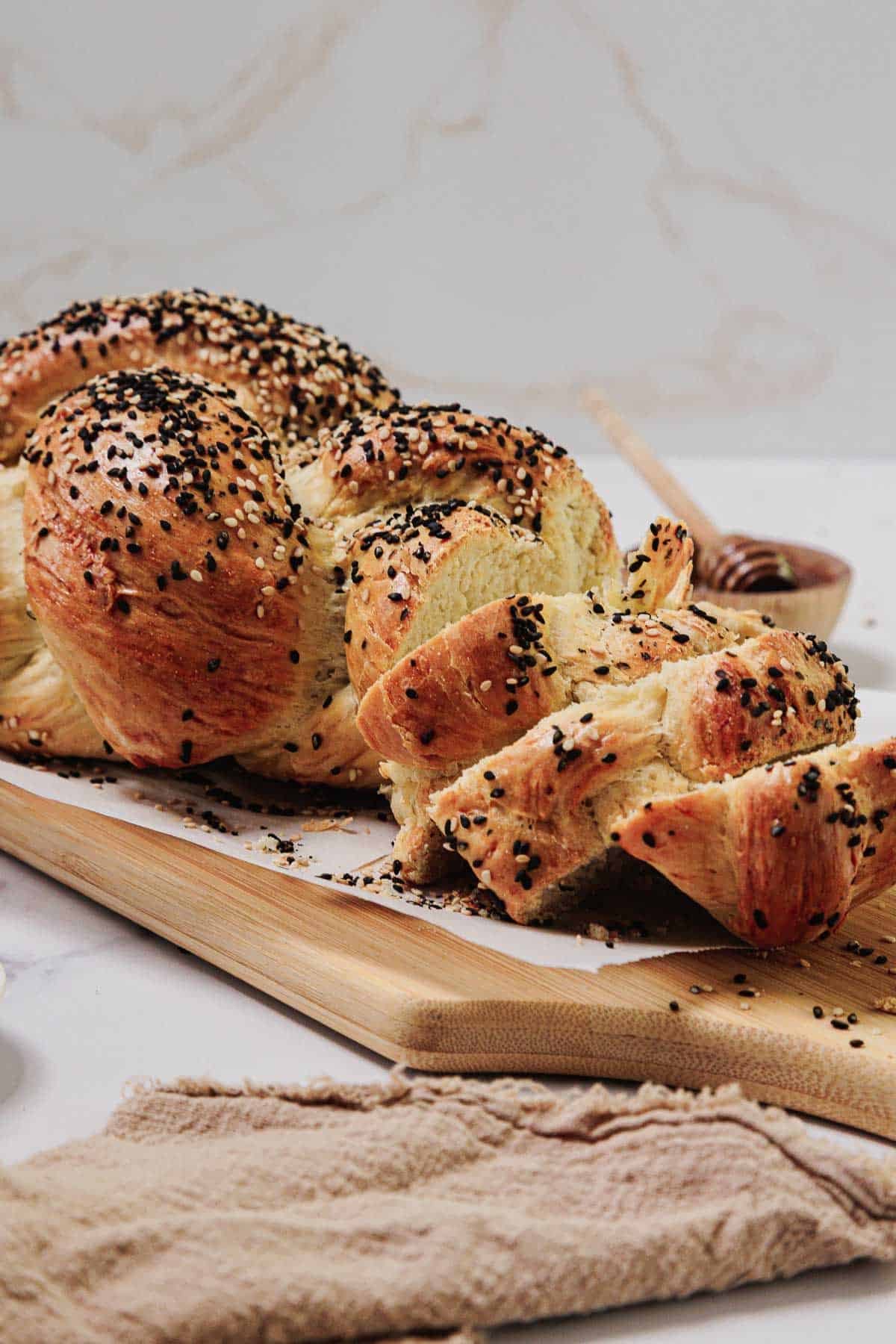
Her version was unusual to me. No eggs, except in a brush on the top that she promised wasn't mandatory. She spoke about it so casually, as if making bread without eggs was nothing remarkable. I had only known challah as glossy, golden braids brushed with egg wash, gleaming on shabbat tables. But here was a recipe stripped down, quick, and still part of tradition.
I knew immediately I had to learn it. Bread had always been the one way I felt I could win over my family. If they ate what I made, if they tore into it and reached for more, I felt connected to them in a way words never allowed.
I scribbled notes while she talked, my mind racing ahead to the kitchen. When I tried it later, the sight of my family pulling pieces from the loaf felt like a small victory. It may not have been the bread they knew, but it became part of us, carried into the rhythm of our meals.
Braiding Challah, Learning Bread
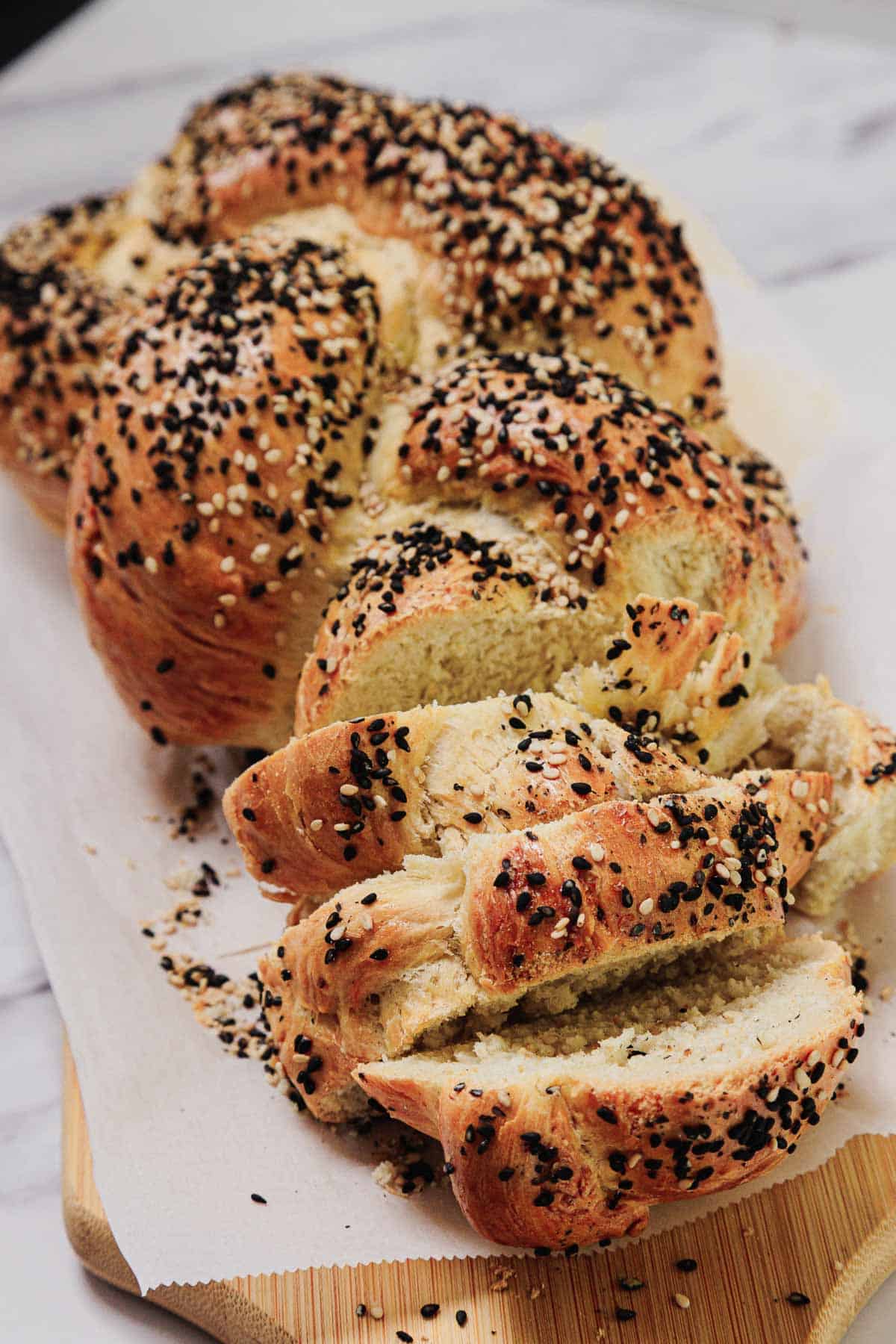
Challah carries meaning that goes far beyond the recipe itself. On Friday evenings, two braided loaves are often placed on the shabbat table, symbols of continuity and abundance. The bread is pareve, containing neither dairy nor meat, which allows it to accompany meals of every kind. That distinction sets it apart from brioche or other European breads enriched with butter or milk.
When I first began baking more often, challah opened the door to many other breads in my kitchen. I learned the patience of keeping a traditional sourdough starter, watching it come to life in a jar, bubbling away on the counter like a companion. That patience stretched into rosemary sourdough bread, its fragrance filling the house during quiet afternoons.
Later came the crisp crunch of almond lavosh crackers, good for light meals or sharing with friends, and the hearty weight of spiced beer bread, which always reminded me of communal tables and gatherings.
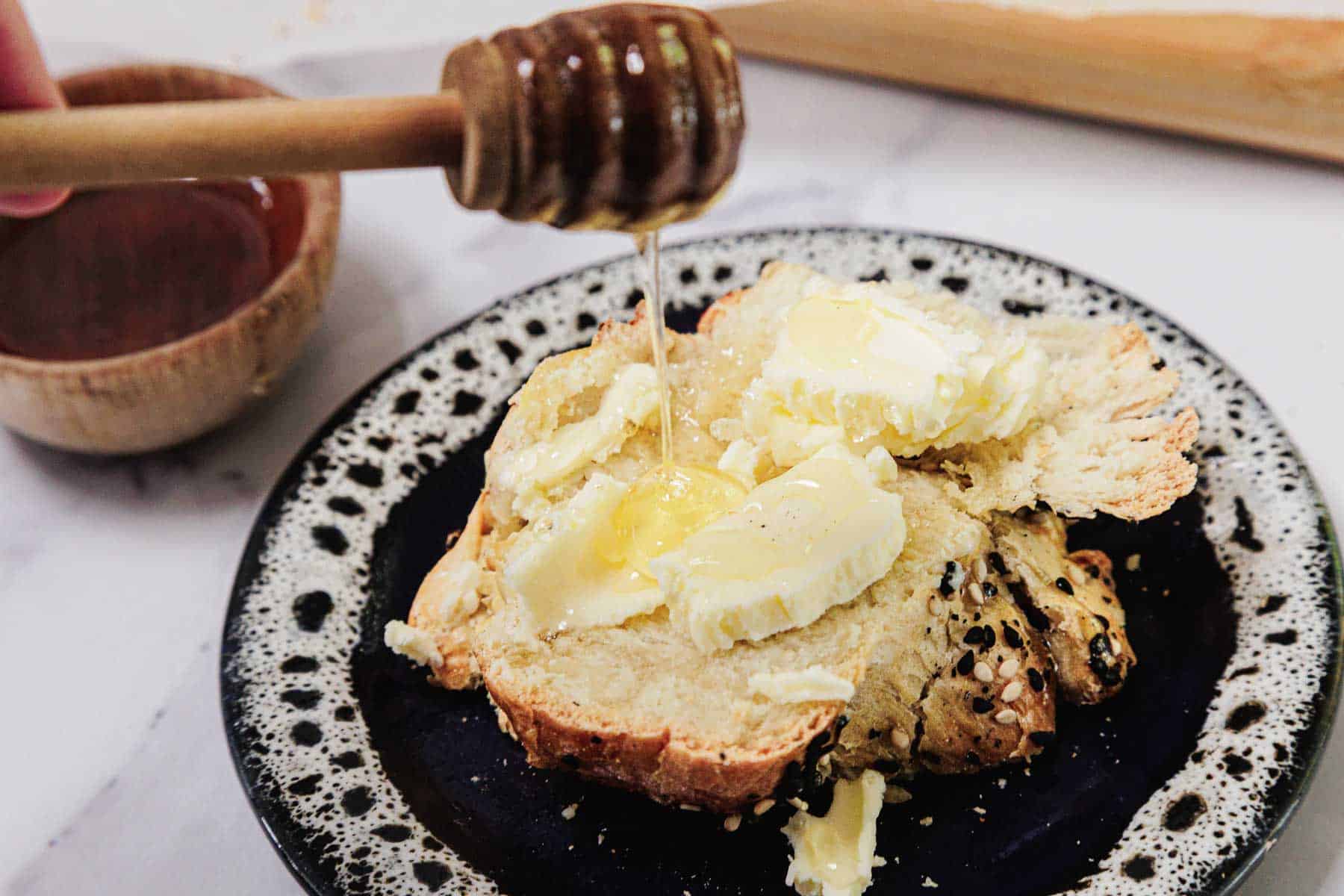
Each of these loaves has its place, but challah remains at the center for me. Not because it is complicated, but because it brings people close. It's the bread I braid with my children, their hands clumsy but eager as they roll strands of dough alongside mine. Sometimes the braids come out uneven, sometimes the dough rises higher on one side. None of that matters. When the loaf emerges from the oven, golden and fragrant, the table grows quieter for a moment as everyone reaches for a piece.
This particular egg-free challah feels tied to that afternoon in my childhood home, when my sister's friend casually passed on something that became a part of me. It taught me that bread does not need to be ornate to hold meaning. It only needs hands to shape it and people to share it with.
Now, as I bake with my own family in Canada, I find myself grateful that such a simple recipe traveled with me across years and borders, finding its place at our table again and again. Sometimes, I brush egg on top; and other times, when my daughter's egg-allergic friend comes over for a visit, I am grateful to have this eggless challah version in my repertoire.
Ingredients
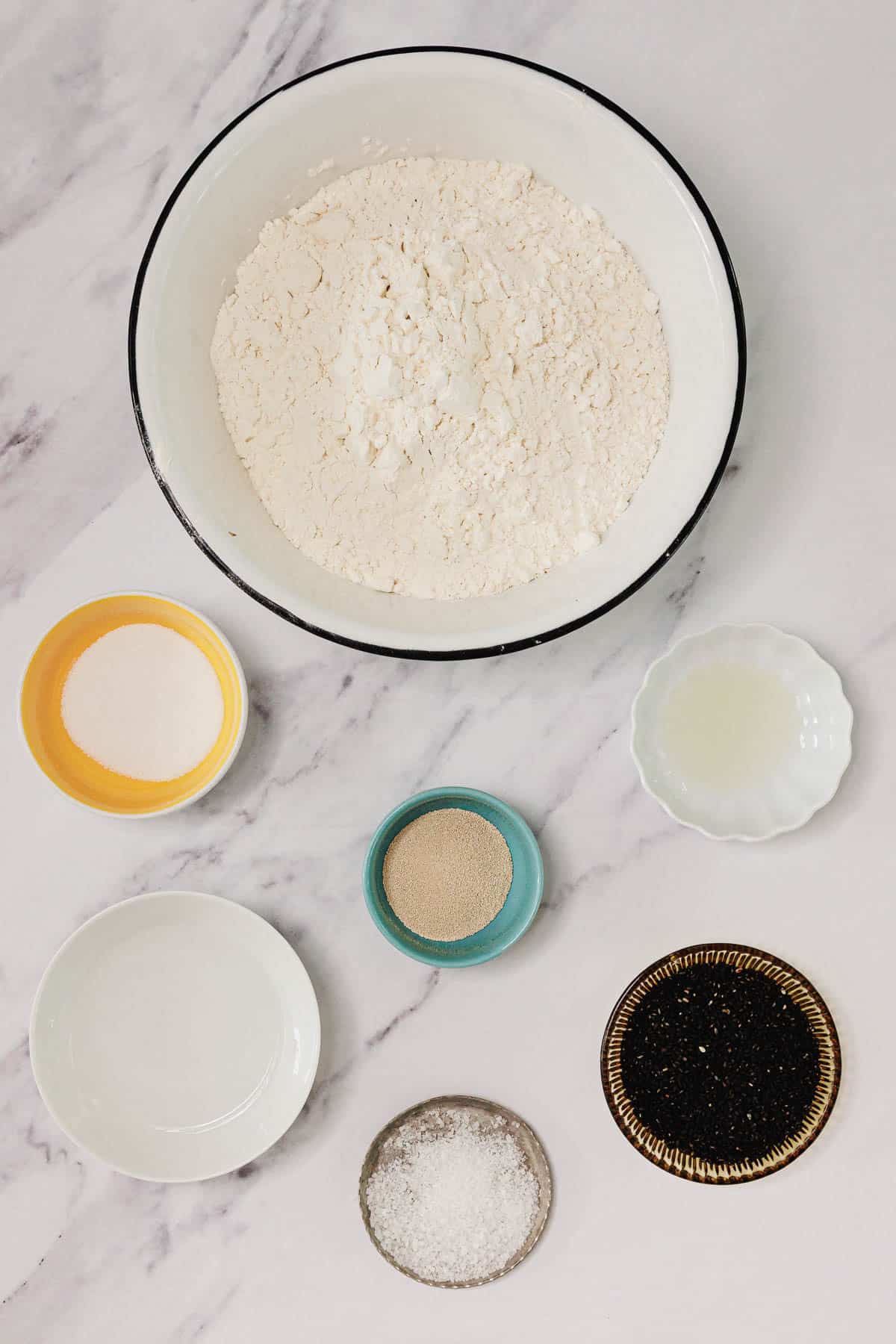
- All-Purpose Flour- It creates a soft yet sturdy crumb, perfect for braiding. I've always used regular flour for this loaf. If you'd like a more rustic texture, bread flour can work too, though the loaf will be slightly chewier.
- Active Dry Yeast - The heartbeat of the bread. Instant yeast can be swapped in, but I still reach for active dry out of habit and memory.
- White and Black Sesame Seeds (or other toppings) - Traditionally, black and white sesame seeds are what my family always sprinkled. At home, I sometimes switch to everything bagel seasoning, or poppy seeds when I want something closer to tradition.
See the recipe card for full list and exact quantities.


How to Make this Easy Eggless Challah Bread Recipe
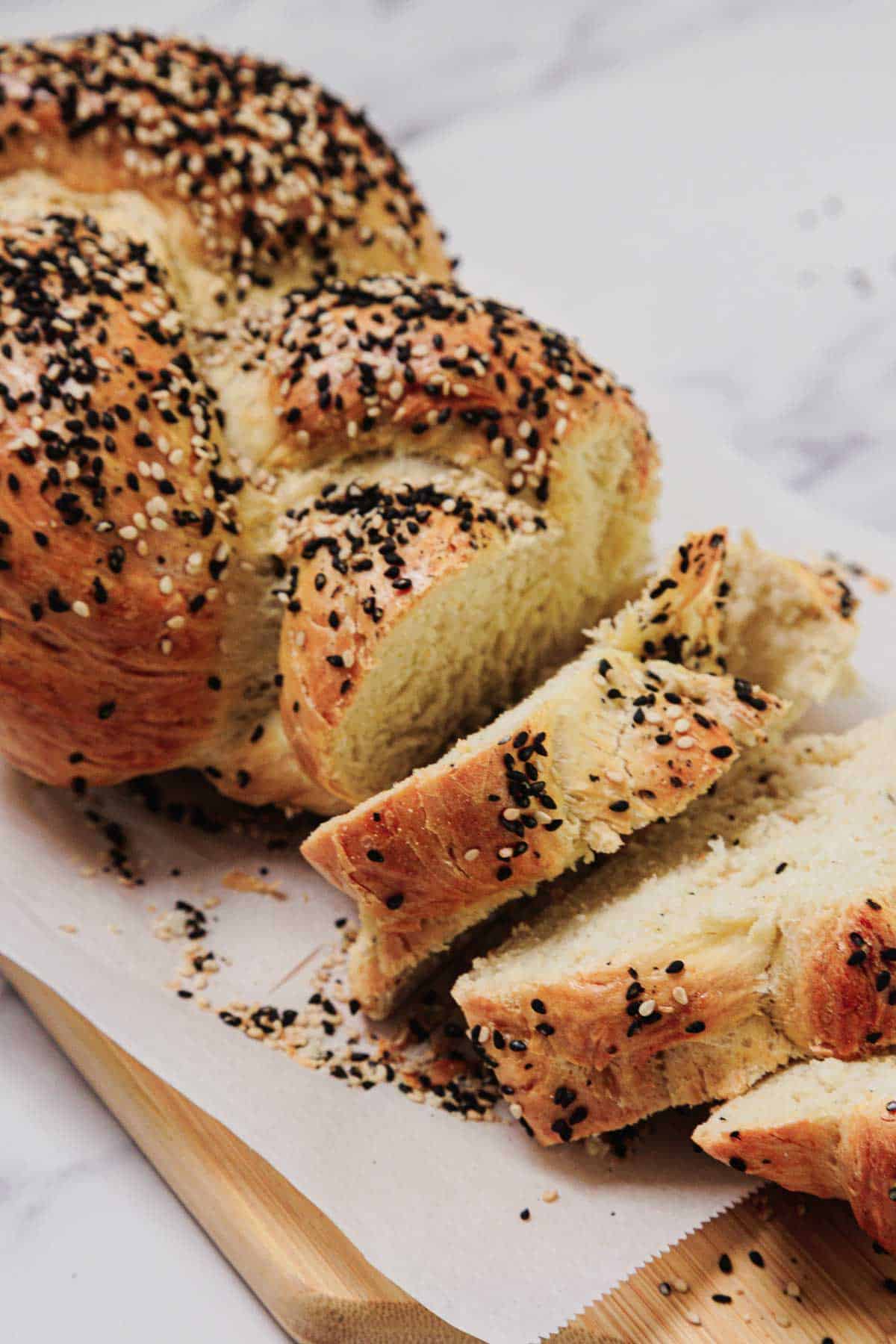
If you're looking for a bread that feels rooted in tradition yet simple enough for a weekday bake, this challah recipe is it. Egg-free and straightforward, it carries all the familiar beauty of braided bread while fitting easily into daily life. Here's how to bring it together:
Mix the Dough
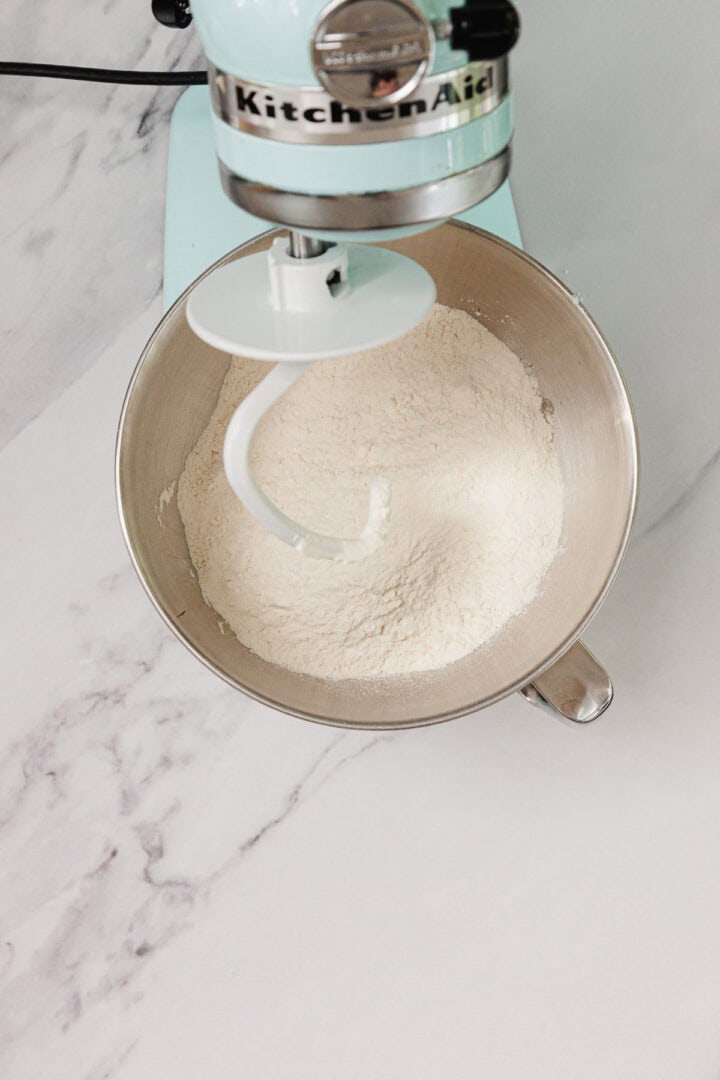
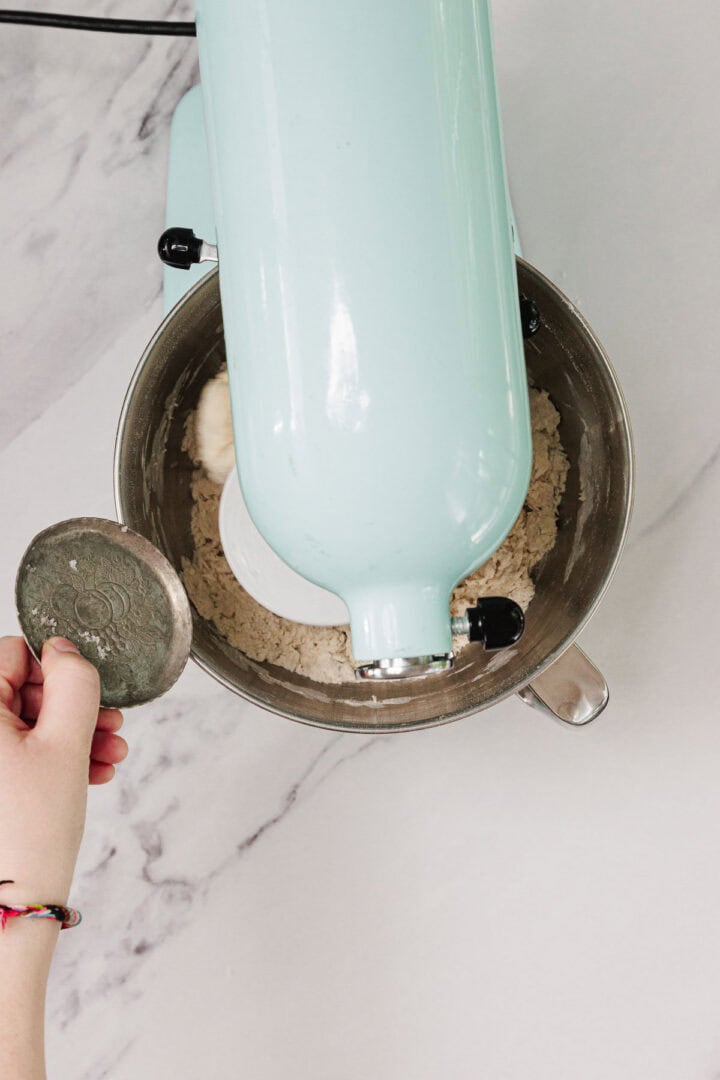
In a large bowl or the bowl of a stand mixer, combine the flour, yeast, sugar, water, and oil. Mix until the ingredients start coming together into a rough dough.
First Knead
Knead the dough on low speed for about five minutes. The texture should begin to smooth out and feel elastic under your hands or the hook of the mixer.
Add the Salt
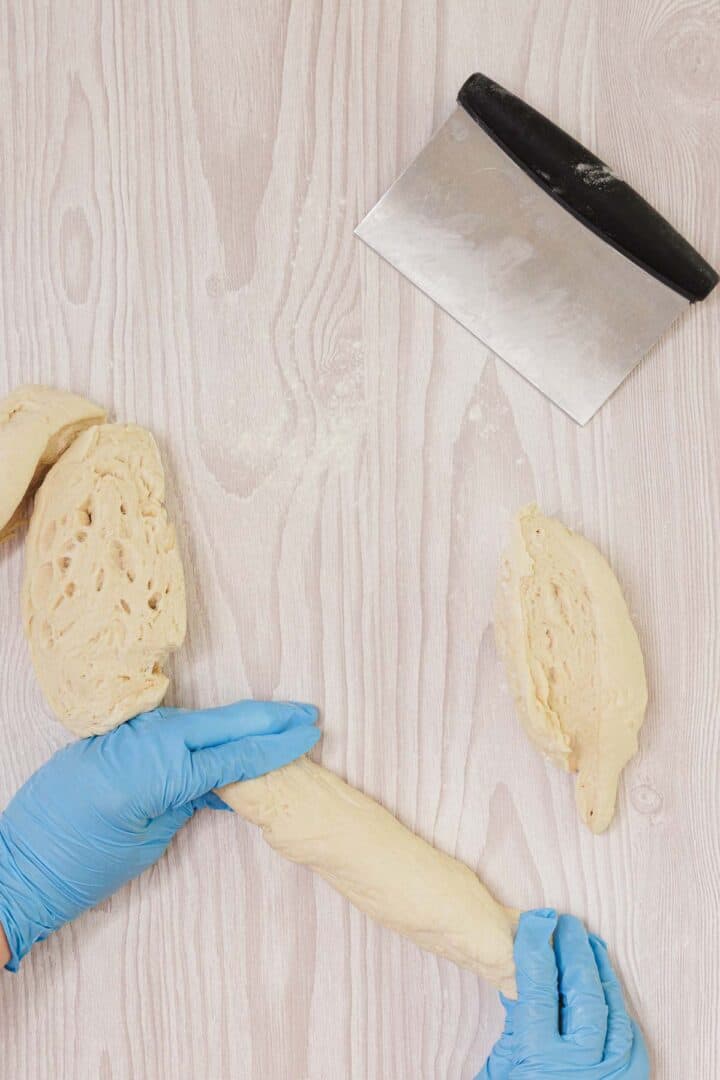
Sprinkle in the salt and continue kneading, this time on high speed, for another five minutes. The dough will become more supple, pulling away from the sides of the bowl.
First Rise
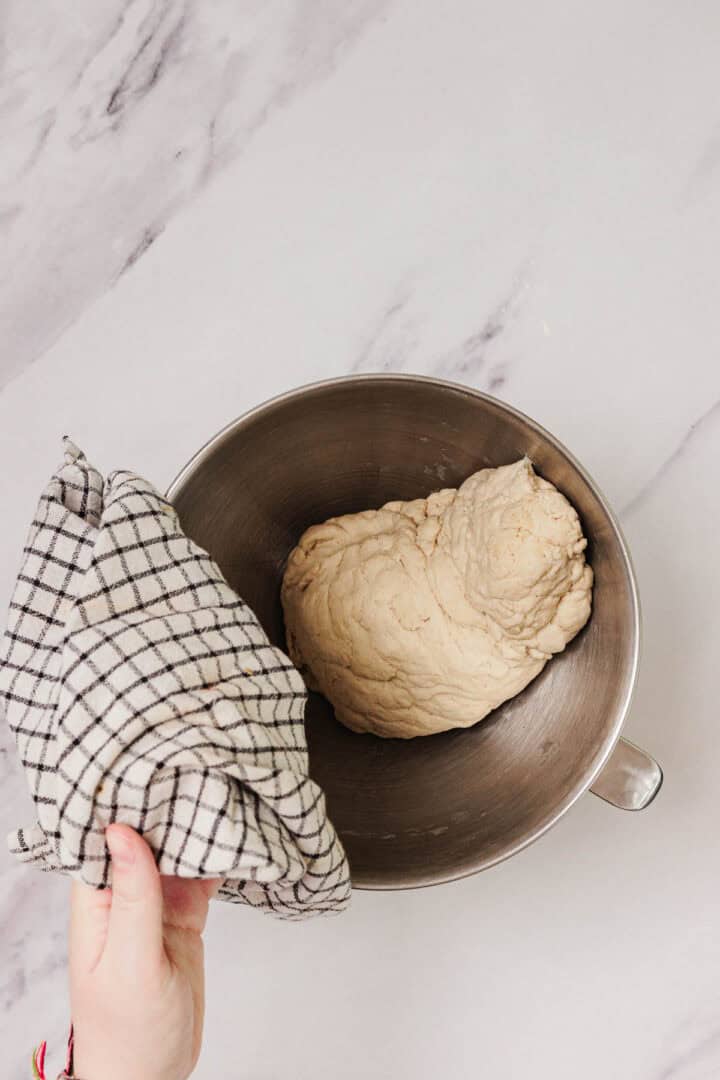
Cover the bowl with a clean towel and set it aside in a warm place. Let the dough rise for about one hour, or until it has doubled in size. This is when the yeast does its quiet work, filling the dough with air.
Shape and Braid
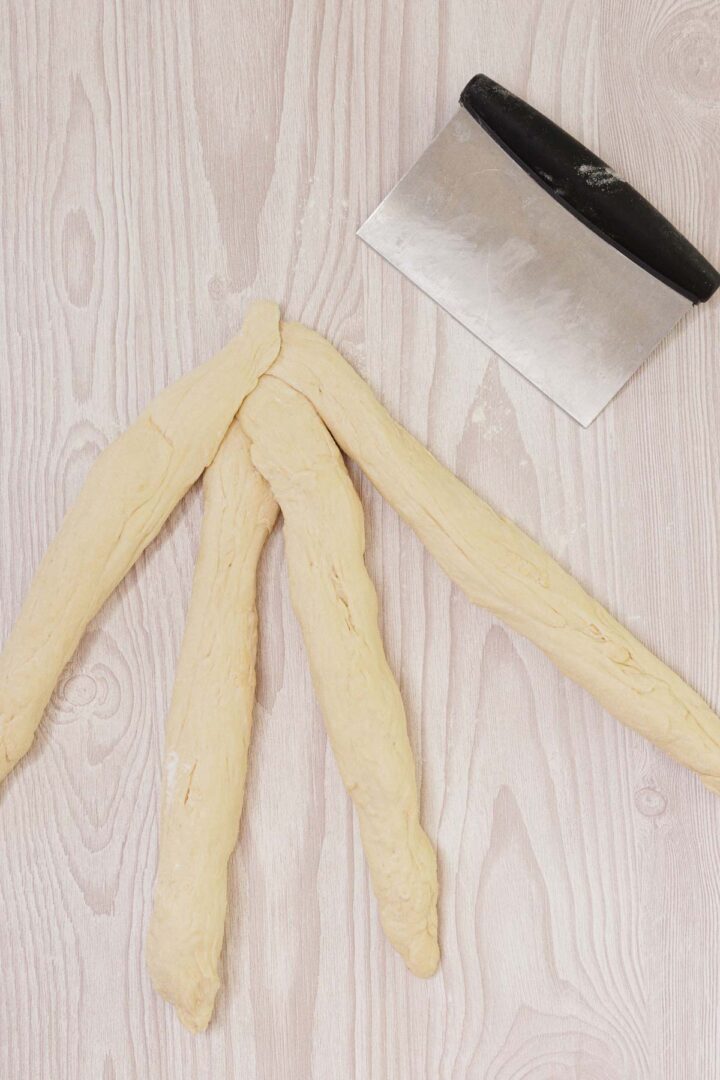
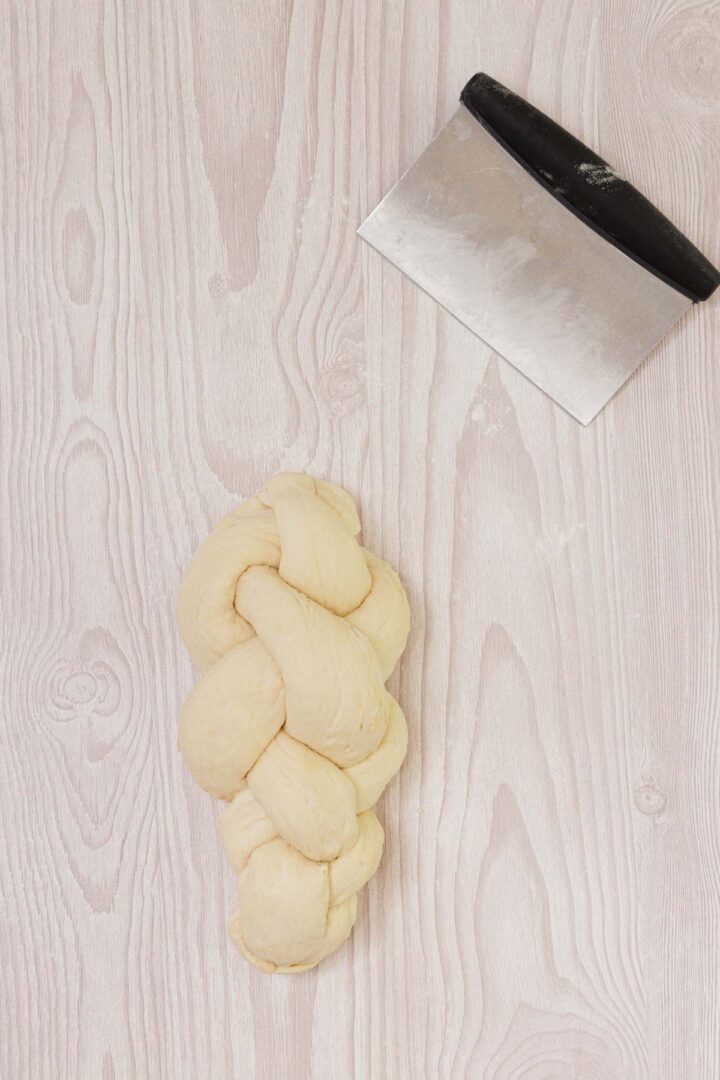
Turn the dough out onto a lightly floured surface. Divide it into equal portions, roll each into long strands, and braid them together. Whether you choose a simple three-strand braid or a more intricate pattern, the process is rhythmic and grounding.
Second Rise
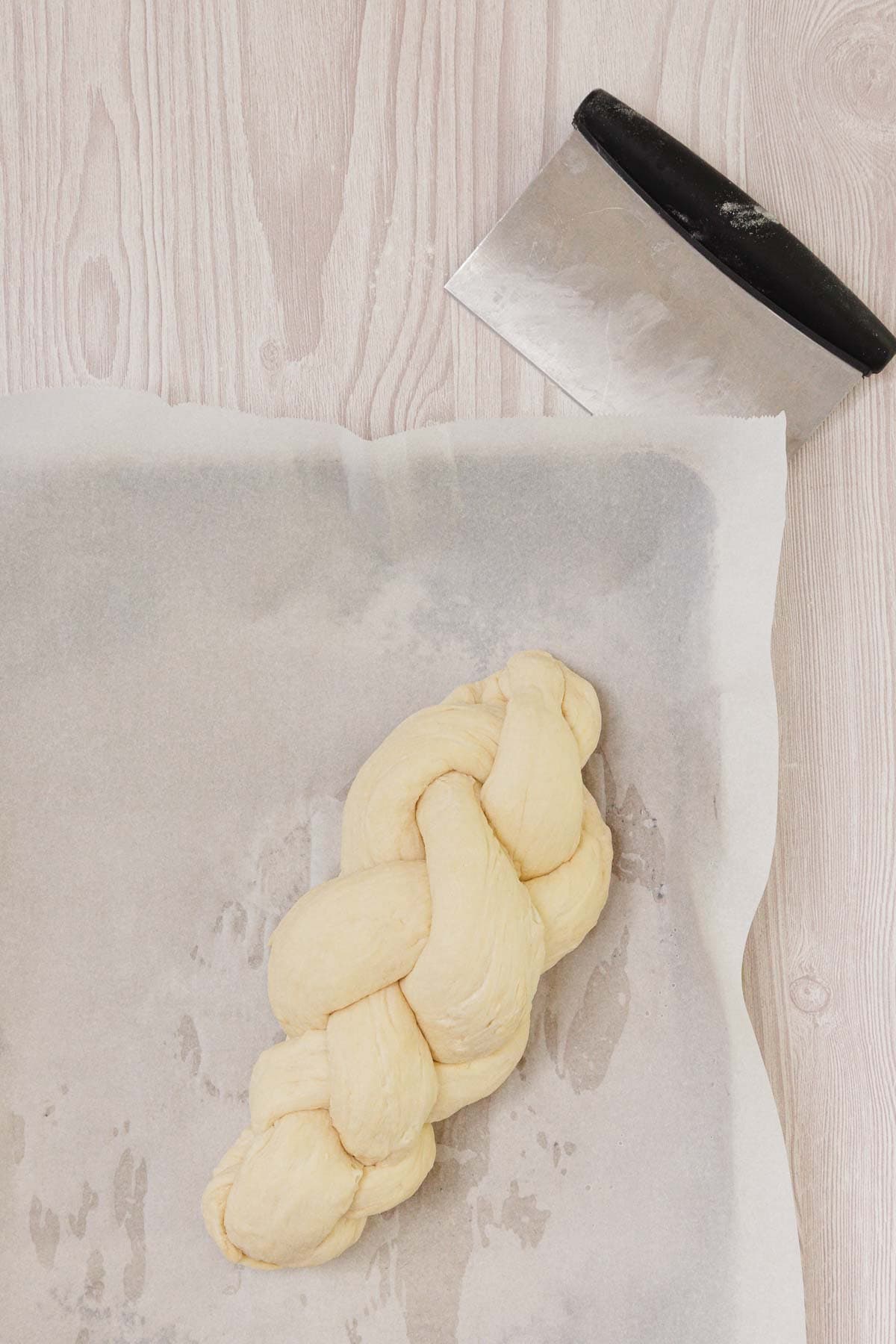
Transfer the braided loaf to a parchment-lined baking sheet. Cover once again and let it rise for another 30 minutes. The loaf will puff slightly, holding its shape but becoming lighter to the touch.
Prepare the Oven
Preheat your oven to 400°F while the dough completes its second rise.
Glaze and Top
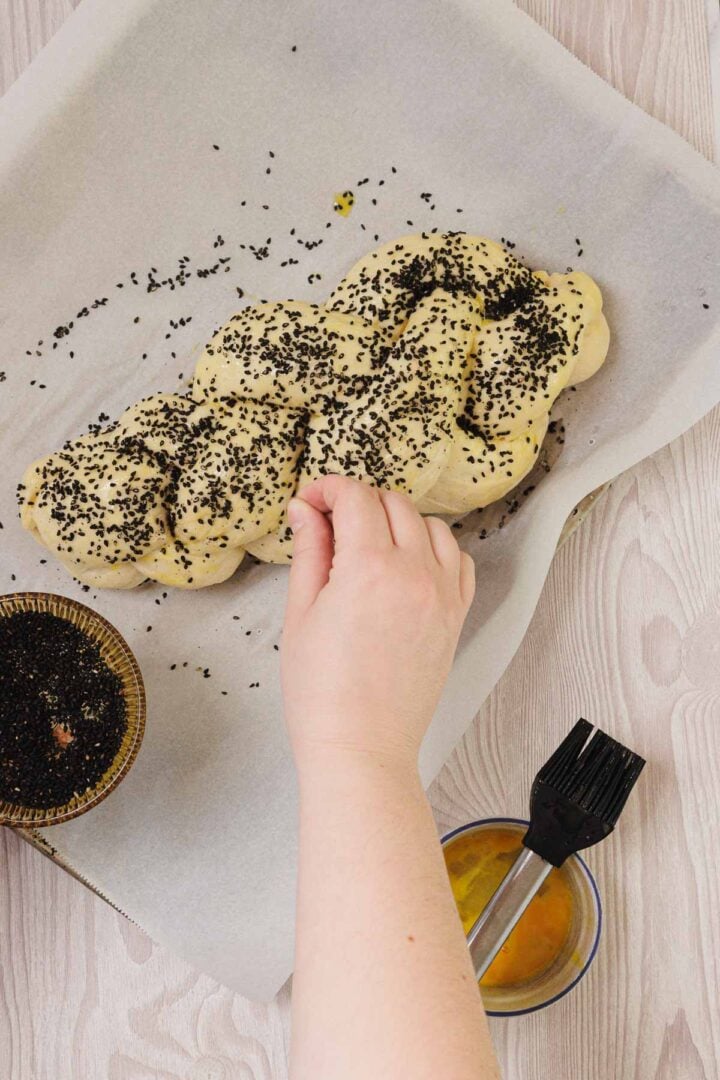
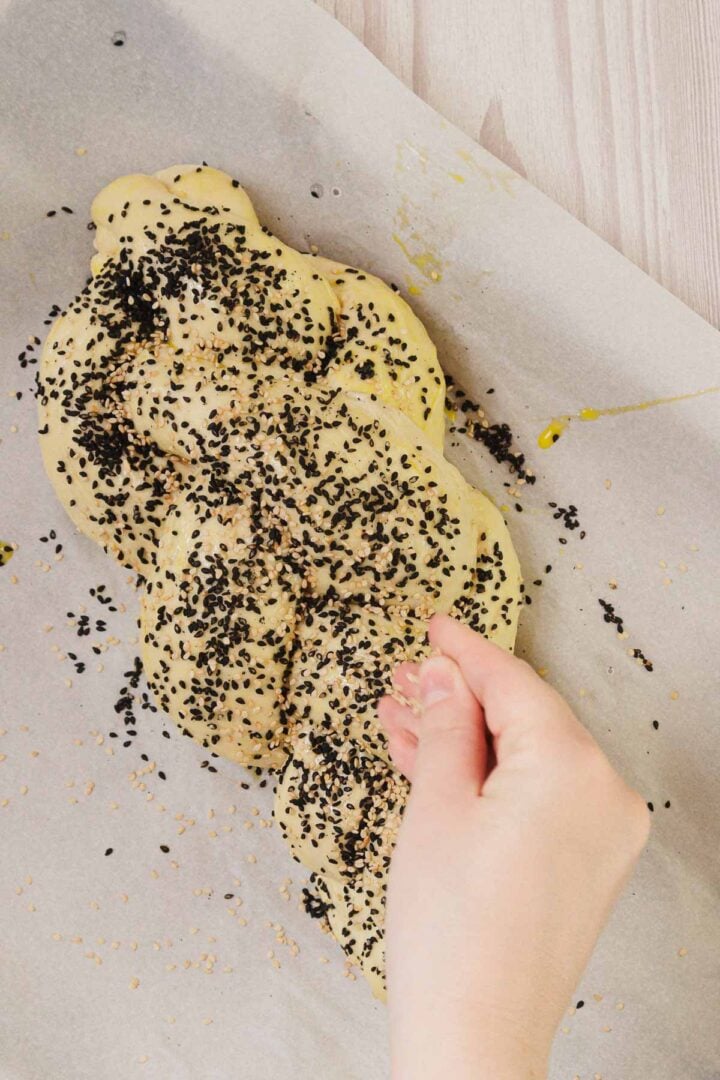
Brush the surface of the challah with the beaten egg wash, if you're going the egg-free route, you can use melted non dairy butter. Sprinkle sesame seeds, everything seasoning, or your topping of choice over the glossy surface.
Bake
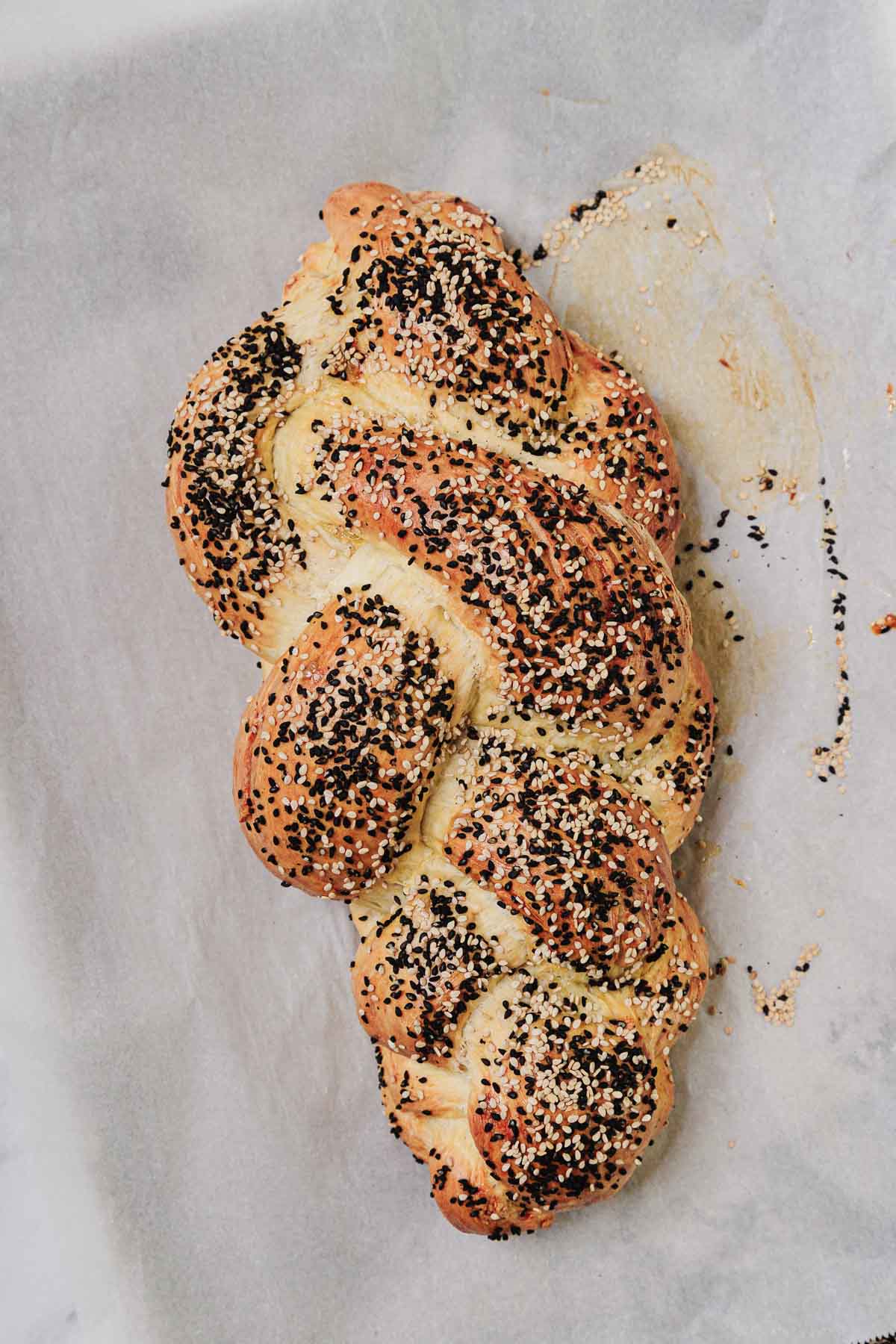
Slide the tray into the oven and bake for 15 to 20 minutes, until the loaf is golden all over and sounds hollow when tapped on the bottom. Remove and let cool on a rack before slicing.
Storage

After the challah cools completely, wrap it in a clean kitchen towel and place it in a sealed bag or container. It will keep fresh at room temperature for about three days. For longer storage, freeze the loaf whole or in slices, wrapped tightly in plastic and foil, for up to a month. To serve, reheat in the oven until soft and fragrant again.
I usually avoid refrigerating challah since it tends to dry out more quickly, but if I know we'll be making French toast or bread pudding the next day, I'll keep it chilled so it's ready to transform into something new.
Top Tips
Rest Before Slicing- let the challah cool for at least 15 minutes before cutting. If you slice too soon, the crumb compresses. I learned this the hard way when I couldn't wait and ended up with a dense center.
Toppings Change the Mood- sesame feels traditional, but everything seasoning makes it playful. Switching toppings has become a way to mark different occasions in our home.
Recipe
Tried and loved this recipe? Please leave a 5-star review below! Your reviews mean a lot to me, so if you've got any questions, please let me know in a comment.
Easy Challah (No Eggs!)
Equipment
- Kitchen towels
Ingredients
- 4 cups all-purpose flour 1 lb 2 oz
- 1 tablespoon active dry yeast
- 2 ½ tbsps sugar
- 1 ¼ cups cold water
- ¾ teaspoon oil
- ½ tablespoon About salt
For topping
- ½ egg beaten, optional
- White sesame seeds OR everything bagel seasoning, or poppy seeds
- Black sesame seeds
Instructions
- In a large bowl or stand mixer, combine flour, yeast, sugar, water, and oil. Mix until a shaggy dough forms.
- Knead on low speed for 5 minutes. The dough will start to smooth out and pull together.
- Sprinkle in the salt. Increase to high speed and knead 5 minutes more, until the dough is elastic and slightly tacky.
- Cover the bowl and set aside for 1 hour, until the dough has visibly puffed and feels airy to the touch.
- Turn the dough onto a lightly floured surface. Divide into equal strands, roll into ropes, and braid. Transfer to a parchment‑lined baking sheet.
- Cover and let the braided loaf rise for 30 minutes. It should look lighter and a bit fuller.
- Preheat the oven to 400°F. Brush the loaf with the beaten egg and sprinkle with your chosen topping.
- Bake 15-20 minutes, until the challah is golden and sounds hollow when tapped on the bottom. Cool on a rack before slicing.