
Homemade Fire Cider blends ginger, turmeric, horseradish, and citrus into a winter elixir that keeps those sniffles at bay.
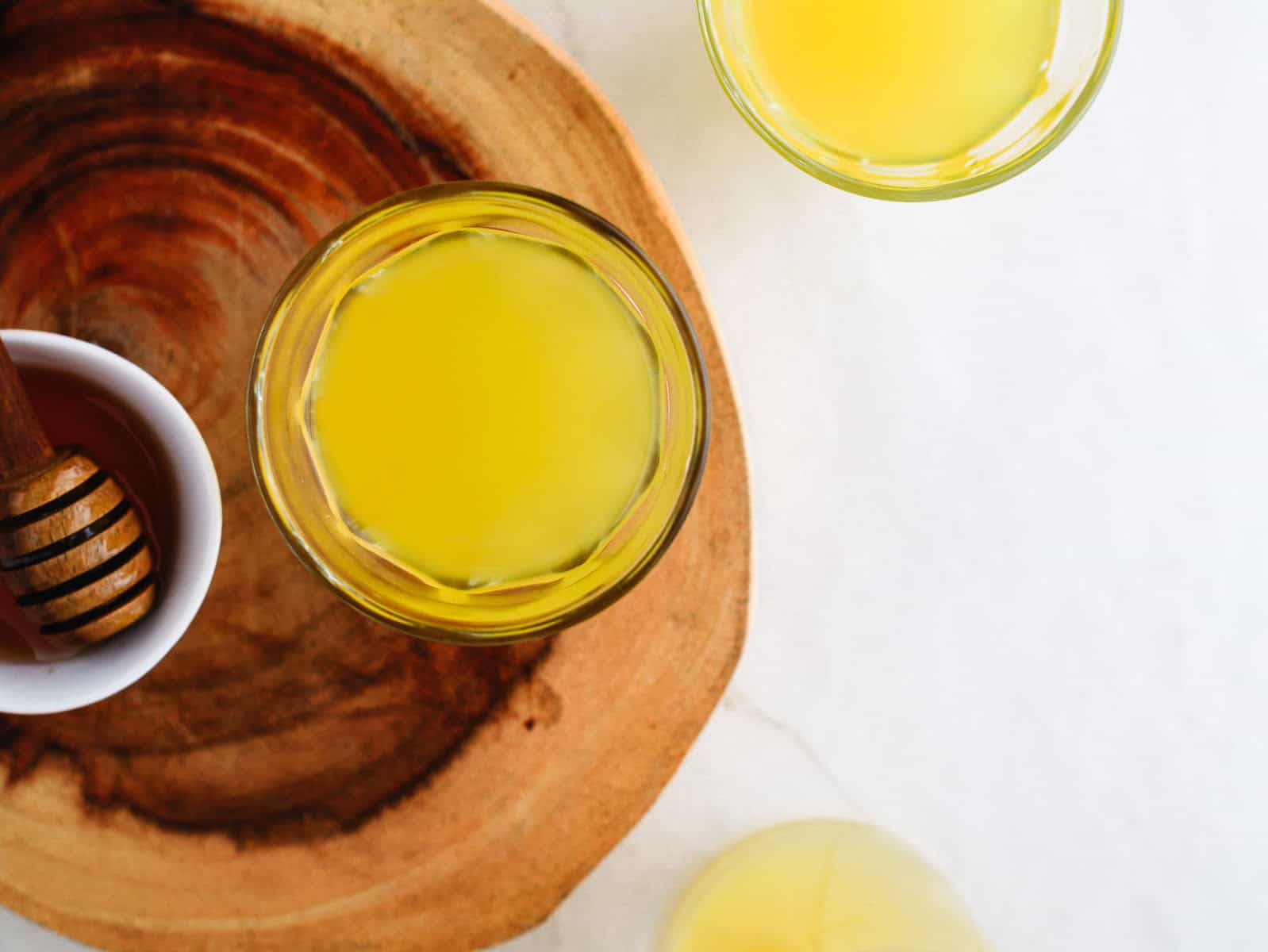
There's a particular kind of morning carrying the scent of early frost mingled with last traces of summer's heat. I remember one such morning in Winnipeg, wandering through a tiny farmer's market tucked between brick buildings with the cold pressing against my cheeks.
At that time I was deep into pickling, preserving, and brewing kombucha at the time. A hobby that felt like an extension of my curiosity and a search for little pockets of magic in ordinary days. My hands were sticky from jars of cucumbers and beets, and the world smelled of damp tea leaves.
I was at a small, local farmers' market and I stumbled upon a table covered with jars of light amber liquid, crowned with slices of citrus and roots poking through like little flags. Someone offered a spoonful, a sharp, almost startling bite that went straight to the chest and lifted the spirits in a way I hadn't expected. Someone called it fire cider.
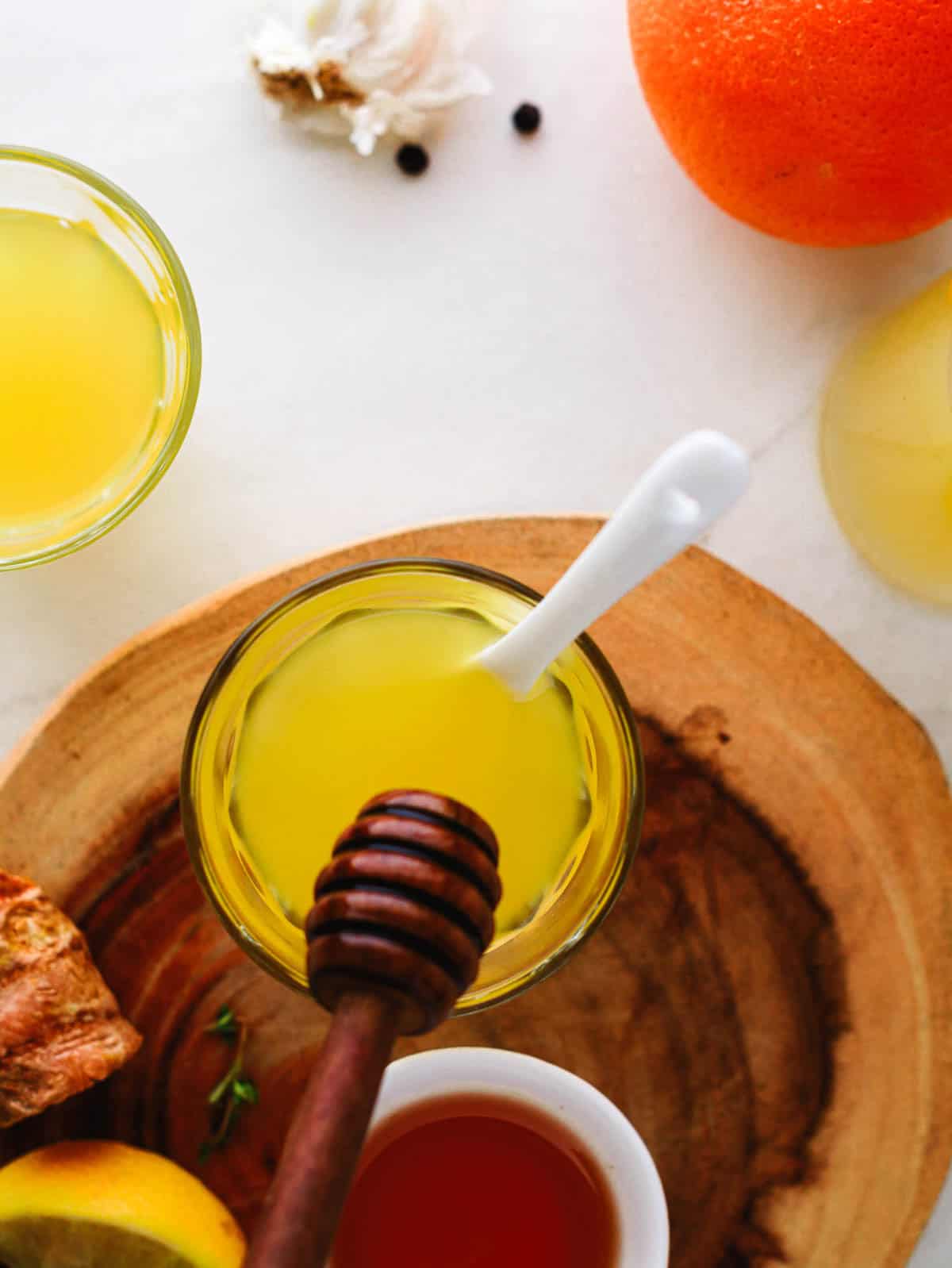
The first sip was shocking, the second intoxicating. It was a drink that felt alive. In that moment, I thought that it could be more than a drink. It can be a shield for winter, a promise to keep one upright through sneezes and sniffles, a little vial of persistence in the face of frost.
Years later, every time I felt that chill wind, I pull out the ingredients and begin the ritual in my own kitchen. The windows are often fogged with the warmth inside while the air outside hints at winter. I shake the jar gently, whispering to it almost, promising it a cool, dark place for the next four weeks.
The Secret for Cold and Flu Season
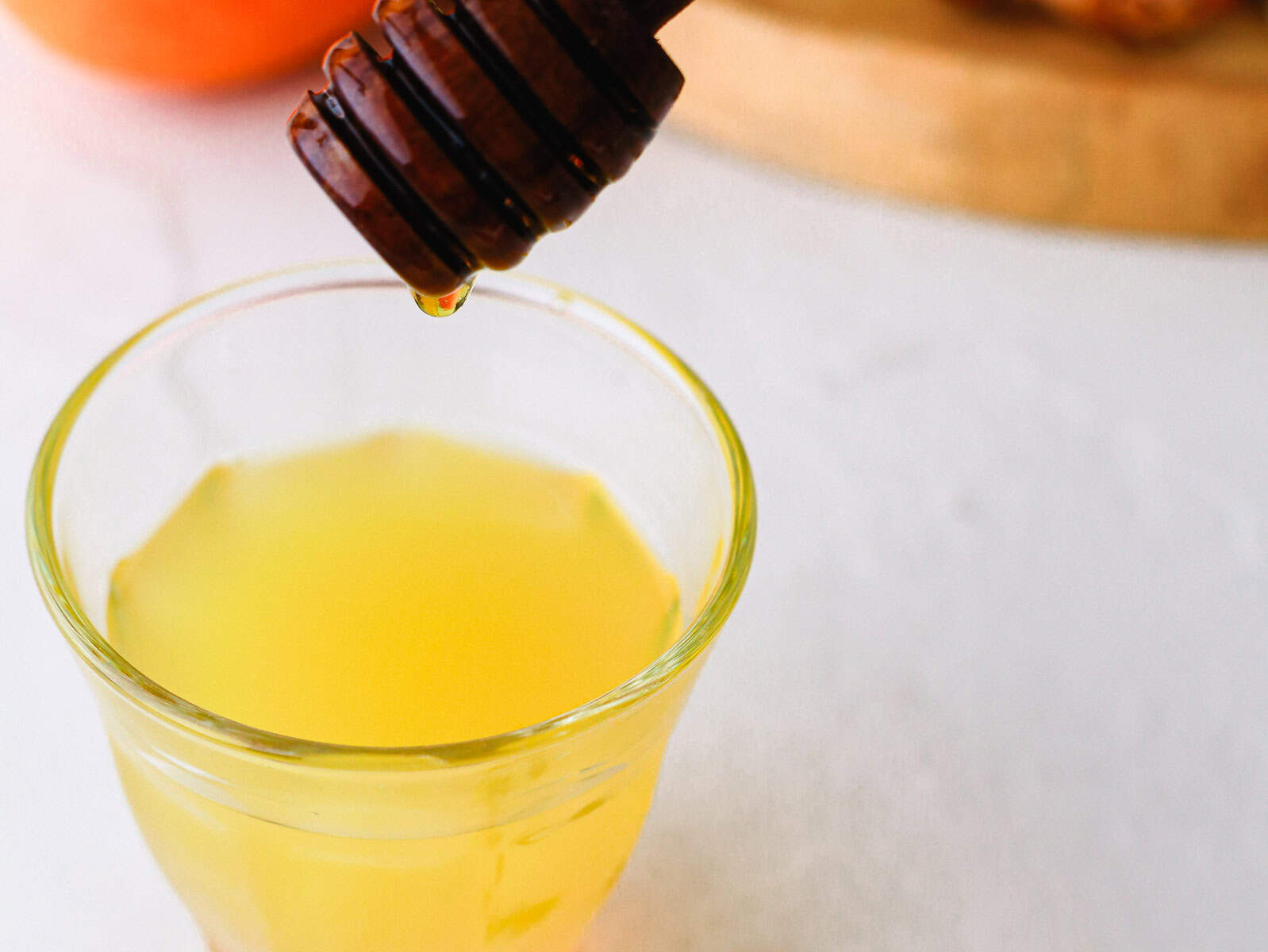
By November, the jar is ready. I strain the liquid into a clean glass container, stir in raw honey, and it gleams like autumn sunlight. I take my first spoonful quietly, in a moment I've carved out for myself while Leo and Lin are at the counter with toast and my husband stirring his cocoa.
The drink itself wakes the senses and is antiinflammatory. It's sharp, bright, and warming in a way that feels like sunlight through a frosty window. Ginger and horseradish carry a bold, immediate heat, turmeric lends an earthy glow, and citrus cuts through with a sharp, uplifting brightness.
Each sip feels purposeful, like a small defense against cold mornings, sniffles, and fatigue, much like the lemon ginger shots I rely on through the winter to keep me healthy when the chill lingers.
I've seen it keep me steady through late nights and the busy swirl of life with the kids underfoot. My family rarely reaches for it, preferring cocoa or tea, but I drink mine slowly, a quiet charm tucked into the rhythm of our mornings, a little jar of magic that belongs only to me.
Making fire cider is simple, but the process itself feels like a meditation. Slicing the roots thin so their flavors seep fully into the vinegar, chopping garlic and onions, and layering herbs and spices, it's all part of how the final elixir develops its depth. I shake the jar daily, watching the colors deepen, smelling the tang of citrus and the sharp warmth rising from the roots.
These techniques I learned from making my passionfruit kombucha and a delicious blackberry tea, it taught me how flavors meld over time, how acids coax out the essence of each ingredient, and how patience turns raw elements into a liquid that is more than the sum of its parts. Each taste carries that slow transformation, the quiet power of winter-proofing captured in a tiny jar.
Ingredients
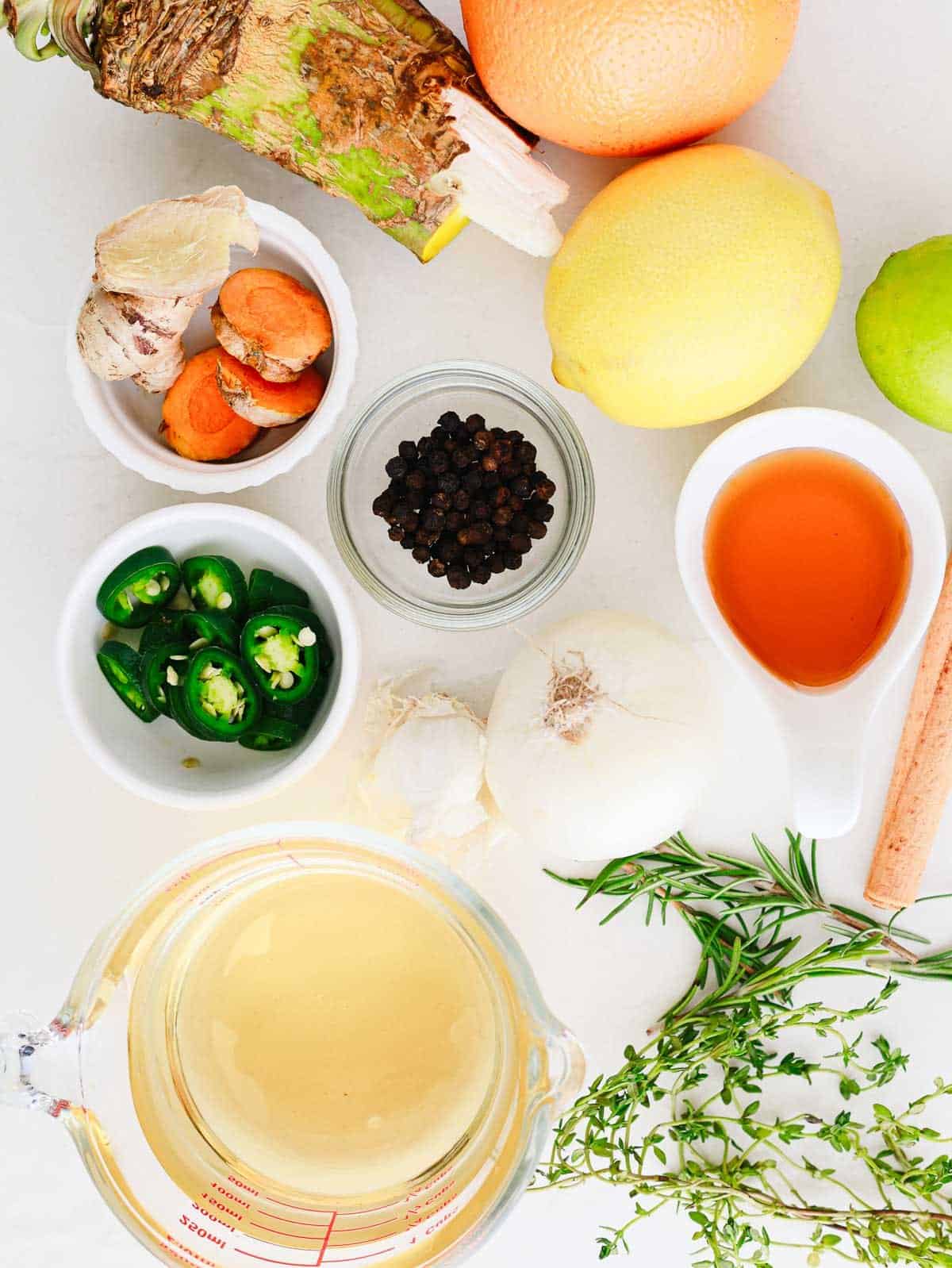
- Horseradish - I always grate fresh horseradish for the sharp, biting warmth it brings. It's what gives the drink its punch, the kind that wakes you on a sleepy morning. If fresh isn't available, prepared horseradish in a jar works, but it will be milder.
- Turmeric Root - Turmeric adds color and subtle earthiness, like sunlight in a jar. I slice it thin to let the vinegar extract its golden hue. I've tried powdered turmeric, but the fresh root gives that living brightness the jar needs.
- Lemon, Orange, Lime - Citrus is the best for a cold-season jar. I quarter them, peel and all, so the oils mingle with vinegar, lifting the intensity of the roots. Any substitution is personal preference but lemon is non-negotiable for its clear, sharp note.
- Jalapeños - A touch of heat that balances the aromatics. I slice one or two depending on the mood I want in the jar. A mild green chile works if you prefer less intensity, but I enjoy that subtle fire.
- Raw Honey - Added after straining, honey softens and balances the bite. I use local raw honey where flavors are strong and distinct. Any mild raw honey works, but processed honey dulls the brightness.
See the recipe card for full list and exact quantities.
How to Make Fire Cider
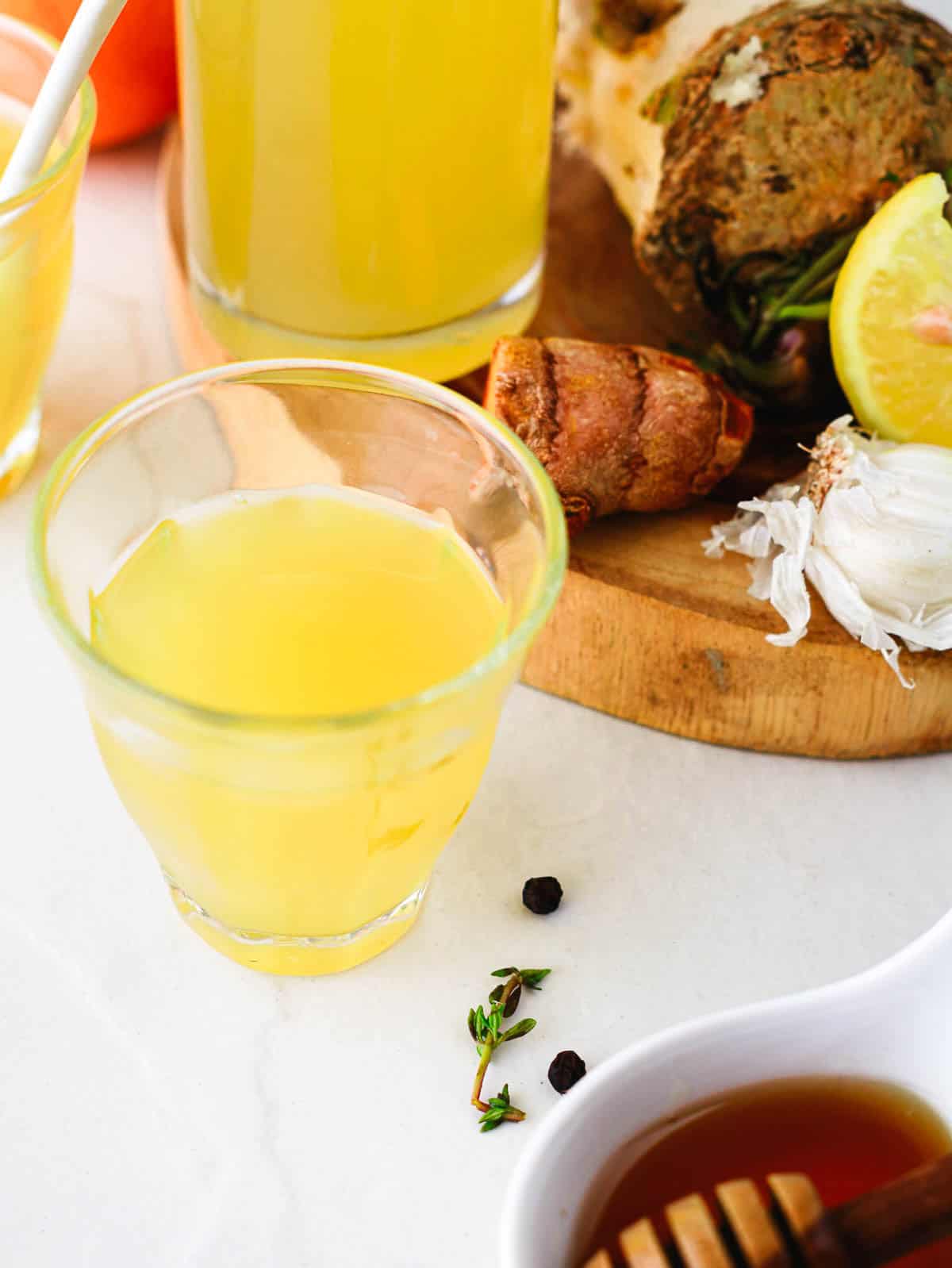
When I make fire cider, it feels like gathering pieces of anti-flu shots into a jar. The process is simple but deliberate, a quiet ritual that fills the kitchen with sharp, bright aromas while the season slowly shifts outside. Here's how to make this recipe:
Prepare the Citrus
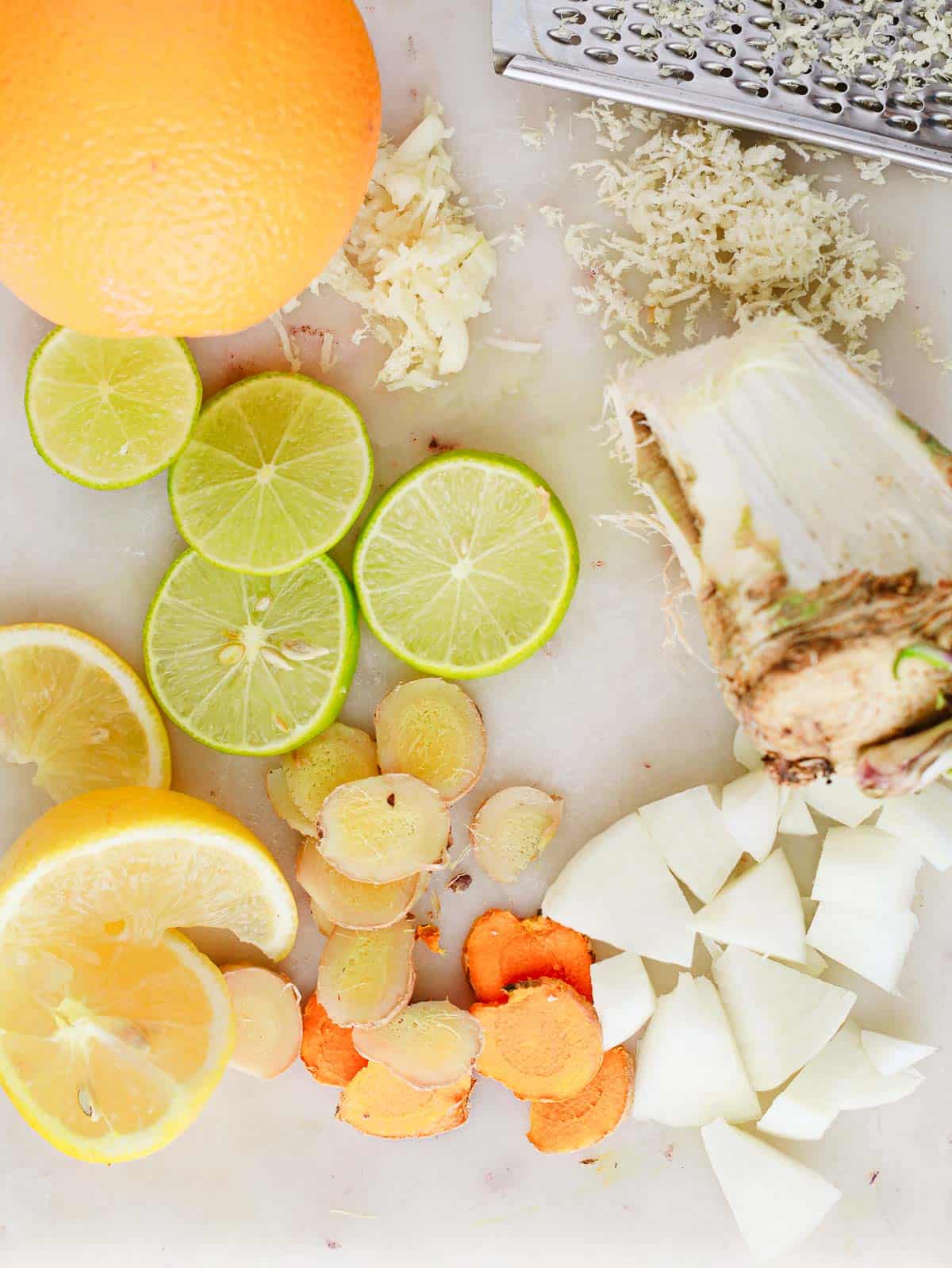
Slice the orange and lemon into quarters, leaving the peel on so their oils mingle with the vinegar and brighten the cider with a lively note. Then slice the jalapeños, lime, ginger root, and turmeric root into thin slices, chop the onions and garlic, and grate or mince the horseradish.
Layer in the Jar
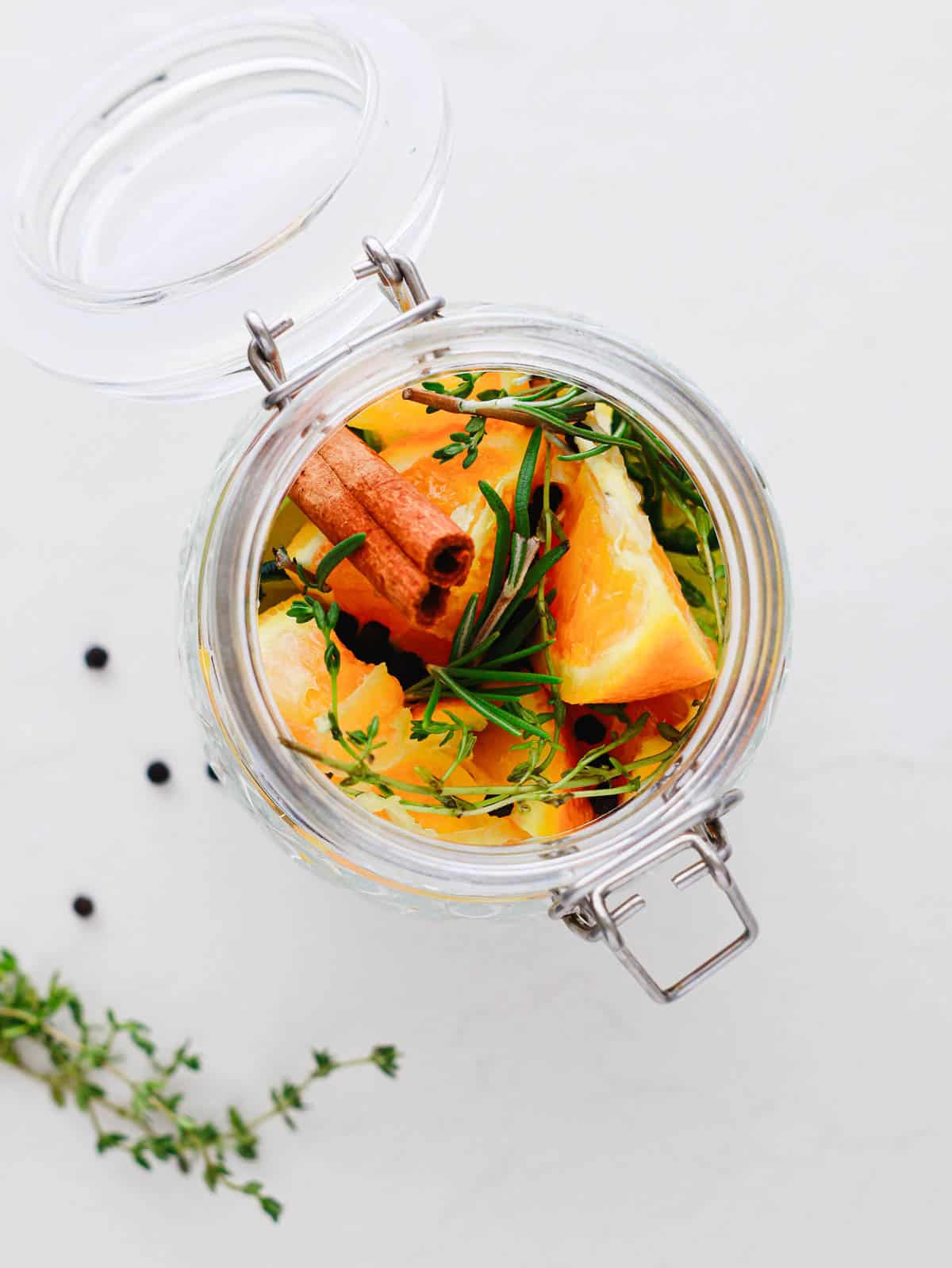
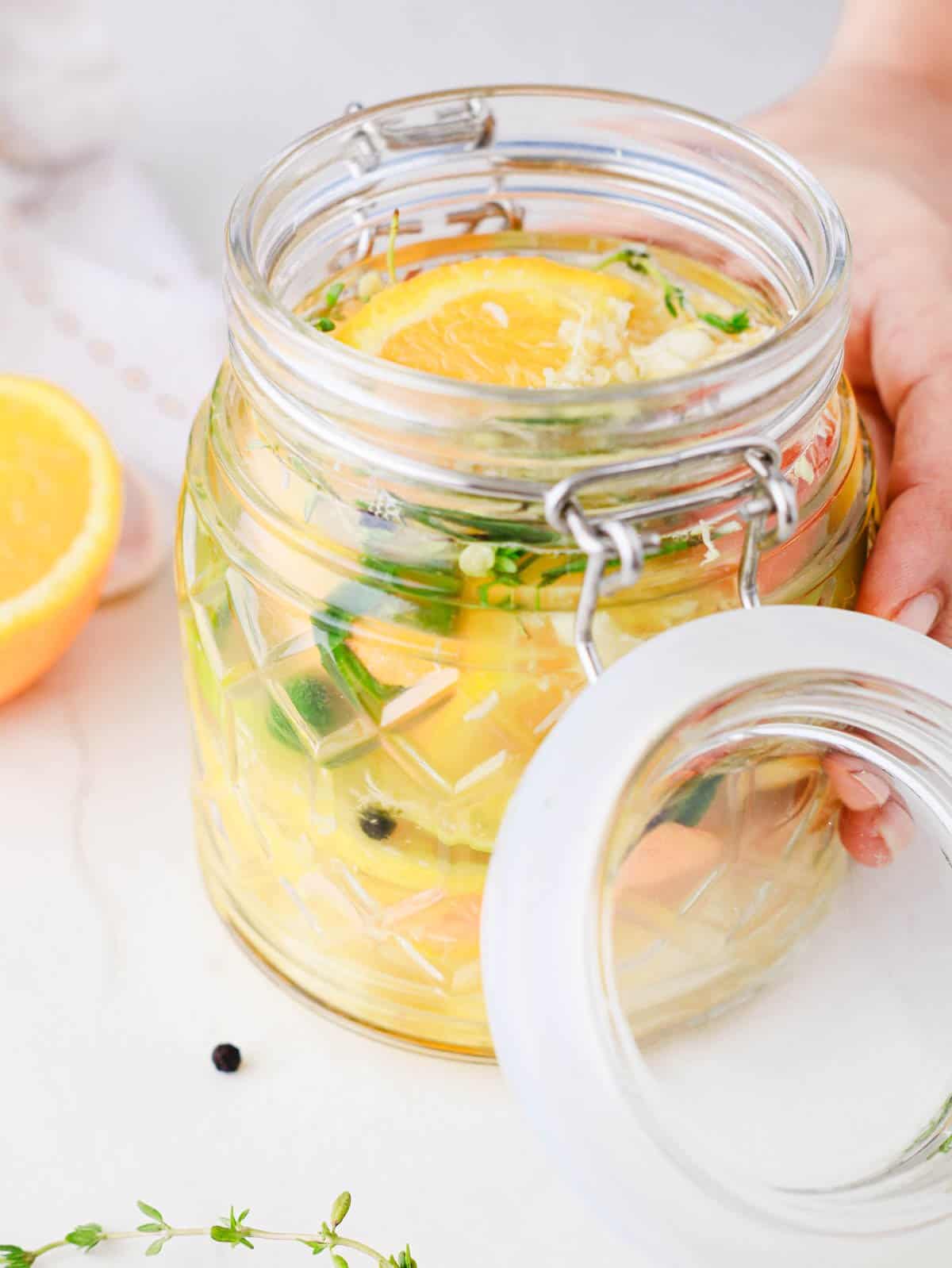
Place all the prepared roots, citrus, and aromatics into a clean, sterilized quart-sized glass jar. Arrange them evenly so every sip later will carry a bit of each ingredient.
Add Herbs and Spices
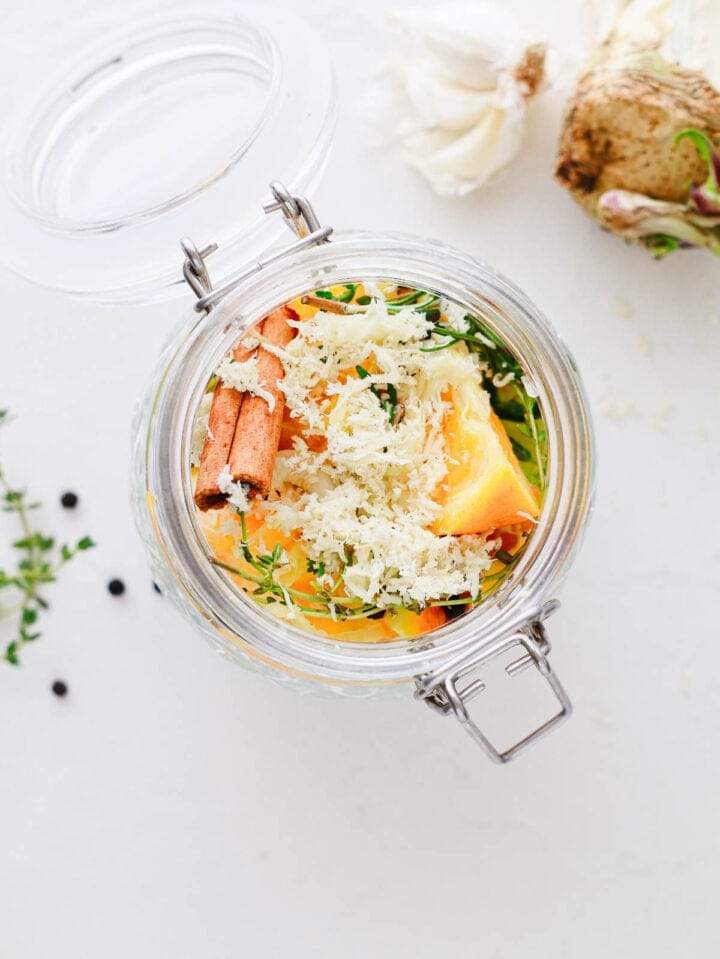
Nestle in the cinnamon sticks, peppercorns, rosemary, and thyme. Pour raw apple cider vinegar over the top until everything is submerged. I like the liquid to completely cover the ingredients so the flavors can mingle and develop fully.
Steep and Shake
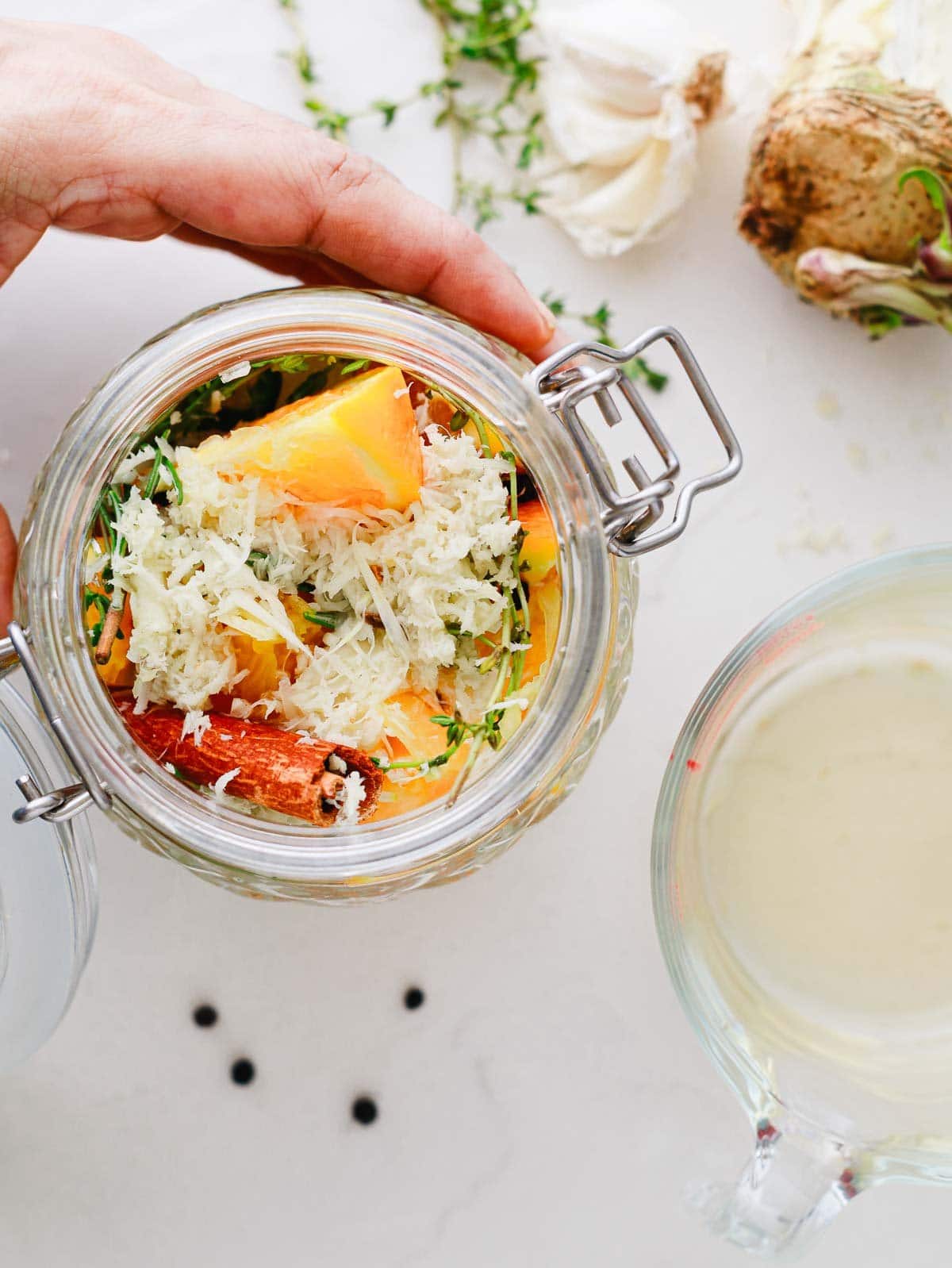
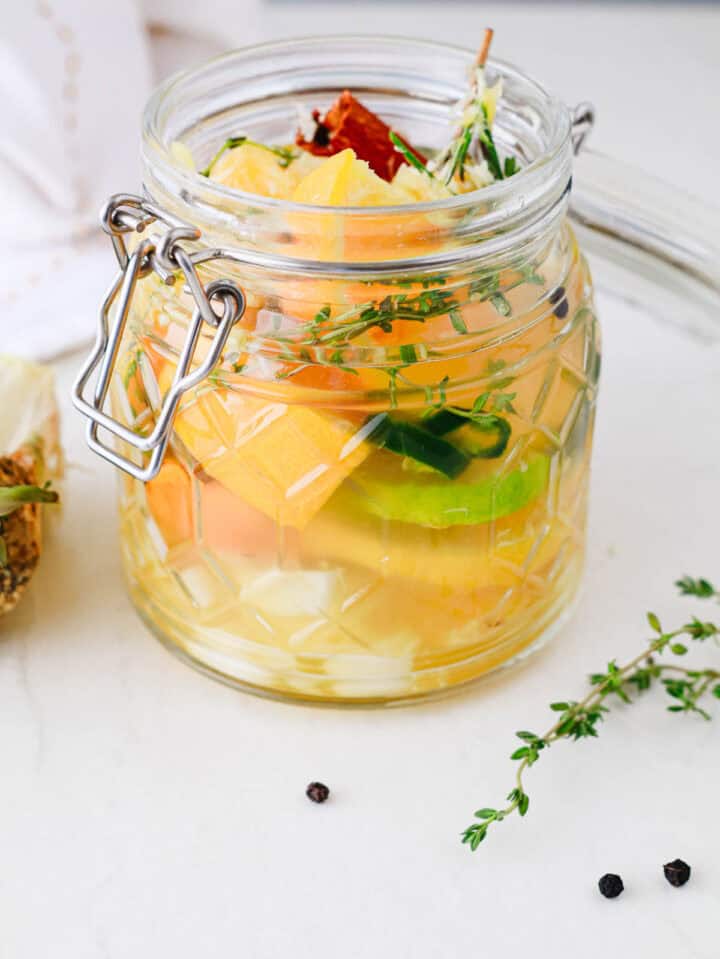
Seal the jar loosely and place it in a cool, dark place at room temperature for four weeks. Every day, I give the jar a gentle shake to move the ingredients around, releasing their aroma into the vinegar. Over time, the liquid turns a deep amber, rich with the essence of the roots, herbs, and citrus.
Strain and Sweeten
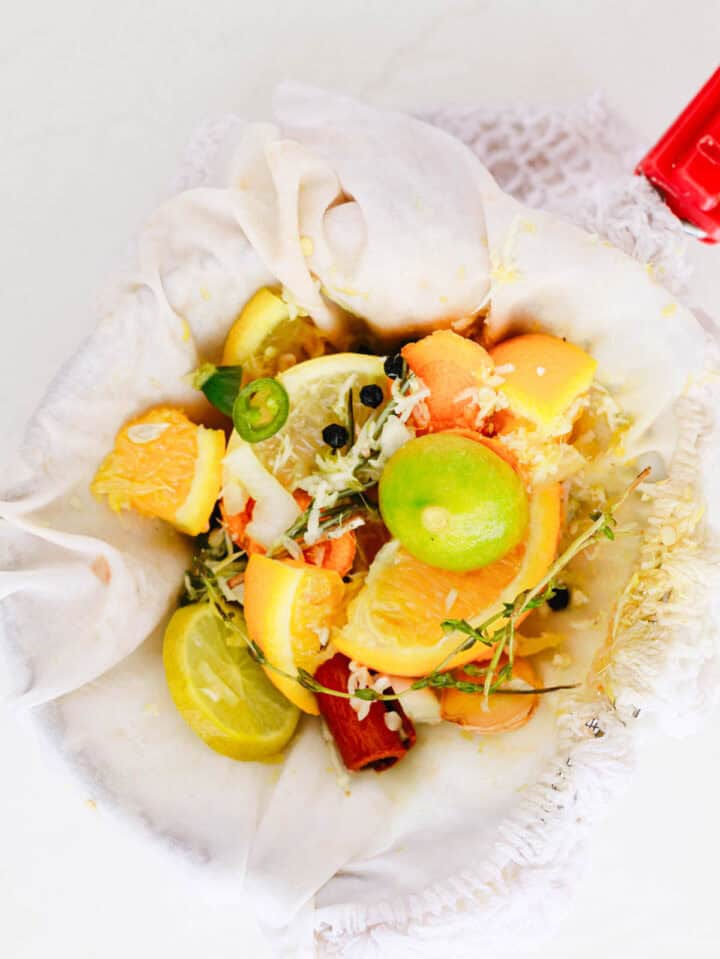
After four weeks, strain the liquid into another clean jar. Stir in raw honey until fully dissolved. The honey softens the edges of the cider, balancing the heat and sharpness without dulling its intensity.
Store and Use
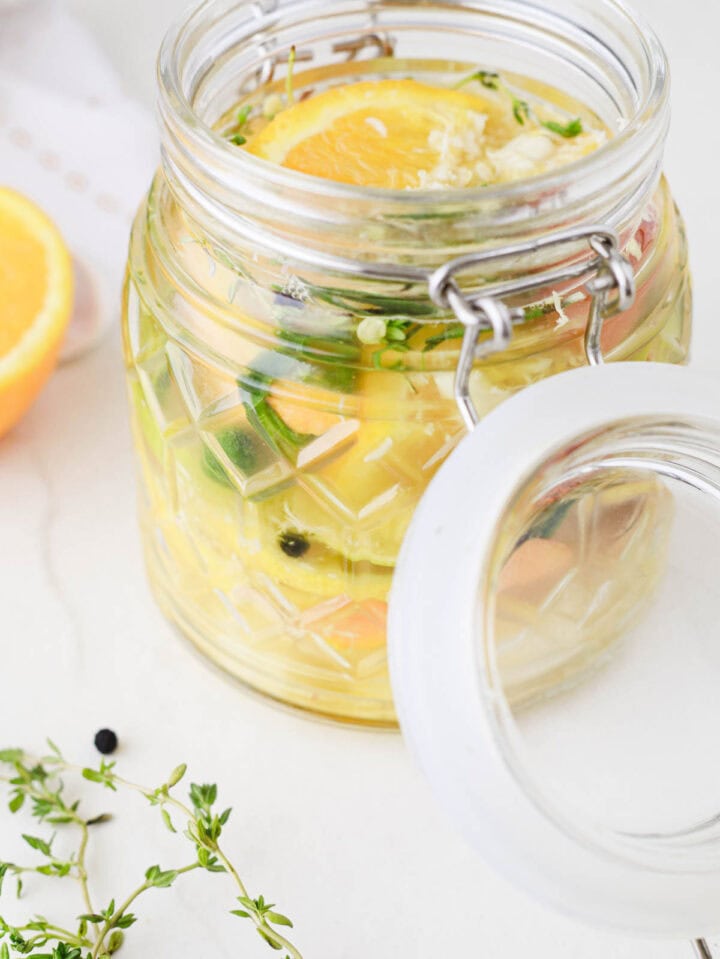
Store your Fire Cider in the refrigerator for up to six months. Shake gently before each use. I sip mine in the morning, a little armor against the cold.
Storage
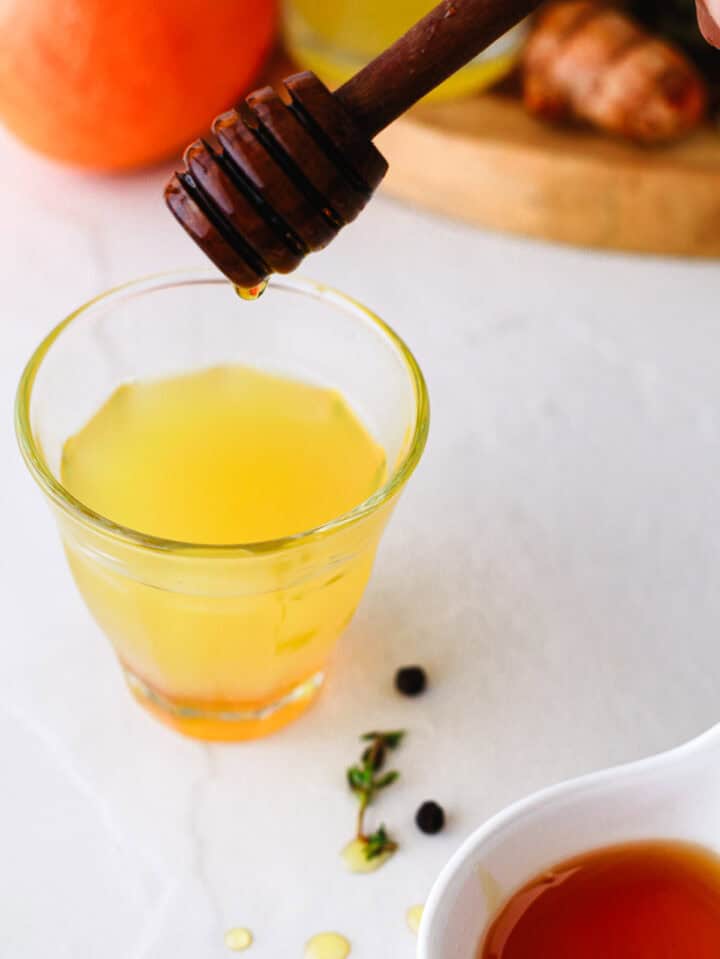
Once your fire cider is strained and sweetened with honey, it becomes a quiet companion for the season. I keep mine in a clean glass jar in the refrigerator, tucked on a shelf. It will stay at its best for up to six months, each day deepening in flavor as the roots and herbs continue to mingle.
If you're making multiple jars, I like to line them up on a shelf, shaking each one gently before use. The movement wakes up the flavors, and over time the aroma will become more pronounced when you open the lid (the liquid may darken slightly).
Top Tips
Slice Thin, Steep Strong - I've found that slicing the ginger, turmeric, and jalapeños thinly makes a huge difference. The flavors seep evenly into the vinegar, giving each sip a balanced warmth. Thick chunks can leave the cider uneven, with bursts of heat that sneak up unexpectedly.
Shake Daily - give your jar a gentle shake every day while it's steeping. I do this while making morning tea, letting the roots swirl and wake up in the vinegar. It keeps the flavors lively and helps all the ingredients mingle, giving the final cider a richer, more integrated taste.
Honey Last - always add raw honey after straining. I learned this the first time I tried mixing it in too early, the fermentation can dull its brightness. Stirring it in at the end preserves its gentle sweetness and smooth texture.
Recipe
Tried and loved this recipe? Please leave a 5-star review below! Your reviews mean a lot to me, so if you've got any questions, please let me know in a comment.
Fire Cider
Equipment
- glass jar
- Funnel optional
Ingredients
- 3 oz. horseradish
- 3 oz ginger root
- 1 oz turmeric root
- 1 head of garlic
- 1 small onion
- 1 lemon
- 1 orange
- 1 lime
- 1-2 jalapeños
- 2 sprigs Fresh rosemary
- 3-4 sprigs Fresh thyme
- 2 cinnamon sticks
- 1 tablespoon pepper corn
- 3 cups raw apple cider vinegar enough to cover ingredients
- ¼ cup raw honey to taste, added after straining
Instructions
- Slice the orange and lemon into quarters.
- Slice the jalapenos, lime, ginger root and turmeric roots into thin slices. Chop the onions and garlic and grate or mince the horseradish.
- Place them in a clean sterilized quart-sized glass jar.
- Add the cinnamon sticks, peppercorns, rosemary and thyme. Cover with the apple cider vinegar until all the ingredients are covered.
- Place in a cool, dark place at room temperature for 4 weeks. Shake daily to dislodge.
- After four weeks, strain the liquid out into another clean jar. Add the raw honey to the fire cider and stir until fully dissolved.
- Store in the refrigerator for up to 6 months. Shake before use.


Marianne says
I am just wondering about the amount of garlic in your Fire Cider recipe. Do you put in a whole head (bulb) of garlic, or do you put in a clove of garlic? A Whole head seems like a lot, ( the garlic I get is quite large & would yield Aut least 1/4 cup chopped up) .
kseniaprints says
I use at least 10 cloves in my recipe... Which is usually a head.