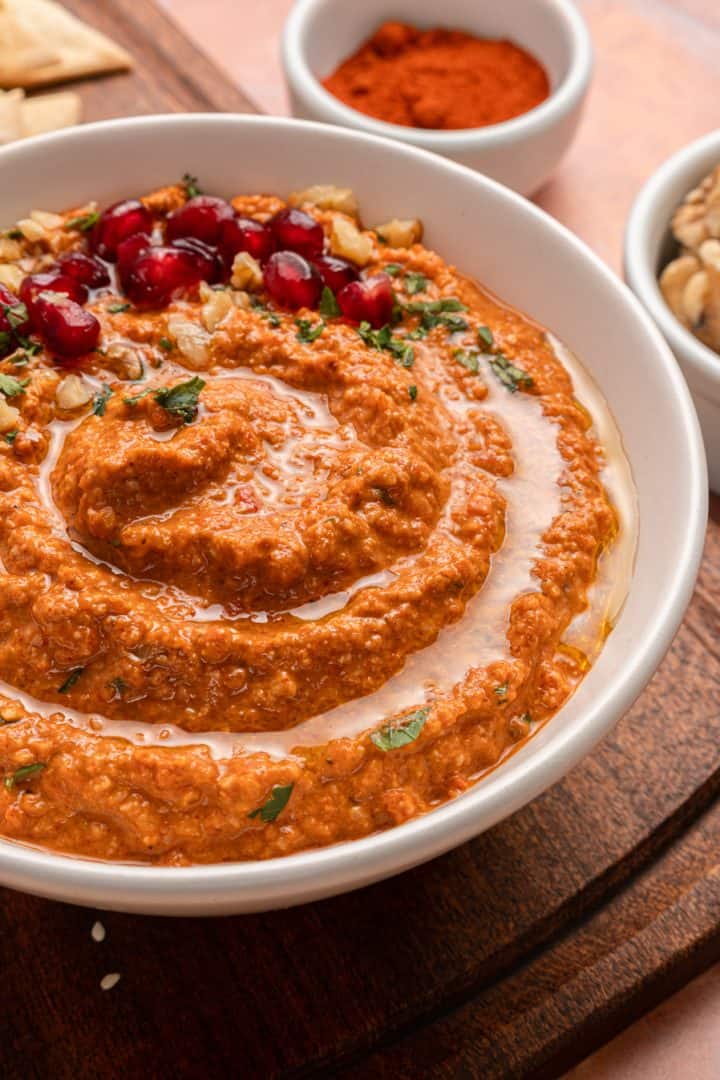
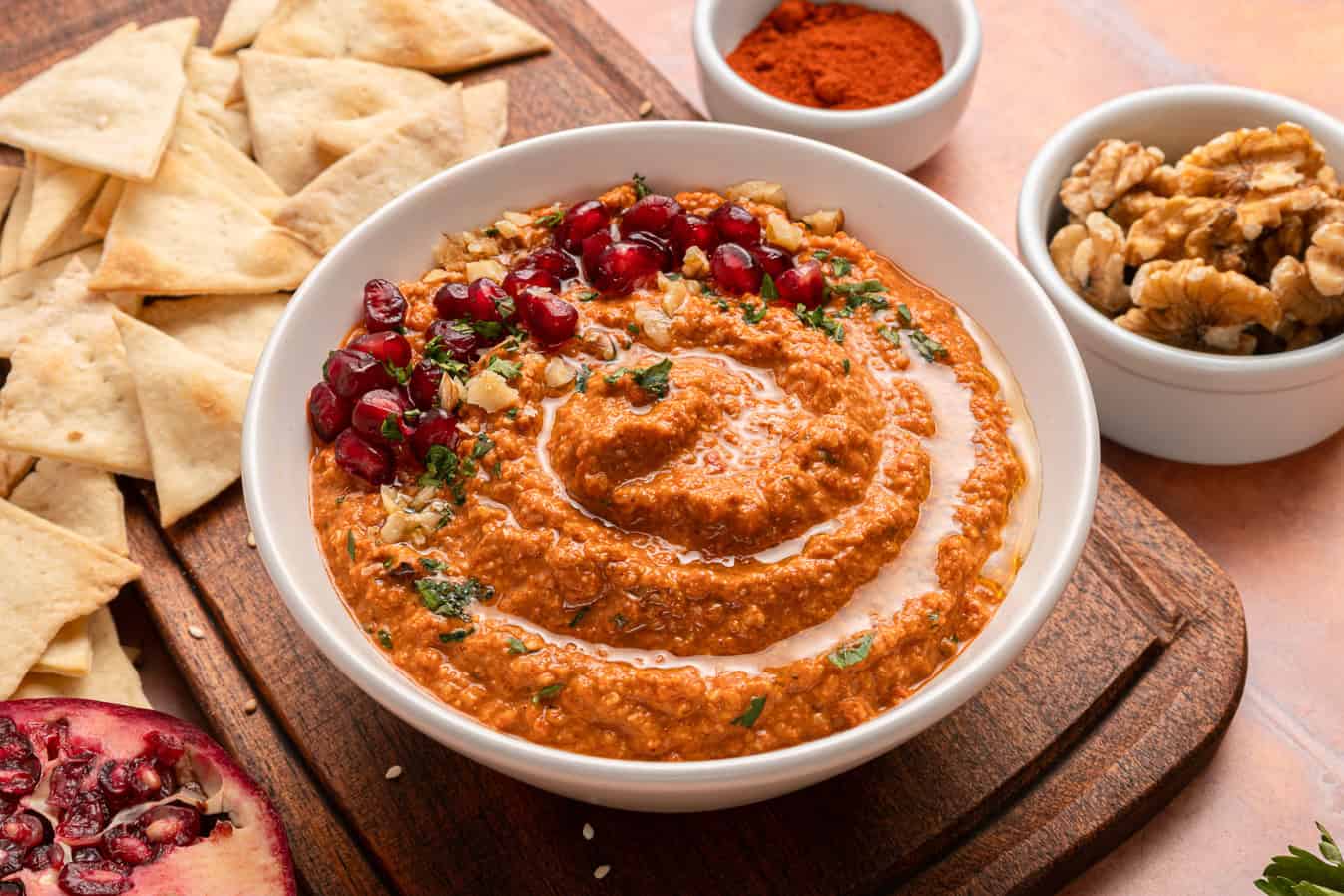
Traditional muhammara is far easier to make than most people expect, and homemade has far more depth than anything from the store. I've spent years roasting peppers with my mother and grandmother, refining every step until the dip became creamy, textured, and rich with roasted flavor.
Jump to:
I wasn't supposed to be in the kitchen. Nobody ever said I couldn't come in. The doorway simply felt like the place where children belonged while the grown-ups worked. I leaned against the frame, watching my grandmother turn red peppers over the open flame until the skins darkened and curled. My mother stood beside her with a bowl already waiting, talking through family news that seemed to drift as naturally as the scent filling the room.
Most afternoons sounded the same. Someone's cousin had written a letter. A neighbor had stopped by. Plans for Shabbat changed three times before lunch. My grandmother answered every story with another story from years earlier, often reaching back to the village where she grew up. My mother laughed because she already knew how each one ended.
The peppers rested beneath a towel while they cooled, and nobody hurried them. There was always another job to do. Walnuts to toast. Garlic to peel. Bread to tear into crumbs. I carried small things from one side of the counter to the other, convinced I was helping in a meaningful way.
Years passed before they finally handed the peppers to me.
By then I already knew what came next without anyone explaining it. Peel away the blackened skin. Let the peppers drain well. Toast the walnuts until they smelled rich. Add the pomegranate molasses carefully because a little carries a long way.
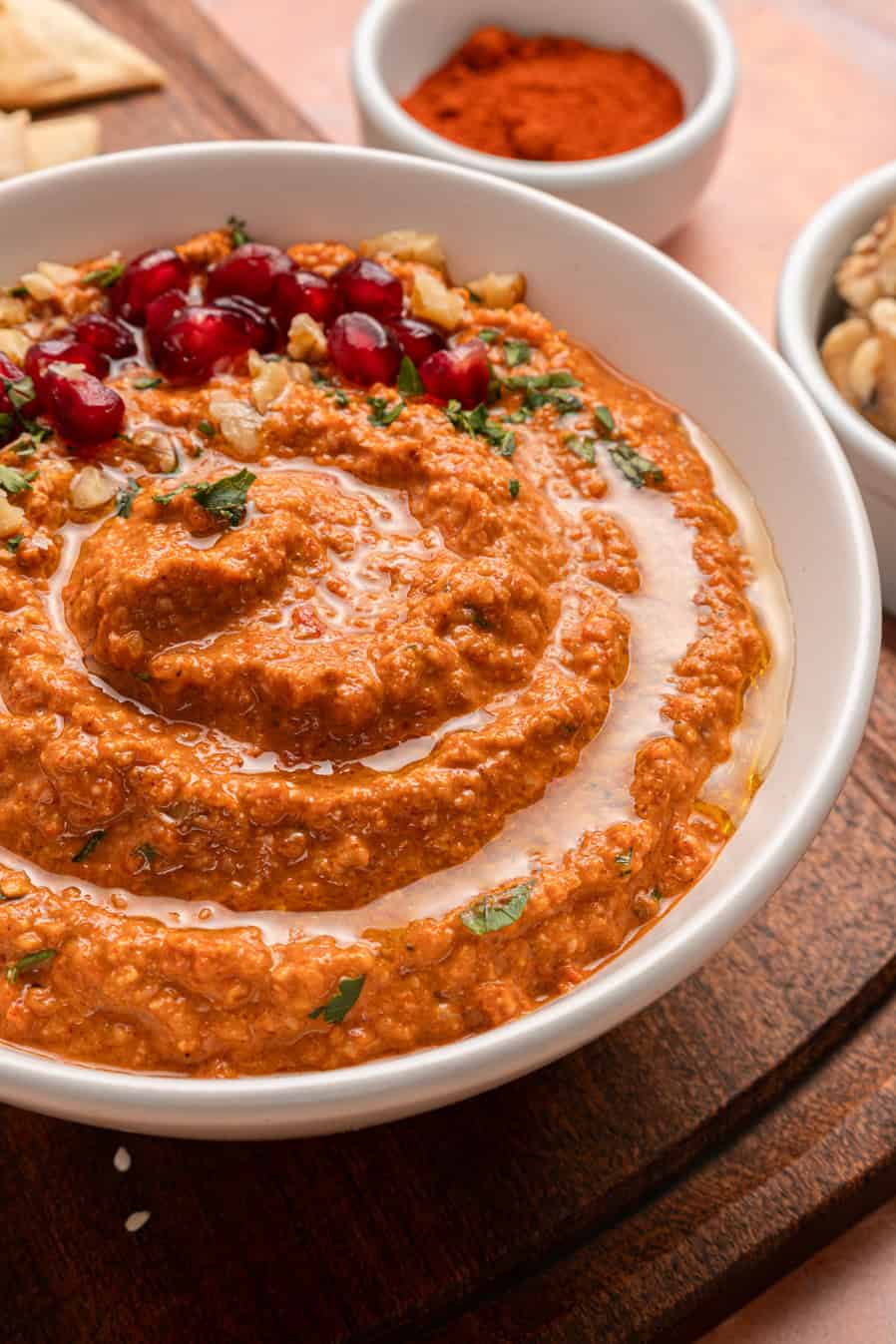
That same bowl of roasted peppers still appears often in my kitchen. Sometimes they become this traditional muhammara. Other times they find their way into my roasted red pepper hummus, disappear inside ground turkey stuffed peppers for dinner, or spend the afternoon soaking in garlic and herbs for Russian marinated red peppers. One ingredient travels through many recipes, carrying familiar flavors into new meals.
Now Leo and Lin linger nearby the way I once did, watching quietly from the edge of the kitchen until it's finally their turn to help. They hand me walnuts one by one, ask if the peppers are finished yet, and wait for their turn at the food processor.
Looking across the counter at my kids as they giggle together, I wonder which parts they'll carry with them years from now. My guess is it won't be the recipe.
It'll be the feeling of standing together in the kitchen.
Ingredients
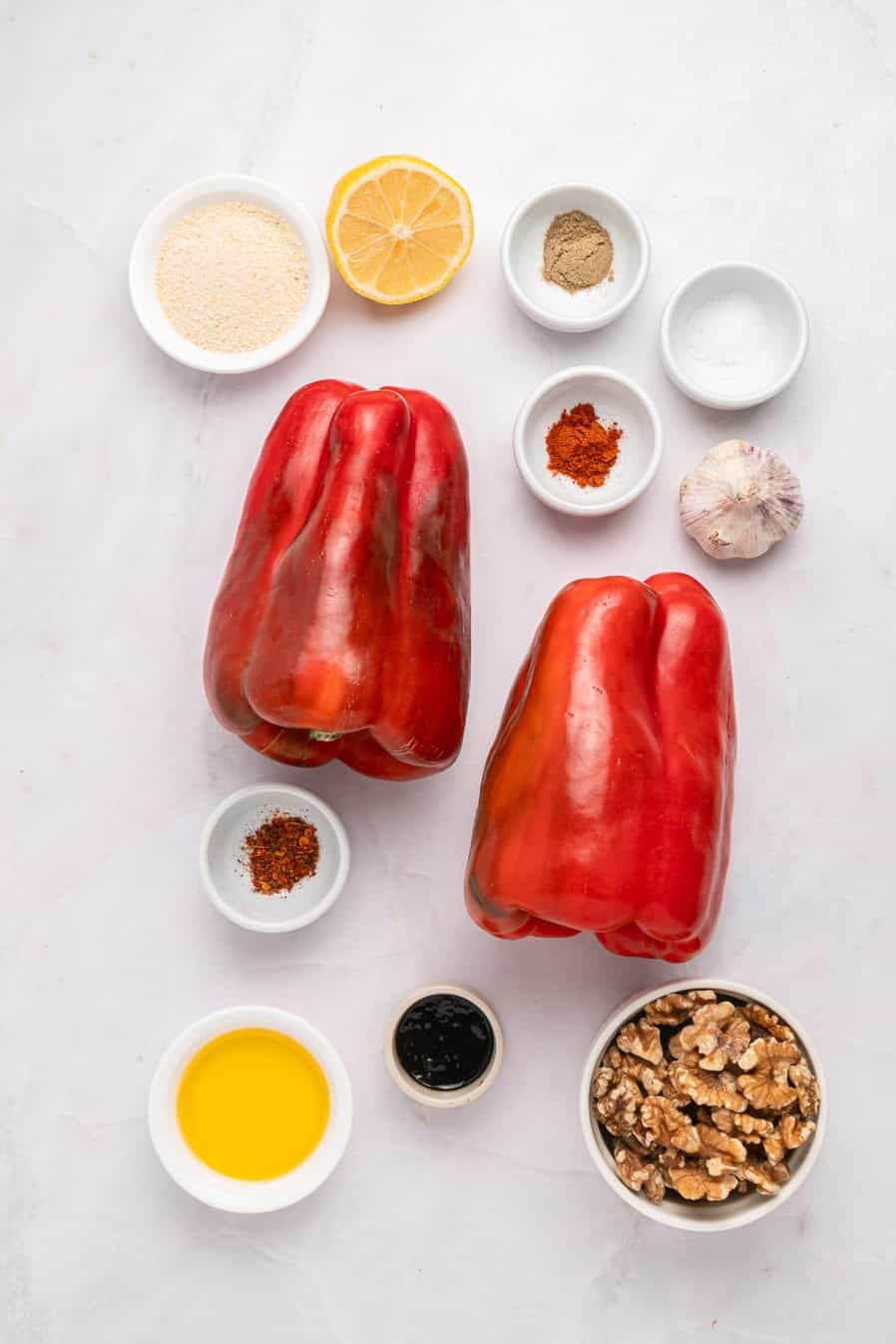
Red bell peppers are the foundation of traditional muhammara. I always roast fresh peppers myself because letting the skins blacken gives them a deeper sweetness than jarred varieties. The extra few minutes are worth it. If you're short on time, canned or jarred roasted peppers can work, though I always drain and pat them very dry so the dip stays thick.
What gives this dip its rich texture and slightly earthy flavor is from walnuts. Toasting them before blending makes a noticeable difference, bringing out their natural oils and aroma. I've tried making it with raw walnuts when I was in a hurry, and the dip never had quite the same depth. Pecans can be used if walnuts aren't available, though the flavor becomes a little sweeter.
Pomegranate molasses is the ingredient that gives muhammara its signature character. It adds a balance of sweetness and tang that ties the peppers and walnuts together. Every bottle I bring home reminds me of browsing Middle Eastern markets where shelves were lined with pomegranate syrup, tahini, and spice jars. If you can't find it, a small amount of balsamic glaze mixed with lemon juice comes closest, though the flavor won't be exactly the same.
The breadcrumbs help bind the dip and absorb any extra moisture from the peppers. I like using plain breadcrumbs because they let the roasted peppers remain the focus. Gluten-free breadcrumbs work equally well if needed.
See the recipe card for the full list and exact quantities.
Top Tips
Char the peppers until they look almost too dark - I used to stop roasting as soon as the skins blistered, and the dip always tasted flatter. Let the peppers blacken across most of the surface. Once peeled, that deeper roast gives muhammara the rich flavor it's known for.
Leave a little texture behind - it can be tempting to blend until completely smooth, but muhammara is at its best with tiny pieces of walnut still throughout the dip. I stop the processor as soon as it becomes spreadable while keeping a little bite.
Make it a few hours ahead if you can - I often prepare muhammara before guests arrive because the flavor deepens after resting in the refrigerator. Before serving, let it sit on the counter for about 20 minutes and finish with fresh olive oil and chopped walnuts so everything tastes balanced again.
How to Make Traditional Muhammara (Roasted Red Pepper Dip)
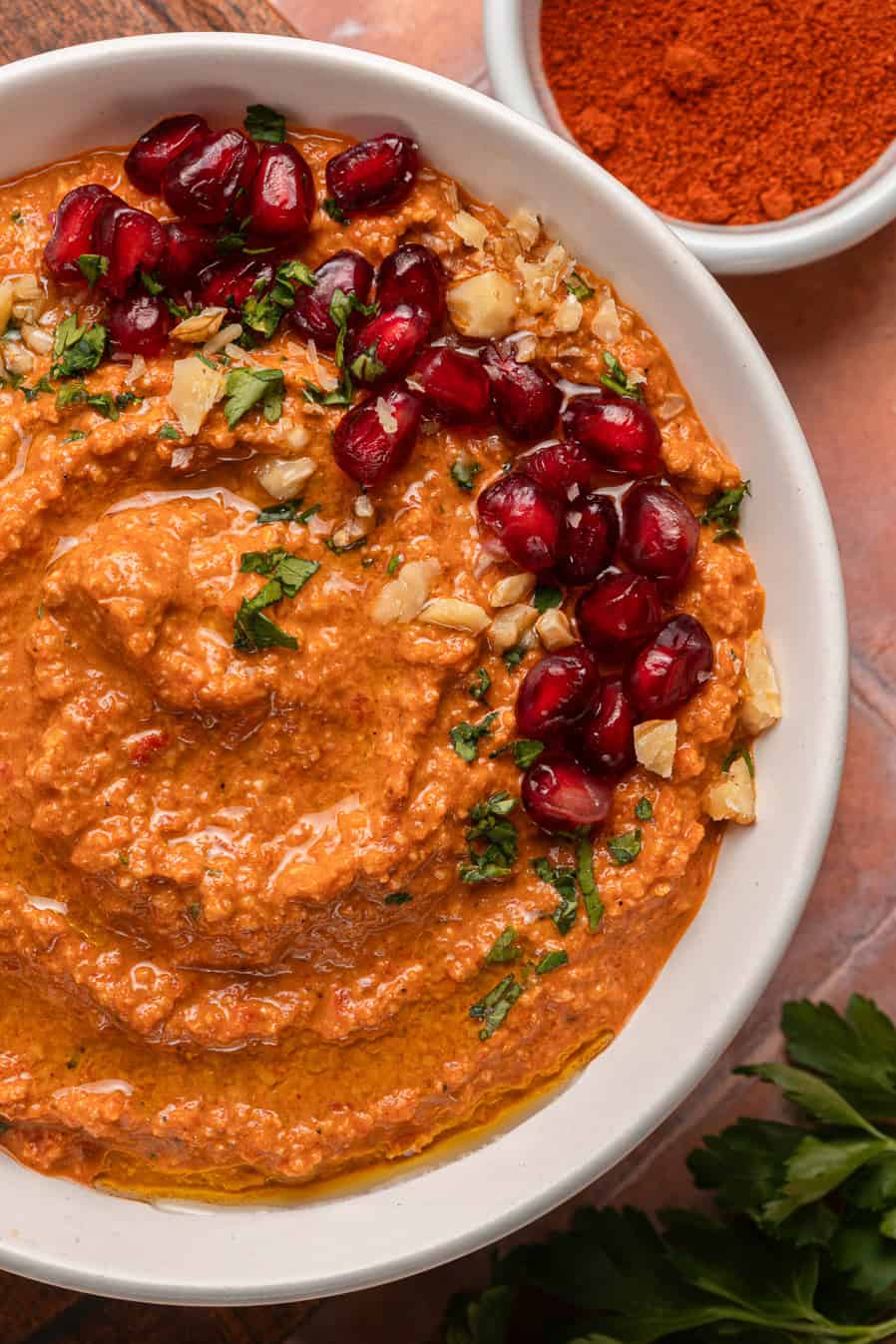
An authentic muhammara dip comes together with a handful of pantry ingredients, though a few small details make all the difference. Taking the time to deeply char the peppers, toast the walnuts, and blend everything to the right texture creates a rich Middle Eastern dip that tastes even better than it looks. Here's how I make it every time:
Char the Peppers
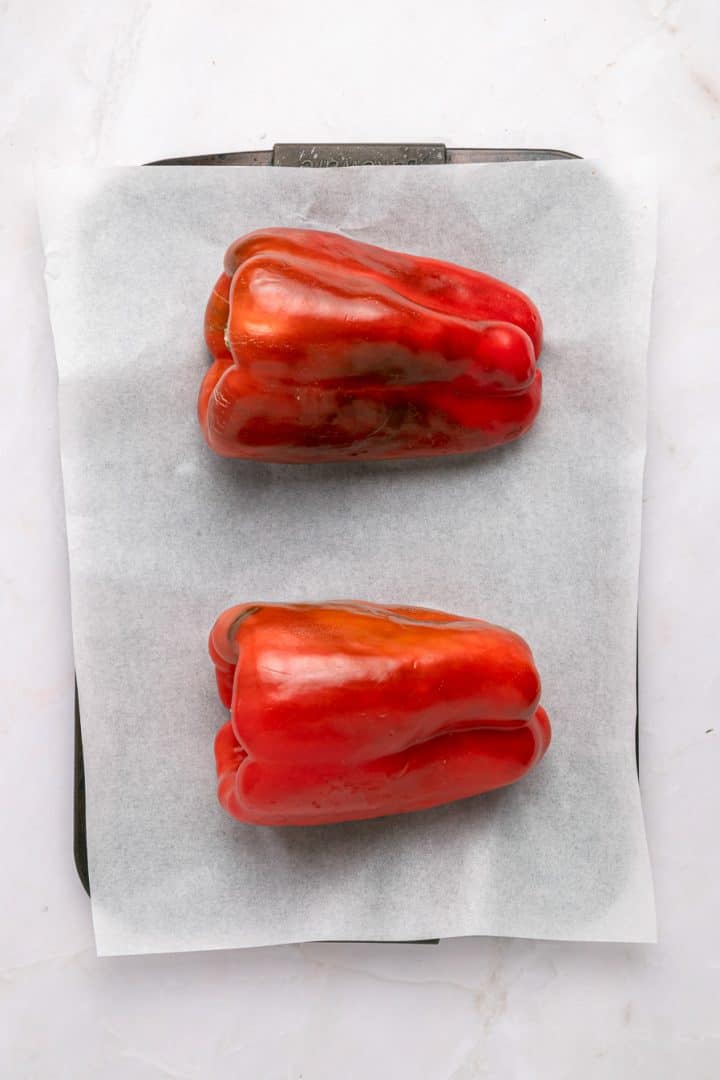
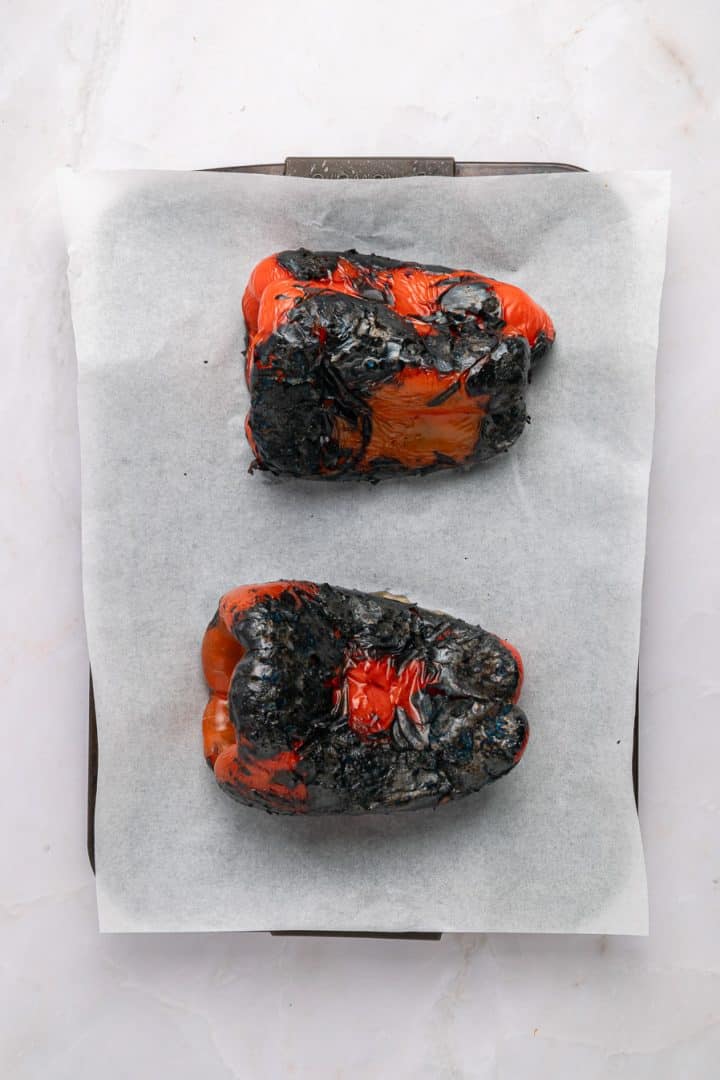
- If you're using the oven, roast them on a foil-lined baking sheet until the skins collapse and develop dark patches.
- Roast until the skins are deeply blistered and blackened on every side.
- The peppers should collapse slightly, making the skins easy to remove after steaming.
Steam, Peel, and Dry
- Transfer the hot peppers to a bowl and cover tightly so they can steam. Once they're cool enough to handle, peel away the skins, remove the seeds and stems, then drain the peppers well.
- This is the step that makes the biggest difference in texture. Pat the peppers dry with paper towels before blending.
- If they're still holding excess liquid, the finished muhammara can become thin instead of thick enough to scoop with pita.
Toast the Walnuts
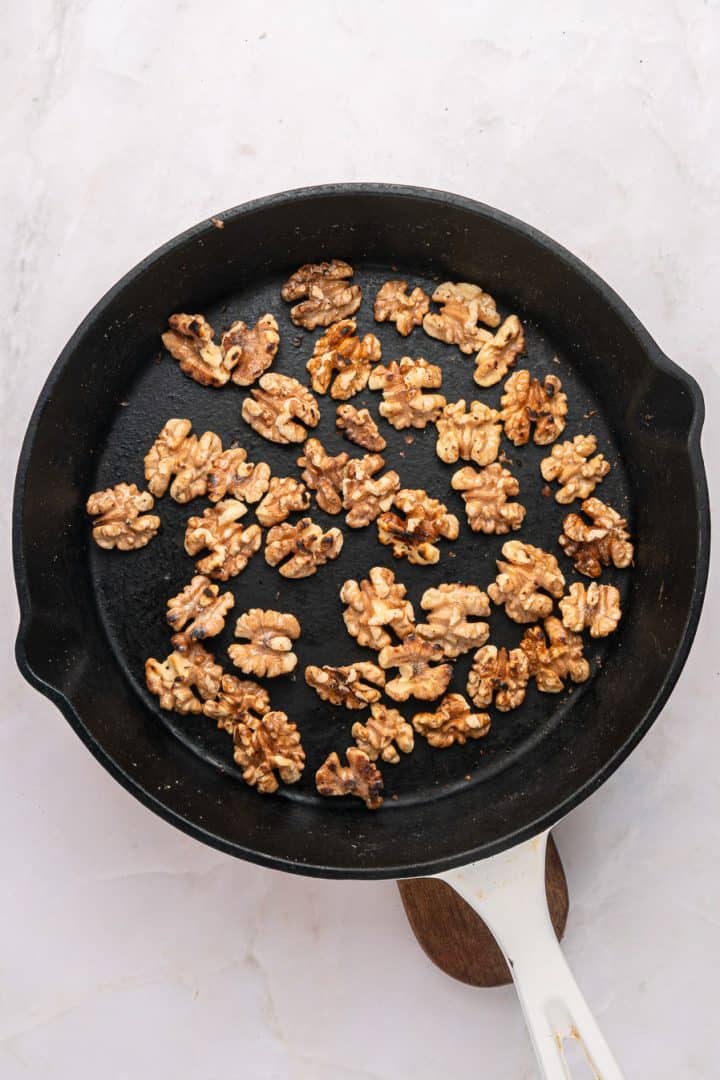
- They should smell nutty without turning dark brown.
- Let them cool slightly before adding them to the food processor.
- Blending very hot walnuts can release more oil than you want, changing the consistency of the dip.
Blend Until Slightly Textured
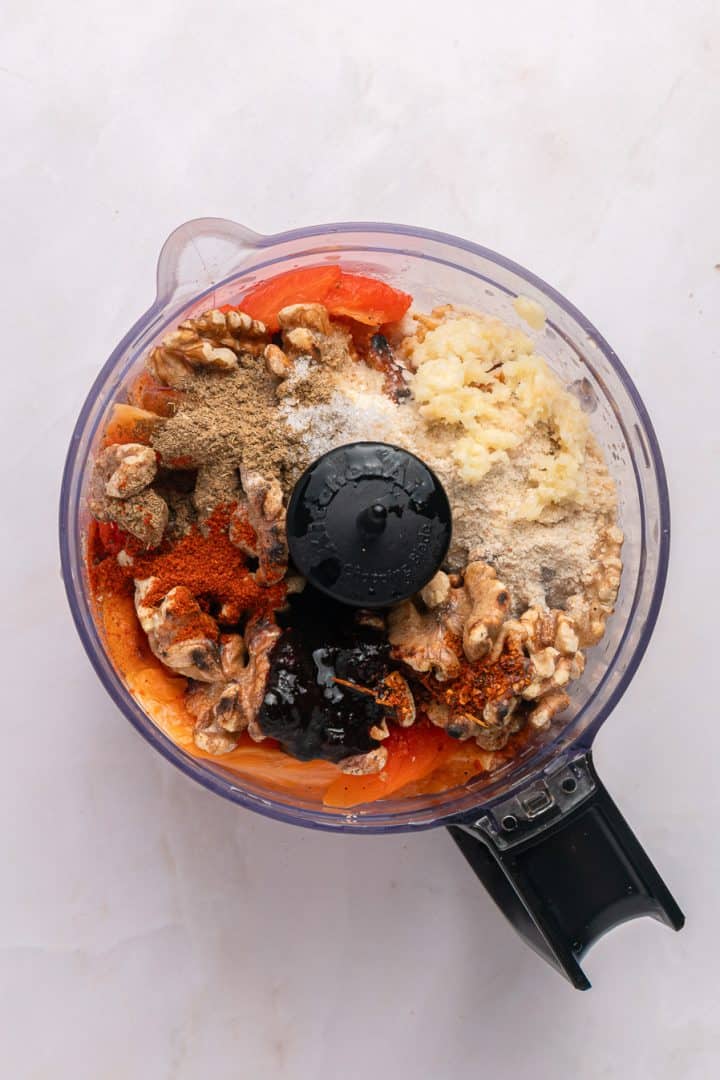
- Pulse instead of running the machine continuously. The mixture should become creamy while still showing tiny pieces of walnut throughout.
- If it looks completely smooth like hummus, you've gone a little too far.
Drizzle in the Olive Oil
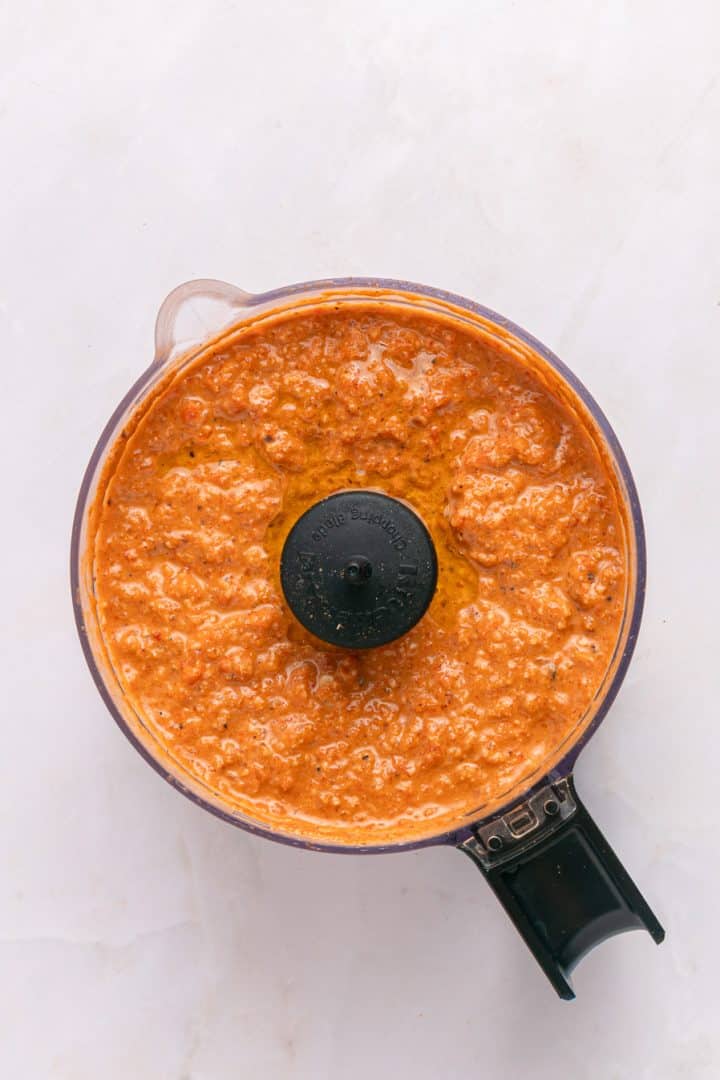
- You'll notice the mixture becoming smoother and more cohesive as the oil is incorporated.
- If the dip still feels looser than you'd like, add another spoonful of breadcrumbs and pulse a few more times rather than blending longer.
- Taste before serving and adjust the seasoning if needed.
- The sweetness of peppers can vary, so a small squeeze of lemon or pinch of salt can make the flavors feel more balanced.
Garnish and Serve
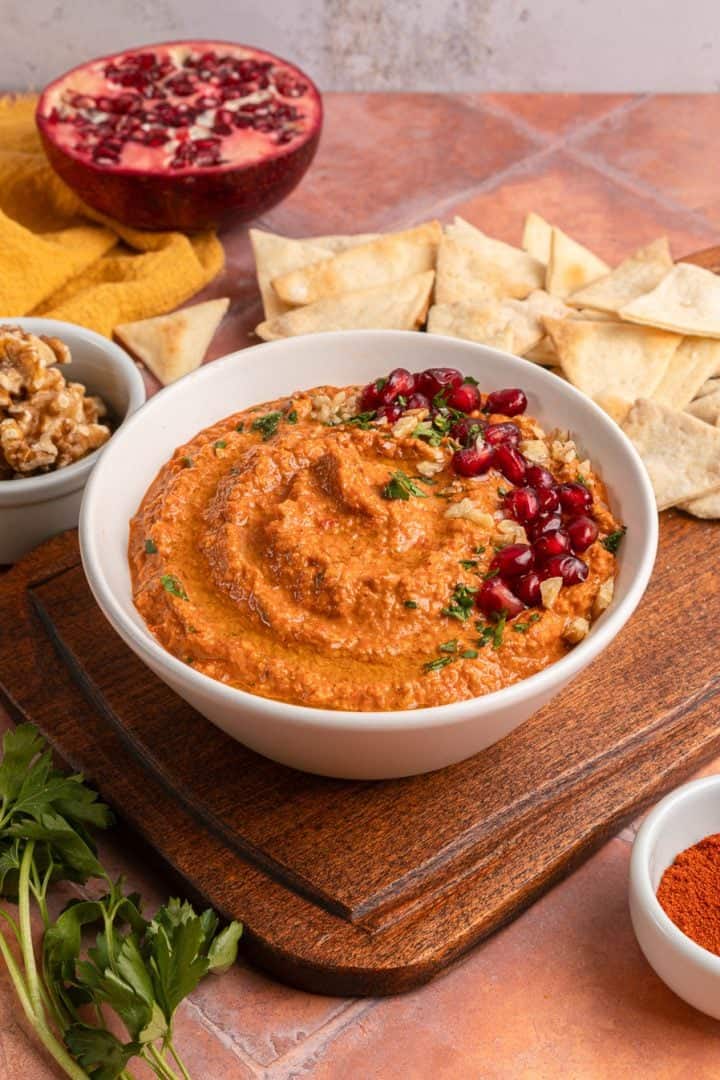
- Drizzle with olive oil and finish with chopped walnuts or fresh parsley.
- Serve with warm pita, flatbread, or crisp vegetables while the dip is at room temperature.
- Straight from the refrigerator, the flavors are more muted. Giving it a few minutes on the counter allows the peppers, walnuts, and pomegranate molasses to come together much more fully.
Storage
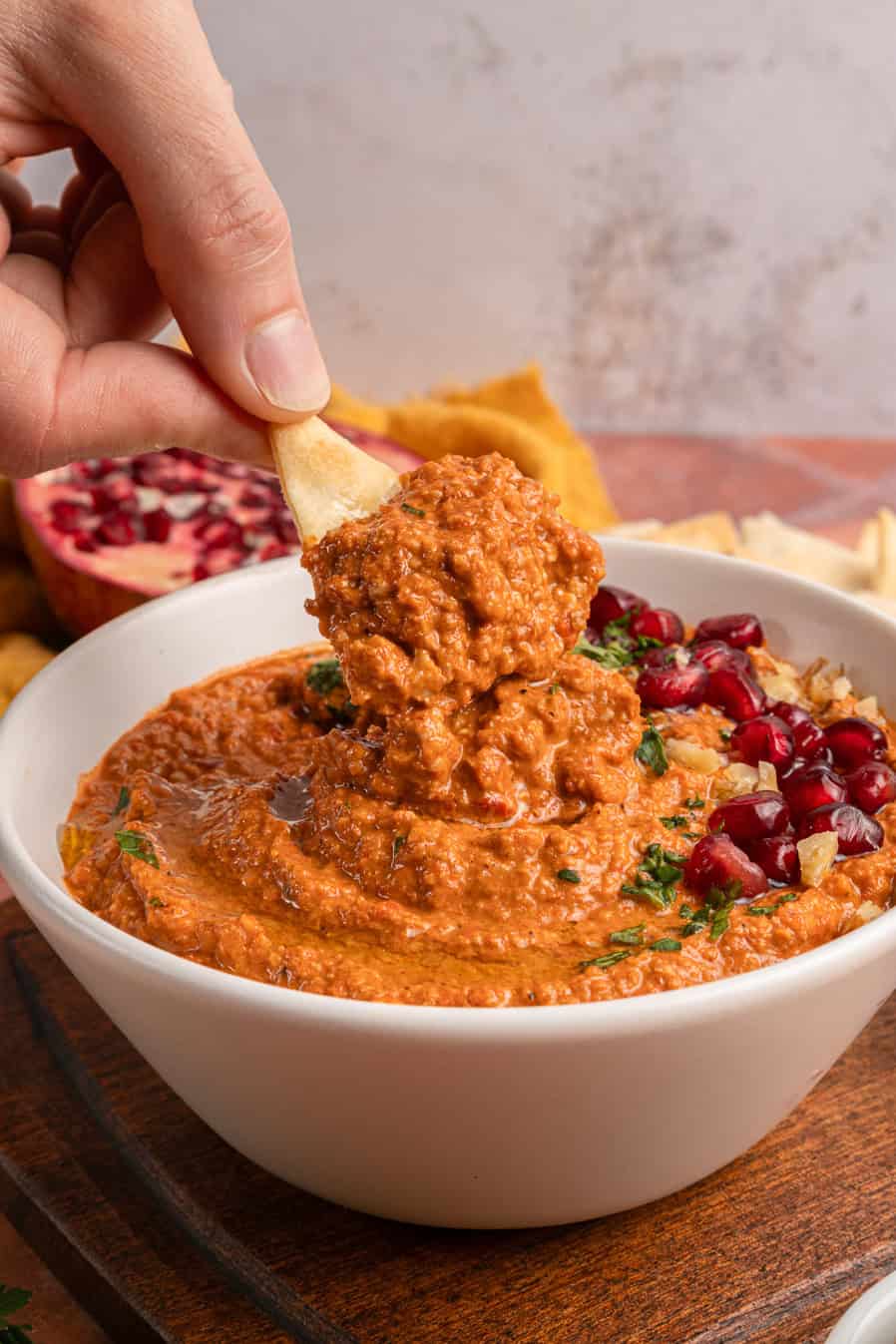
Store leftover muhammara in an airtight container in the refrigerator for up to 5 days. I like to smooth the surface before closing the container so less air reaches the dip. Before serving again, let it sit at room temperature for 15 to 20 minutes and finish with a fresh drizzle of olive oil. The texture becomes creamier, and the flavors have time to open up.
Muhammara also freezes well for up to 2 months. Transfer it to a freezer-safe container, leaving a little space at the top for expansion. Thaw overnight in the refrigerator, then stir well before serving, as a small amount of separation is normal. If the dip seems thinner after thawing, stir in a spoonful of breadcrumbs to bring back its original consistency.
FAQs
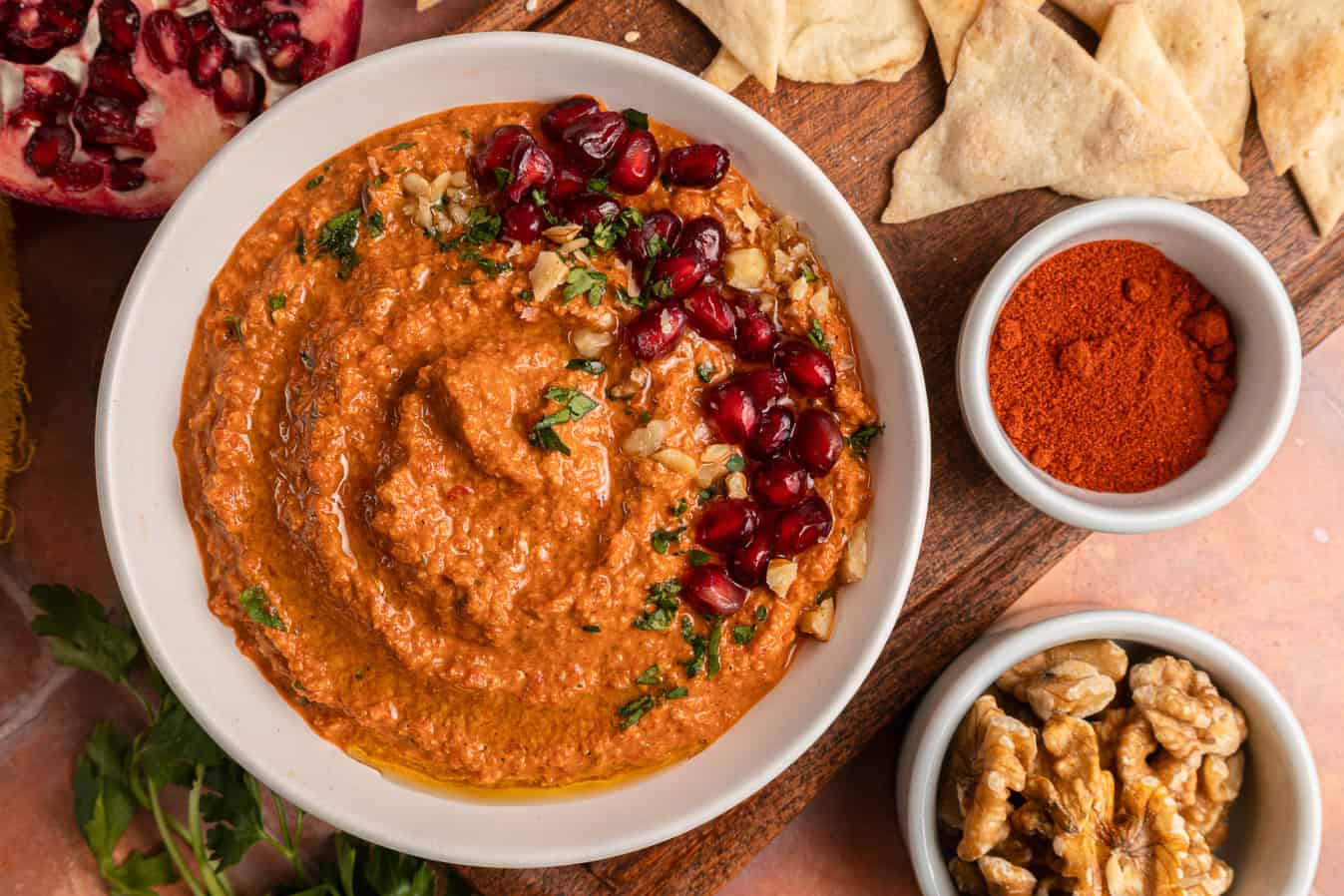
The most common cause is over-toasted walnuts or peppers that have burned instead of charred. The pepper skins should blacken because they're removed later, but the flesh underneath shouldn't burn. Toast the walnuts only until fragrant and lightly golden.
Yes. Replace the regular breadcrumbs with your favorite gluten-free breadcrumbs. Everything else in the recipe is naturally gluten-free, making this an easy adaptation without changing the flavor or texture very much.
They are both popular Middle Eastern dips, but they have very different ingredients and flavors. Hummus is made with chickpeas and tahini, giving it a smooth, creamy texture. Muhammara is built around roasted red peppers, walnuts, and pomegranate molasses.
Muhammara can be part of a balanced diet. Roasted red peppers are rich in vitamin C and antioxidants, while walnuts contribute healthy fats and plant-based protein. Since it uses olive oil and whole-food ingredients, it's a flavorful alternative to many processed dips. Serving it with fresh vegetables or whole grain pita makes it an easy appetizer or snack that feels both filling and fresh.
Recipe
Tried and loved this recipe? Please leave a 5-star review below! Your reviews mean a lot to me, so if you've got any questions, please let me know in a comment.
Traditional Muhammara Recipe
Equipment
- Gas stove or oven
- Baking sheet if oven roasting
- Aluminum foil
- Plastic wrap or plate for covering
- Dry skillet
- Measuring Cups and Spoons
- Serving bowl
Ingredients
Dip
- 2 large red bell peppers
- 1 cup walnuts
- 5 tablespoons breadcrumbs plain
- 2 garlic cloves
- 1 tablespoon pomegranate molasses
- 1 teaspoon ground cumin
- 2½ teaspoons smoked paprika
- ½ teaspoon Aleppo pepper flakes or red pepper flakes
- ½ teaspoon kosher salt
- 1 tablespoon lemon juice
- 2 tablespoons extra virgin olive oil
For Serving
- 1 tablespoon extra virgin olive oil
- 2 tablespoons chopped walnuts or chopped fresh flat-leaf parsley
- Pita or flatbread
Instructions
Roast the peppers
- Char the red peppers over an open flame, turning often until the skins are blackened on every side. Alternatively, roast them in a 450°F oven until blistered and softened.
Steam and peel
- Transfer the peppers to a covered bowl and let them steam for about 10 minutes. Peel away the skins, remove the stems and seeds, then drain and pat the peppers completely dry.
Toast the walnuts
- Toast the walnuts in a dry skillet over medium heat for 4 to 5 minutes, stirring frequently until lightly golden and fragrant. Let them cool slightly.
Blend the dip
- Add the roasted peppers, walnuts, breadcrumbs, garlic, pomegranate molasses, cumin, smoked paprika, Aleppo pepper, salt, and lemon juice to a food processor. Pulse until the mixture is mostly smooth while still retaining a little texture.
Add the olive oil
- With the processor running, slowly drizzle in the olive oil until the muhammara becomes creamy and cohesive. Taste and adjust the seasoning if needed.
Garnish and serve
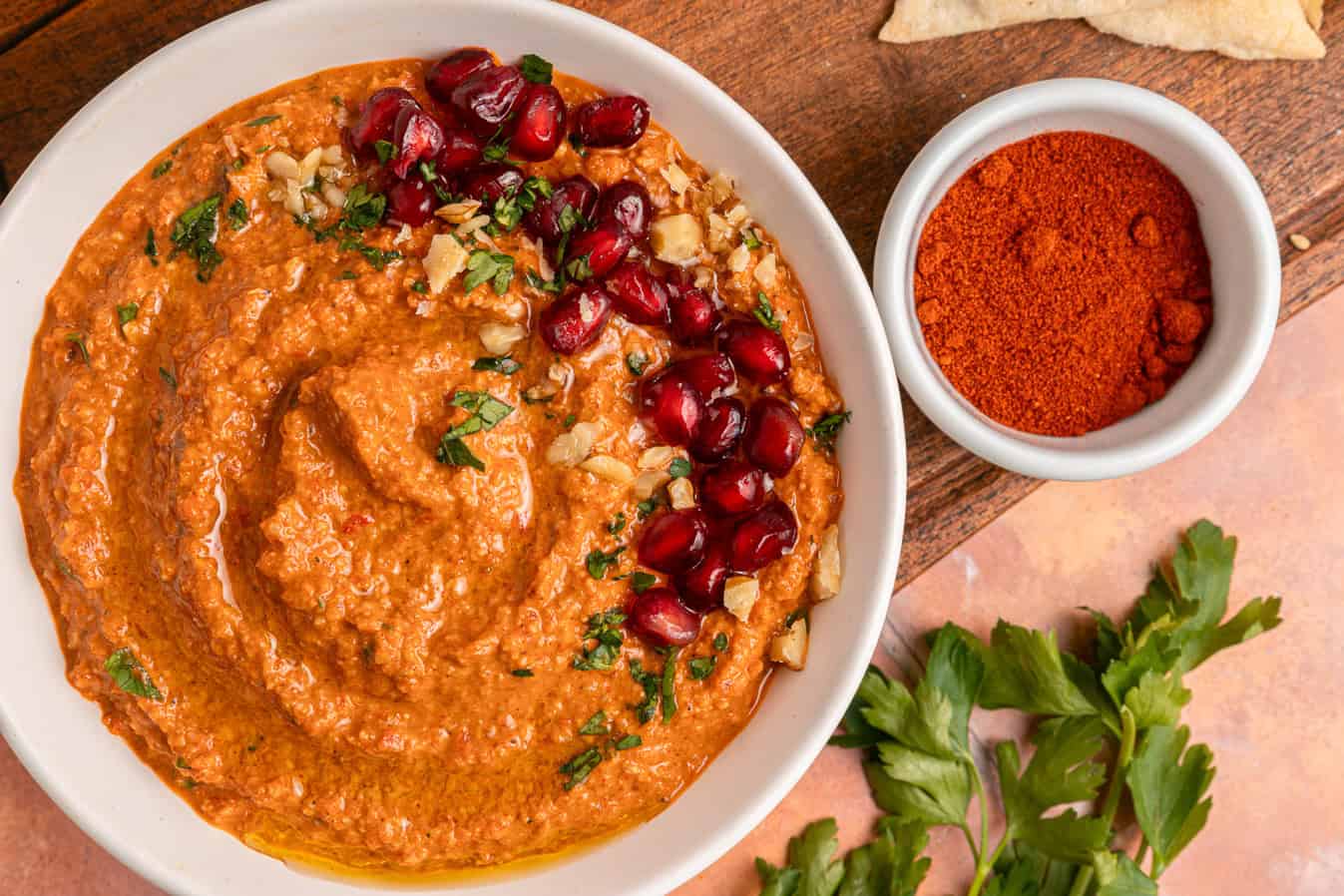
- Transfer to a serving bowl. Drizzle with olive oil, sprinkle with chopped walnuts or parsley, and serve with warm pita, flatbread, or fresh vegetables.
Nutrition