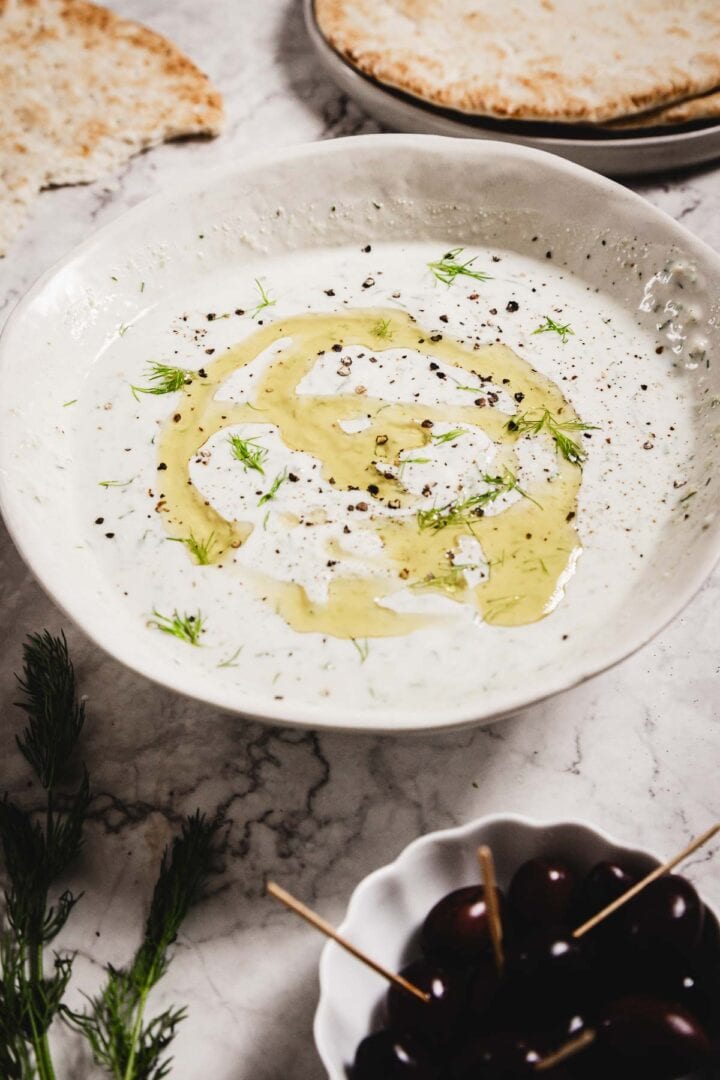
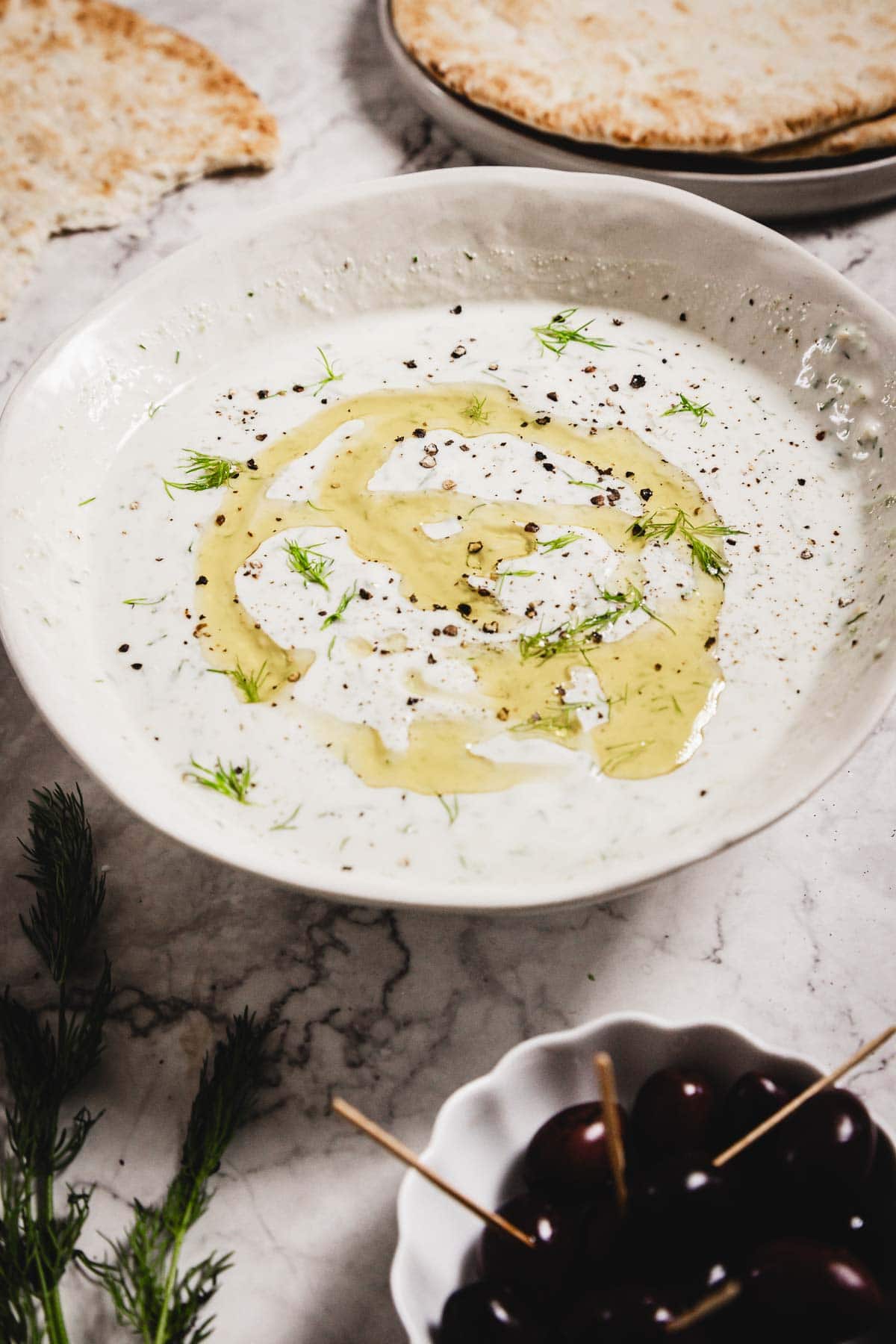
Easy homemade tzatziki sauce that cools, brightens, and brings flavor to everything from meatballs to veggies.
Jump to:
When I started working on the Greek turkey meatballs with feta recipe, I thought the dish would be complete on its own. With its herbs, the feta, the way the turkey stayed tender. It all felt balanced. But after a few days of eating them, there was this quiet gap on the plate, it was the kind that makes you feel like something is missing without knowing exactly what.
And then I thought back to our trips in Greece, to the taverna tables where the food always came with a scattering of small bowls, each one bringing its own character to the meal. There was always tzatziki. Cool and smooth, with cucumber and dill cutting through whatever richness was on the plate. I decided then to make a small bowl one evening, and suddenly the meatballs felt like they had their missing piece.

It's simple to bring together, but somehow feels like it connects a lot of threads. Yogurt, cucumber, and garlic form the base, with dill reminding me of Russian kitchens scented with herbs, and olive oil and lemon carrying me back to Israeli summers. And now, here in our kitchen, it's the sauce that holds together not only the meatballs but everything else we set on the table.
Sometimes I serve it with a few other sauces if the table feels generous. A bowl of tahini sauce, creamy and nutty, often sits nearby. On nights when someone wants a bit of heat, I'll bring out a jar of schug, bright and green. And if there's leftover chunky tomato sauce from pasta or pizza, it goes out too. But tzatziki is the one that disappears, scraped clean with a last piece of pita bread or a stray cucumber slice.
What Is Tzatziki? And Where Did It Come From?
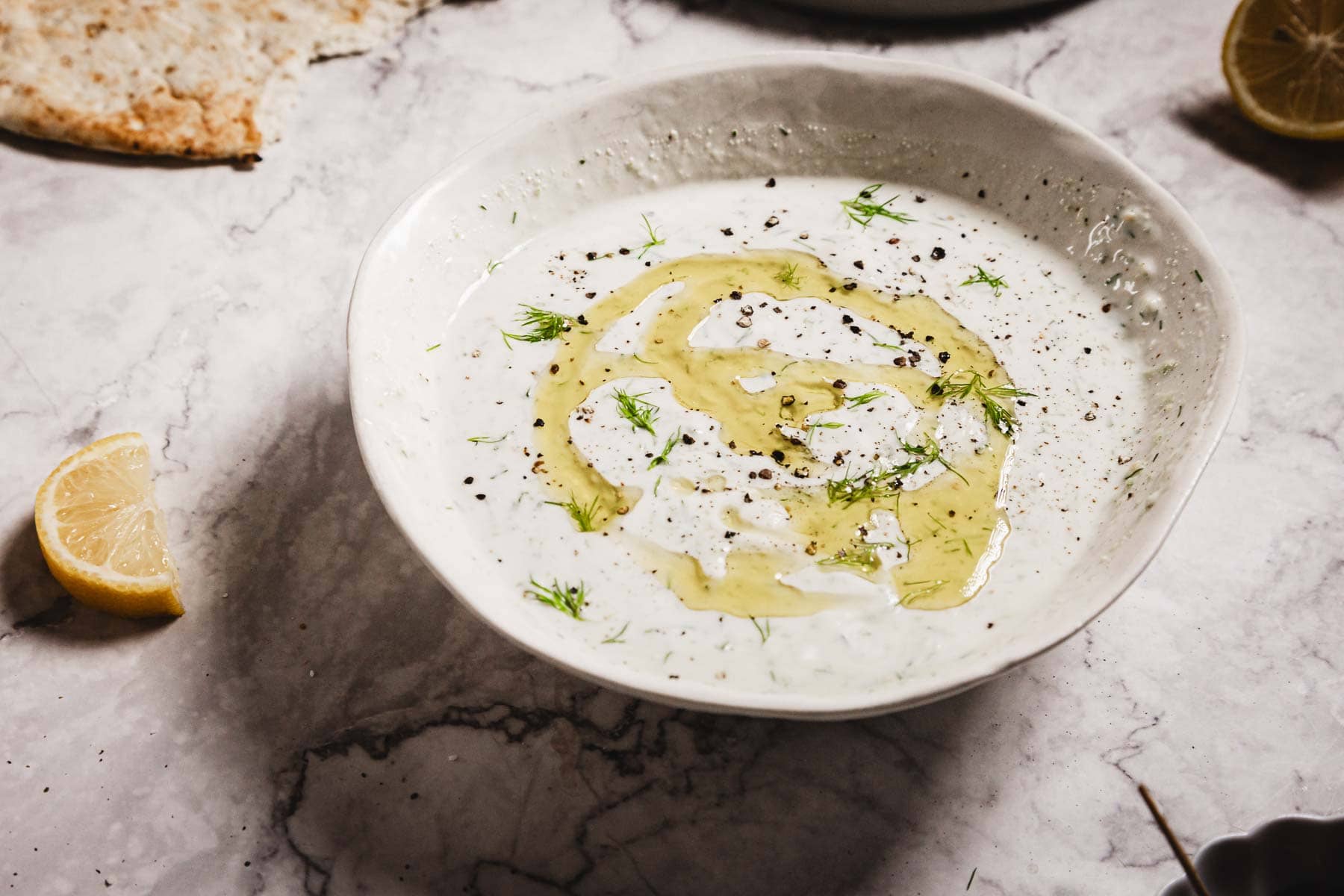
Tzatziki has a way of showing up like it's always belonged. A bowl at the center of a table, something to scoop into without thinking, a cool, steady presence that never asks for attention. Of course it starts with yogurt, cucumber, garlic, herbs, and olive oil. Things most of us have in our kitchens, but together they turn into something that feels bigger than the sum of its parts.
In Greece, I remember tzatziki everywhere. It's spooned next to grilled meats, spread across bread, served in little dishes alongside vegetables. The name comes from the Turkish word cacık, and you can spot its relatives all over-mast-o-khiar in Iran, tarator in Bulgaria, versions in Lebanon and Israel. And each one tells the same story in a slightly different voice, a little more garlic here, a handful of mint there.
I grew up seeing sauces like this in many forms. In Israel, it wasn't always called tzatziki, but there was always some version of yogurt and cucumber on the table, tucked between hummus and labneh, or appearing without explanation to cool whatever else was being served. When I finally had tzatziki in Greece, it felt like meeting an old friend, recognizable even if the details were new.
Now, when I make it, I don't think so much about where it came from. I think about how it lives in our kitchen now. A spoonful lands next to the Greek turkey meatballs with feta, another gets spread on warm bread, and before I notice, F is dipping vegetables straight into the bowl. It's the quiet kind of staple that slips into meals without asking, the one you reach for without really thinking about it.
Ingredients
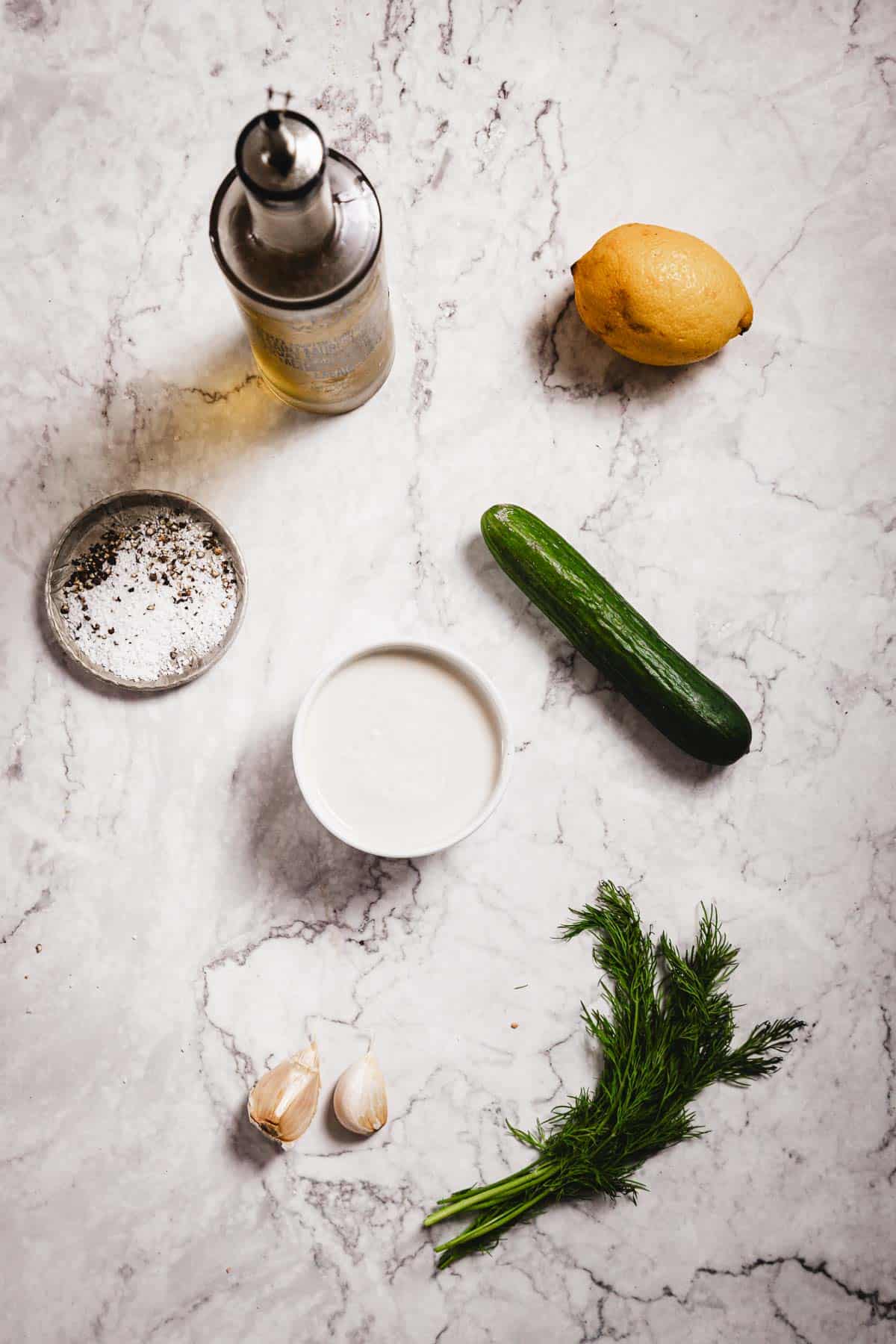
- Greek Yogurt- The base of tzatziki. I use full‑fat yogurt because it makes the sauce thick and creamy without needing to strain it. You can try low‑fat versions when that's what's on hand, but they tend to thin out. If you want a tangier bite, a mix of yogurt and labneh will work beautifully.
- Cucumber- Grated and squeezed until dry, it gives tzatziki that fresh, cooling flavor. I like using English cucumbers since they're less watery and don't need peeling, but any firm cucumber will work if you're thorough with draining.
- Garlic- Here, a little goes a long way. Freshly minced garlic is what gives tzatziki its sharp, fragrant backbone. If you prefer something gentler, roasted garlic softens the edge without losing the depth.
- Fresh Dill- For me, dill is what makes tzatziki taste like tzatziki. It reminds me of my grandmother's kitchen in the summer, her cutting board always covered in green. Mint can be swapped in for a different, lighter flavor, but dill keeps it classic.
- Lemon Juice- Brightens the yogurt and wakes up the cucumber and dill. Fresh is best! Bottled lemon juice will do in a pinch, but you'll lose that vivid, citrusy lift.
See the recipe card for full list and exact quantities.
How to Make Tzatziki Sauce Recipe
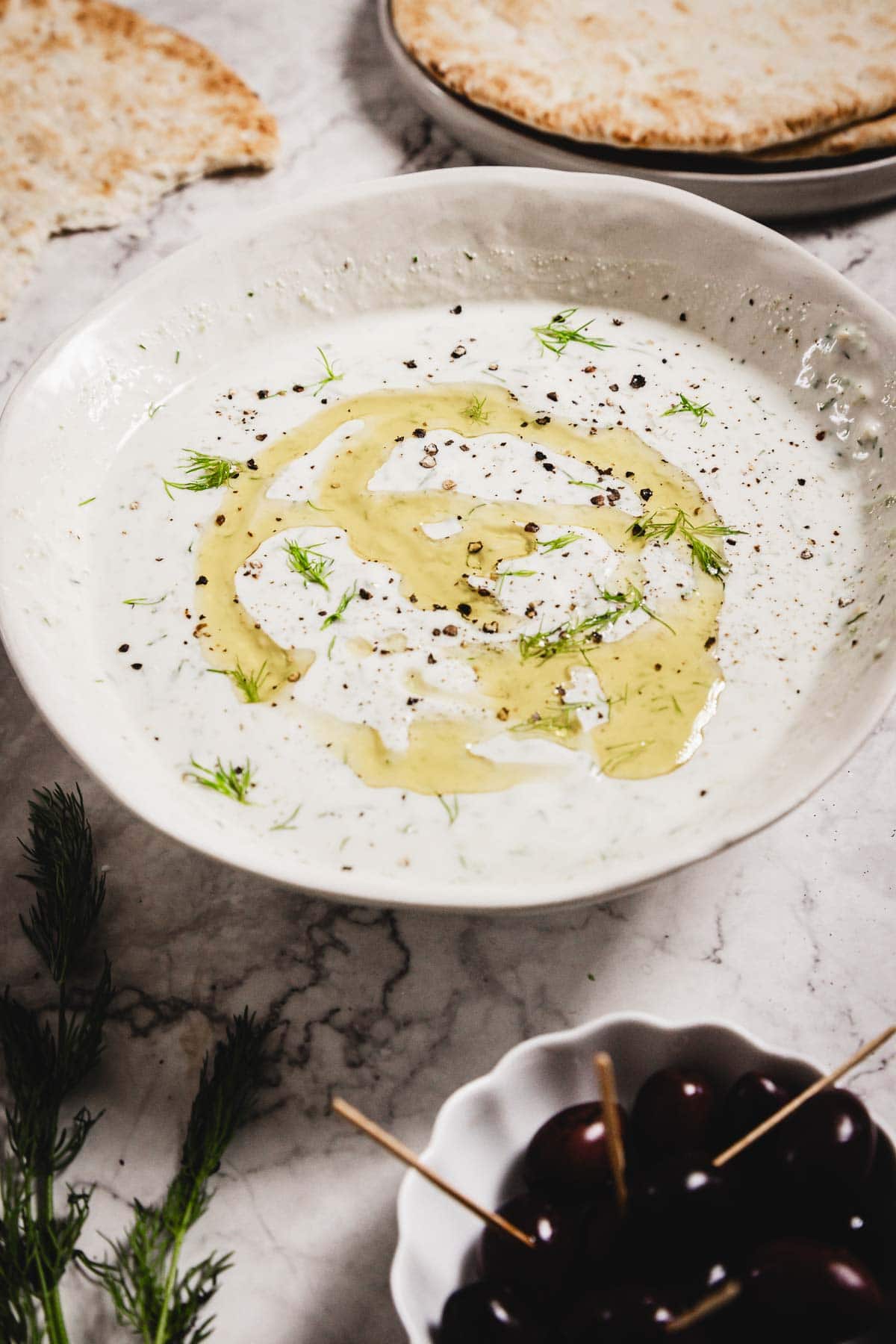
Cool cucumber yogurt mixed with garlic, dill, and lemon turns into the best tzatziki you can spoon over meatballs, bread, or vegetables without a second thought. Here's how to make it:
Grate and Drain the Cucumber
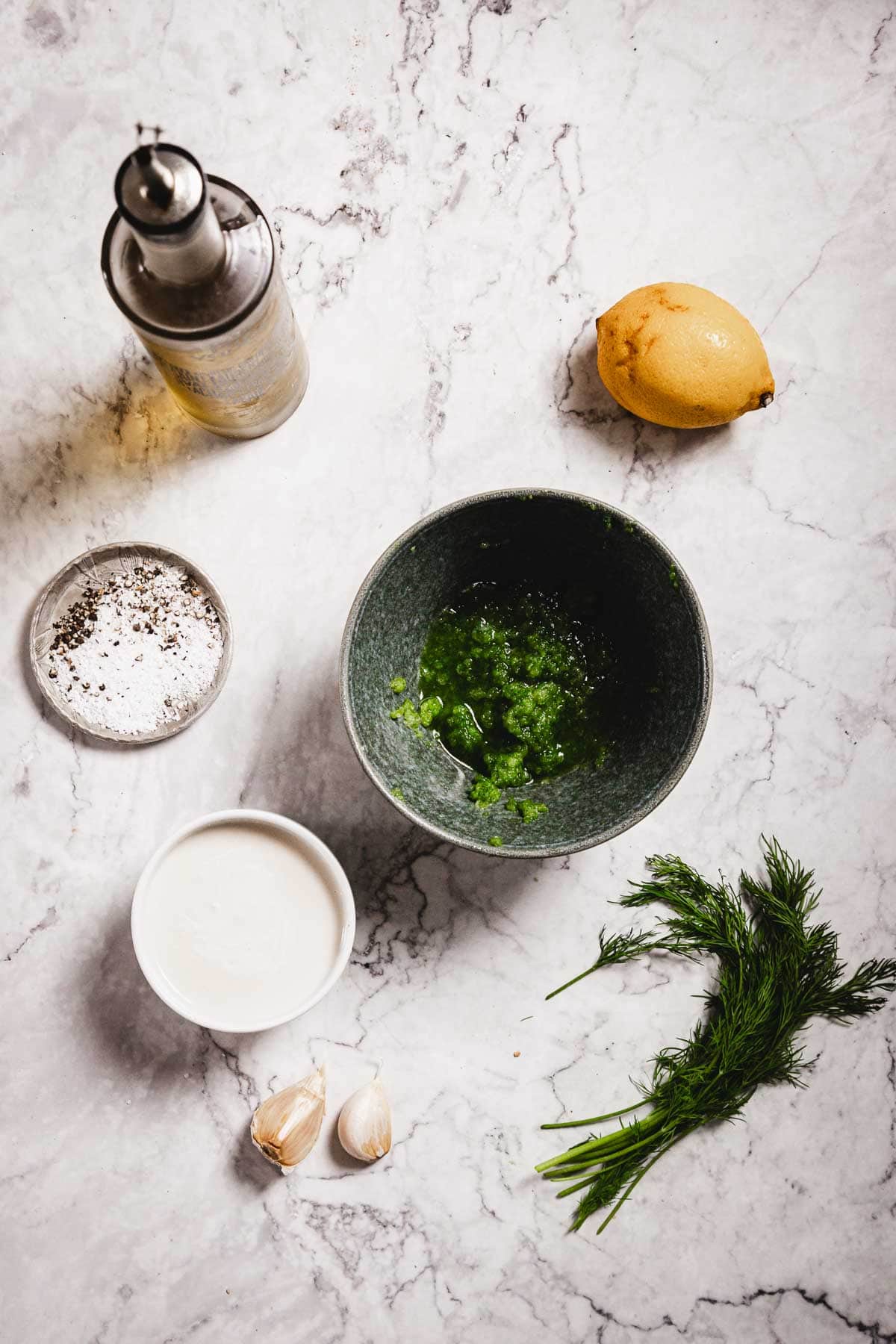
Start by grating the cucumber on the large holes of a box grater. Gather the shreds in a clean kitchen towel and squeeze firmly over the sink until nearly all the liquid is out, this step keeps the sauce thick instead of watery.
Prepare the Garlic
Mince the garlic finely, almost to a paste. A little bite is essential, but too much raw garlic can take over, so keep the pieces small so they fold into the yogurt evenly.
Mix the Base
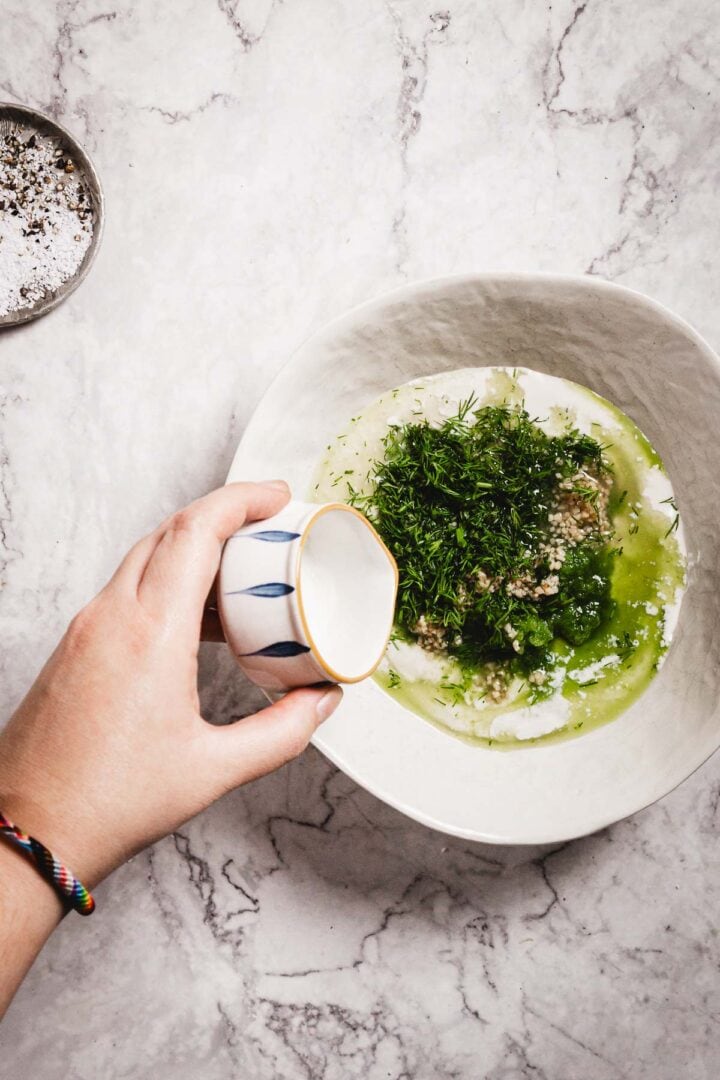
In a medium bowl, stir together the Greek yogurt, grated cucumber, garlic, fresh dill, and a splash of lemon juice. Take a moment to really fold it so the cucumber and herbs are fully tucked into the yogurt.
Taste and Season
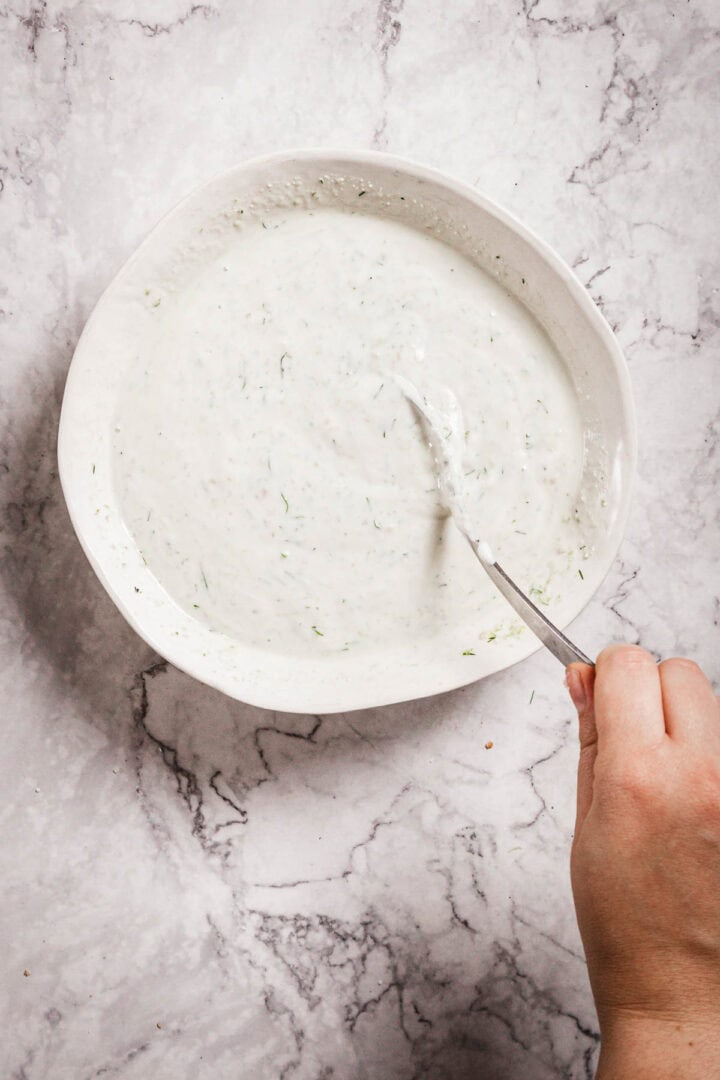
Add a pinch of salt and some black pepper. Taste, adjust, and stir again. This is where the flavors begin to settle into balance.
Chill and Serve
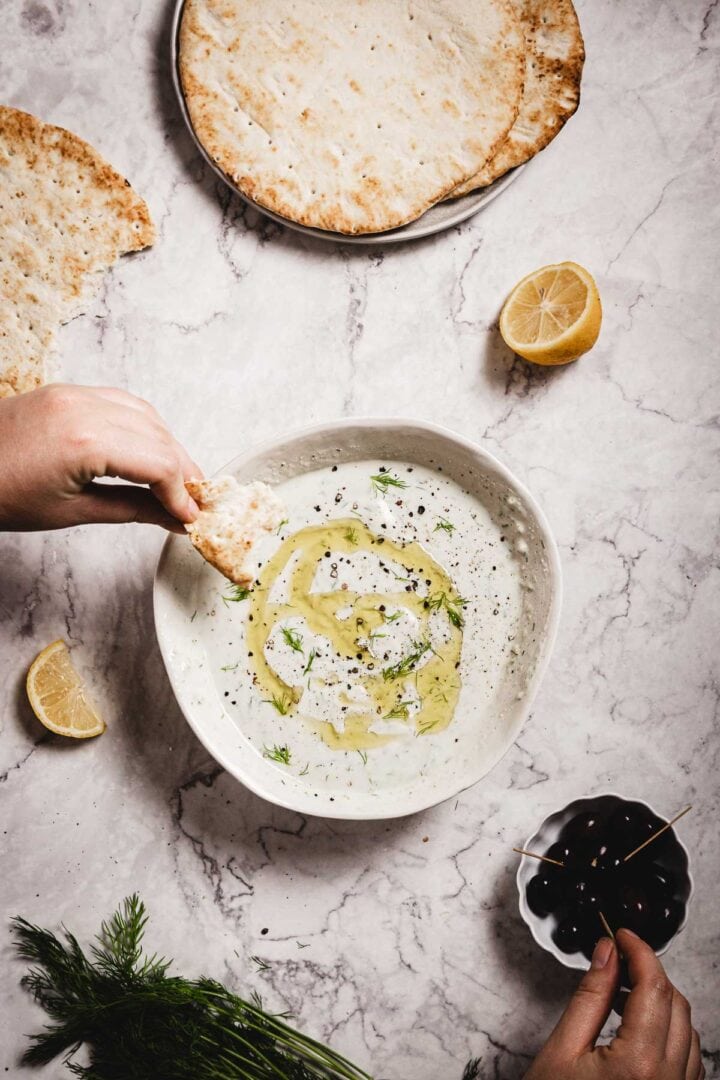
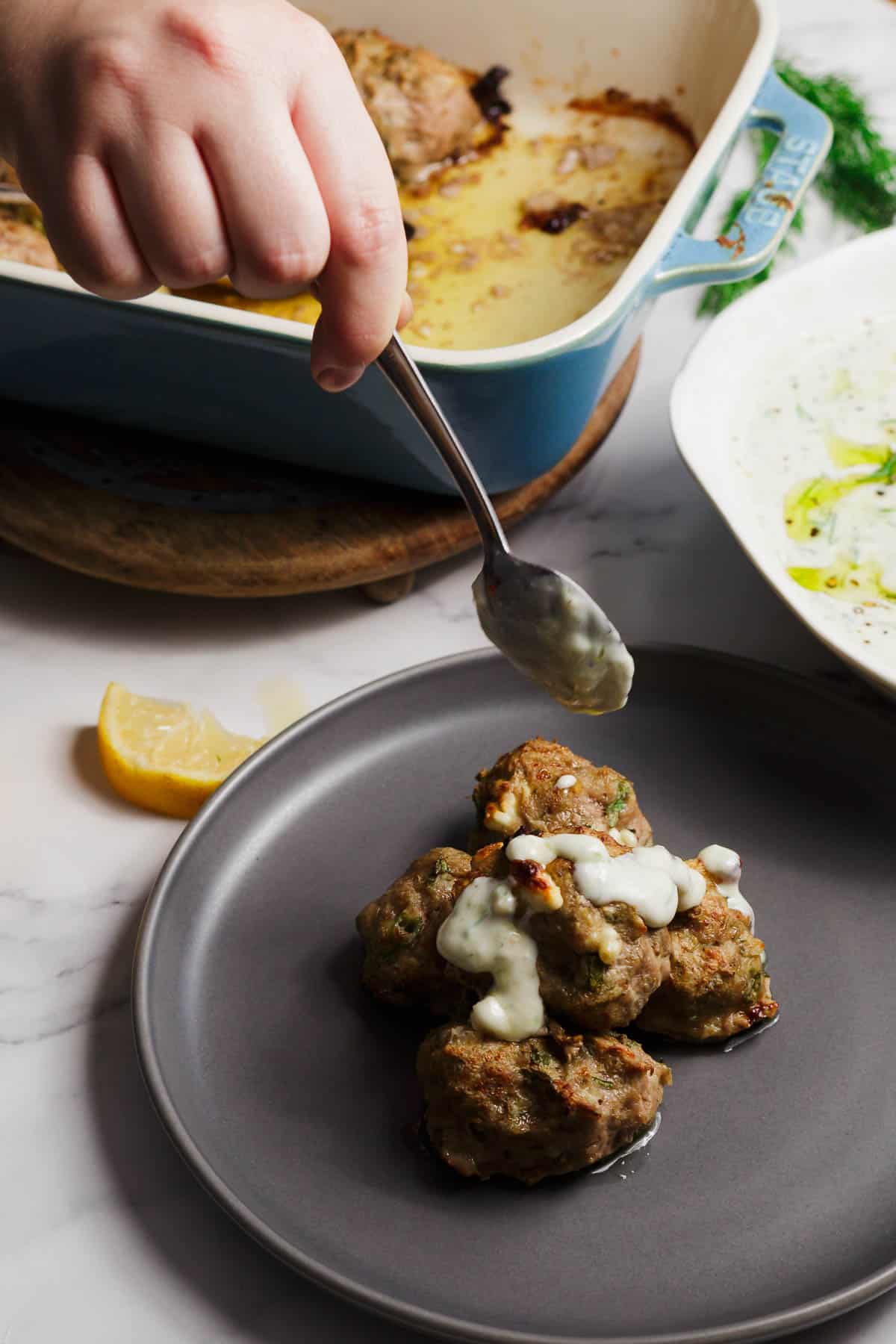
Cover the bowl and let it rest in the refrigerator for at least 30 minutes. It gives the garlic time to mellow and the dill to spread its flavor. Serve with Greek turkey meatballs, spooned next to bread and cucumbers, or as a cool side for salads.
Storage
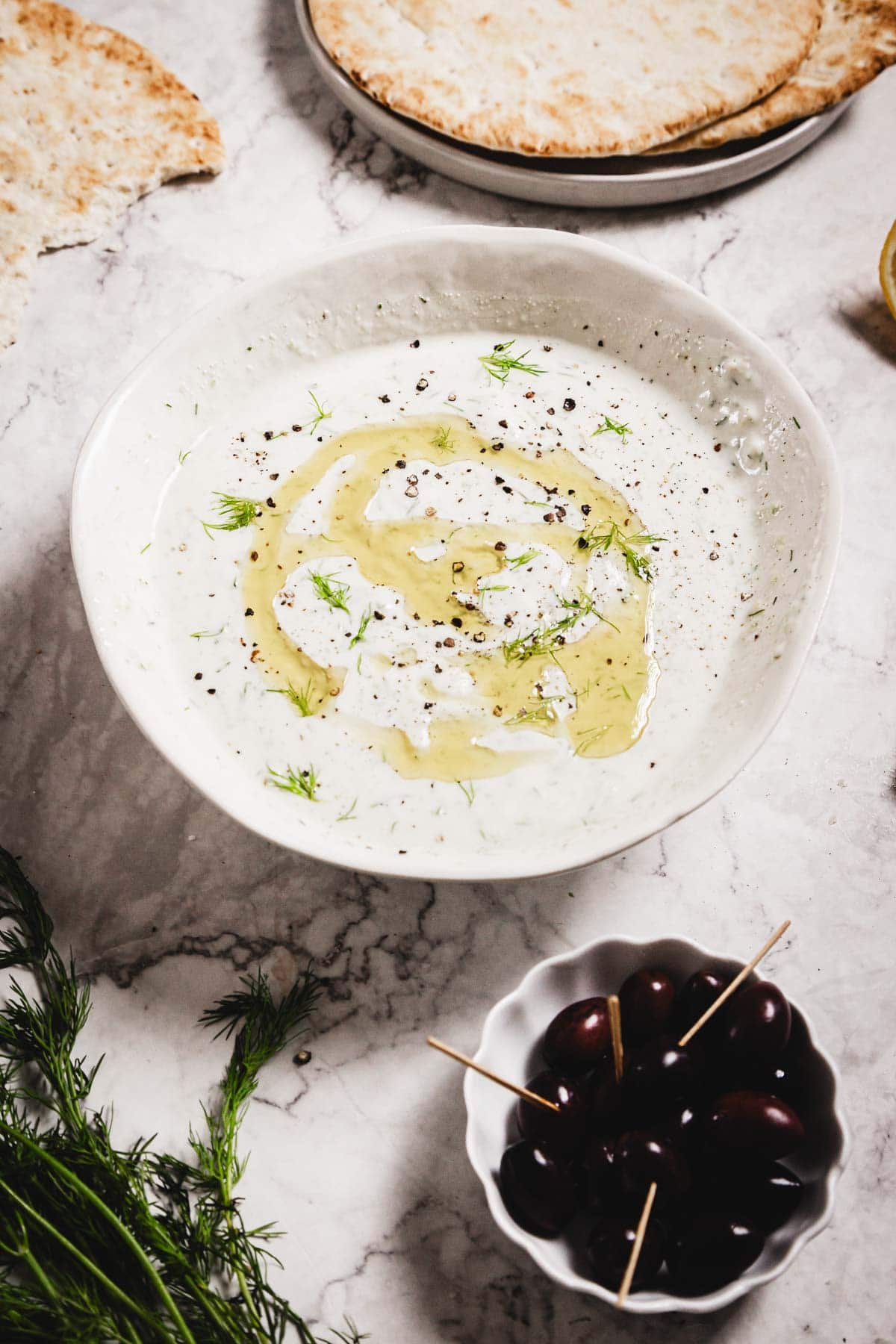
Tzatziki keeps well in the refrigerator for up to four days. Store it in a sealed glass jar or container to keep the garlic from overpowering other foods in the fridge. If you notice a bit of liquid pooling on top after a day or two, just give it a quick stir and it's good as new.
Tzatziki isn't meant for freezing! The yogurt separates and loses its smooth texture. but it's so quick to make fresh so there's rarely any reason to store it for long.
Top Tips
Drain the cucumber - I've learned the hard way that skipping this step leaves you with a watery bowl. I wrap the grated cucumber in a clean dish towel and squeeze until it feels almost dry.
Adjust the garlic to the crowd - if you're making this for friends or kids who aren't used to strong garlic, start with one clove and add more later. For family dinners, I stick with two, it's bold without being overpowering and the kids seem to love it.
Recipe
Tried and loved this recipe? Please leave a 5-star review below! Your reviews mean a lot to me, so if you've got any questions, please let me know in a comment.

Tzatziki Sauce
Equipment
- Wooden Spoon or Spatula
Ingredients
- 1 cup Greek yogurt
- 1 small cucumber grated and excess moisture squeezed out
- 2 cloves garlic minced
- 1 tablespoon olive oil
- 1 tablespoon fresh dill chopped
- 1 tablespoon lemon juice
- Salt and pepper to taste
Instructions
- Use the large holes of a box grater to shred the cucumber.
- Wrap the grated cucumber in a clean kitchen towel and squeeze firmly. Removing the excess liquid keeps the tzatziki thick and creamy.
- In a medium bowl, combine Greek yogurt, cucumber, garlic, olive oil, dill, and lemon juice.
- Add a pinch of salt and a few grinds of pepper, stirring well to blend all the flavors.
- Place the bowl in the refrigerator for at least 30 minutes to let the garlic mellow and the dill infuse.
- Spoon next to Greek Turkey Meatballs with Feta, use as a dip for cucumbers, or spread it into wraps and salads.