
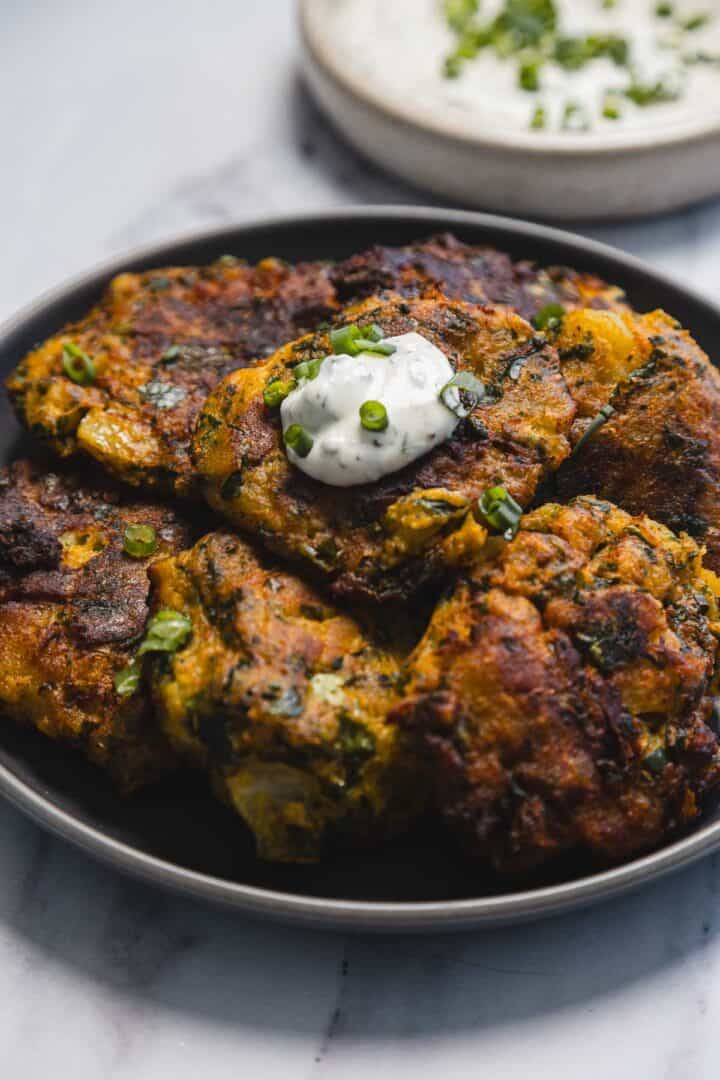
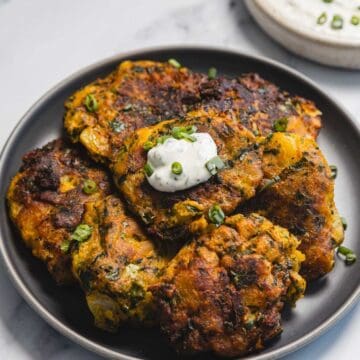
With crisp edges, warm spices, and fresh herbs, this Aruk-Iraqi Style Latkes recipe is one of the dishes that lights up our Hanukkah celebrations.
There are eight nights, but somehow the days feel longer. Hanukkah always seems to unfold slowly, like a song you know by heart but hear differently each year.
Maybe it's the rhythm of lighting candles while the kids sing off-key. Or the way oil clings to the air in the kitchen, fragrant and soft, even before the latkes hit the pan. We measure the holiday in flickers and frying sounds.
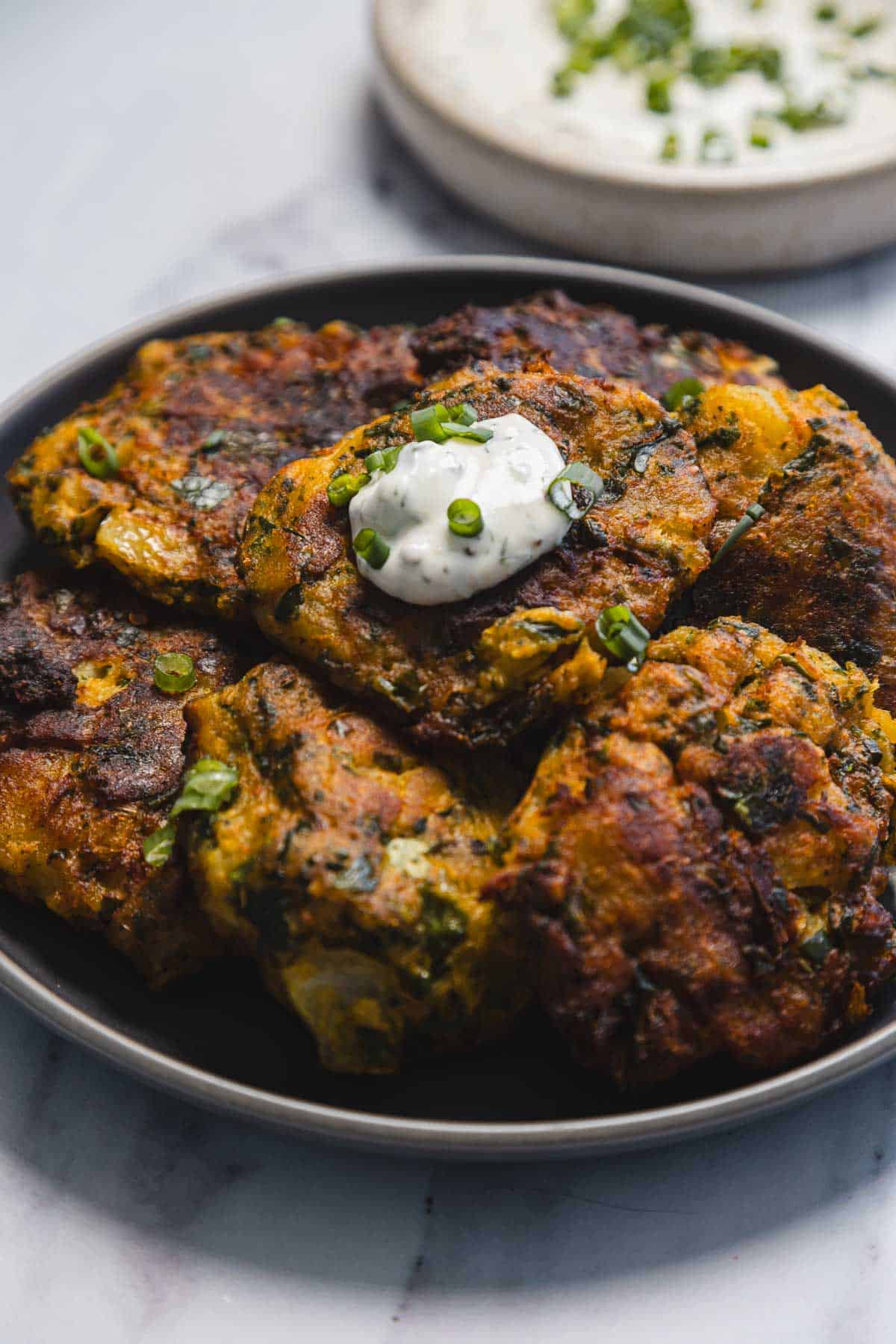
And while every family has their own version of the Hanukkah latke, ours now comes with a whisper of turmeric, a handful of scallions, and more herbs than you'd expect. These Aruk-Iraqi style latkes made with mashed potatoes and herbs, are our way of honoring the miracle of the oil while also honoring the many places Jewish food has traveled.
It's a latke, yes, but one that sings with the flavors of Baghdad and Basra, passed down by generations who carried Sabbath smells and holiday memories across borders and time.
In my home growing up, Hanukkah meant grated potato latkes. Russian, straightforward, sometimes carrot-flecked, always served with applesauce or sour cream. But when I tasted the variety of other Jewish dishes around the world, I found myself drawn into a new rhythm.
Green-Flecked, Golden-Lit
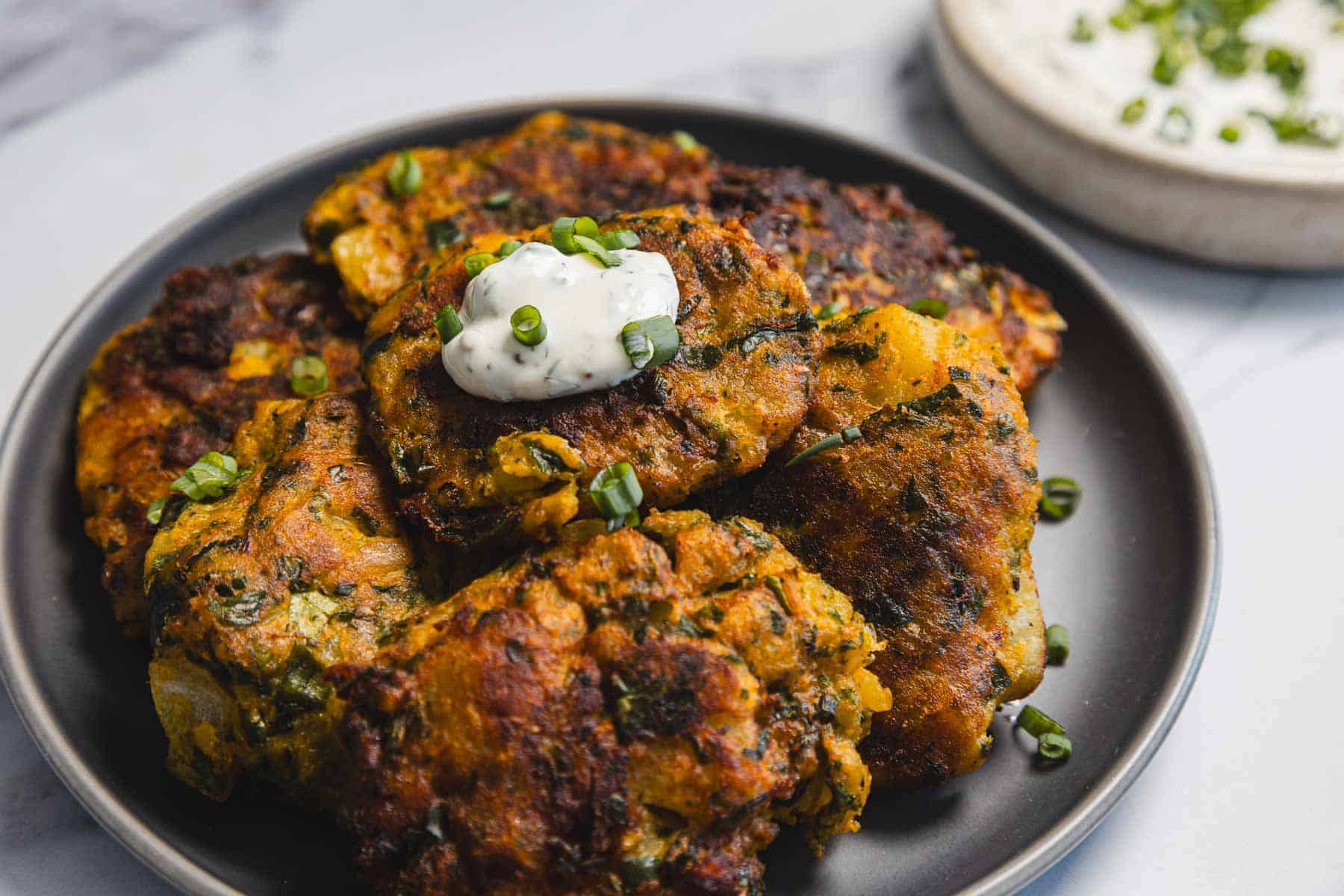
That's how aruk entered our kitchen, golden-edged, green-flecked, and unmistakably festive. The first time I made them, I didn't expect the kids to go for it. But they did. They dipped them in yogurt and ate them hot from the plate, oil still crackling at the edges.
Now, every year as we gather around the menorah, aruk makes its way onto the table alongside sufganiyot, dreidels, and songs about light. The herbs brighten the plate. The spices warm the room.
And the act of frying, of cooking something crisp in oil, just like Jews around the world have done for generations-ties us to something larger. It's the Hanukkah story retold not just in candles, but in the scent of allspice rising from a skillet.
They remind me of my grandma's Carrot Tzimmes, another dish tied to celebration and memory. Where her tzimmes was sweet and soft and simmered, aruk is lively and fast and golden. But both come from that same instinct: to feed your people with love, to honor tradition while making it your own, and to meet the holiday where you are-with what you have.
This is a recipe that doesn't ask much: a few boiled potatoes, a handful of herbs, a couple of spices pulled from the back of the drawer. But when it hits the oil, the kitchen shifts. The smell is instant, warming, grounding. The kind of smell that wraps around your shoulders like a blanket and makes your home feel exactly like it should during the Festival of Lights.
Ingredients
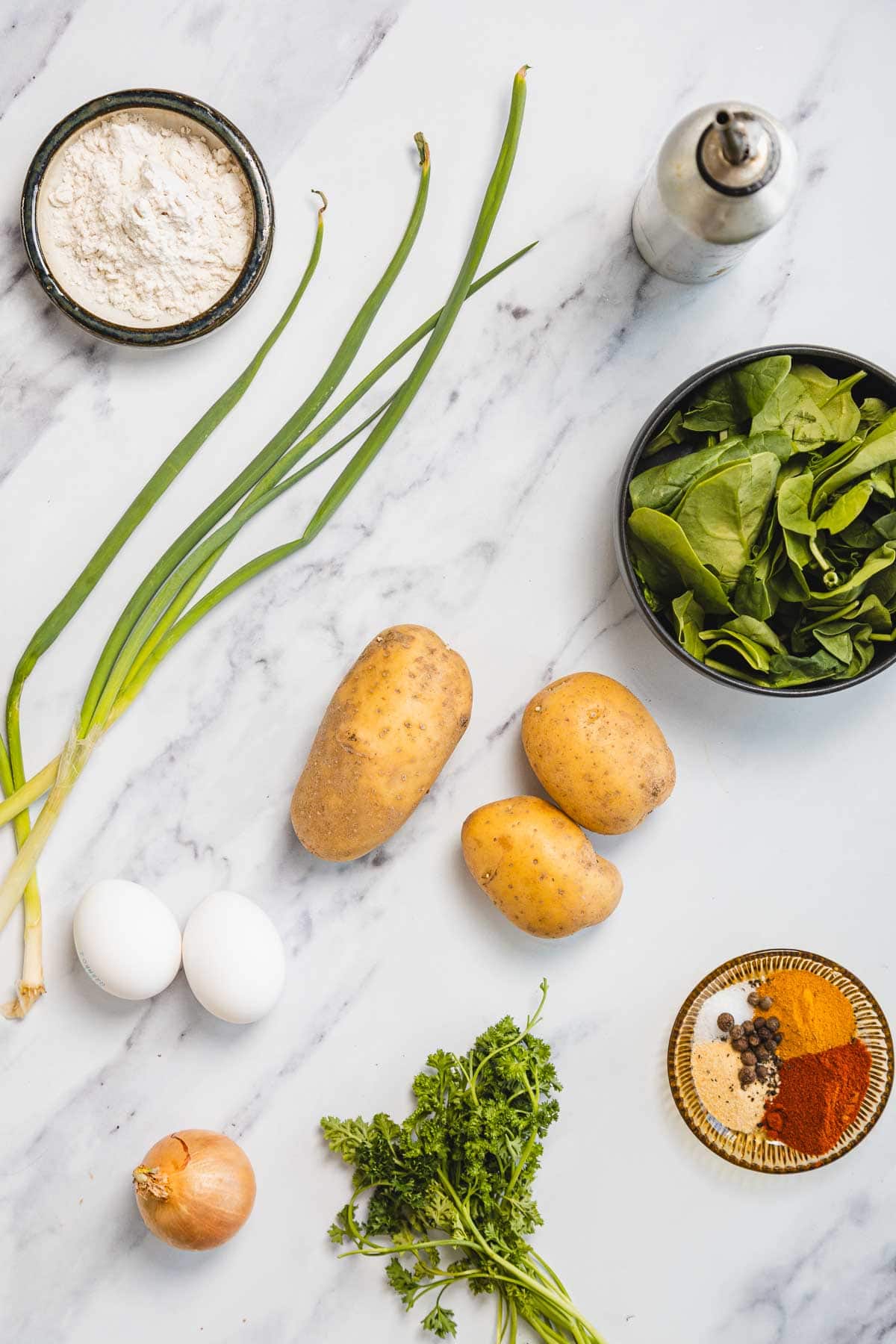
- Russet Potatoes - These give aruk their structure. Their high starch content means less flour is needed, and boiling them before mashing creates a soft, tender inside that contrasts beautifully with the crisp outer shell. If you don't have russets, Yukon Golds can work, but they're creamier, so you may need a little more flour for binding.
- Yellow Onion - Diced finely to melt into the patties as they fry. I like using yellow onion for its mild sweetness, but red onion adds a little more bite and color if that's what you have on hand. Shallots can work too, though you'll need a bit more to match the flavor.
- Eggs - Help bind the mixture so it holds its shape. I beat them lightly before mixing so everything comes together evenly. For a vegan version, I've had success using flax eggs (1 tablespoon ground flaxseed + 3 tablespoon water per egg) though the patties are more delicate and best pan-fried gently.
- Scallions, Parsley, and Spinach - These greens make aruk shine. Scallions add a fresh onion note, parsley brings brightness, and spinach gives body and color. If you're out of scallions, chives or even a little finely minced leek can work. No spinach? Try chard or kale, just chop it very fine and sauté it briefly first to soften.
- Flour - Just enough to hold things together without making them doughy. All-purpose is what I usually use, but if you're making these gluten-free, chickpea flour is a great substitute, it adds a slightly nutty flavor that works beautifully here.
See the recipe card for full list and exact quantities.
How to Make This Aruk-Iraqi Style Latkes Recipe
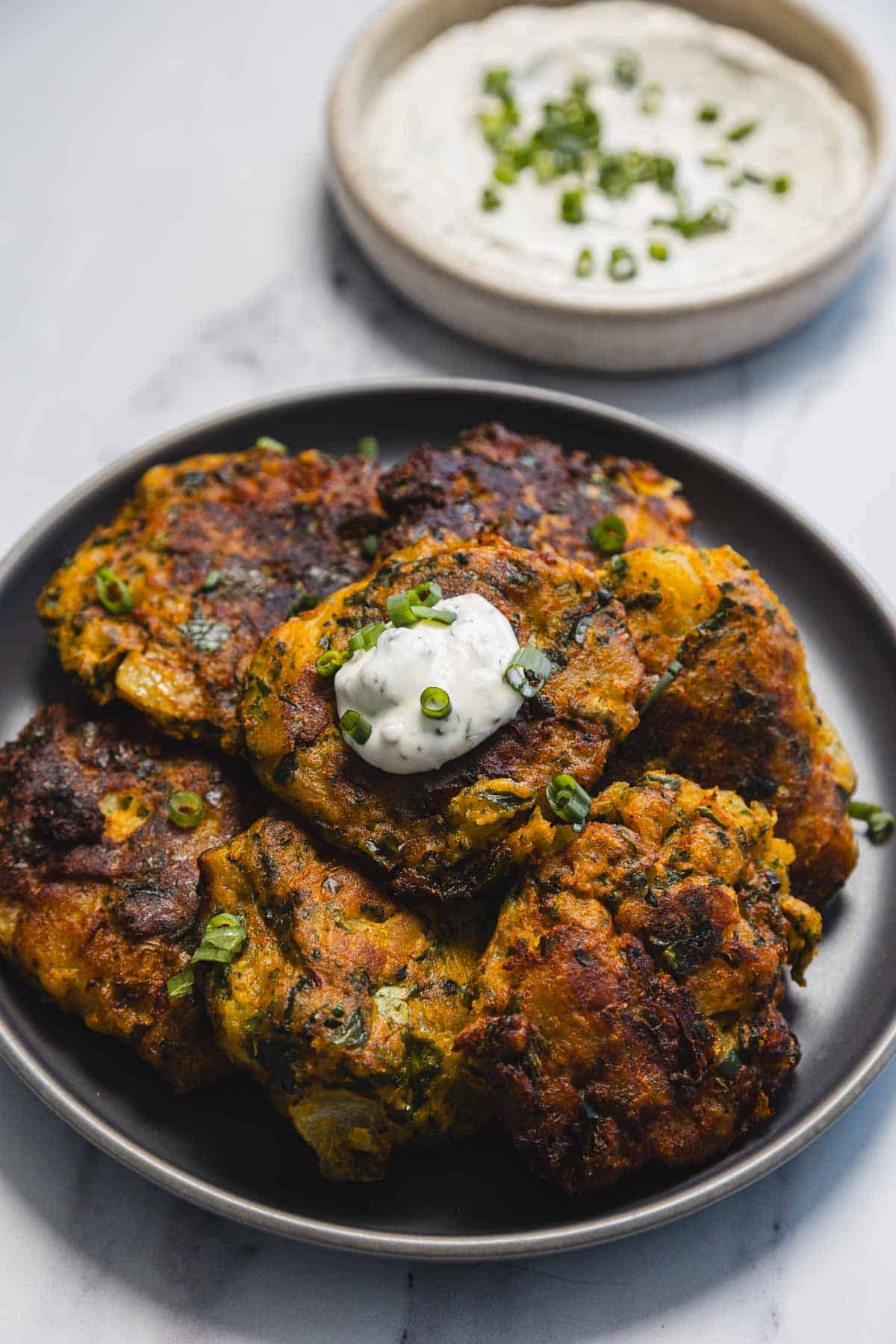
Its golden, crisp-edged, and full of herby flavor, these Aruk-Iraqi style latkes come together with pantry staples and a little bit of care. They're easy to prepare in stages, and perfect for making ahead and frying fresh when the menorah is lit and the table is set. Here's how to make this recipe:
Boil the Potatoes
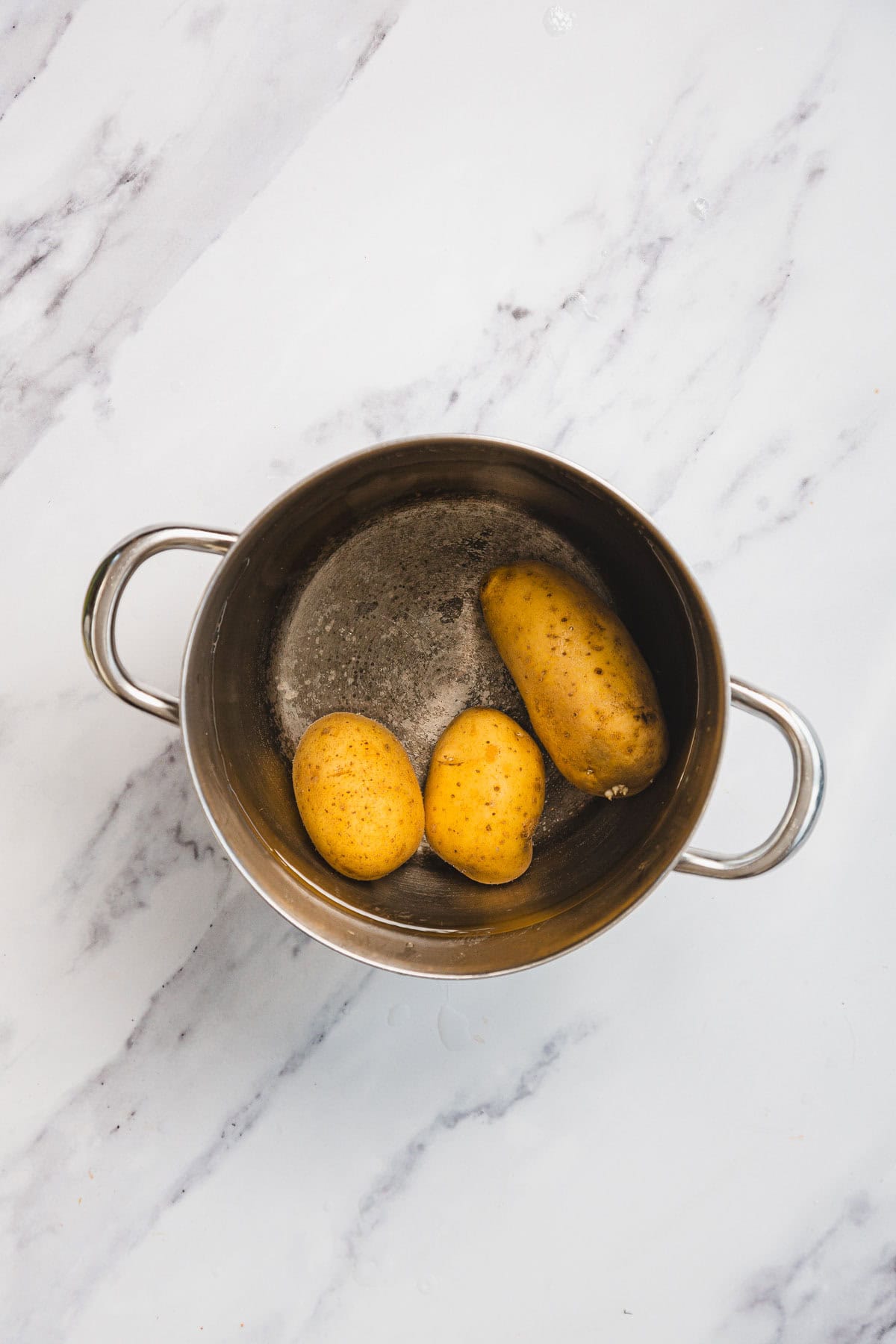
Place whole russet potatoes in a large pot and cover with water. Bring to a boil and cook for 20-25 minutes, or until a fork slips in easily. Drain and let them cool for 15 minutes-long enough that they won't burn your hands when peeling.
Mash the Base
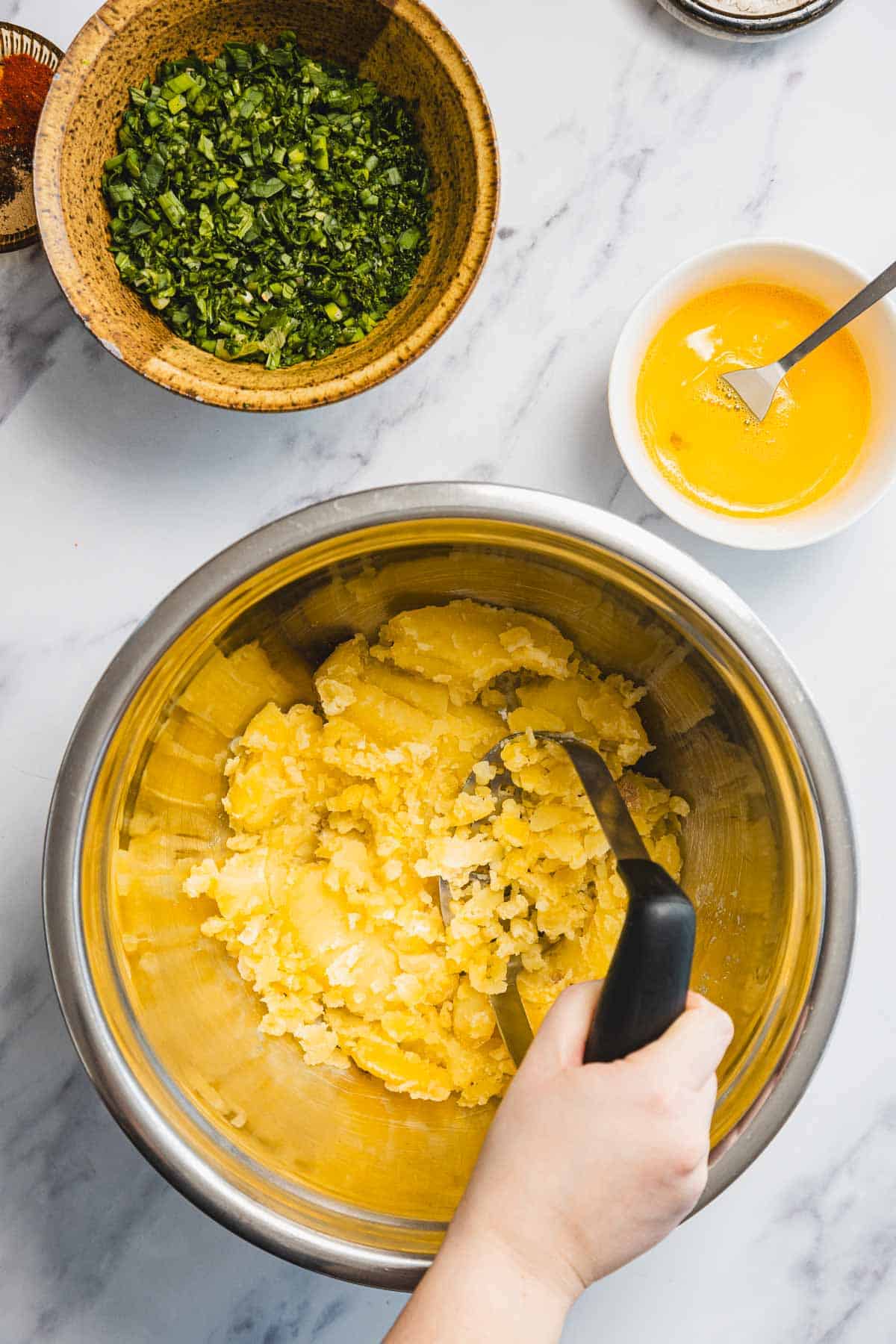
Peel the cooled potatoes and mash them in a large mixing bowl. You want them mostly smooth, with a little texture left for body. This is the moment when the kids usually hover, looking for a taste.
Mix the Greens and Spices
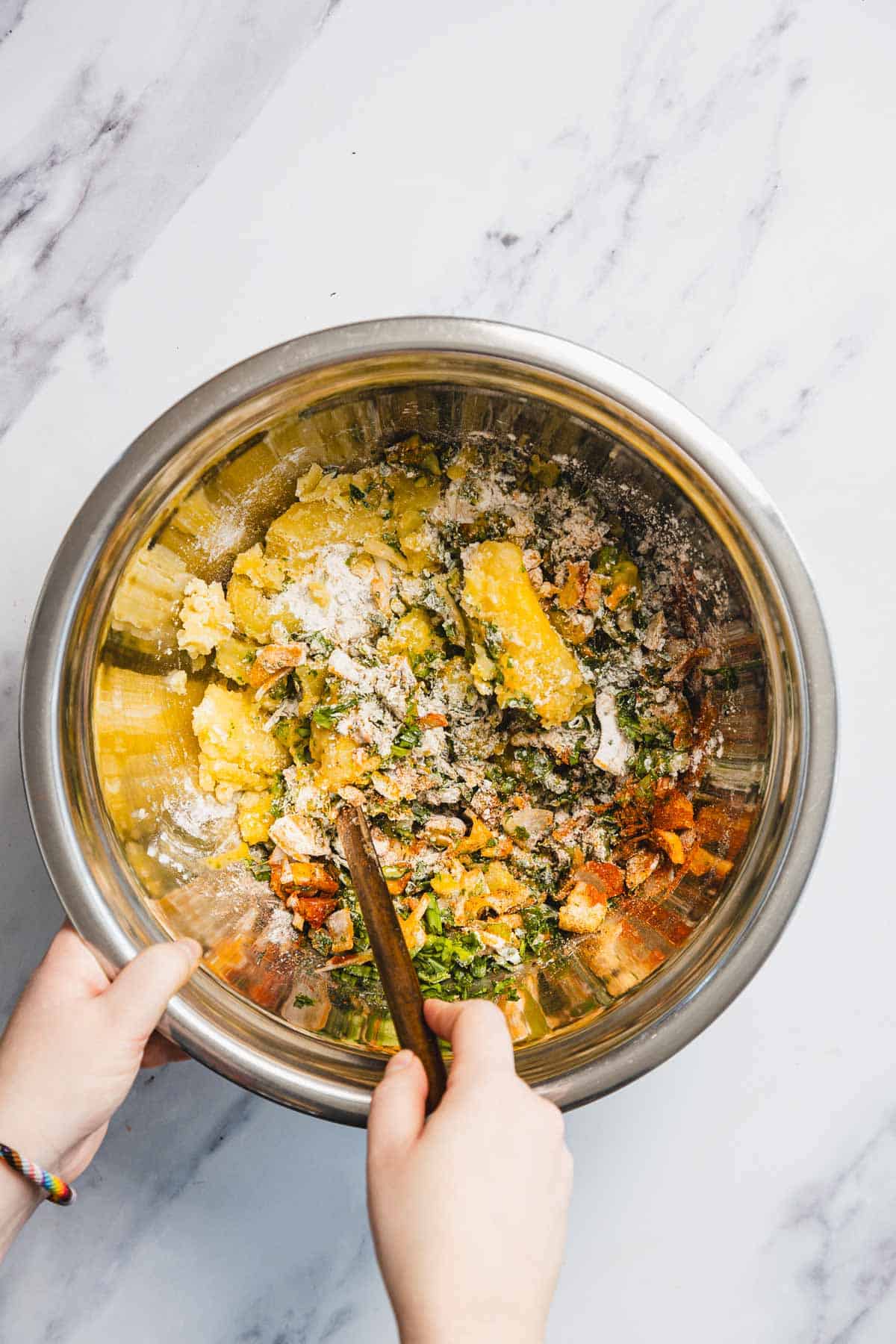
Add the chopped onion, scallions, parsley, spinach, eggs, flour, and spices to the mashed potatoes. Stir well for 2-3 minutes until everything is evenly distributed and the mixture is flecked with herbs and golden turmeric throughout.
Chill the Mixture
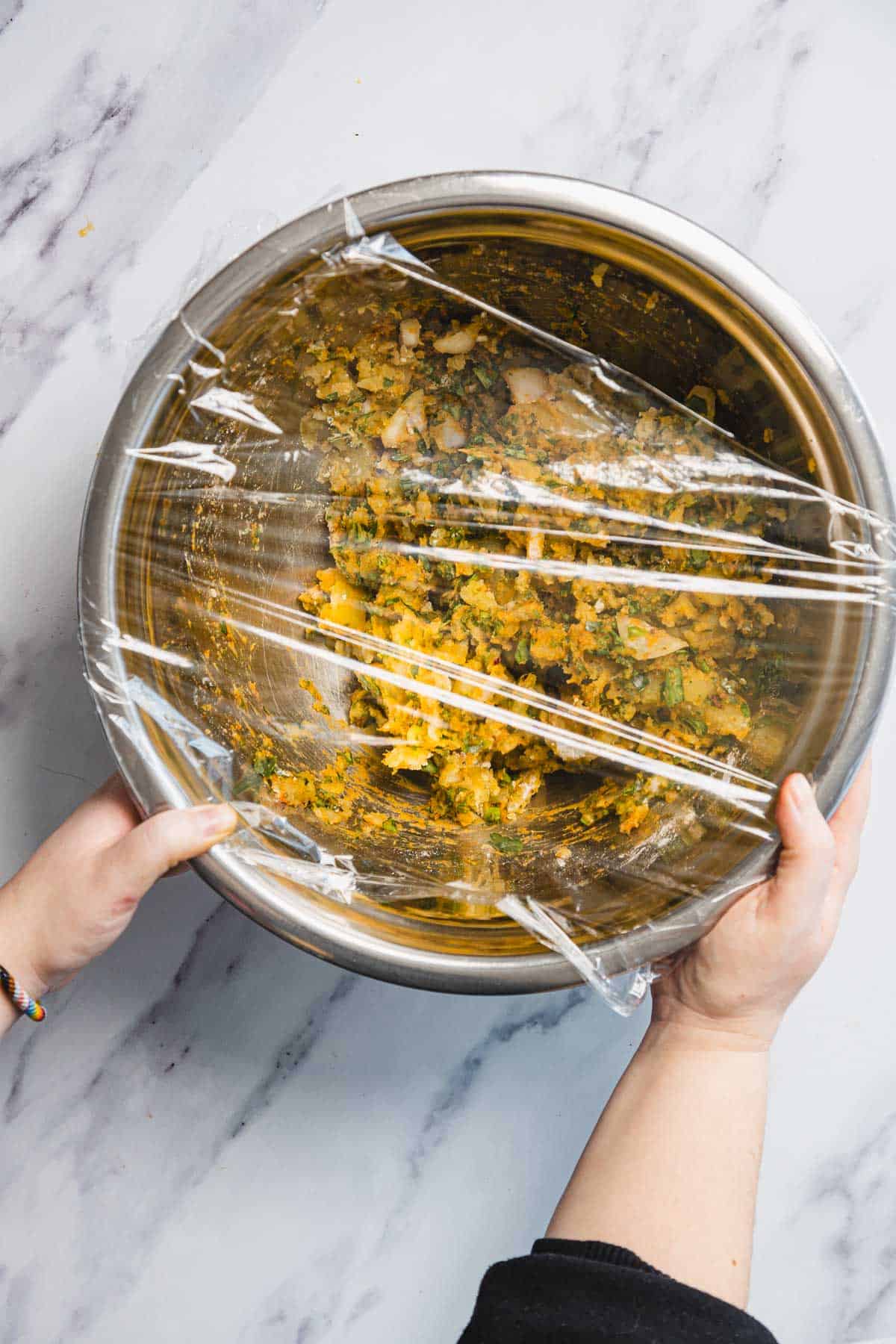
Cover the bowl with plastic wrap and refrigerate for at least 30 minutes. This resting time helps the mixture firm up and makes shaping easier.
Shape the Patties
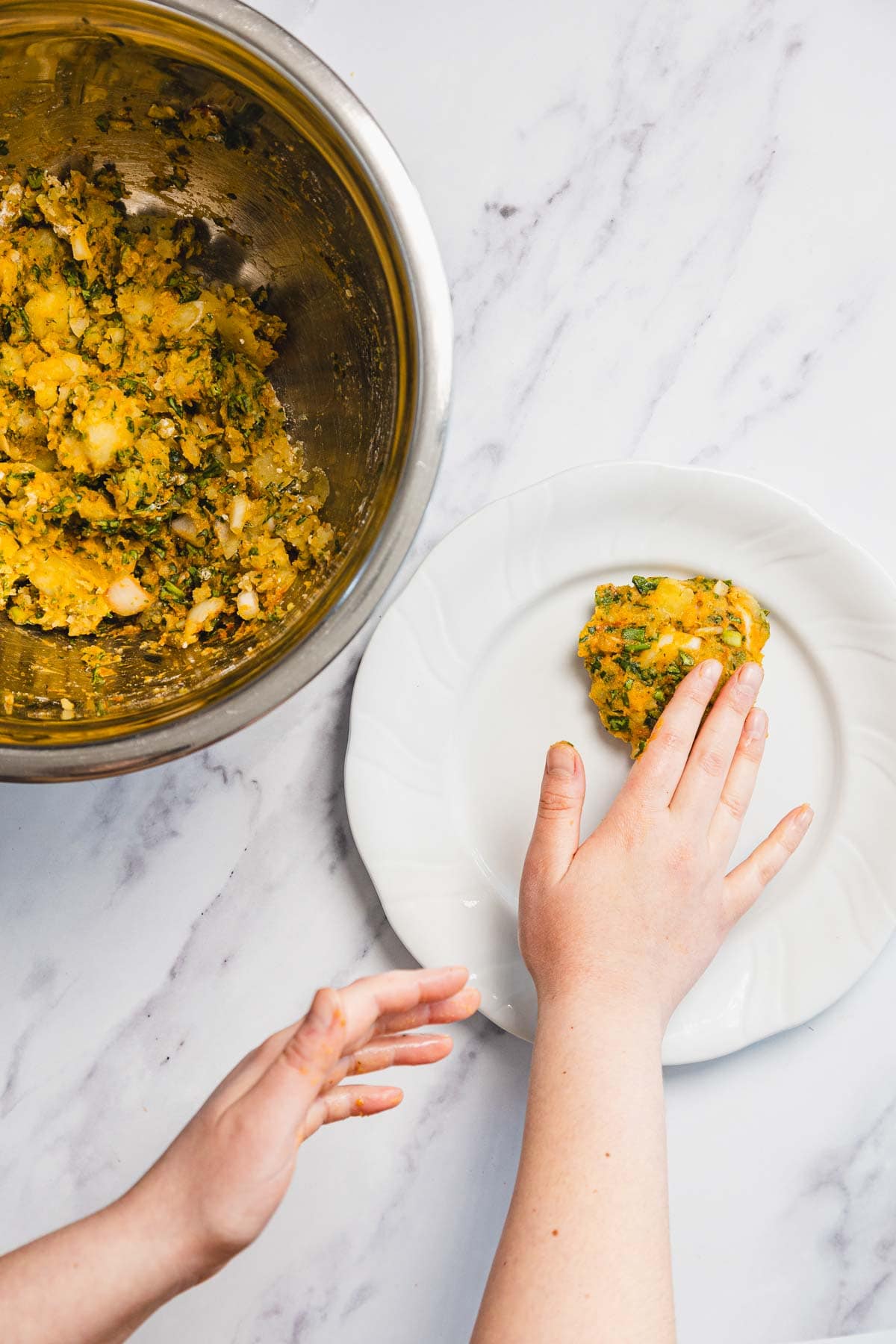
Wet your hands lightly to prevent sticking, then scoop out about ¼ cup of the mixture and shape it into a flat, 3-inch patty. Repeat, forming patties one at a time. Each one should take about 30 seconds to shape.
Fry Until Golden
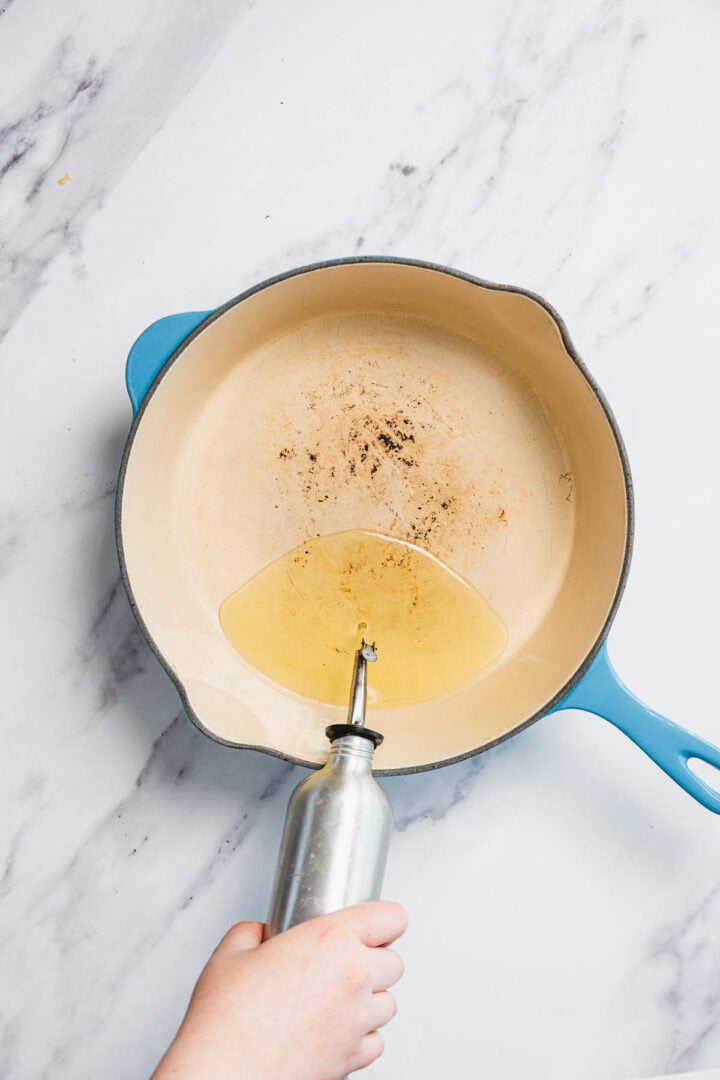
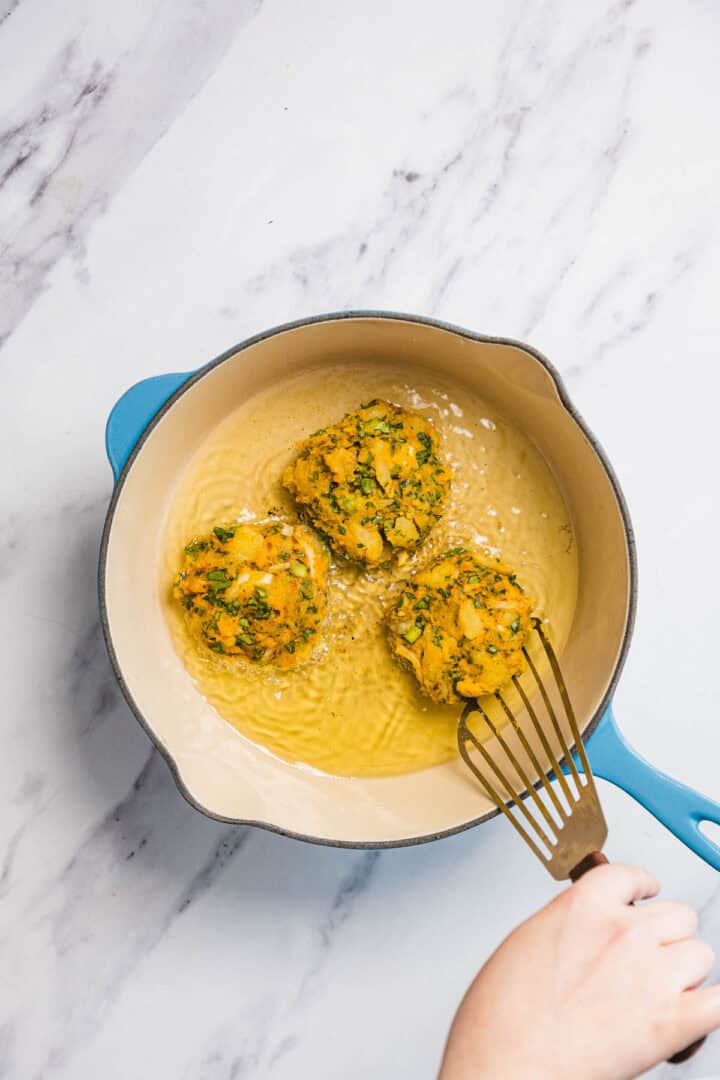
Pour about ¼ inch of vegetable oil into a large frying pan and heat over medium-high for 5 minutes. When the hot oil is shimmering, carefully place the patties into the pan. Don't overcrowd, work in batches if needed.
Flip and Finish
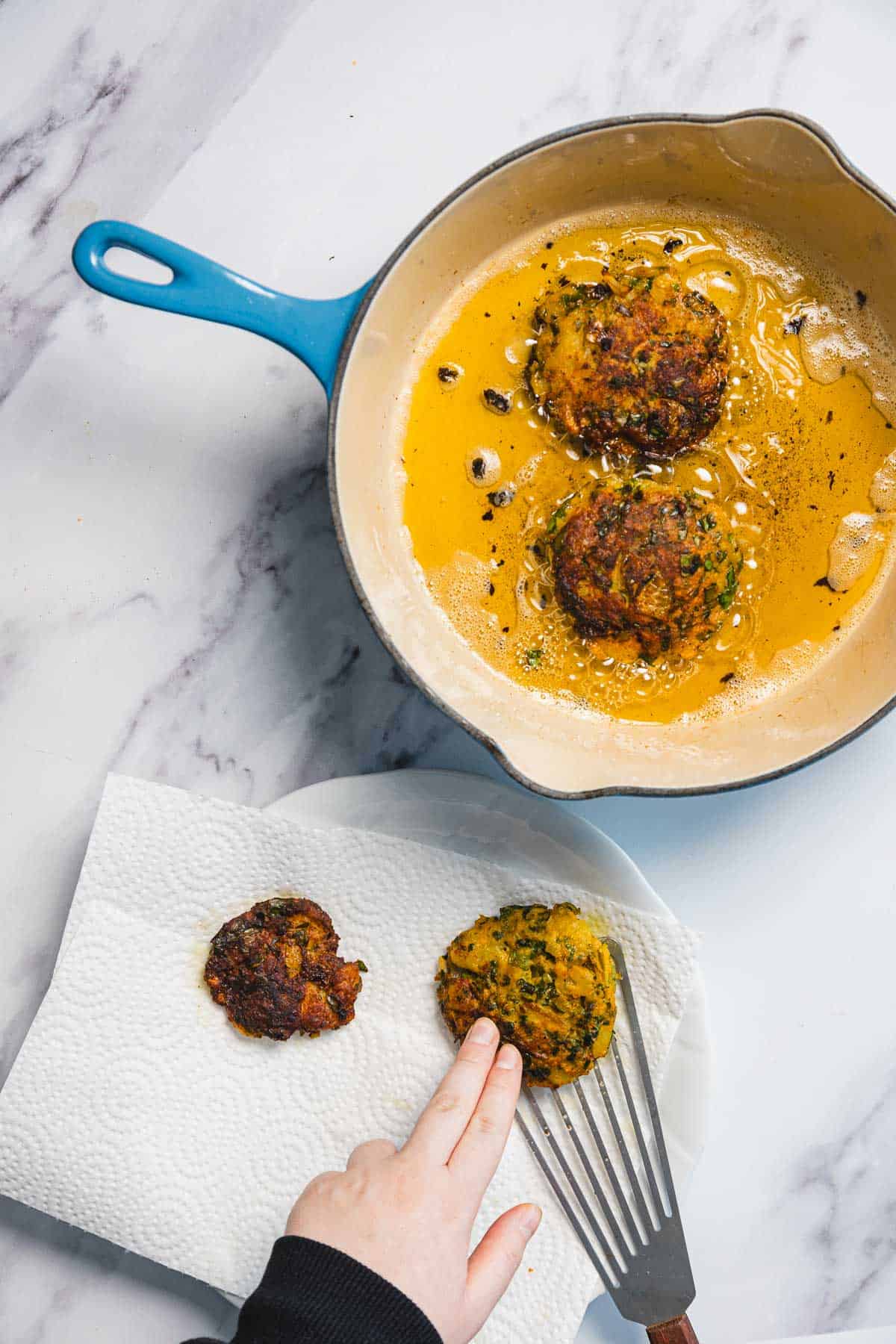
Fry each aruk for 3-4 minutes per side, or until golden and crisp. Use a slotted spoon to transfer them to a paper towel-lined plate and let drain for 1-2 minutes.
Serve Warm
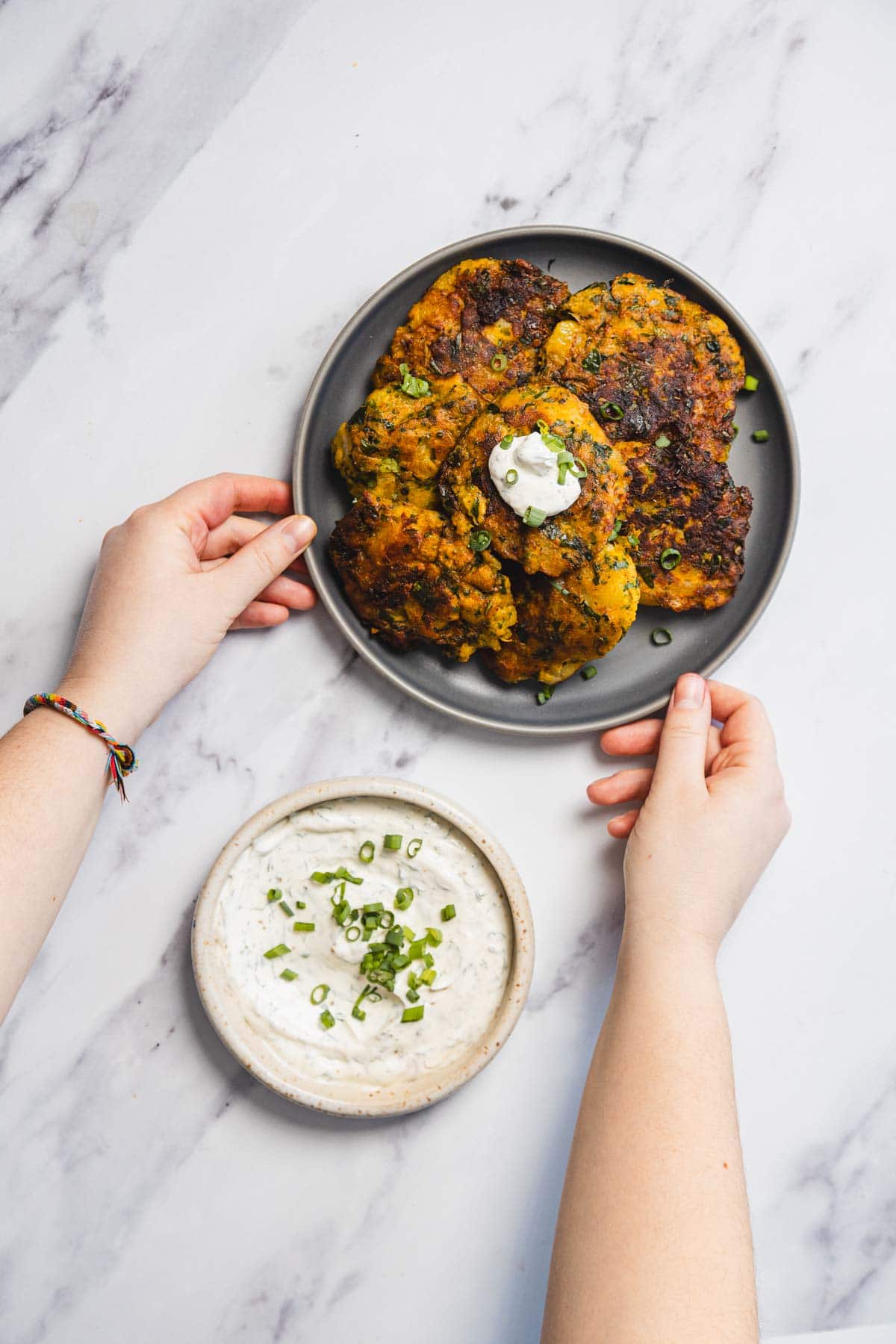
These are best hot, right out of the pan. Serve with yogurt, tahini sauce, amba, or even a squeeze of lemon, whatever brings joy to your table.
Storage
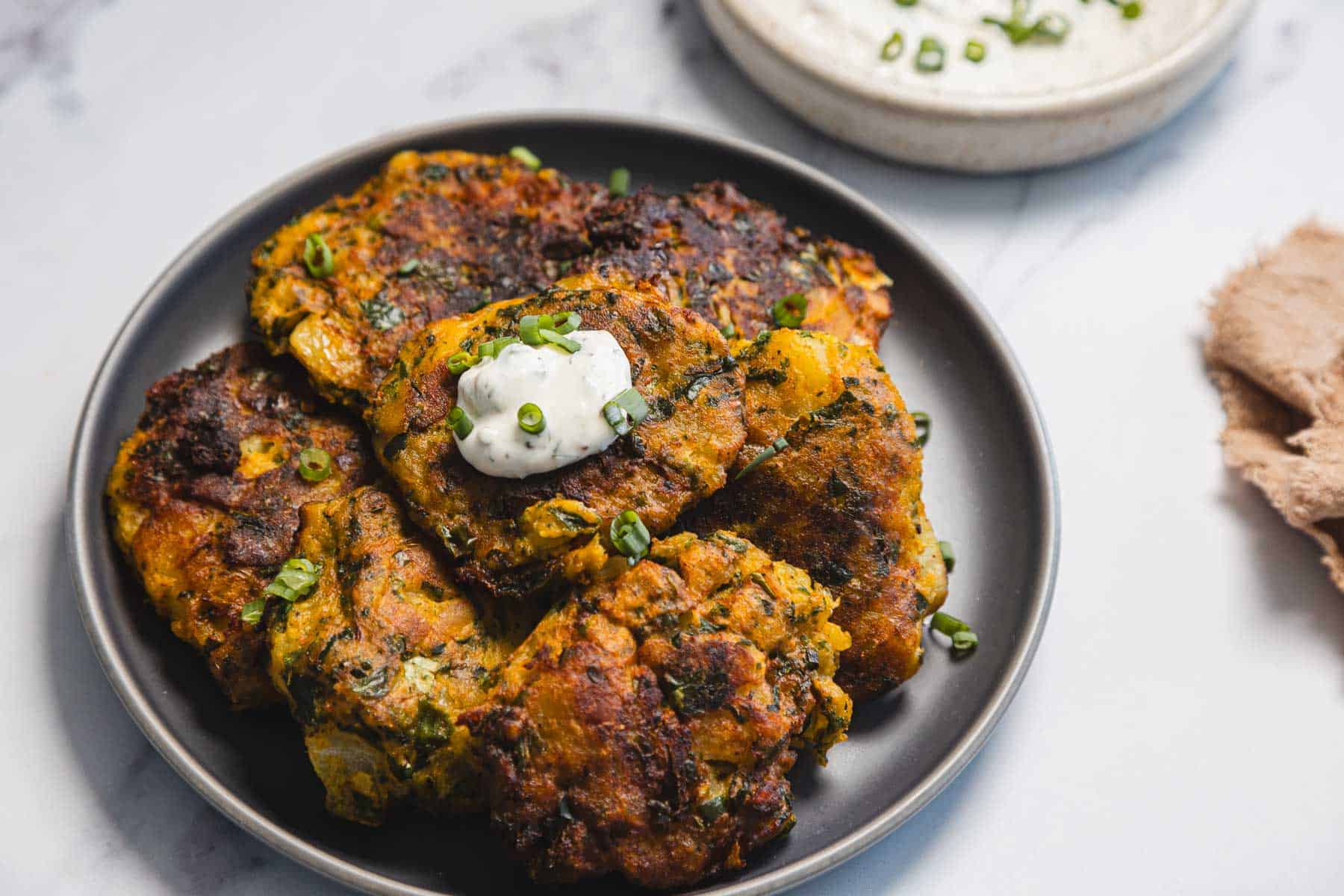
If you do have leftovers, let them cool completely, then transfer them to an airtight container. They'll keep in the fridge for up to 4 days.
To reheat, I like to pop them into a skillet with a little oil until the edges crisp up again, almost better than the first time. You can also warm them in the oven at 350°F for about 10 minutes, flipping once. The microwave works in a pinch, but they lose that golden finish I love.
I don't recommend freezing aruk once fried, the herbs and mashed potato base tend to weep and soften. But the uncooked mixture? That you can refrigerate for up to a day in advance, tightly wrapped. It's what I do when prepping ahead for Hanukkah or a busy Friday night.
Top Tips
Top Tips
Chill Before You Shape - don't skip the resting time in the fridge. Even just 30 minutes helps the mixture firm up and makes shaping the patties easier (and less sticky). I usually mix the batter during naptime, chill it, then fry right before dinner.
Use Damp Hands - the potato mixture can be soft and a little sticky. Wet your hands lightly before shaping each patty, it keeps things neat and saves you from constantly washing your fingers between each one.
Don't Rush the Frying - let the oil get hot before adding your patties. I always test it with a small spoonful first. If it sizzles gently, it's ready. Too cold, and the aruk will soak up oil; too hot, and the outside will burn before the inside sets. Medium heat is your sweet spot for that perfect golden crust.
What to Serve With Aruk-Iraqi Style Latkes
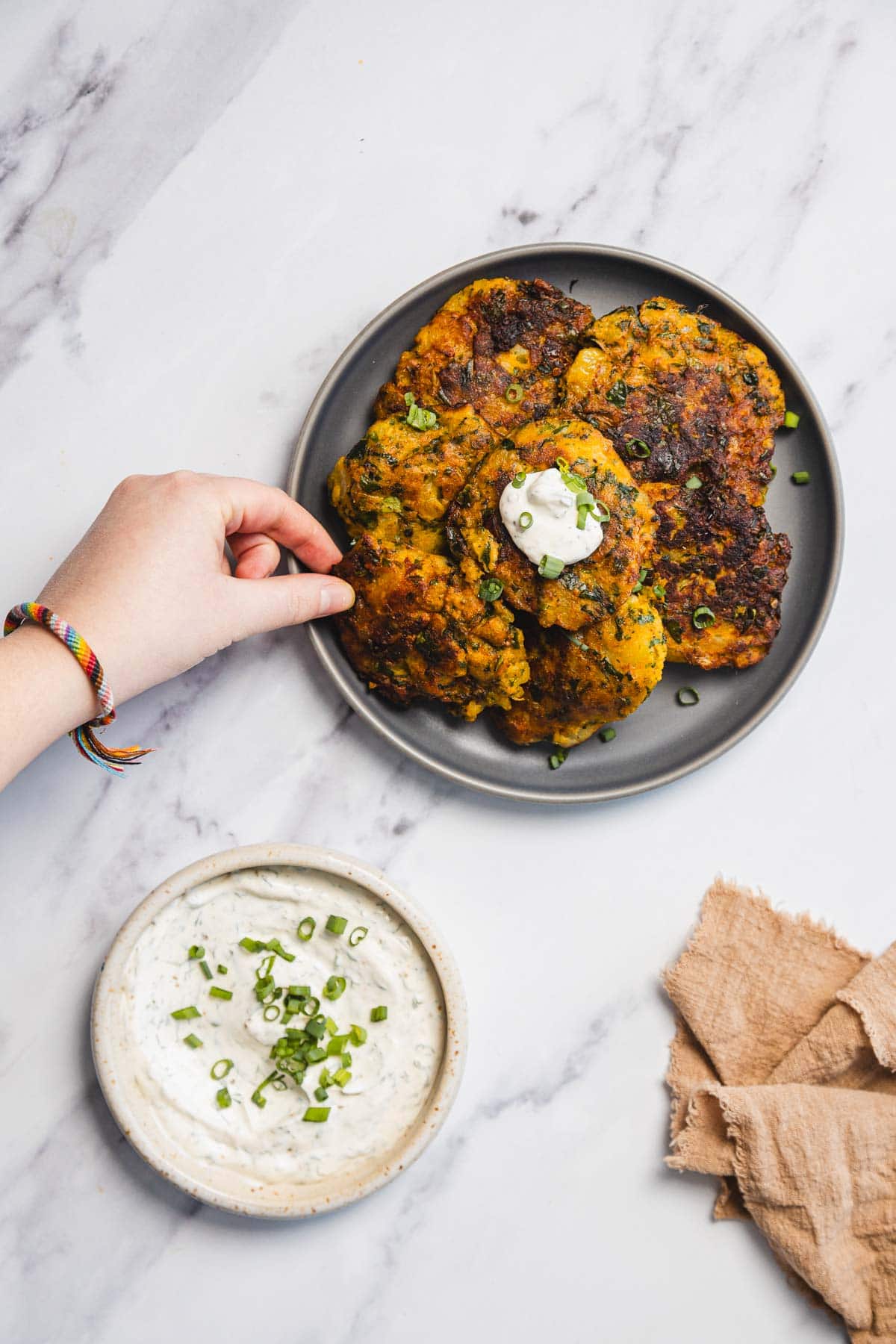
These golden aruk are beautiful on their own, especially fresh from the skillet with yogurt or tahini sauce for dipping, but you can pair them with dishes that balance their richness and complement their herb-forward flavors.
For something crisp and bright, I serve them with my Cucumber Crispy Rice Salad. The cool crunch and gentle acidity contrast the warm patties perfectly, it's a combination that feels both grounding and fresh.
If you're leaning into something more layered, the Eggplant Tomato Stacks bring softness and depth to the plate. We've served the two together at Shabbat dinners, and the flavors feel like they're speaking the same language.
And for brunch or a hearty side, nothing beats a few Authentic Colombian Cheese Arepas nestled beside the aruk. Soft inside, golden outside, and perfect for soaking up any extra sauce.
For something unexpected (and honestly, pretty fun during Hanukkah), I've even served them alongside Matzo Lasagna with Cottage Cheese. It's unconventional, but it always disappears from the table.
Recipe
Tried and loved this recipe? Please leave a 5-star review below! Your reviews mean a lot to me, so if you've got any questions, please let me know in a comment.
Aruk-Iraqi Style Latkes
Equipment
- box grater optional
- paper towels
Ingredients
- 3 russet potatoes
- 1 large yellow onion finely diced
- 2 eggs beaten
- 3 tablespoon flour or chickpea flour for gluten-free
- ½ cup chopped scallions
- 1 cup chopped parsley
- 1 cup chopped spinach
- 1 teaspoon turmeric
- ½ teaspoon paprika
- ½ teaspoon allspice
- ½ teaspoon garlic powder
- 1 tablespoon salt
- freshly ground black pepper to taste
- vegetable oil for frying
Instructions
- Place the whole potatoes (unpeeled) into a large pot and cover with water. Bring to a boil and simmer for 20-25 minutes, or until a fork pierces them easily.
- Drain the potatoes and let them cool for about 15 minutes. Once cool enough to handle, peel and mash them in a large mixing bowl until mostly smooth, with a few bits for texture.
- Add the chopped onion, scallions, parsley, spinach, eggs, flour, and all spices into the bowl with the mashed potatoes. Stir well for 2-3 minutes, until the mixture is fully combined and flecked with herbs and color.
- Cover the bowl with plastic wrap and refrigerate for 30 minutes. This helps firm up the batter for easier shaping and better frying.
- Wet your hands with cold water. Scoop out about ¼ cup of the mixture and shape into a 3-inch wide, flat patty. Repeat with the remaining mixture, working quickly.
- Pour vegetable oil into a large frying pan to about ¼-inch depth. Heat over medium-high heat for 5 minutes, or until shimmering.
- Carefully place 3-4 patties into the hot oil without overcrowding the pan. Fry for 3-4 minutes per side, or until golden brown and crisp.
- Remove with a slotted spoon and transfer to a plate lined with paper towels. Let drain for 1-2 minutes. Serve warm with yogurt, tahini sauce, amba, or your dipping sauce of choice.

Jael says
Yummy Happy Chanuka&Chag Sameach
Chris says
Thank you for the history and the recipe. My family has made one close to this for generations but I never knew where it came from. They taste like my Great Great Grandmother use to make.
kseniaprints says
So glad it helped clarify a loved family recipe 🙂