

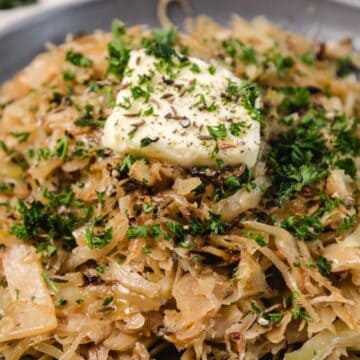
Celebrate St. Patrick's Day with buttery cabbage that's simple, tender, and full of home-cooked warmth.

I grew up thinking cabbage was serious food. In our kitchen, it meant a big pot on the stove and my mother moving slowly between sink and burner, slicing through a dense green head with steady hands.
Her stewed cabbage cooked low and slow, softening into something silky and slightly sweet, the edges turning darker as the hours passed. It stretched across dinners, tucked beside roasted chicken one night, spooned over potatoes the next. By the third day, it tasted deeper, fuller, as if time itself had settled into it.

That cabbage taught me patience long before I understood technique. Years later, when I began developing recipes for this space, I realized the turning point had little to do with extra ingredients. It had everything to do with heat and restraint. Rush cabbage, and it releases water, going pale and limp. Give it space in a wide skillet with butter and onions, and it changes slowly, edges caramelizing, sweetness rising to the surface.
As St. Patrick's Day approaches, I find myself thinking about Ireland. I have never been, though it lives on my list of places I hope to walk through one day. I picture green hills, long tables, and cabbage cooked simply with butter alongside hearty meals.
In Ireland, especially around Dublin and Cork, buttered cabbage often appears next to corned beef and potatoes, sometimes scented with caraway. The instinct feels familiar. Different kitchens, but same understanding: cabbage responds to care.
This recipe sits somewhere between my mother's stewed cabbage and the Irish buttered cabbage I have read and studied about. I caramelize the onions fully, a full ten minutes until golden and fragrant. Then the cabbage cooks gently until the edges turn nutty and brown. That detail matters. It separates bland cabbage from the kind you eat straight from the pan.

Cabbage runs through many immigrant kitchens. It shows up in braises, soups, and stuffed rolls. In Israel, cabbage salads land bright and sharp on the table. My own hot and sour shredded napa cabbage salad lives in the fridge for weekday lunches, while this purple cabbage pickled mushroom salad carries a Russian accent with its vinegar bite. Even my spicy air fryer cabbage steaks with tahini nod toward Middle Eastern flavors, tahini pooling in the grooves of roasted leaves.
For St. Patrick's Day, this buttered cabbage feels like a quiet bridge between the kitchen that raised me and the green hills I hope to see one day. It asks for little, relying on butter, onion, and time, and gives back in tenderness and depth. You work with what you have. Let it soften slowly. And trust that patience will carry the flavor.

Ingredients

- Green Cabbage - Cabbage is the heart of this dish, so choose it carefully. I use a small green head because it holds structure as it cooks. Green cabbage develops natural sweetness during a long sauté, Savoy cabbage works well if you prefer more delicate leaves and a slightly milder flavor. Red cabbage can be used, though it will cook down darker and slightly firmer, with a deeper earthiness.
- Butter - Butter defines this recipe. I use full-fat butter for depth and proper browning. For a dairy-free version, good-quality olive oil or vegan butter can step in, though the flavor will lean more Mediterranean than Irish. Ghee also works and adds a slightly richer finish.
- Onion - Onion builds the base layer of sweetness. Yellow onions are my default because they caramelize evenly. White onions are slightly sharper but still reliable. Shallots can be used for a softer, more delicate flavor, though they cook faster and require attention to avoid browning too quickly.
See the recipe card for full list and exact quantities.
How to Make Buttered Cabbage Recipe

If you're used to cabbage being an afterthought, this version offers something more satisfying. It blends buttery richness with sweet vegetables and a hint of caraway, bright and soft at once, with a simple method for any night. Here's how to make this easy side dish, step by step:
Melt the Butter and Cook the Onions

- Add the sliced onions in an even layer. At first, they will look firm and slightly sharp. After a few minutes, they begin to turn translucent and glossy. Around the halfway point, they soften fully and start picking up color. By ten minutes, you are looking for a deep golden shade at the edges and a light sweetness in the aroma.
- If the onions brown in patches too fast, lower the heat and stir more often. If they stay pale and watery, give them time. Properly cooked onions should feel soft when pressed with a spoon and leave a faint golden coating on the pan. This base determines how rich the cabbage will taste later.
Add the Cabbage and Remaining Butter

- Within several minutes, the cabbage begins to wilt. The leaves turn glossy and reduce in volume. You may notice liquid collecting at the bottom of the pan. That is normal. Keep the heat steady so the moisture slowly cooks off rather than steaming the cabbage.
- If the pan looks dry too early, the heat is likely too high. Lower it slightly. If the cabbage sits in a pool of liquid without changing color, increase the heat just enough to encourage evaporation.
Cook Until Tender and Caramelized

- You are looking for very tender strands that bend easily when lifted with a fork. The edges should turn golden brown in spots, especially where they touched the pan. That is where the flavor deepens. The color shift from pale green to lightly golden signals that the sugars in the cabbage have developed.
- If the cabbage remains pale and soft with no browning, it likely cooked too quickly or with too much moisture trapped inside. Give it more time uncovered. If it turns dark brown too fast, reduce the heat and stir to prevent burning.
Season and Finish

- Add the caraway at the end so its flavor stays clear and does not turn bitter from prolonged heat.
- Taste before serving. The cabbage should feel soft throughout, slightly sweet from the onions, and rich from the butter. Serve it hot, straight from the skillet, when the edges are still golden and fragrant.
Storage

Let the buttered cabbage cool completely before storing. Transfer it to an airtight container and refrigerate for up to 4 days. To reheat, warm it in a skillet over medium-low heat until heated through. This helps restore some of the original texture and caramelization. You can also microwave it in short intervals, stirring between each, though the cabbage will be softer.

Buttered cabbage can be frozen, but the texture will change. Cabbage holds a lot of water, so once thawed it may be noticeably softer and less caramelized. To freeze, cool completely, then place in a freezer-safe container or tightly sealed freezer bag. Remove as much air as possible. Freeze for up to 2 months.
Top Tips
Use a Wide, Heavy Pan - crowding is the fastest way to end up with steamed cabbage instead of caramelized cabbage. A wide skillet (not a saucepan) gives the cabbage direct contact with heat so it can brown properly. If your pan is small, cook in batches.
Salt in Layers, Not All at Once - lightly season the onions first, then adjust again at the end. Salting only at the finish can leave the interior flat, while salting too heavily at the start can draw out excess moisture and slow browning. A restrained, layered approach gives better depth.
Recipe
Tried and loved this recipe? Please leave a 5-star review below! Your reviews mean a lot to me, so if you've got any questions, please let me know in a comment.
Buttered Cabbage
Equipment
- Large, wide skillet
- Cutting board and knife
- Wooden Spoon or Spatula
Ingredients
- 1 small head cabbage chopped
- 4 tablespoons butter
- 1 medium onion sliced
- Salt and pepper to taste
- ½ teaspoon caraway seeds optional
Instructions
Melt Butter and Cook Onions
- Heat 2 tablespoons of butter in a wide skillet over medium heat. Add the sliced onions in an even layer.
- Cook for about 10 minutes, stirring occasionally, until they become soft, golden, and fragrant. Too high heat can scorch them, too low will slow caramelization.
Add Cabbage and Remaining Butter
- Add the chopped cabbage and the remaining 2 tablespoons butter. Stir gently to coat everything evenly.
Cook Until Tender and Caramelized
- Continue cooking for 20-25 minutes, stirring occasionally. Let some cabbage edges touch the hot pan to develop deep golden spots.
- If too watery, increase heat slightly; if browning too fast, reduce heat.
Season and Serve
- Finish with salt, pepper, and caraway seeds if using. Taste and adjust seasoning. Serve hot straight from the skillet for best texture.


Robin says
Enjoyed making the butter cabbage fun for the week of St Patrick's Day. Thank you for sharing.
Robin
Brenda says
Great recipe, Ksenia. I live in a two person household with a non
cabbage eater, and a quarter of the cabbage was enough for several meals for me. It's delicious and caramelized which is my preference. And can repeat once this batch is eaten!