
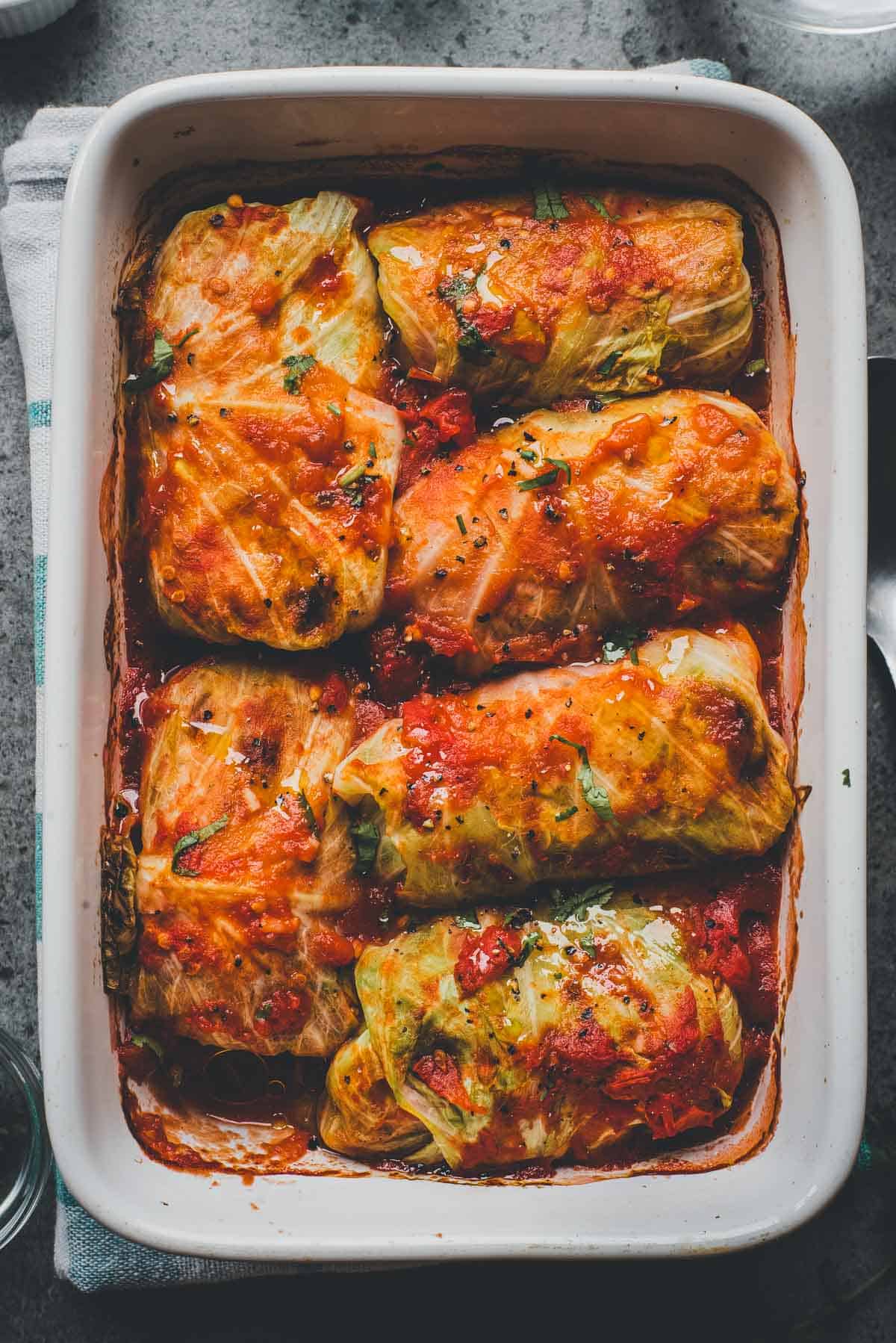
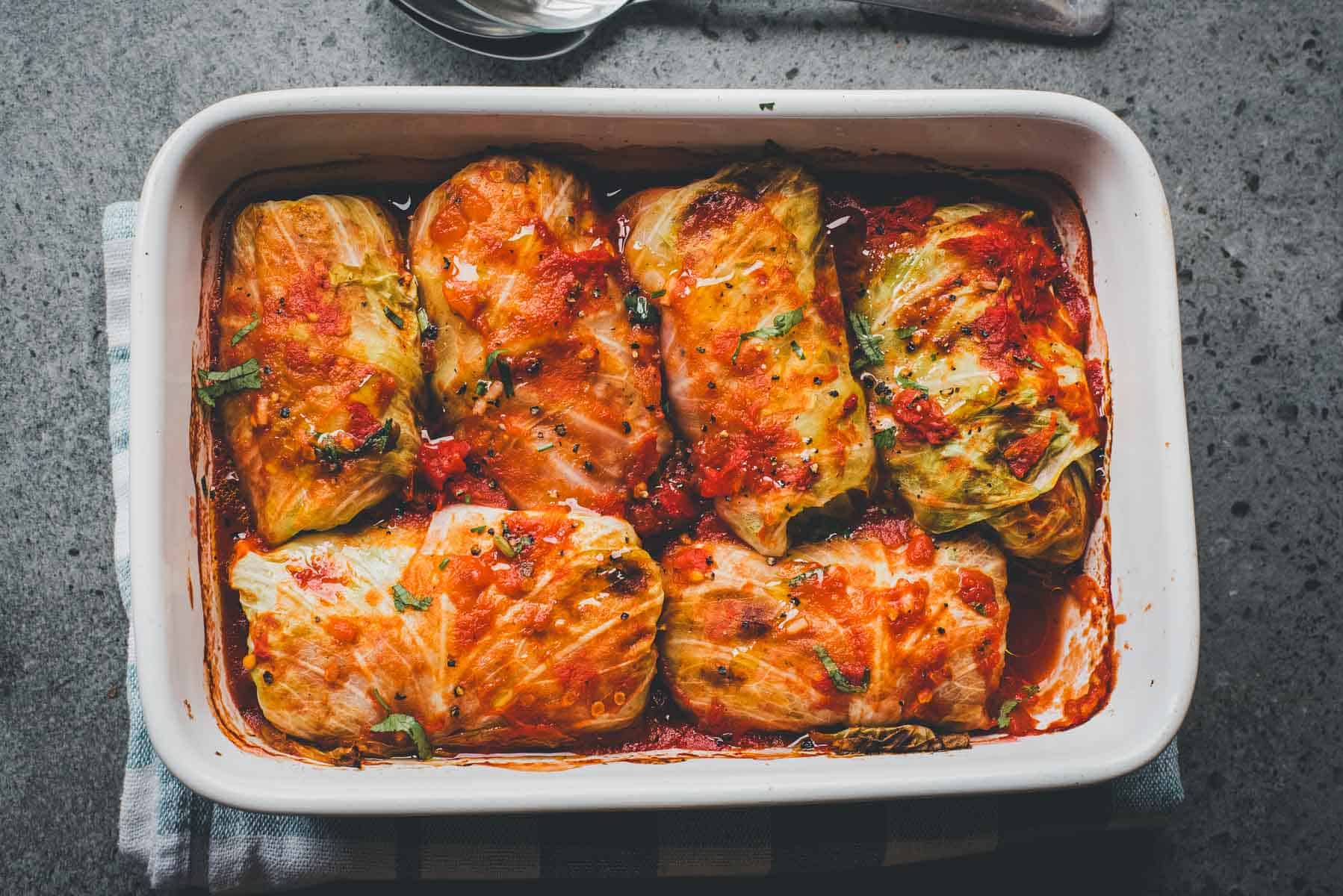
Celebrate green with a twist and a roll! This cabbage rolls casserole is baked, simple, and ready to wow everyone at your table.

I started noticing it one afternoon in March, when cabbage seemed to appear everywhere at once for St. Patrick's Day. The outer leaves came off easily, wide and flexible, the kind you can lay flat without thinking too much.
The next layer tore along the veins, splitting despite careful handling, while the center stayed small, tight, and pale, the kind that never quite fits a plan. There is a quiet order to it.
A cabbage decides early on which parts will cooperate and which ones will resist.
Traditional cabbage rolls ask you to pay attention to that. Choose the right leaves, trim, fill them carefully, roll them neat. I tried making each one perfect, adding extra filling, thinking it would turn out better. It never did. The leaves gave in halfway through baking, the rolls loosened, and the dish lost its shape.
I kept making them, tweaking small things each time, until one evening I stopped rolling. I layered everything instead. The large leaves, the torn ones, even the small pieces I used to set aside.
It all went into one dish, covered in tomatoes, and baked until it settled. That's when I realized a simple roasted cabbage recipe could be both forgiving and delicious. It felt easier in a way that stayed with me.
It's the same way with my other cabbage recipes. A pan of buttered cabbage on a slow afternoon, stirred while Lin waited nearby, asking how long it would take. A bowl of mayo purple cabbage slaw that Leo helped mix, his hands moving faster than the spoon. And that gochujang tahini cabbage soup I made one evening when me and F wanted something spicy, something that would hold for a while.
This cabbage casserole leaves room for uneven pieces, for small adjustments, for the parts that do not line up perfectly. All leaves come together to make a forgiving, hearty meal.
Ingredients
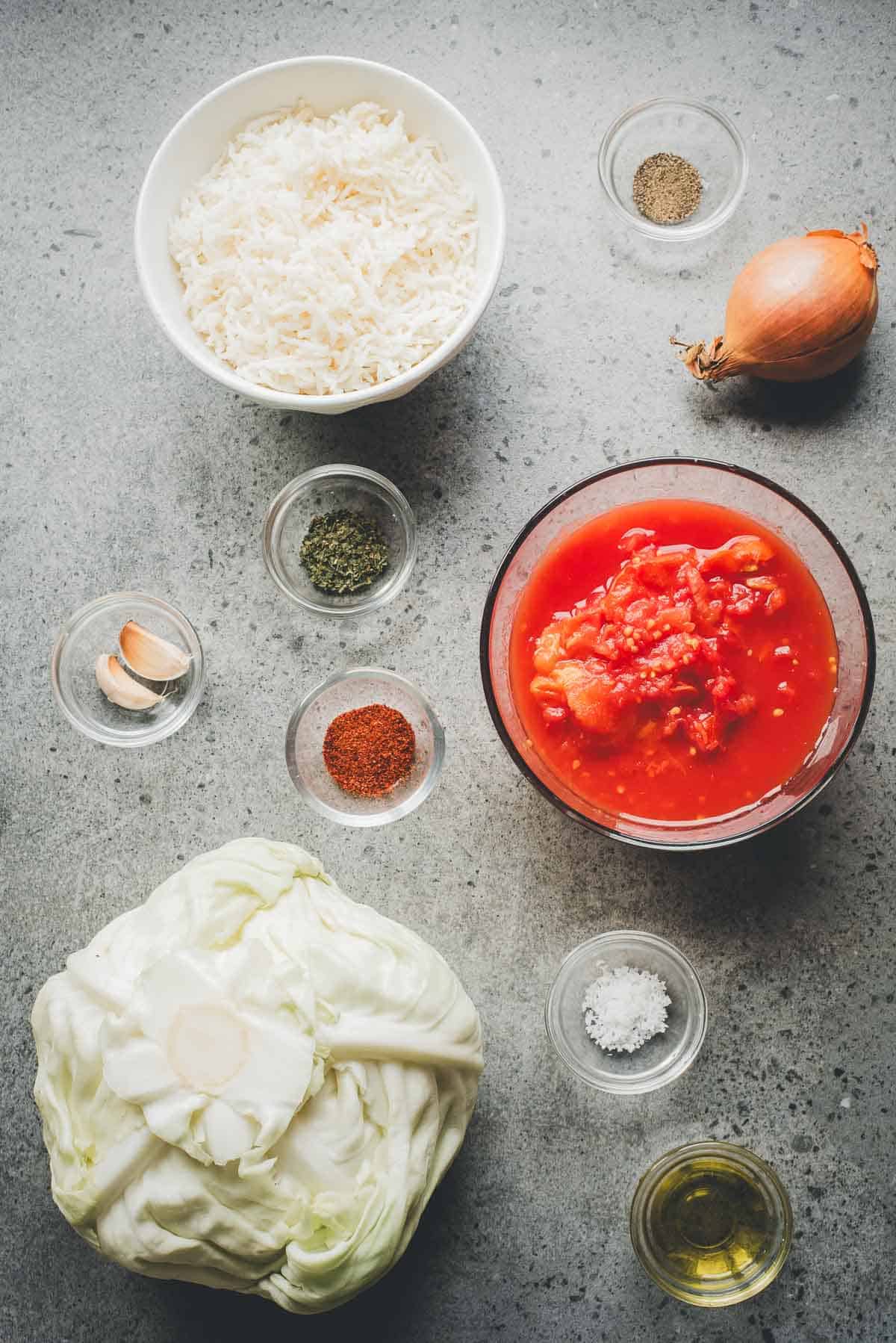
- Green cabbage - A whole green cabbage is the foundation of this casserole. The outer leaves give structure, while the inner ones soften into the layers, creating that slightly melting texture once baked. I always use green cabbage for this because it holds up well in the oven without turning too soft too quickly. Savoy cabbage works if you want something more delicate and easier to roll or layer, while Napa cabbage gives a softer, almost silky result that leans more toward a spoonable casserole.
- Cooked rice - Rice carries the filling and absorbs the tomato as it bakes, turning everything cohesive. I often use leftover rice from the day before since it stays separate and is easier to mix. Long-grain white rice keeps the texture light, while jasmine adds a faint fragrance. Brown rice works for a firmer bite, though it stays slightly more distinct in the layers. Quinoa can replace rice if you want something lighter, though the texture will be less soft and familiar.
- Onion - Onion builds the base of the filling, softening into the rice and adding a gentle sweetness that balances the acidity of the tomatoes. I prefer yellow onion for its balance, though white onion gives a sharper edge. If you want something milder, finely chopped leeks can take its place and melt more quietly into the mixture.
- Crushed tomatoes - These form the sauce that ties everything together. I like using canned crushed tomatoes for consistency. If you only have whole canned tomatoes, crush them by hand before using. Tomato passata works for a smoother finish, though it creates a slightly more uniform texture throughout.
See the recipe card for full list and exact quantities.
How to Make Cabbage Rolls Casserole Recipe
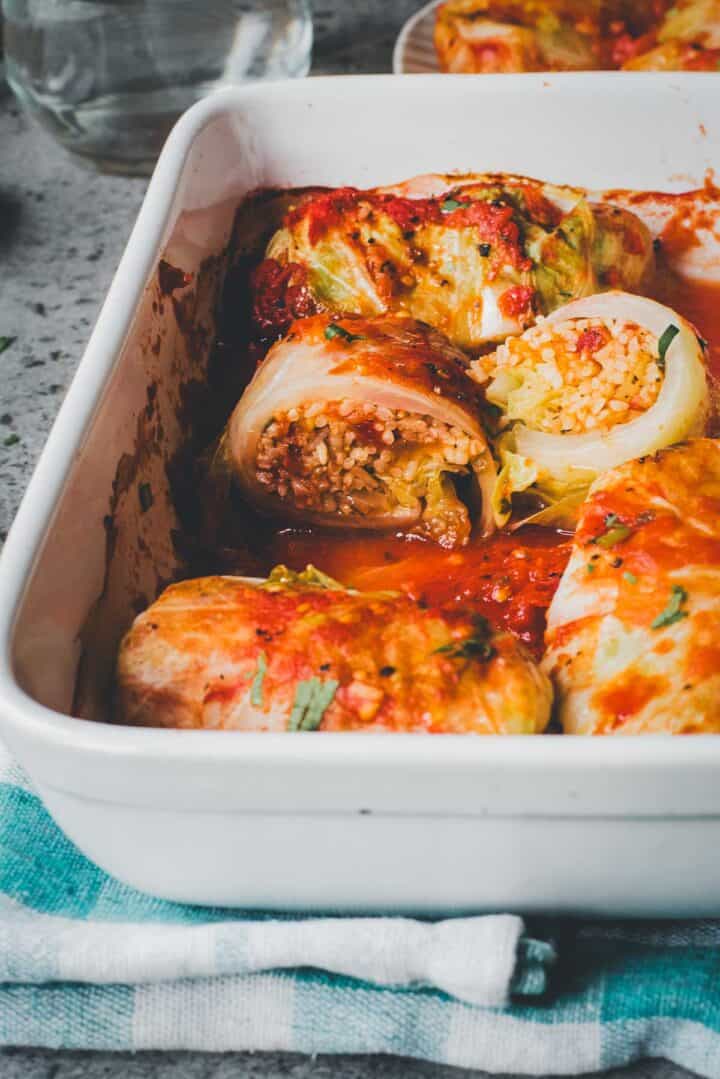
These oven-roasted cabbage rolls follow the structure of traditional rolls, though the process feels more forgiving. Each step has small signs to watch for, especially with baked cabbage recipes itself, which tends to decide how it wants to behave. Here's how to make this recipe:
Soften and Separate the Cabbage Leaves
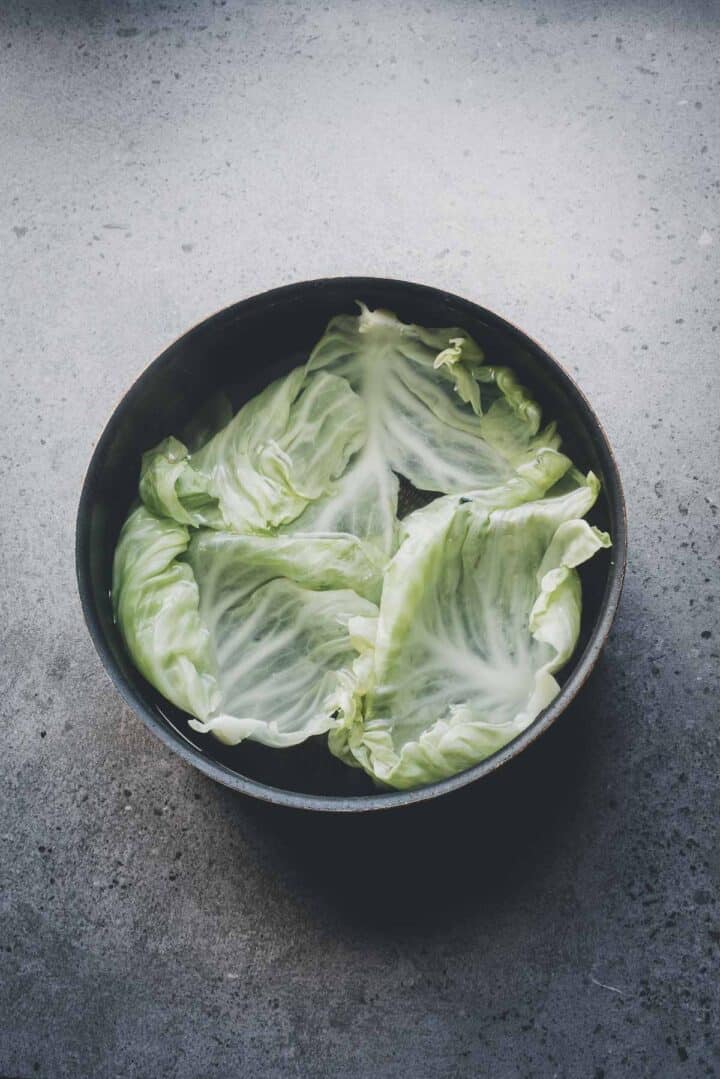
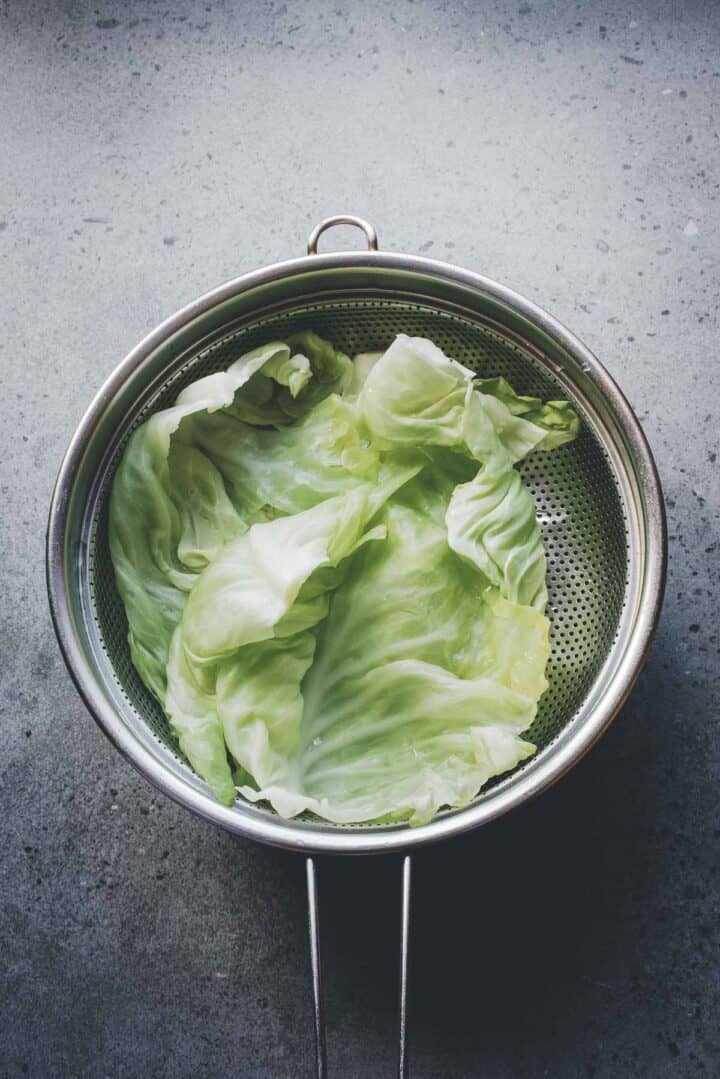
- You're looking for leaves that bend easily without splitting when lifted. If they still feel stiff or resist when pulled, give them another minute in the water. If they stay too long, they turn overly soft and tear when handled, which makes rolling harder later.
- As you peel each layer away, the leaves will get smaller and slightly more delicate. Keep them all. Even torn or uneven pieces will still work during assembly.
Build the Rice Filling
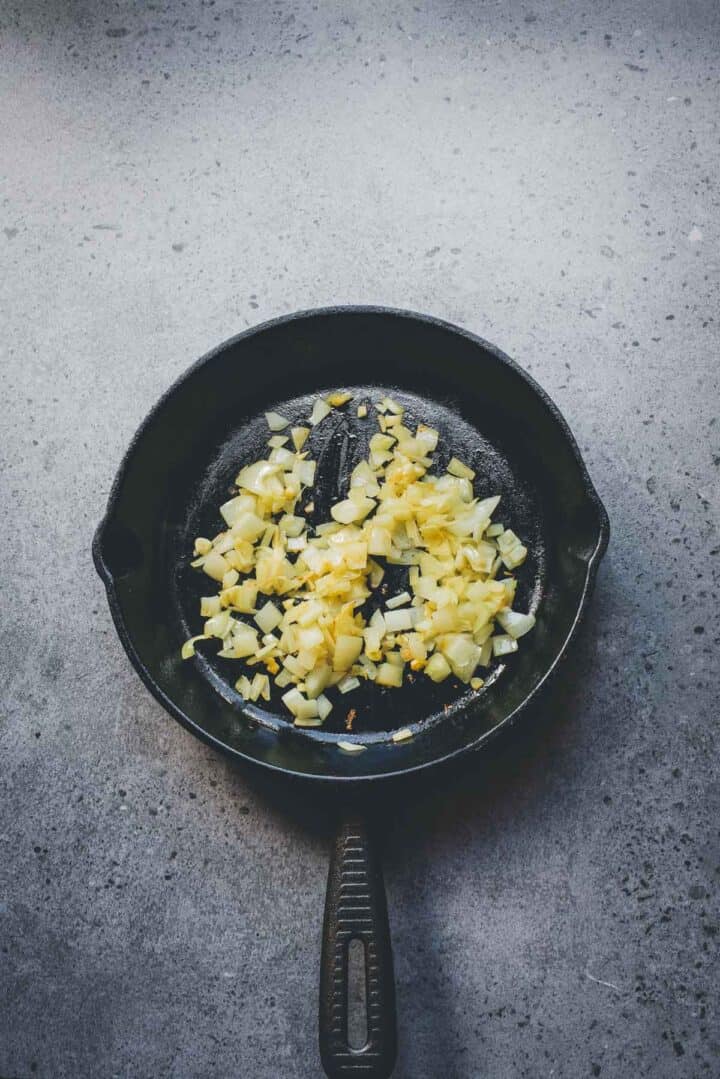
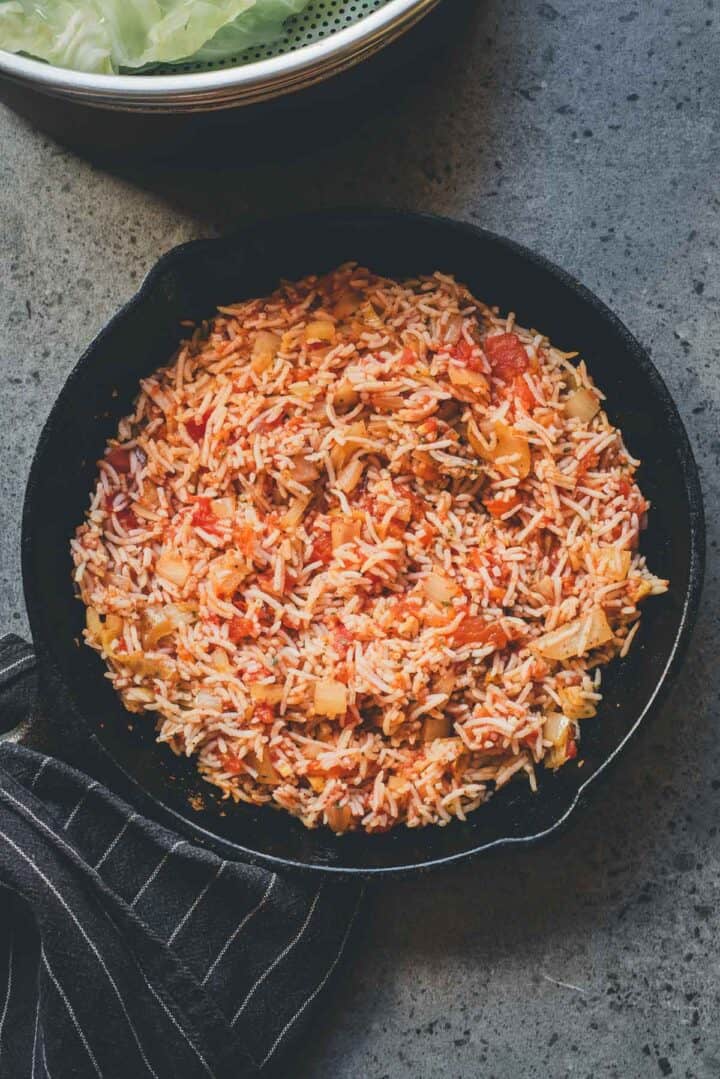
- The filling should feel moist and easy to scoop, with the grains staying separate rather than clumping together. If it looks dry, it will stay dry in the oven. If it looks too wet, it may spread too much when rolled.
- The balance here matters. You want a filling that holds its shape when pressed lightly but still feels soft.
Roll or Layer the Cabbage
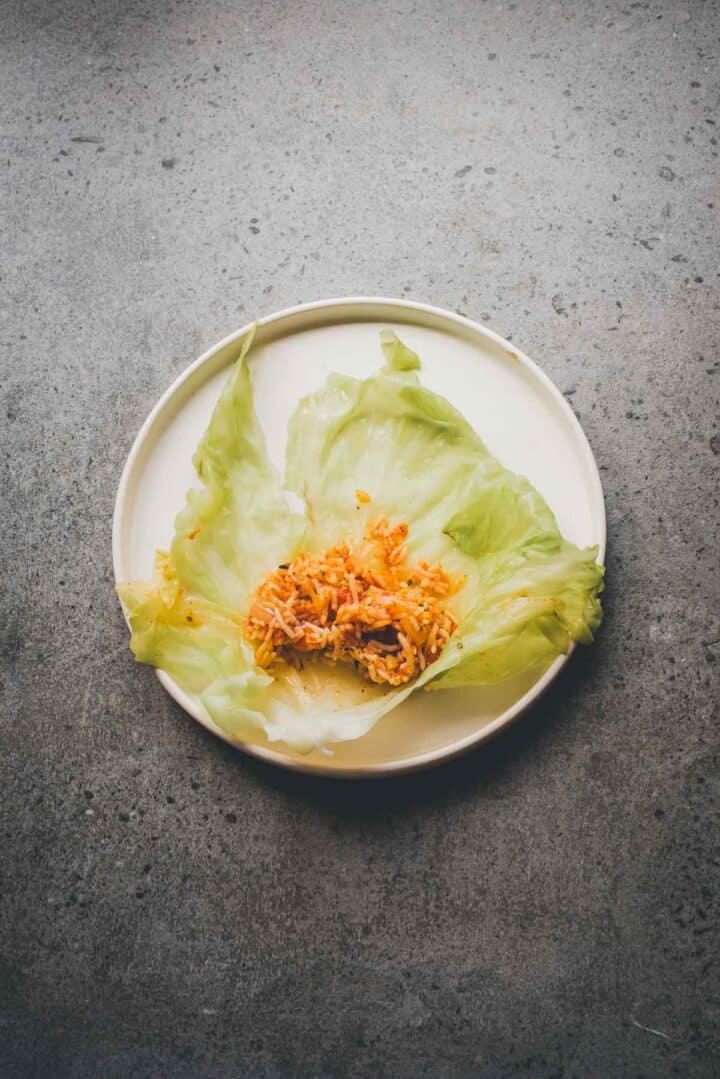
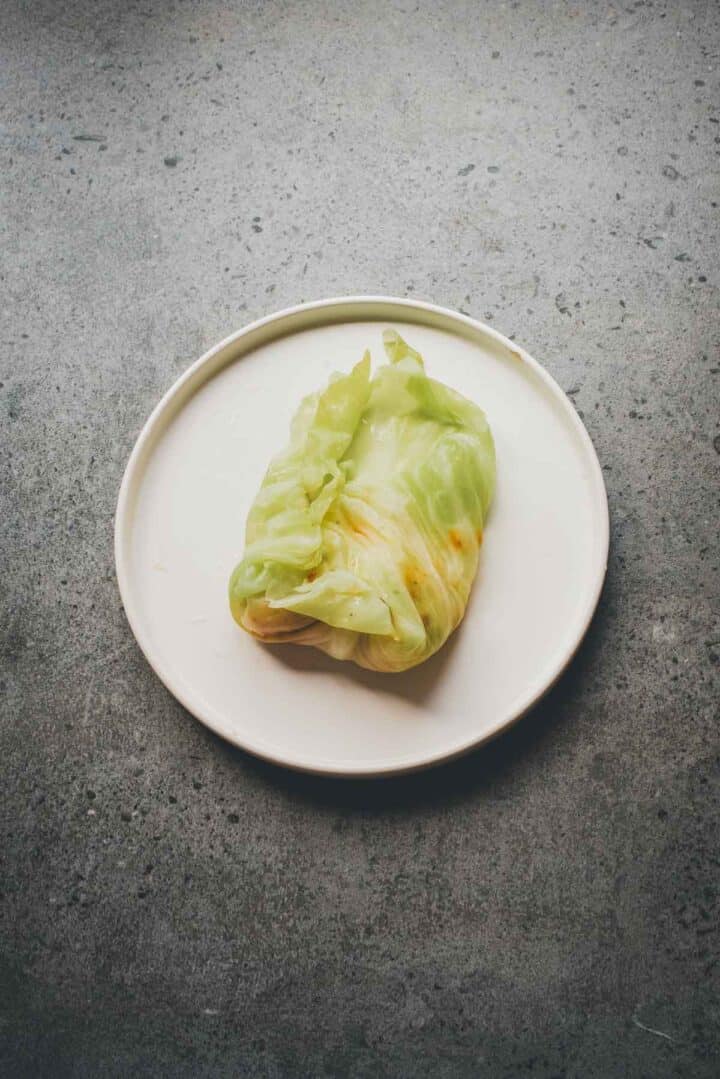
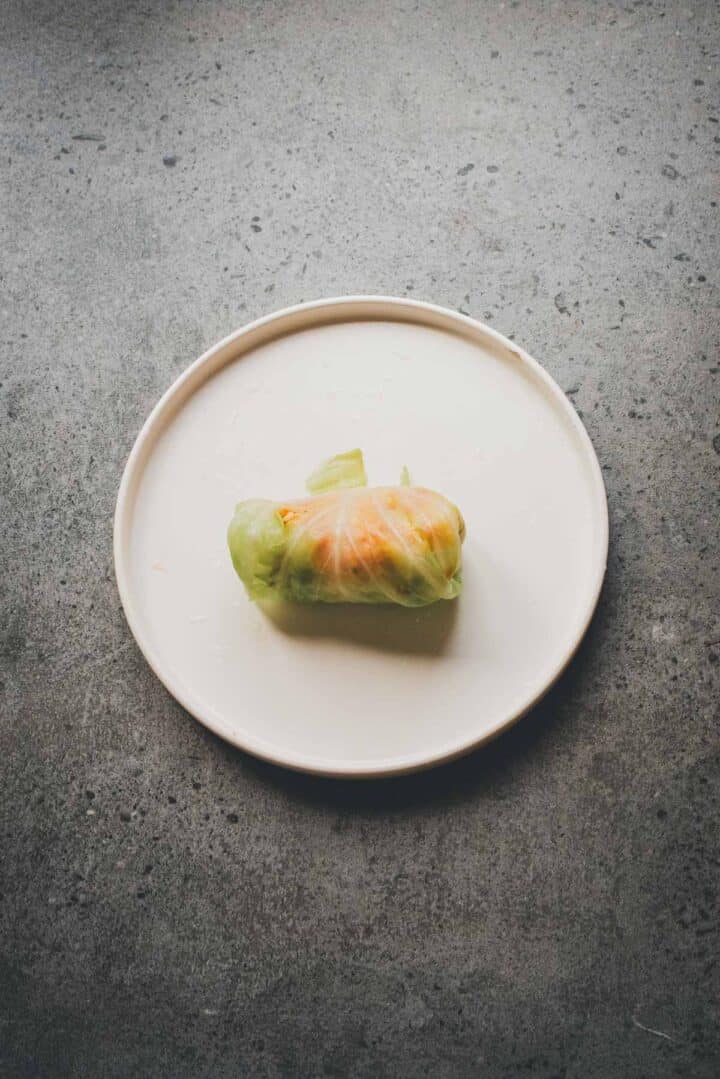
- Some leaves will refuse to cooperate. Instead of discarding them, layer them with filling in between, almost like building a loose stack. This works especially well with smaller inner leaves.
- What matters is that the filling stays enclosed enough to hold together while baking, whether rolled or layered.
Assemble the Casserole
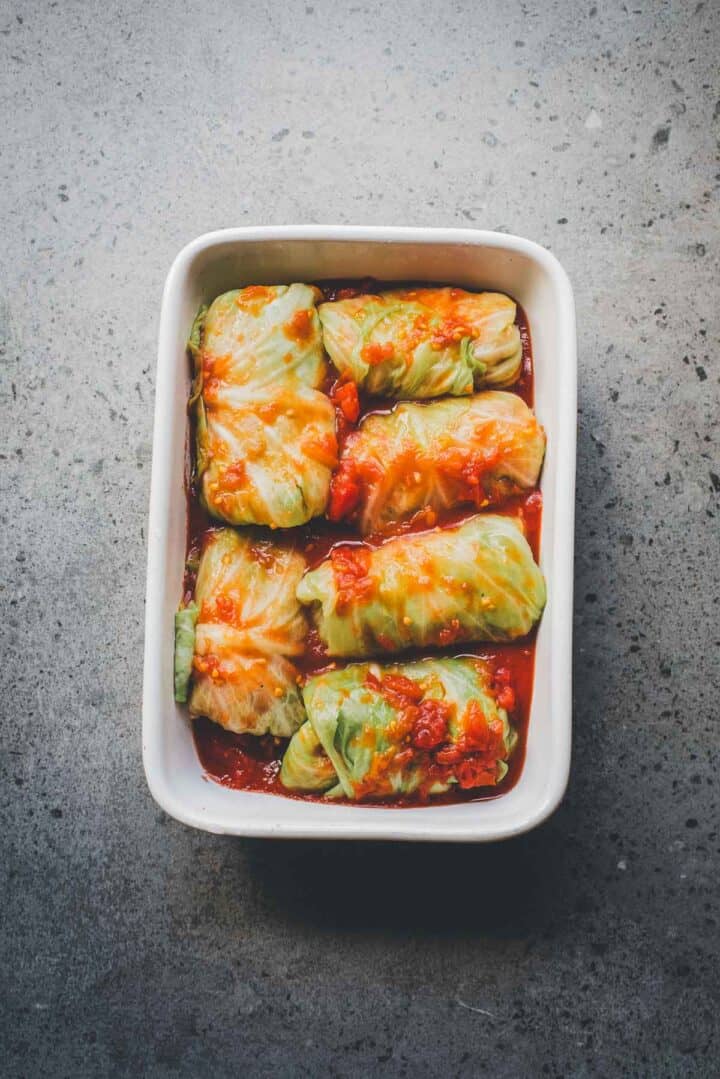
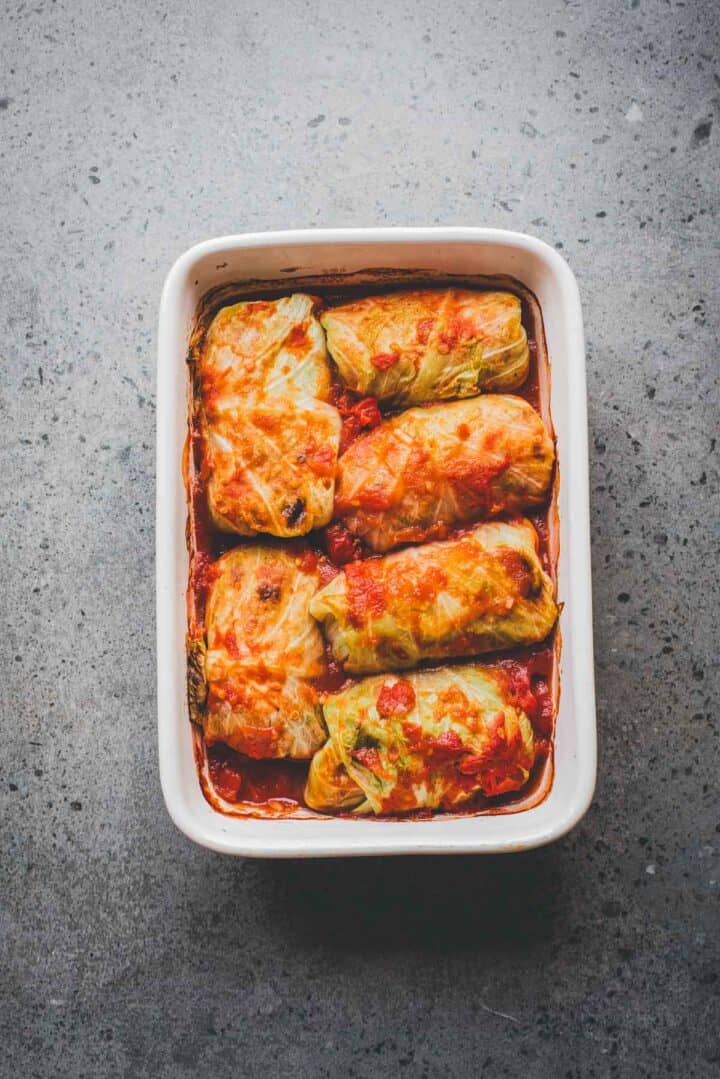
- Tuck in any loose or layered pieces around them. The dish should feel full, though not tightly packed. A little space allows the sauce to move between the layers.
- Pour the remaining tomatoes over the top. It should coat the surface without drowning it. Too much liquid can make the casserole overly soft, while too little can leave dry patches.
Bake Until Tender

- When done, the leaves should cut easily with a spoon, and the sauce will have thickened slightly around the edges.
- If the cabbage still feels firm or slightly resistant, give it more time in the oven. If the top looks dry midway through baking, a spoonful of extra tomato spread over the surface helps keep everything soft.
- The aroma will deepen as it cooks, shifting from sharp tomato to something more rounded and settled.
Let It Rest Before Serving
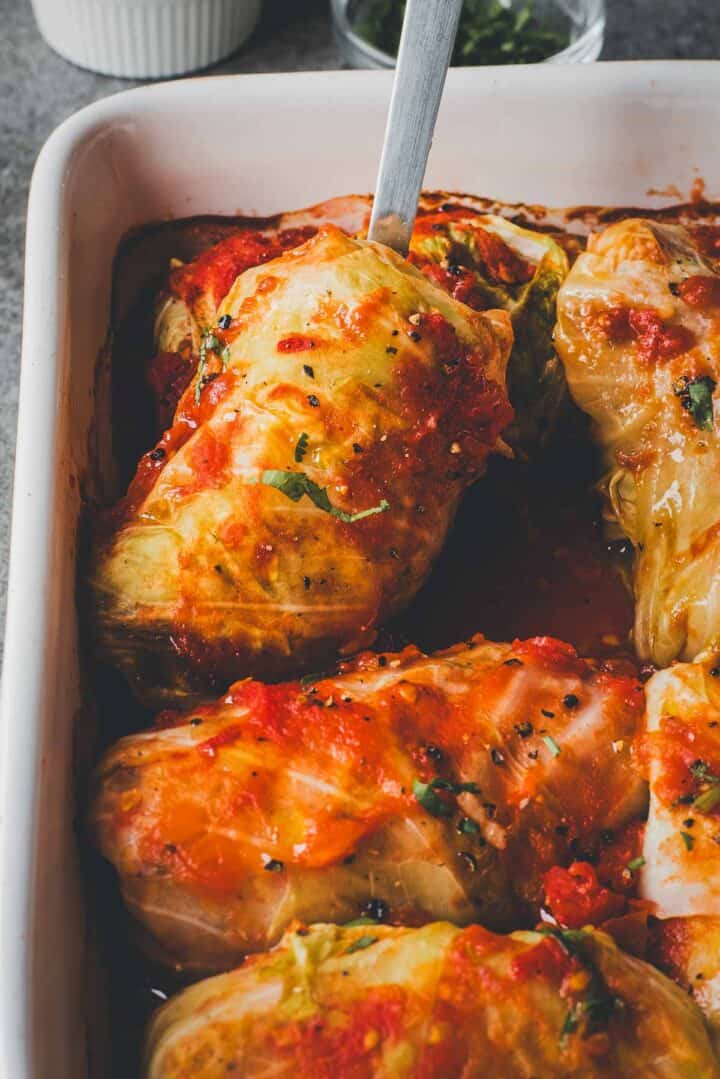
- Right away, it will feel loose and slightly unstable when scooped. After resting, the layers hold together more cleanly.
- The texture should feel soft throughout, with the cabbage wrapping around the rice and the sauce settling into each layer.
Storage

Let the casserole cool completely before storing. Transfer to an airtight container or cover the baking dish tightly. It keeps well in the refrigerator for up to 3 days. The texture softens further as it rests, with the rice absorbing more of the tomato and the cabbage becoming more tender. Reheat covered, adding a spoonful of crushed tomatoes if it seems dry.
Fully cooled, it freezes well for up to 2 months. Wrap tightly or use a freezer-safe container. Thaw overnight in the fridge and reheat covered until heated through, allowing extra time if reheating from frozen.
Top Tips
Work the cabbage while it's still pliable - once the leaves cool down, they become harder to handle and more likely to tear when rolling or layering. I keep the pot nearby and return the cabbage to the hot water for a minute if needed. It saves a lot of frustration, especially with the middle leaves that tend to resist folding.
Keep the filling slightly under-seasoned at first - as the casserole bakes, the tomatoes concentrate, and the flavors deepen. If the filling tastes fully seasoned before baking, it can turn too strong later. I learned this after a few overly intense batches that tasted heavier the next day.
Use a deeper baking dish than you think you need - this casserole settles as it cooks, but it starts out quite full, especially if you're layering torn leaves in between. A slightly deeper dish prevents overflow and gives the sauce space to move through the layers, which helps everything cook evenly.
Recipe
Tried and loved this recipe? Please leave a 5-star review below! Your reviews mean a lot to me, so if you've got any questions, please let me know in a comment.

Cabbage Rolls Casserole
Ingredients
- 1 medium green cabbage about 2 lb | 900 g
- 2 cups cooked rice 13 oz | 370 g
- 1 small onion diced
- 2 cloves garlic minced
- 2 cups crushed tomatoes 16 fl oz | 473 ml
- 1 teaspoon dried oregano
- 1 teaspoon smoked paprika
- 1 tablespoon olive oil
- Salt & black pepper to taste
Instructions
Prepare the Cabbage
- Bring a large pot of water to a boil. Remove the core of the cabbage and gently place the whole head into the water.
- Cook for 5-8 minutes, peeling off softened outer leaves with tongs as they loosen. You want leaves that bend without tearing.
- Continue until you have about 12 large leaves. Save even torn or smaller leaves-they work for layering.
Make the Filling
- In a skillet, heat olive oil over medium heat. Sauté diced onion for 2 minutes until translucent, then add garlic for another 30 seconds until fragrant.
- Remove from heat and stir in rice, 1 cup crushed tomatoes, oregano, smoked paprika, salt, and pepper. The mixture should be moist but not runny, with grains still separate.
Roll the Cabbage
- Lay a cabbage leaf flat. Spoon 2-3 tablespoons of filling near the base. Fold in the sides and roll tightly from base to tip.
- For torn leaves, overlap two smaller leaves to create a stable base. Repeat with remaining leaves.
Assemble the Casserole
- Preheat oven to 375°F (190°C). Spread half of the remaining crushed tomatoes in the baking dish to prevent sticking.
- Arrange the rolls seam-side down and tuck in any loose or layered pieces. Pour remaining tomatoes over the top. The sauce should coat without drowning the rolls.
Bake
- Cover the dish with foil and bake for 40-45 minutes. Cabbage should be tender, filling heated through, and sauce slightly thickened at edges.
- If the top looks dry, spoon a little extra tomato over it halfway through baking.
Serve
- Let the casserole rest 5 minutes. Scoop carefully-the layers will hold better after resting. Enjoy warm.
Taste & Texture
- Tender cabbage wraps around savory herbed rice in a comforting tomato sauce. Soft layers contrast with the slightly firm outer leaves, giving structure to each bite.