
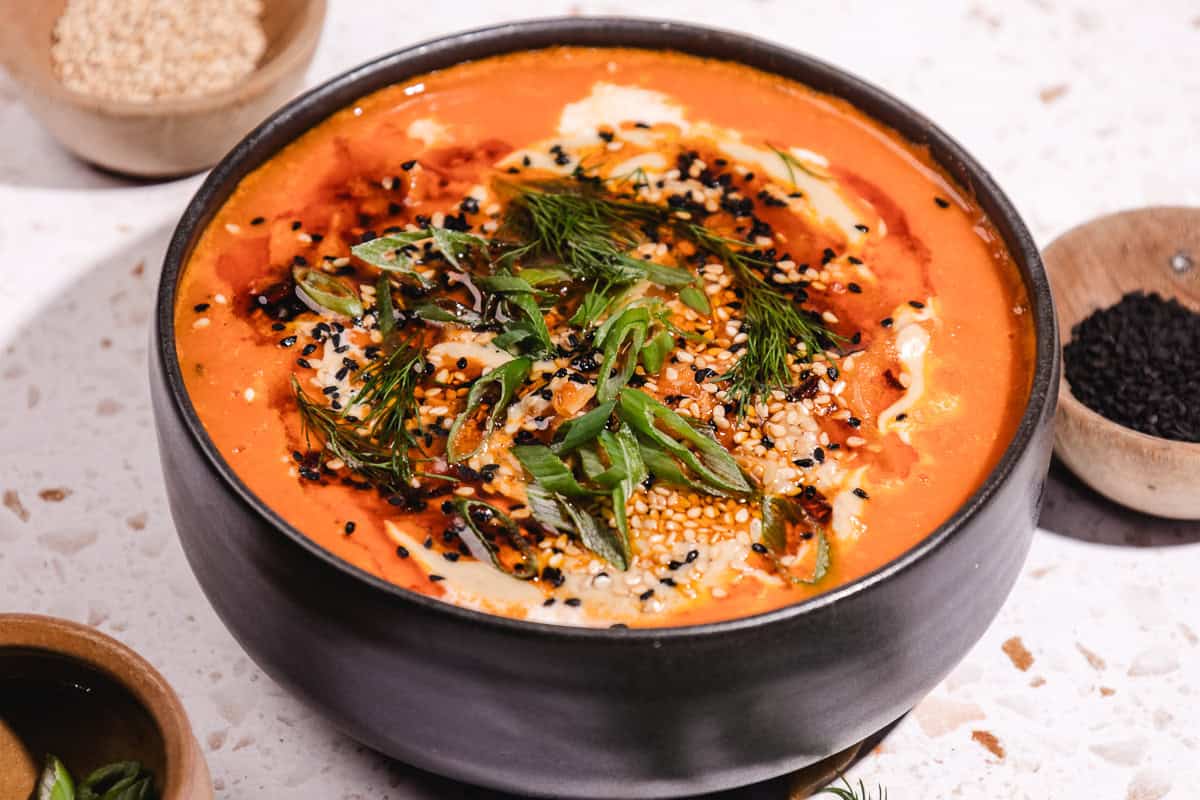
Gochujang tahini cabbage soup brings sweet heat and creamy sesame into a hearty, vegetable-forward dinner.
The afternoon that led to this soup began with cabbage rolling across my kitchen floor.
Leo pulled it from the grocery bag before I finished unpacking. A full green head landed on the tiles with a dull thud and rolled slowly toward the table like a bowling ball with no clear destination. Lin laughed so hard she slid down beside it, hugging the cabbage as if she had discovered a new pet.
The kitchen filled with the usual end of day activity. Leo climbed onto a chair to watch the counter like a tiny inspector. Lin began listing foods she believed cabbage could become. Noodles appeared on her list. Pancakes followed quickly after.
I stood there with my phone, looking at a recipe that had been sitting in my saved folder for days. The caramelized gochujang tomato soup from Justine Snacks kept returning to my thoughts all week. Gochujang's heat, sweetness, and deep savory notes can transform an entire pot with a single spoonful.
The original soup used tomatoes as its base. My kitchen had cabbage.
Cabbage carries its own cooking history. My sauerkraut soup from Bar Tartine starts with fermented cabbage simmering until the kitchen fills with tangy steam. Chicken borscht draws on Russian and Ukrainian tradition, stretching vegetables into a pot generous enough for the whole table. These soups taught me that cabbage holds strong flavors well.
The cabbage Leo rolled across the floor became dinner's star. Onions softened in olive oil as Leo peeked at the pot and Lin asked if it would turn red or green. Gochujang darkened the cabbage and onions, filling the kitchen with its fermented aroma. Tahini added creaminess, and coconut milk softened the chili as the cabbage melted into the broth.
Who knew that the cabbage that rolled across the floor earlier in the afternoon would ended up carrying flavors from several kitchens into one pot.
Ingredients
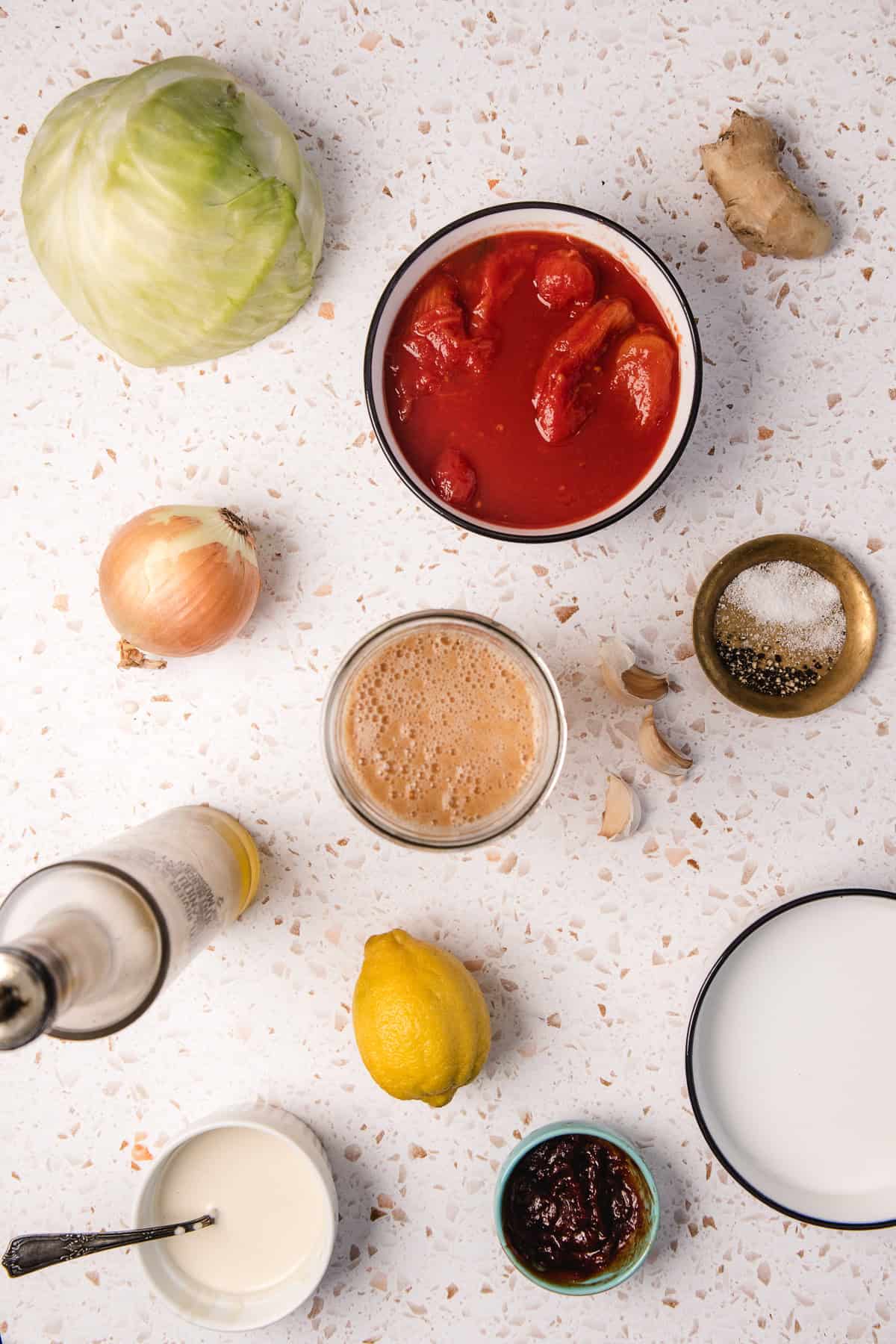
- Green Cabbage - Cabbage forms the backbone of this soup. As it cooks down, the leaves soften and release a gentle sweetness that balances the fermented chili paste. Green cabbage works best here since it keeps structure during simmering. Savoy cabbage can replace it easily, while Napa cabbage creates a softer texture and a lighter broth.
- Gochujang Paste - Gochujang is the defining ingredient in this soup. The Korean fermented chili paste brings depth, gentle sweetness, and a layered heat. Cooking it directly with the cabbage allows the paste to darken slightly and spread through the vegetables. If gochujang cannot be found, a mixture of miso paste and chili paste creates a similar fermented depth.
- Vegetable Stock - Vegetable stock forms the base of the soup and carries the cabbage through the simmer. A good stock brings depth without overpowering the sesame and chili flavors. Homemade stock always works beautifully here, though a mild store bought vegetable broth works well too.
- Full-Fat Coconut Milk - Coconut milk softens the chili heat and rounds the broth with gentle richness. Full fat coconut milk gives the soup its creamy texture while keeping the flavors balanced. Light coconut milk can be used, though the broth becomes thinner and less silky.
See the recipe card for full list and exact quantities.
How to Make Spicy Gochujang Tahini Cabbage Soup Recipe
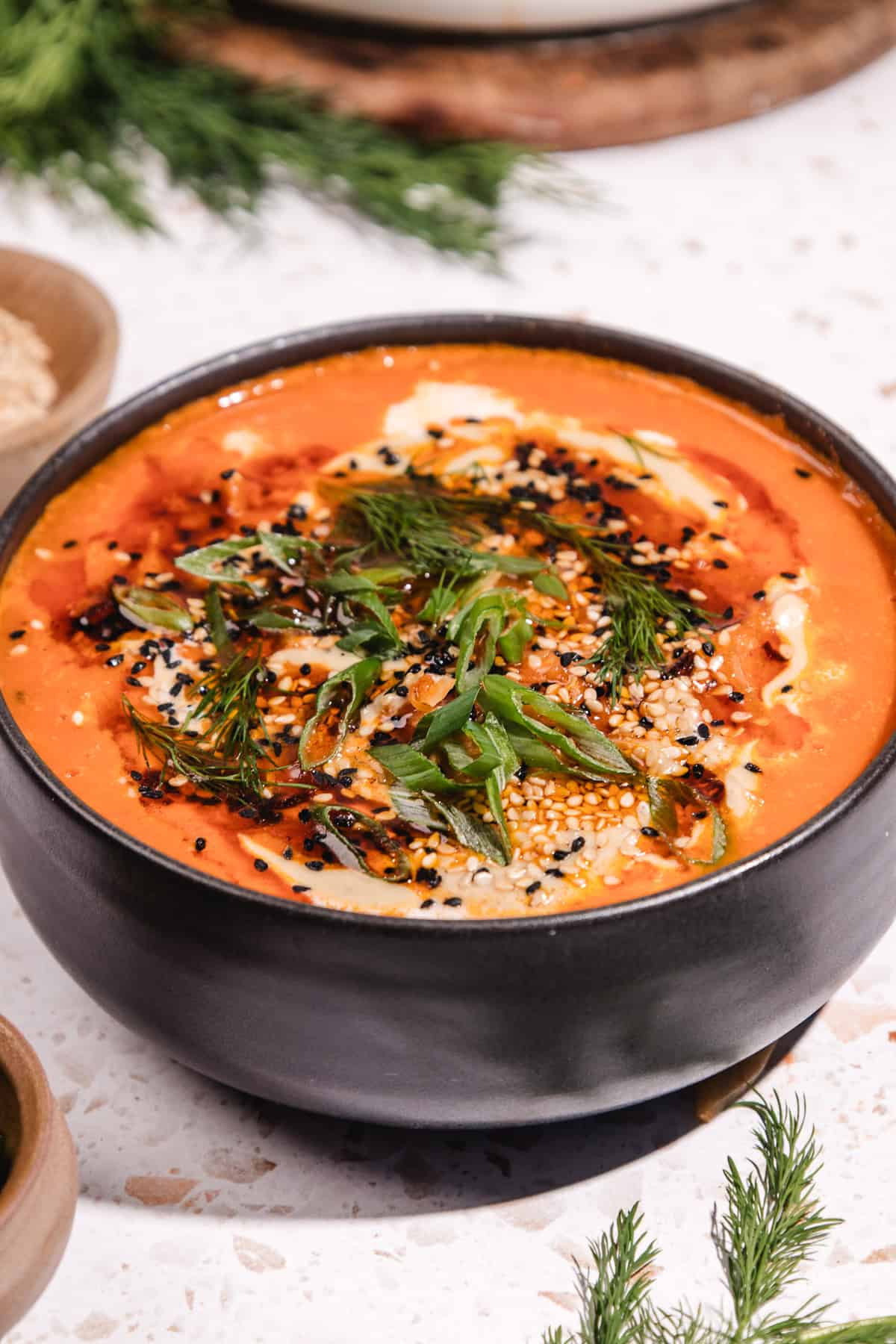
This rich soup builds flavor slowly in the pot. Cabbage softens first, gochujang deepens as it cooks, and sesame and coconut milk round the broth at the end. Each stage changes the texture and aroma in noticeable ways. This bowl of soup is super easy to make, here's how to make this delicious recipe:
Soften the Onion and Cabbage
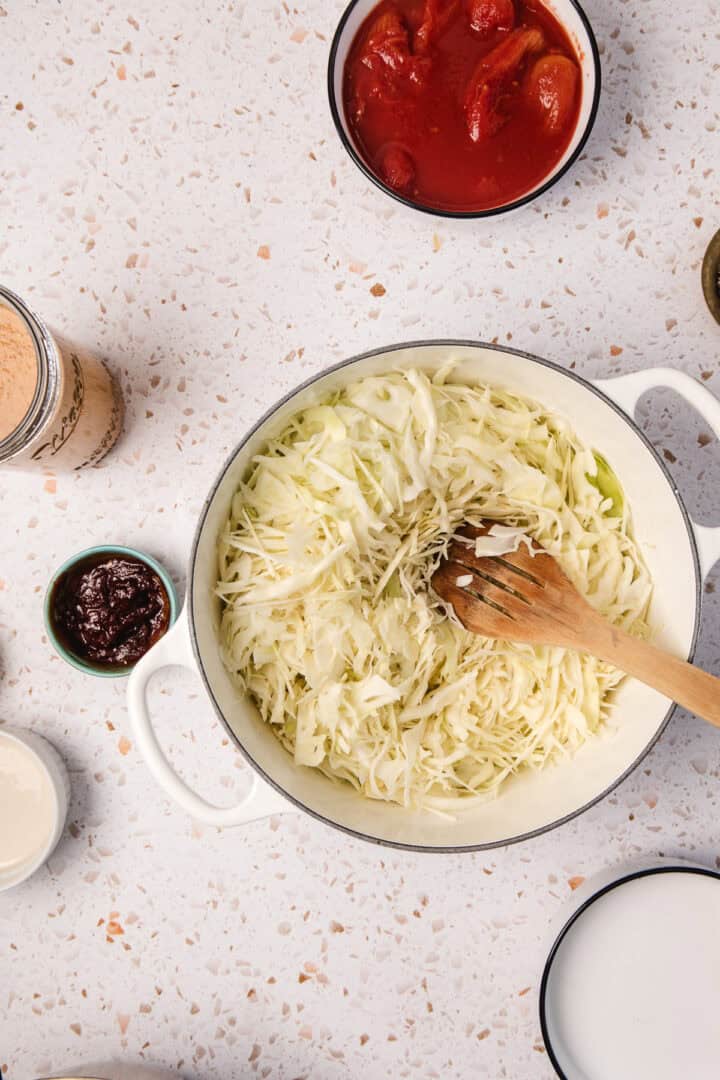
- At first the cabbage will look bulky and slightly dry. After a few minutes it begins to release moisture and shrink down into the pot. The onion should turn translucent and soft rather than brown. The vegetables should look glossy from the oil and feel tender when pressed with a spoon.
- If the vegetables begin browning quickly, the heat is likely too high. Lower it slightly so the cabbage softens gradually without scorching at the edges. This gentle start keeps the soup balanced later.
Cook the Gochujang With the Vegetables

- During this stage the paste spreads through the vegetables and darkens slightly in color. The smell changes as well. The fermented chili aroma becomes deeper and more savory as it cooks in the oil. The cabbage should continue softening and take on a reddish color.
- If the mixture begins sticking to the bottom of the pot, stir more frequently or lower the heat slightly. The goal is to let the paste cook slowly so the flavor develops fully without burning.
Add the Garlic and Ginger

- At this stage the pot should smell bright and aromatic. Garlic and ginger cook quickly, so keep stirring gently and watch for signs of browning. They should soften and release fragrance without turning dark. If they brown too much the flavor can become harsh.
Build the Soup Base and Blend

- The soup should look thick and slightly textured with small pieces of cabbage still visible. Fully pureeing the mixture can make the soup feel heavy, so aim for a partially blended consistency.
- Bring the soup to a gentle simmer, cover the pot, and cook for about 35 minutes. During this time the cabbage breaks down further and the broth thickens slightly. You should see small bubbles rising slowly rather than a strong boil. A gentle simmer keeps the soup smooth and prevents the tahini from separating.
Stir in the Coconut Milk

- The broth will turn slightly lighter in color and take on a creamy consistency. The coconut milk softens the chili heat and rounds the sesame flavor from the tahini. Keep the soup at a gentle simmer so the coconut milk blends evenly into the broth.
- If the soup looks too thick at this stage, a splash of additional stock can loosen the texture.
Taste and Finish the Soup
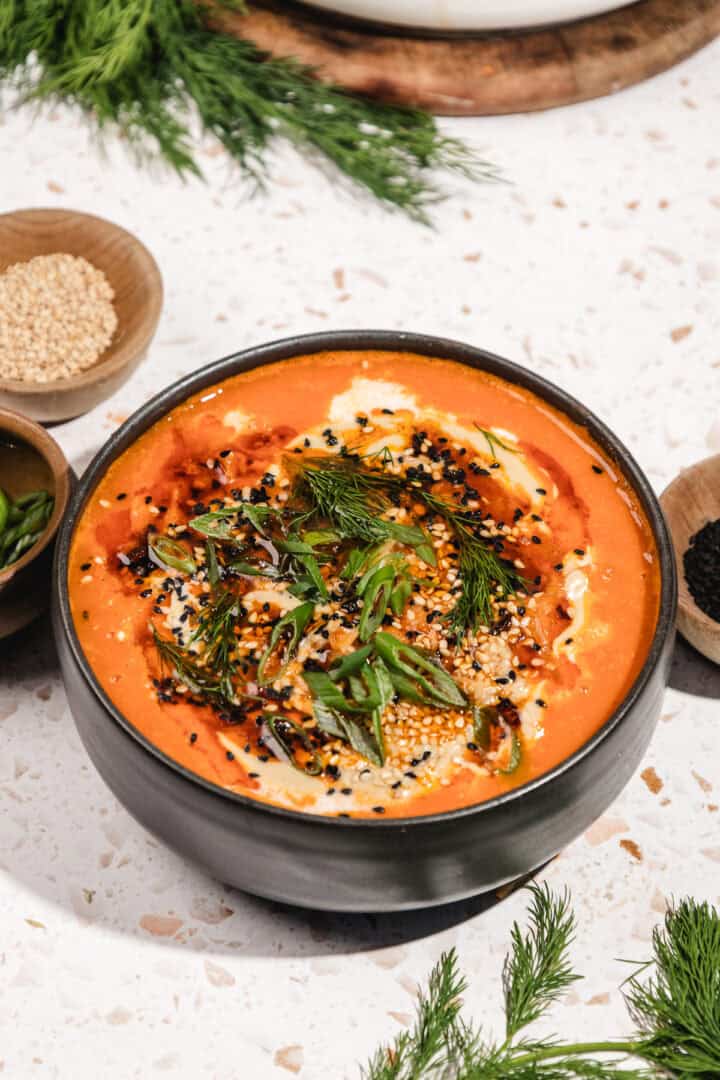
- The flavor should feel balanced with gentle chili heat, sesame depth, and a slight brightness from the lemon.
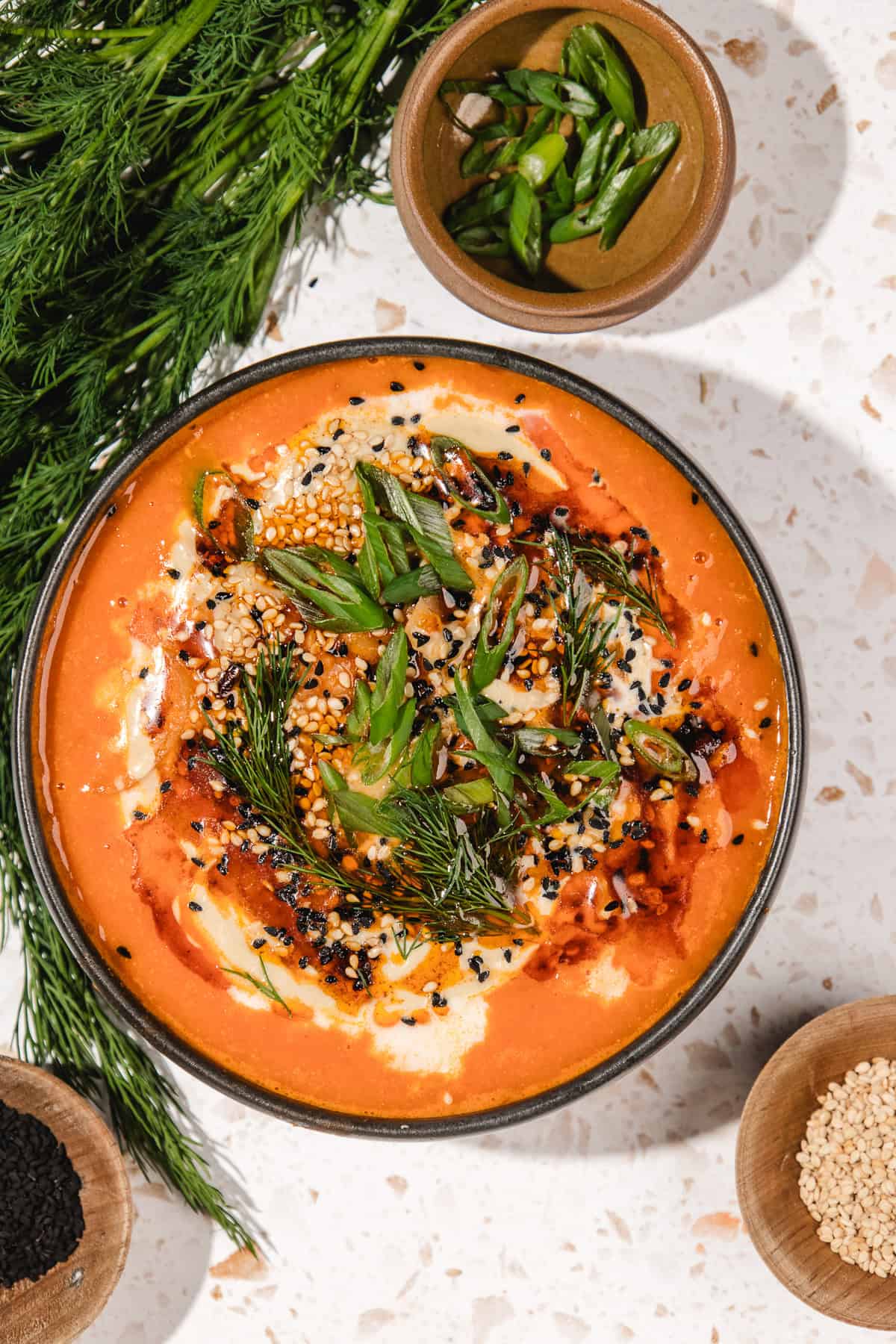
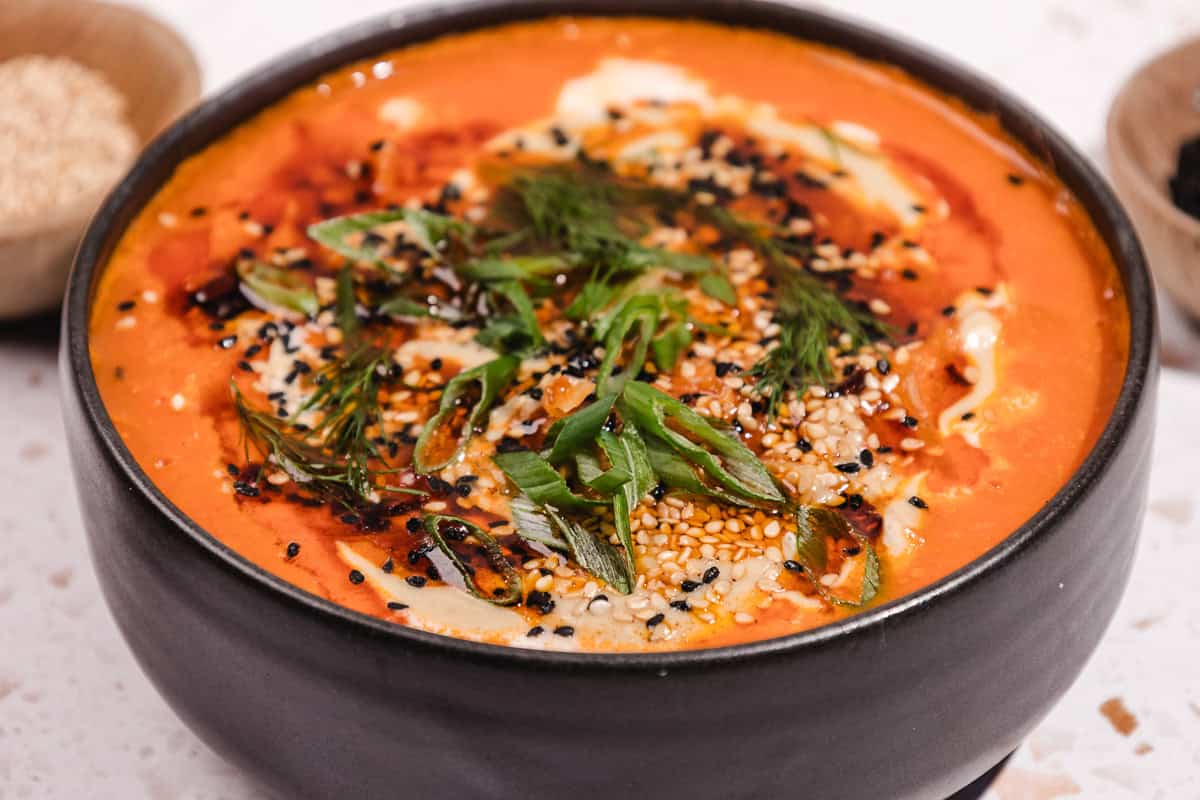
- Serve the soup hot with fresh herbs, a drizzle of olive oil, and warm pita or rice on the side. The broth should feel creamy while still carrying small pieces of cabbage throughout each spoonful.
Storage
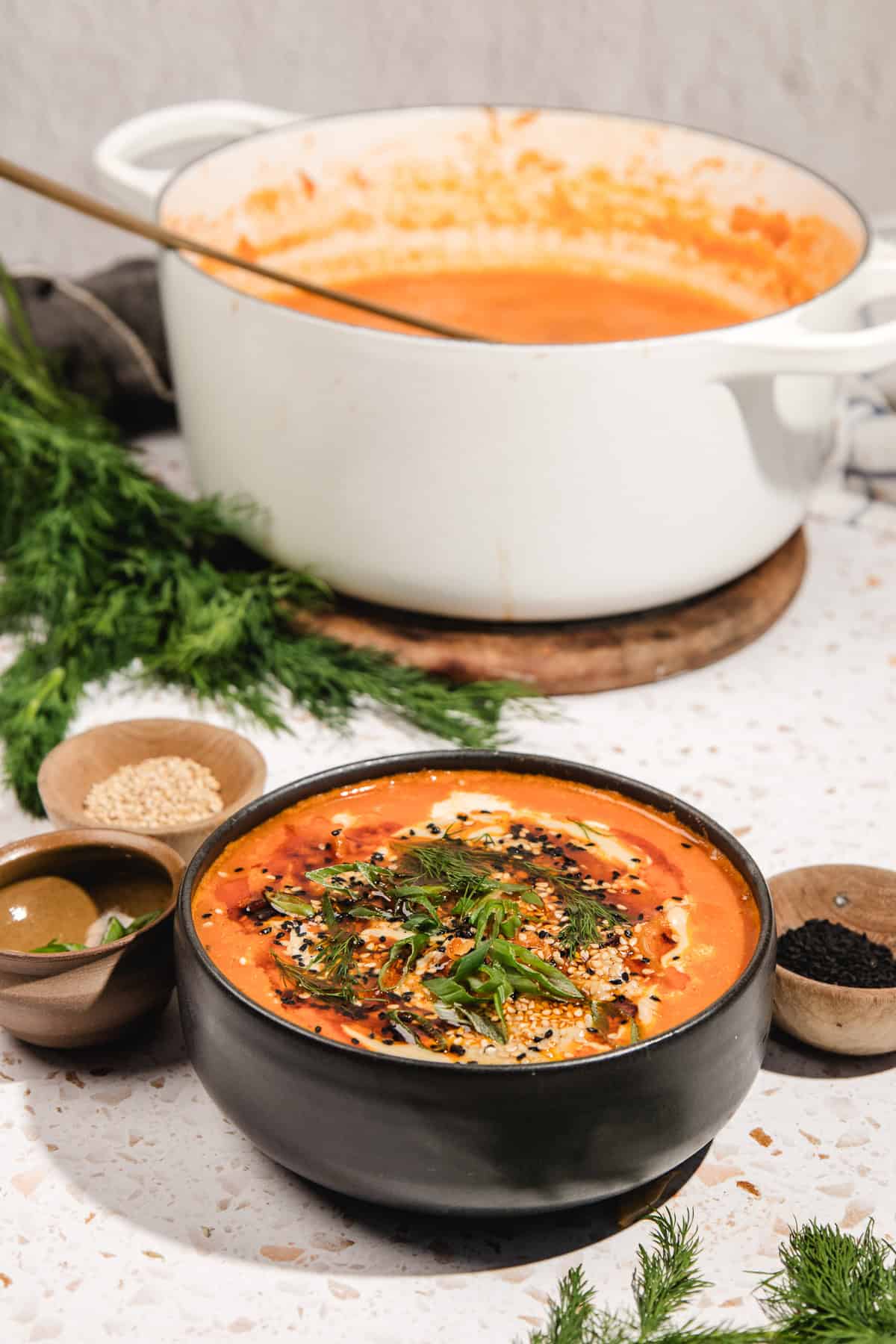
This soup tastes even richer the next day as the gochujang and tahini meld. Cool completely and store in a sealed container in the fridge for up to 4 days. Reheat gently on the stove, adding a splash of stock or water if it thickens.
For longer storage, freeze in portioned, freezer-safe containers, leaving space for expansion. Keep for up to 2 months. Thaw overnight in the fridge and reheat slowly, stirring so the coconut milk blends smoothly. A quick stir will bring the soup back together if it separates slightly.
Top Tips
Give the gochujang time to cook before adding liquid - I saw many recipes add chili paste directly into broth, though gochujang develops a tasty deeper flavor when it cooks with the vegetables first. Let it soak the cabbage and onions for the full cooking time until it darkens slightly and smells deeper. Rushing this step leaves the soup tasting flat instead of layered.
Blend partially, not completely - it helps to keep some cabbage texture in the soup. When using an immersion blender, pulse slowly and stop once the broth looks thick with small cabbage pieces still visible. Fully pureeing the soup can make the texture heavy and erase the cabbage character that gives the soup body.
Choose a smooth tahini that pours easily - tahini texture varies widely. Thick, gritty tahini can separate or clump in soup. A smooth, pourable sesame tahini blends much more easily into the broth and creates the creamy finish this recipe depends on
Recipe
Tried and loved this recipe? Please leave a 5-star review below! Your reviews mean a lot to me, so if you've got any questions, please let me know in a comment.

Gochujang Tahini Cabbage Soup
Equipment
- immersion blender or regular blender
- Knife
Ingredients
- 1 large yellow onion sliced
- ½ small head green cabbage chopped
- 2 tablespoon fresh ginger grated
- 3 garlic cloves grated
- ¼ cup extra-virgin olive oil
- 2 tablespoon gochujang paste
- 1 28-oz can whole plum tomatoes
- 2 tablespoon tahini
- 2 tablespoon lemon juice
- 2 cups vegetable stock
- 1 13.5-oz can full-fat coconut milk
- Salt to taste
Instructions
Sauté onion and cabbage
- Heat olive oil over medium heat. Add sliced onion and chopped cabbage. Cook 5-6 minutes, stirring occasionally, until softened and slightly translucent. Watch for burning; the vegetables should sweat and release natural sweetness.
Add gochujang
- Stir in the gochujang paste. Cook 10-12 minutes, stirring frequently. The paste will darken and stick slightly to the pot. This step deepens the flavor, so don't rush it.
Add aromatics
- Mix in grated garlic and ginger. Cook 2-3 minutes until fragrant. Be careful not to burn the garlic; it should smell sharp and warm, not bitter.
Combine tomatoes, tahini, lemon juice, and stock
- Pour in the canned tomatoes, tahini, lemon juice, and vegetable stock. Use an immersion blender to partially blend for a creamy yet slightly textured soup. Bring to a low simmer, cover, and cook 35 minutes. Check occasionally; the cabbage should be tender but not mushy.
Add coconut milk
- Stir in coconut milk and simmer uncovered for 10 minutes. The soup should become creamier and slightly thickened. Adjust consistency with extra stock if needed.
Season and serve
- Taste and season with salt. Serve warm with fresh herbs, a drizzle of olive oil, and warm pita or rice. Soup should be rich, slightly spicy, and aromatic.