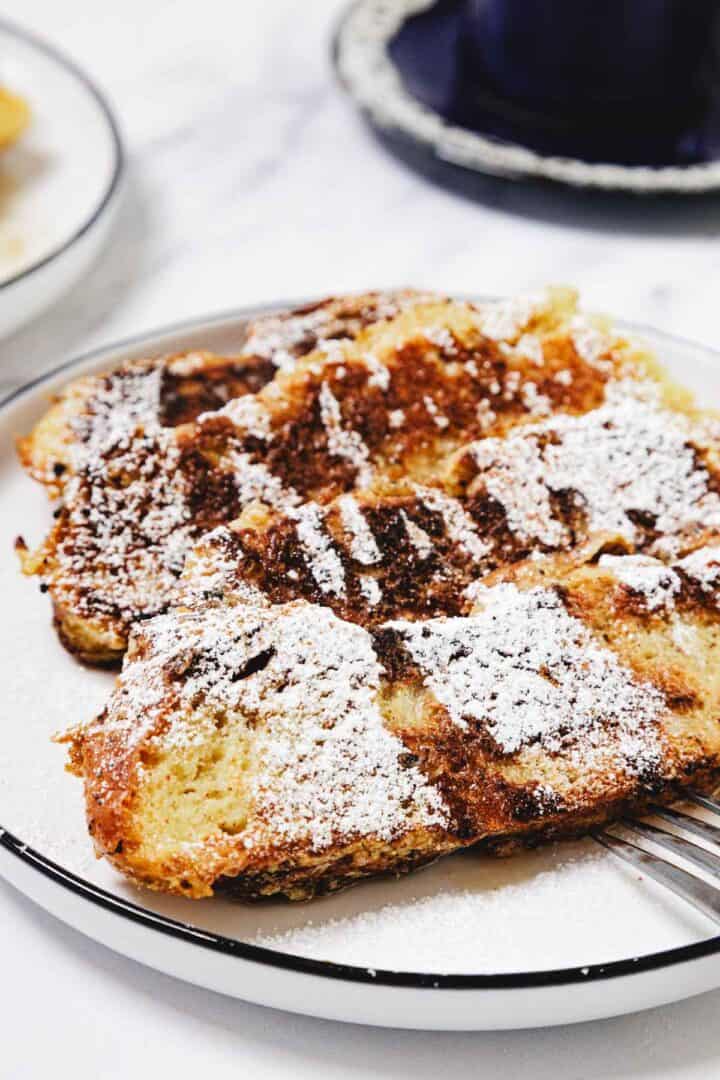
Challah French toast that turns yesterday's loaf into today's comfort, sweetened with syrup and the pull of tradition.
Jump to:
There were mornings in college when the silence felt heavier than the books stacked on my desk. I would wake up in my small room, the kind with walls that seemed to echo every creak of the radiator, and reach for the challah bread I baked last night.
Braided, glossy from egg wash, it sat on my counter like a link to everything I was missing. Sometimes it was a classic loaf, other times the easy challah with no eggs that became a staple when ingredients were scarce but the tradition remained.
No student could finish a whole challah in a week. By the third or fourth morning, the loaf would grow firm, the crust tough enough to resist the knife. That was when I learned what my grandmother always knew. That no bread should be wasted. In Russia, where my mom grew up, every loaf was hard-earned. She carried that lesson with her when she immigrated, and it lived on in our kitchen: rye crumbled into soups, breadcrumbs scattered over casseroles, and, in my case, challah reborn as French toast.
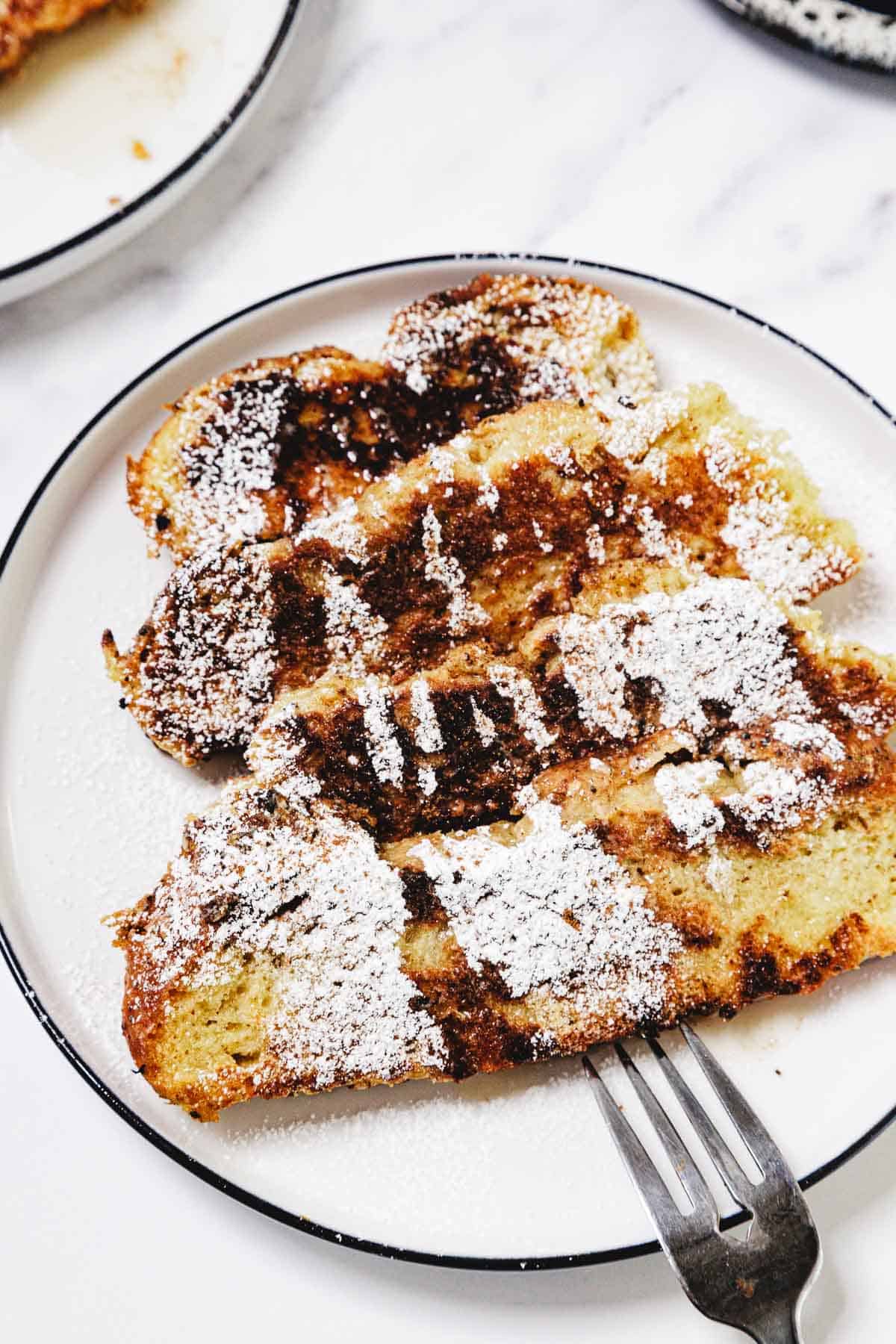
I would crack eggs into a chipped ceramic bowl, the same one I used to stir instant noodles, whisk in a splash of milk from my miniature fridge, and dunk the challah slices until they softened under the custard. I fried them slowly in butter, the edges browned and crisped while the apartment filled with a scent that reminded me of home. Some mornings I ate them plain, others with peanut butter or maple syrup I had bought in my new home, Canada. It wasn't elegant, but it felt like a ritual, a tether across miles.
That ritual became my survival. I was stretching a loaf to last another day, holding onto the flavors of family when everything else felt new and unfamiliar. Challah French toast wasn't about presentation or even perfection. It was about waking up alone, yet never really being alone, because each bite carried the presence of those who had come before me, kneading dough and braiding strands for Shabbat, making sure there was always enough to share.
French Toast Through Time
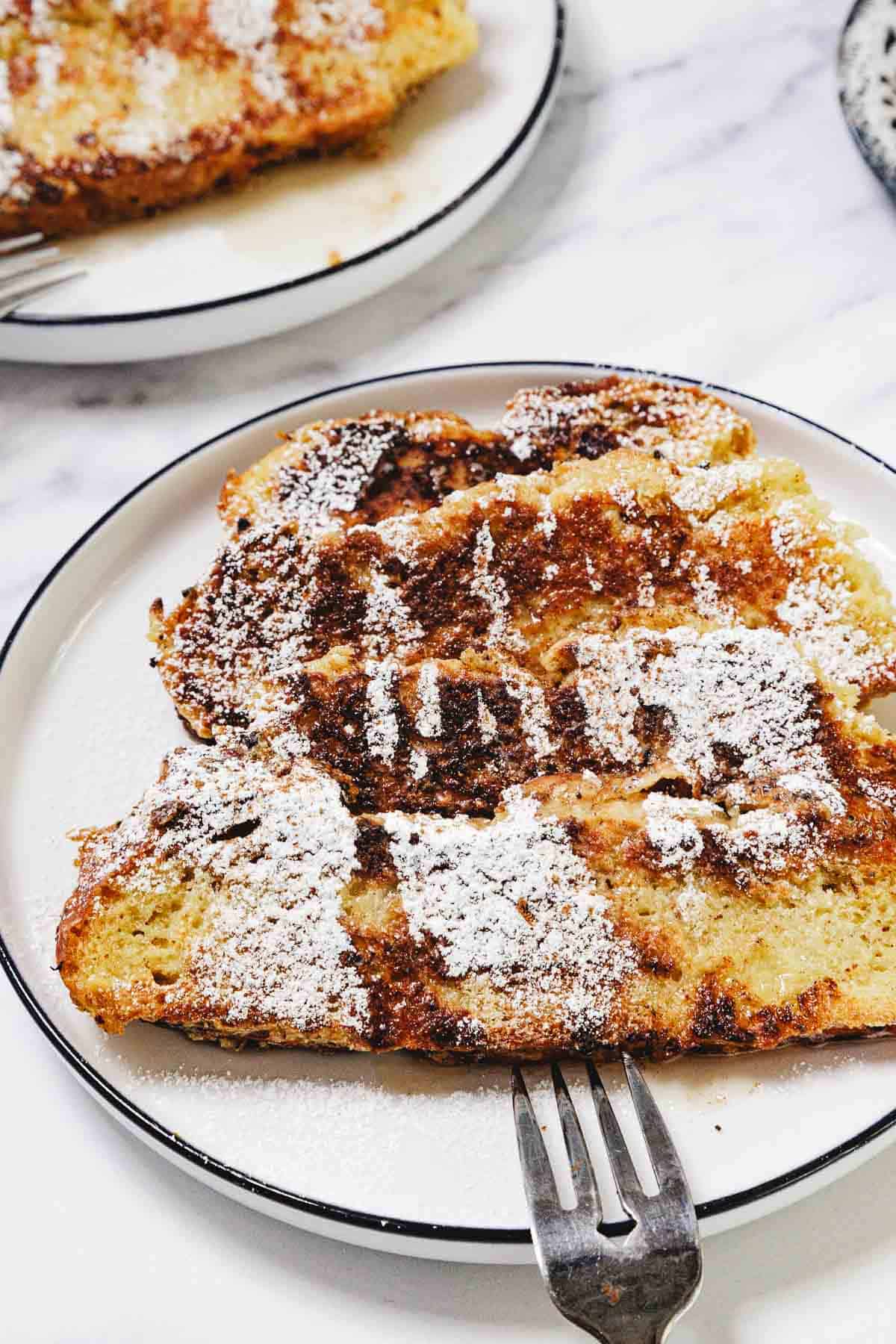
Years later, I find myself returning to those mornings, though now they are noisier. Instead of the creak of a radiator, there is the patter of little feet, Leo already awake and asking if breakfast is ready, Lin climbing onto a chair to watch.
My husband makes coffee while I slice day-old challah, and suddenly that simple student ritual becomes a family breakfast. French toast has grown with me, first a way to stretch my mother's gift, now a way to teach my children the same lesson grandma taught: bread is never wasted, and love lingers in the ways we use it.
And in between, there were other versions, each one tied to a different chapter of life. There was the time I made a tofu beet spread for breakfast, spreading it over toasted bread, its color bright enough to rival any sunrise. Or the Russian mornings when cheese-encrusted grenki sat on my plate, crisp edges hiding molten centers, a taste of my grandmother's roots. Later came casseroles baked for gatherings, like the cheesy gluten-free French toast bake that carried us through holidays with friends, or the pecan-studded gluten-free French toast casserole, where each bite felt celebratory and sweet.
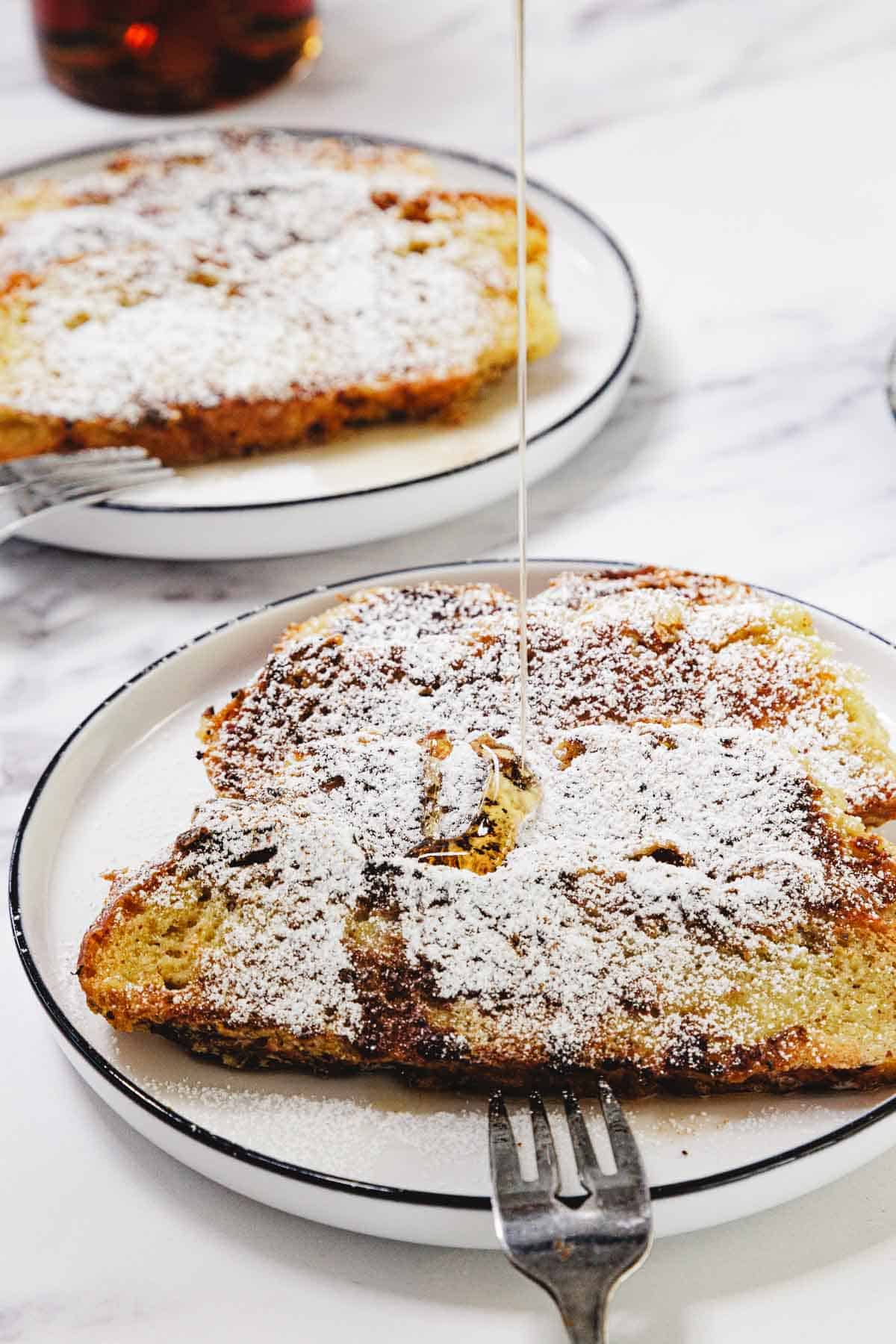
But it is the challah French toast that continues to draw me back. Its simplicity is its strength. A few slices of bread, a custard of eggs and milk, a skillet kissed by butter, and suddenly the air feels familiar, comforting. It is as international as it is personal. Bread that traveled from Ukrainian kitchens to Jewish Shabbat tables, custard that carries the echo of French pain perdu, syrup brought from Canadian trees, and now the laughter of my Colombian husband as he passes plates across the table.
Every family finds its own way to start the morning. For us, it often begins with challah. And when challah grows stale, as it inevitably does, that is not an ending. The loaf becomes French toast, and the ritual continues, reminding me that food, like family, is always evolving but never far from its roots.
Ingredients
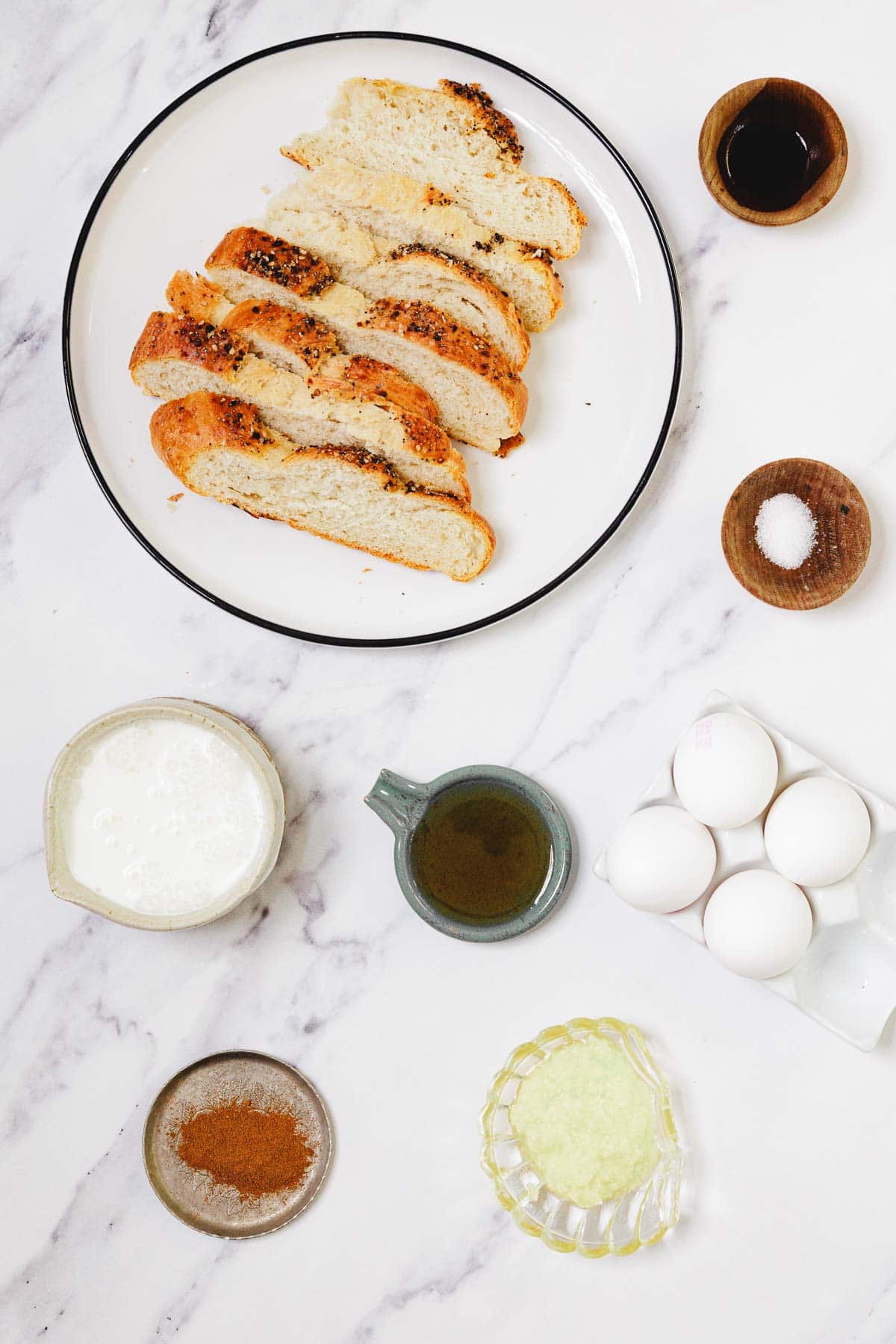
- Challah- Day-old challah works best because its slightly dry crumb soaks up the custard without falling apart. If you don't have challah, brioche or another enriched bread will do, though nothing matches the soft sweetness and braids of challah.
- Milk- Whole milk makes the custard creamy without overwhelming the bread. Plant-based milks like oat or almond can step in if needed, though they'll bring their own taste to the mix.
- Vanilla Extract - A few drops carry warmth and a sweetness that lingers in the background. If you don't have extract, scrape in the seeds of half a vanilla bean for a deeper note.
- Cinnamon- This spice is what makes French toast feel like breakfast instead of dessert. A little is enough to perfume the custard with warmth. Sometimes I swap it for cardamom when I want a flavor that reminds me of Middle Eastern kitchens.
- Clarified Butter (Ghee) - Essential for frying without burning. Regular butter can smoke too quickly, but clarified butter holds its ground, giving the bread a nutty edge.
See the recipe card for full list and exact quantities.
How to Make This Challah French Toast Recipe

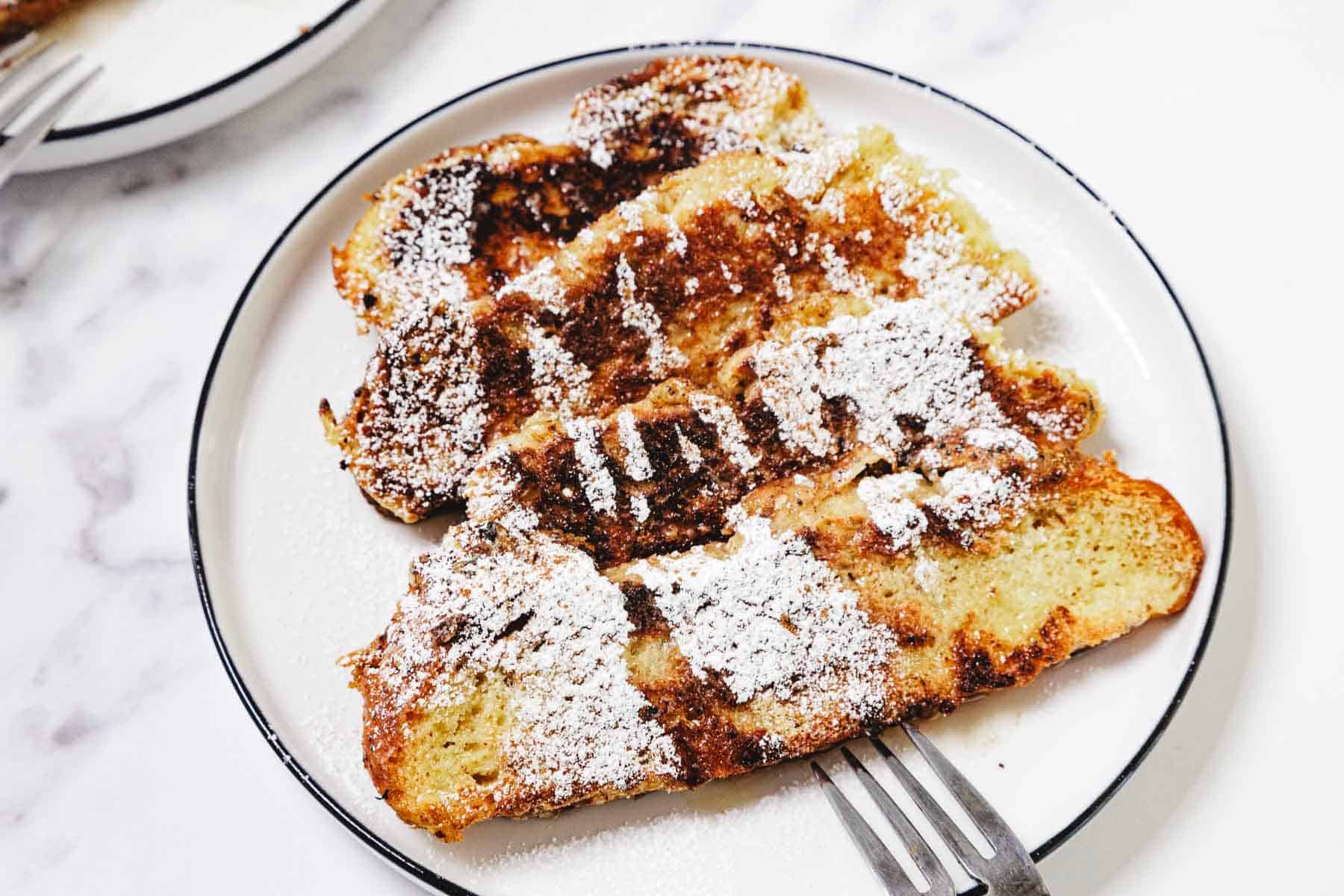
If you've got a loaf of challah that's gone a little stale, this is challah bread french toast is the way to bring it back to life. Soft, custardy in the center with golden edges, it's the kind of breakfast that carries the scent of home into your kitchen. Here's how to do it:
Make the Custard
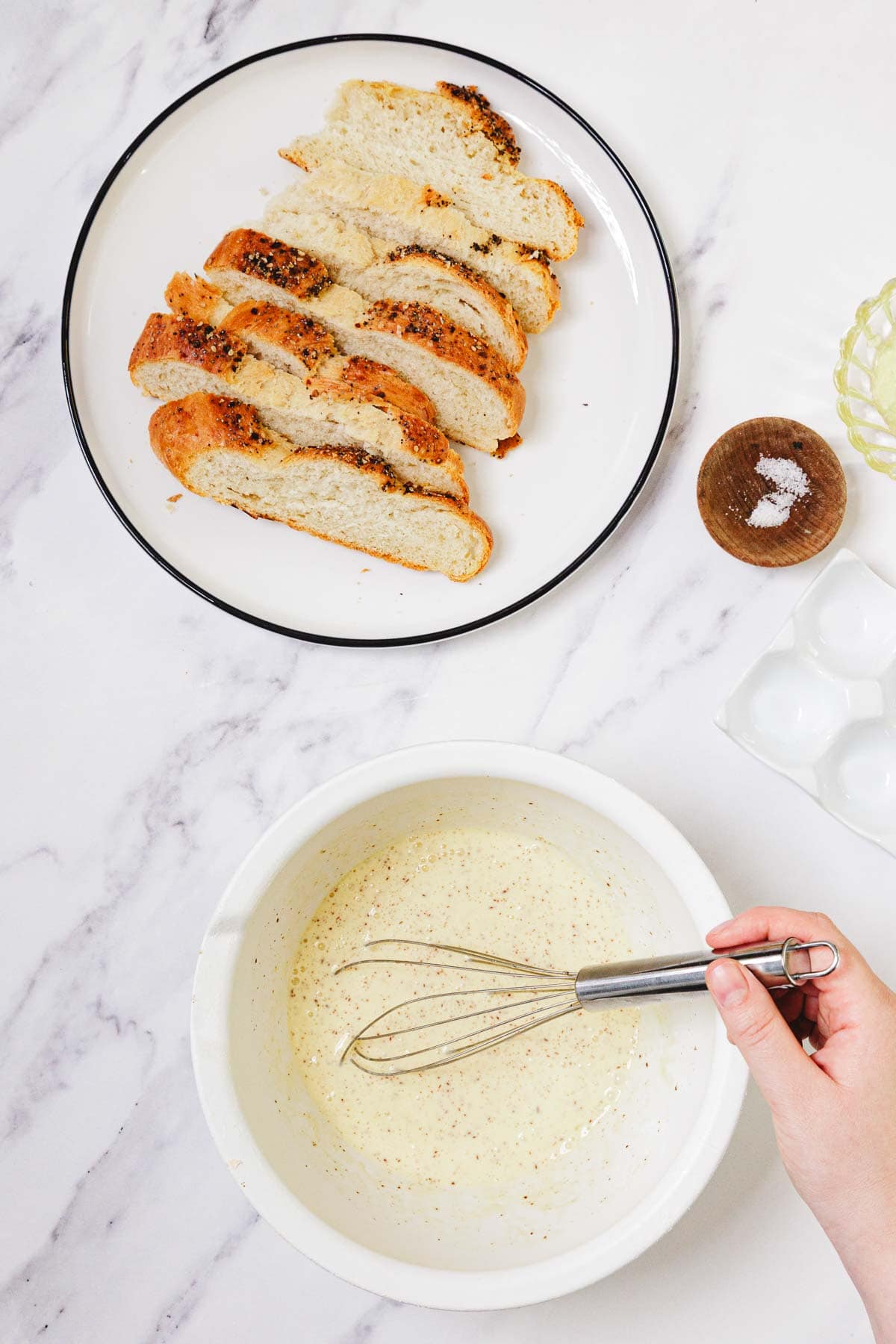
Crack the eggs into a wide, shallow bowl and whisk them together with the milk until smooth. Add in cinnamon, vanilla extract, and a pinch of salt. The mixture should smell fragrant and lightly spiced, almost like the start of a holiday morning.
Soak the Bread
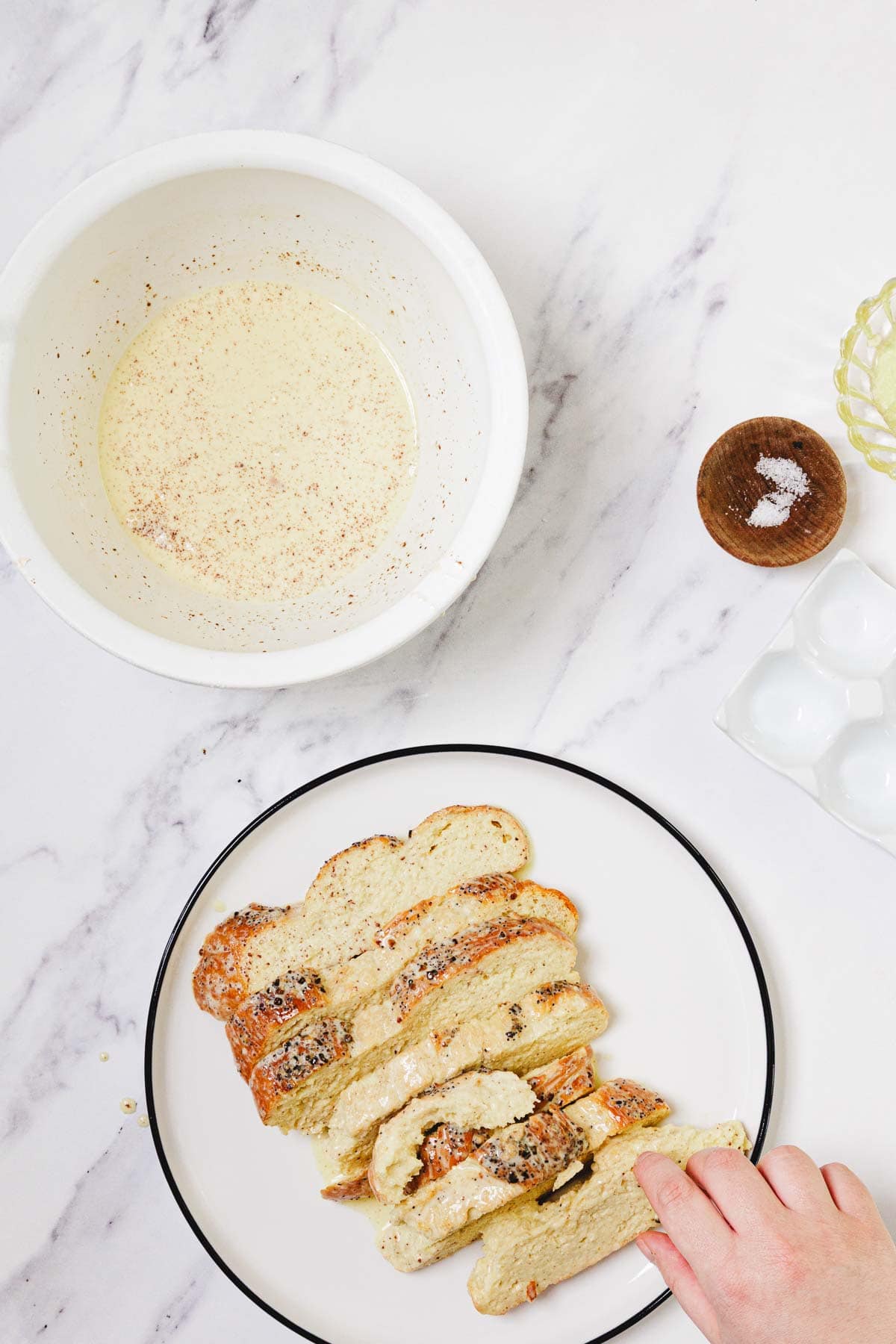
Lay slices of challah into the custard, giving them about 30 seconds per side. The bread should feel heavier as it absorbs the mixture but still hold its shape. Don't rush this step! It's what transforms the challah into something soft and rich inside.
Heat the Skillet
Place a cast-iron skillet over medium heat and melt the clarified butter. When it shimmers and spreads easily across the pan, you'll know it's ready.
Cook the Slices
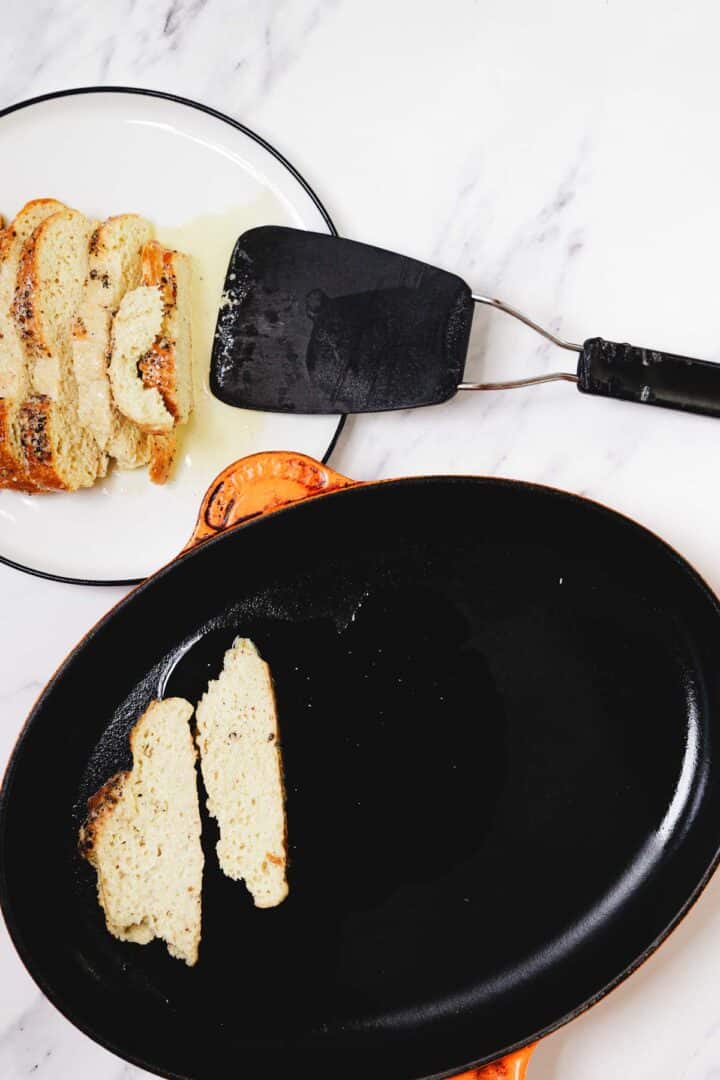
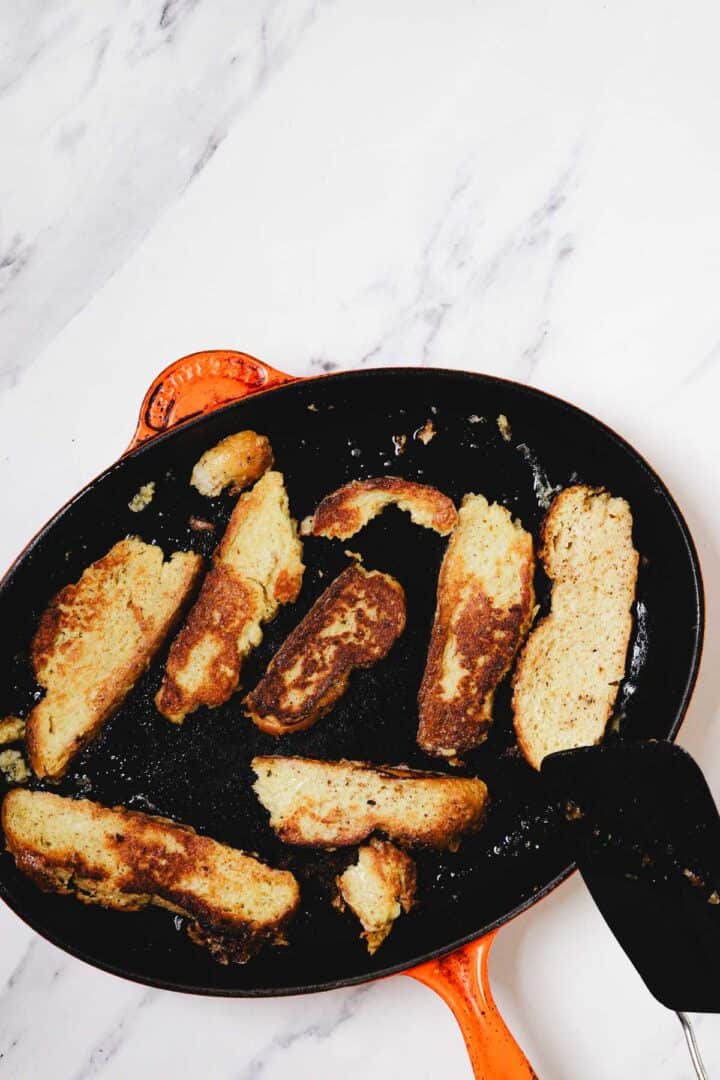
Add the soaked challah to the skillet and cook until each side turns golden brown, about 3 minutes per side. The edges should be crisp, while the center stays custardy. Adjust the heat if the bread browns too quickly.
Serve Right Away
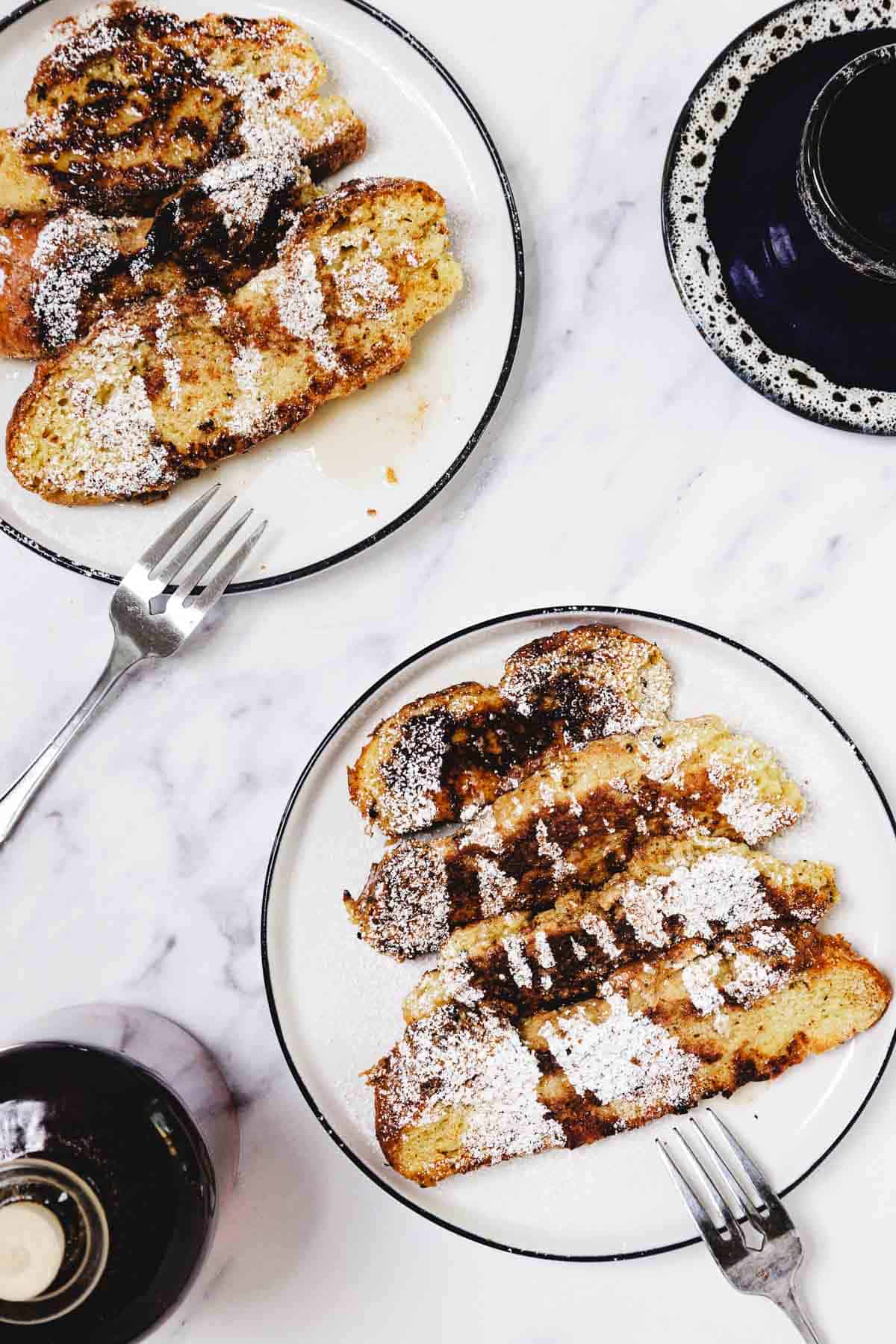
Transfer the slices to plates while still warm. Drizzle with maple syrup or spoon fruit compote over the top. If you like, add fresh fruit, a sprinkle of nuts, or even a smear of peanut butter, whatever makes it feel like yours.
Storage
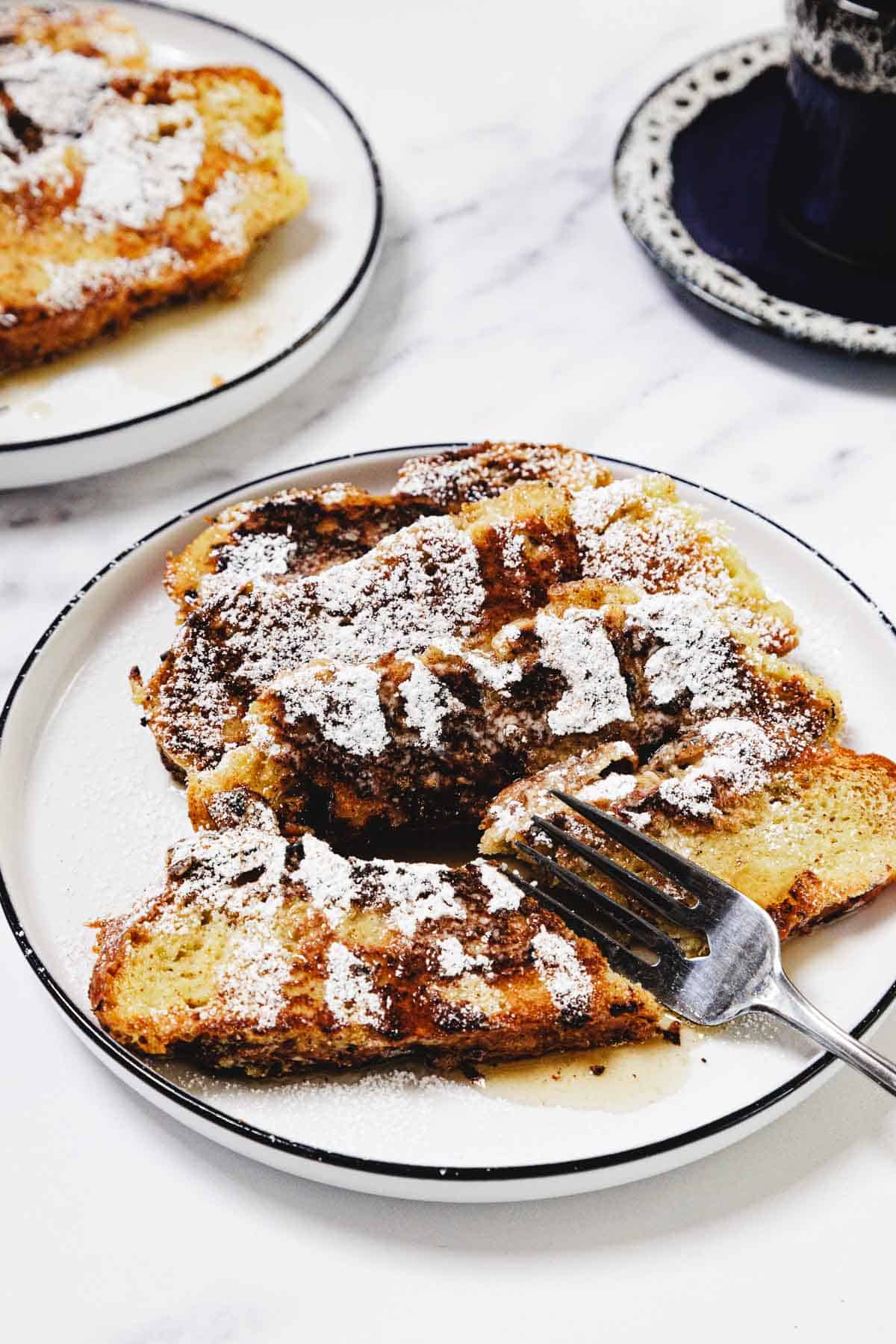
Challah French toast is best served right after cooking, but leftovers can be kept for later. Allow slices to cool fully before storing to prevent condensation. Place them in an airtight container and refrigerate for up to 2 days. To reheat, use a skillet or oven so the edges crisp back up and the center stays custardy. The microwave works in a pinch but will soften the bread more.
For longer storage, freeze slices in a single layer on a baking sheet until firm, then stack them with parchment paper between each slice. Store in a freezer-safe bag or container for up to a month. Reheat directly from frozen in the toaster or oven for a quick breakfast that still tastes fresh.
Top Tips
Don't Rush the Soak- giving each slice a full half-minute in the custard makes all the difference. A slower soak means every bite tastes rich and even.
Cook Over Medium Heat - high heat browns the bread too fast, leaving the middle undercooked. Medium heat lets the crust caramelize slowly while the inside turns soft.
Recipe
Tried and loved this recipe? Please leave a 5-star review below! Your reviews mean a lot to me, so if you've got any questions, please let me know in a comment.
Challah French Toast
Equipment
- Bread knife
- Shallow dish for soaking
Ingredients
- 6 slices day-old challah 1‑inch thick
- 4 large eggs
- 1 cup whole milk
- 1 teaspoon vanilla extract
- ½ teaspoon ground cinnamon
- Pinch of salt
- 2 tablespoon clarified butter
- Maple syrup or fruit compote for serving
Instructions
- In a wide bowl, whisk eggs and milk until smooth. Add vanilla, cinnamon, and a pinch of salt. The custard should smell gently spiced and balanced.
- Pour the custard into a shallow dish. Lay in the challah slices and soak about 30 seconds per side until the crumb feels heavy but intact.
- Warm a cast-iron skillet over medium heat. Add clarified butter and let it melt and shimmer so the surface is evenly coated.
- Lay soaked slices in the skillet without crowding. Cook about 3 minutes per side, until edges are crisp and centers are custardy. Adjust heat as needed to prevent scorching.
- Move slices to plates while hot. Finish with maple syrup or spoonfuls of compote. Serve immediately.