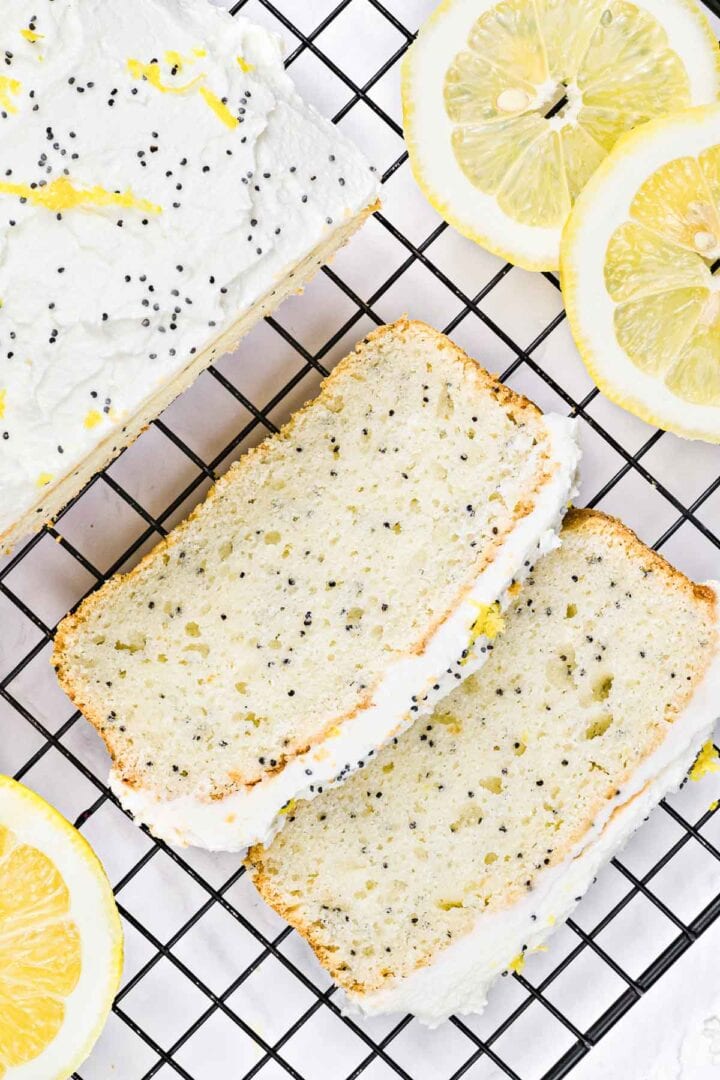
A soft, zesty gluten-free lemon poppy seed loaf cake with vegan cream cheese frosting, perfect for brunch, snacks, or a sweet afternoon treat this spring!
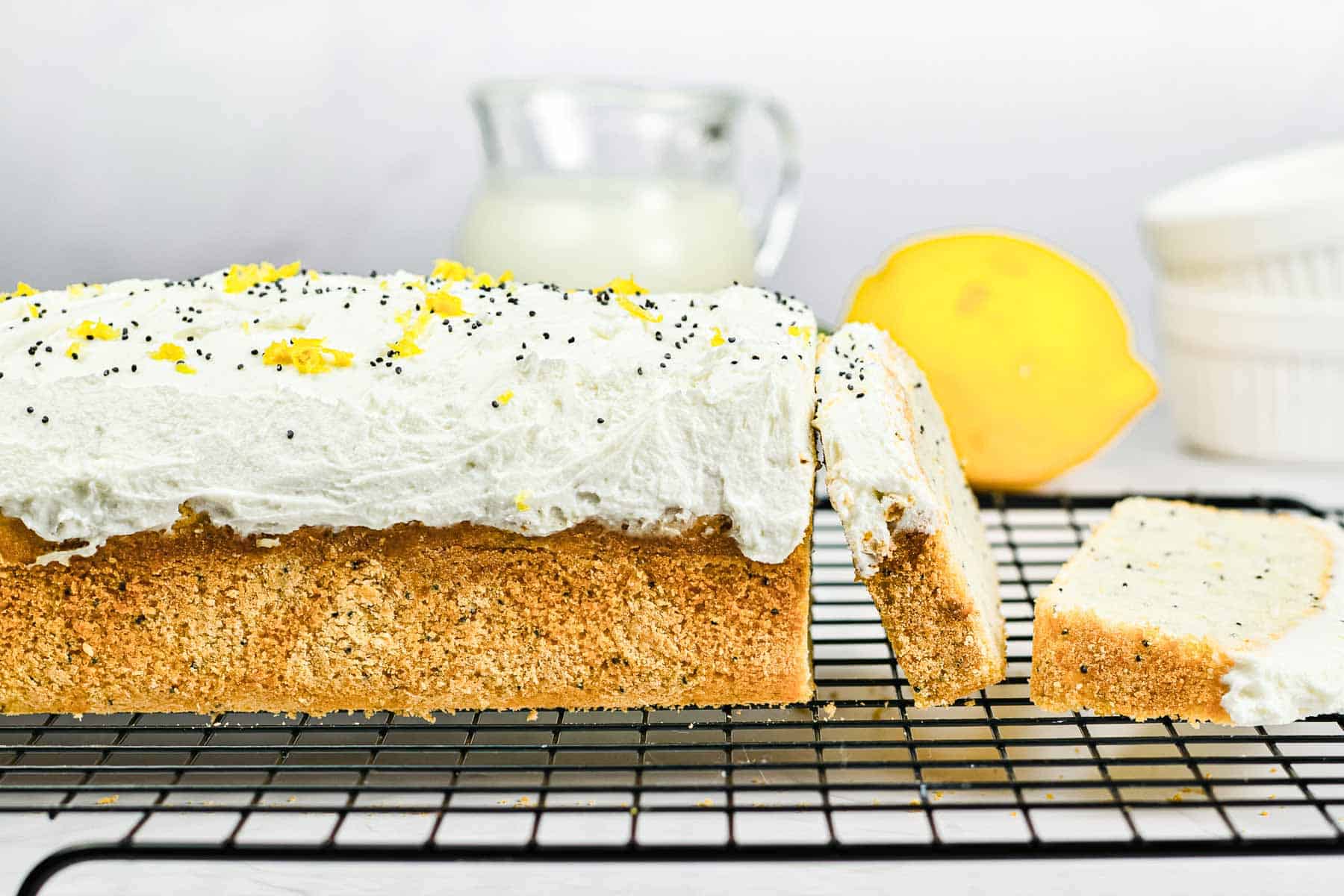
When I'm hosting, I try to have at least one thing on the table that I don't have to worry about. This gluten-free lemon poppy seed loaf is usually that thing.
It holds its shape, doesn't need to be served immediately, and tastes the same a few hours later as it does when it first cools on the rack. The lemon keeps it fresh, the crumb stays even, and I don't find myself hovering over it while guests arrive. It quietly does its job, which is exactly what I want around Easter, when everything else feels a little too decorated, a little too delicate.
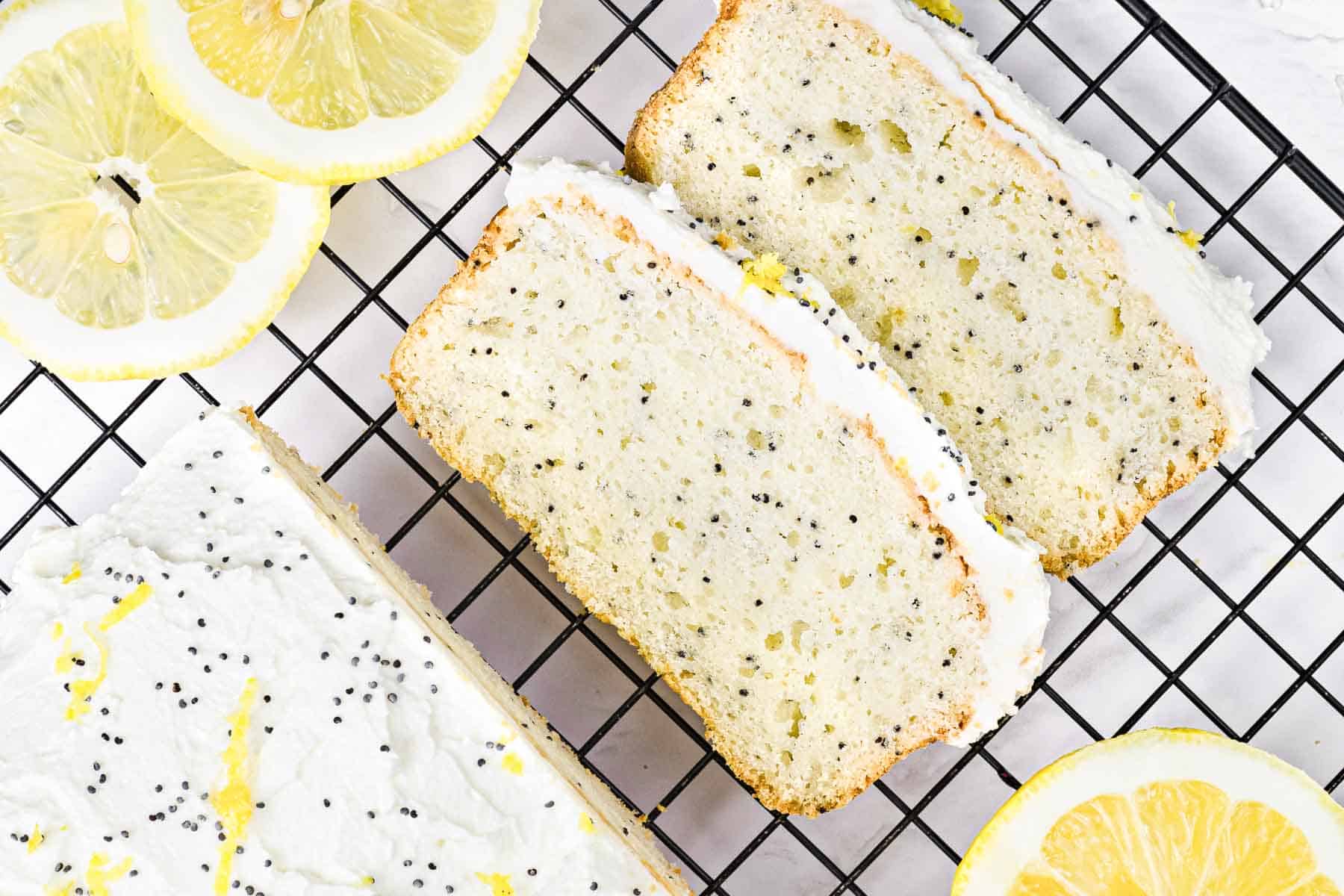
Poppy seeds still feel like a small puzzle to me. I grew up seeing them scattered over breads and pastries in Eastern European kitchens, pressed into rolls, folded into fillings, stirred into batters without much explanation.
My grandmother used them without measuring, her hands moving as if they remembered every pinch and sprinkle. Back then, I thought they were there for looks. They weren't flashy the way chocolate or berries do. They stayed quiet, tucked into the dough.
It took years of baking on my own to understand what they do. They change the way a cake feels more than the way it tastes. There is a faint nuttiness, yes, but more than that, it gives structure. Lemon cake without poppy seeds feels soft and fleeting. Lemon with poppy seeds feels grounding.
I come back to lemon cakes every spring. There is something about the brightness that fits this time of year, especially around Easter when tables fill quickly.
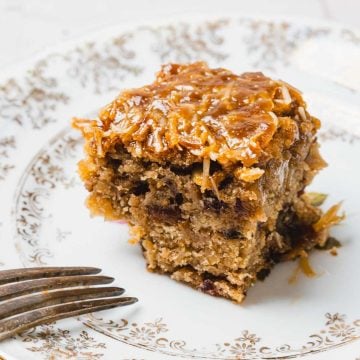
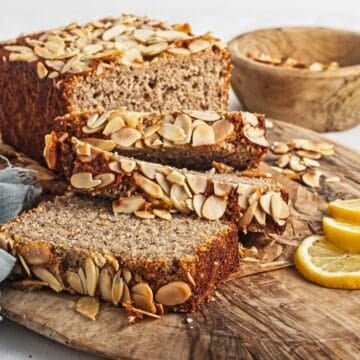
I have made versions with almond flour, like this almond flour lemon bread, which carries a deeper, slightly dense crumb that works well with tea in the afternoon. There is also my gluten-free lemon almond loaf, softer, lighter. And on weekends, when strawberries begin to appear again, I find myself baking a lemon almond yogurt cake with strawberries, a cake that disappears in uneven slices while the kids reach for the berries first.
This loaf carries the brightness of lemon, the steadiness of a loaf cake, and that quiet presence of poppy seeds that makes it feel complete. I started making it when I needed a gluten-free option, to be honest. Over time, it became the one I rely on when I don't want to think too much, when I want something I can trust to come out the same way every time.
Leo asks for the frosting before the cake has even cooled. Lin watches the seeds when I fold them in, asking why they look like tiny stones. My husband slices it thick, sometimes without waiting for plates. By the time guests arrive, there is already one piece missing from the end, and somehow that makes it feel more like home.
Ingredients
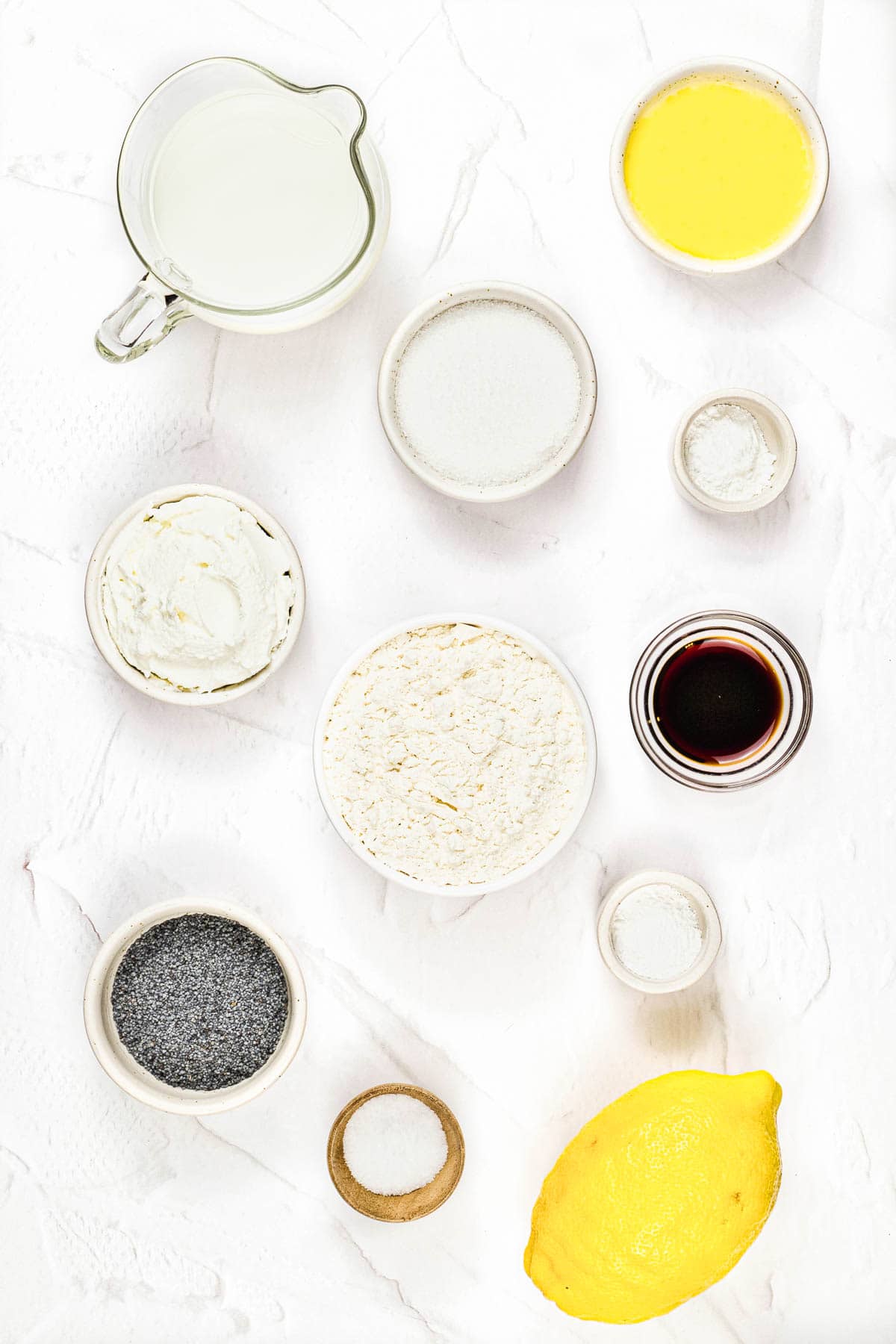
- Gluten Free Flour Blend - A good gluten-free flour blend is what keeps this loaf from falling apart or turning dense. I use a blend that already includes a binder like xanthan gum, which helps the cake hold together when sliced. After a few early attempts with single flours, I learned that blends give a more consistent crumb, especially for loaf cakes that need structure. If your blend doesn't include a binder, add a small amount separately. Regular all-purpose flour works if gluten-free isn't needed, though the texture will feel slightly softer.
- Poppy Seeds - Poppy seeds are what give this cake its identity. They add a gentle crunch and a quiet depth that lemon alone can't carry. I check that they smell fresh before using them, since older seeds can lose their character. If you don't have them, you can leave them out, though the cake will feel flatter in texture.
- Stevia Sugar- stevia keeps the sweetness light while letting the lemon stay at the front. Since it is more concentrated than regular sugar, it needs a careful hand. I prefer it here because it doesn't mask the citrus. If you're more comfortable with traditional sweeteners, you can use granulated sugar, though the cake will feel slightly heavier and more rounded in flavor.
See the recipe card for full list and exact quantities.
How to Make This Gluten Free Lemon Poppy Seed Loaf Cake
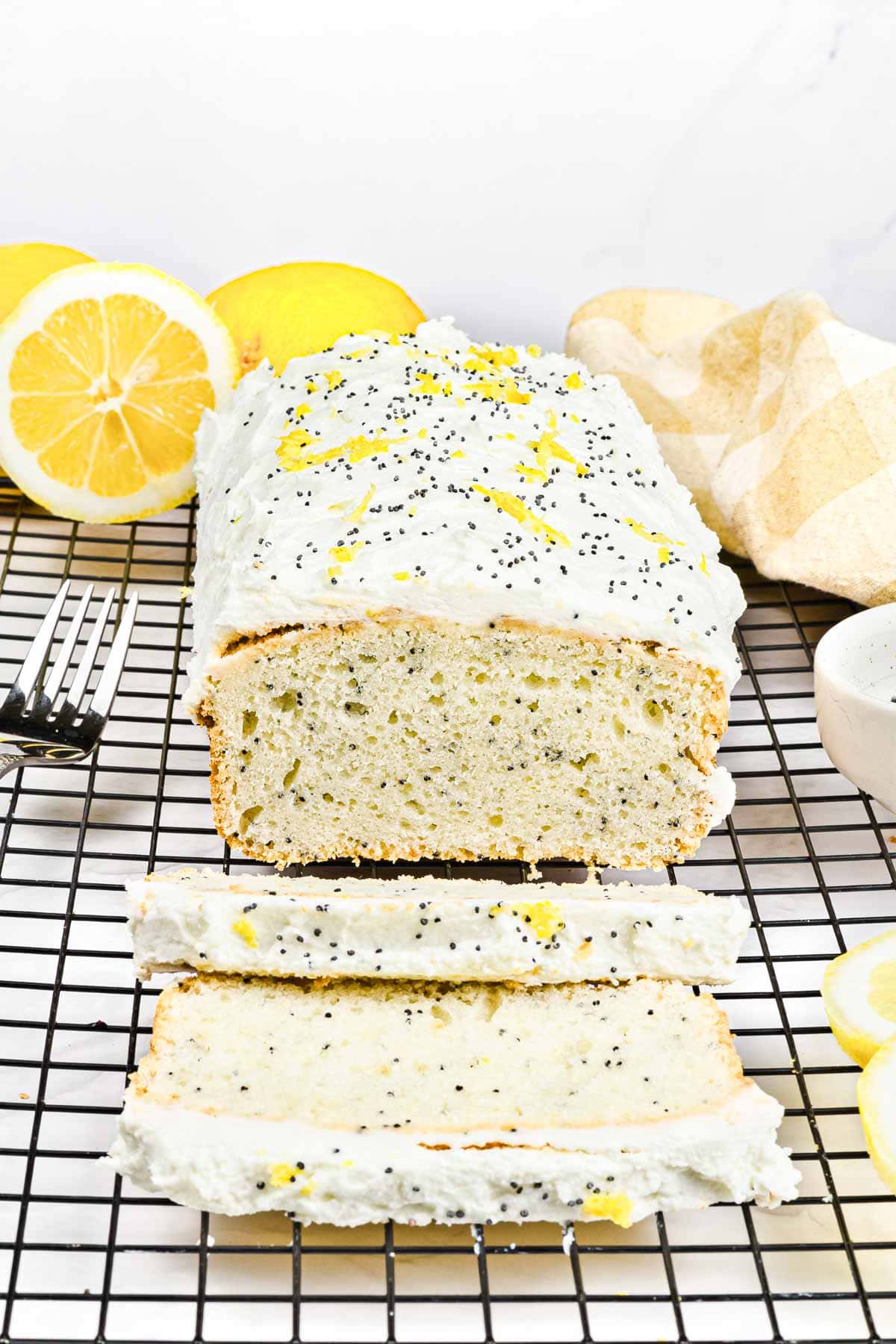
This gluten free lemon poppy seed loaf comes together in a steady, predictable way once you know what to look for. The batter moves from slightly separated to smooth, the loaf rises with a clean split down the center, and the final crumb stays soft without feeling fragile with its vegan glaze. Here's how to make this recipe:
Prepare the Oven and Pan
- Set your oven to 350°F (175°C). Line your loaf pan with parchment paper, leaving enough overhang on the sides to lift the cake later.
- The paper should sit flat against the pan without large folds, since those can press into the sides of the loaf as it bakes. A well-lined pan makes removal clean and keeps the edges from sticking.
Mix the Vegan Butter and Lemon Juice


- If the butter is too cold, it will resist blending and stay lumpy. Let it soften a bit more before continuing. This step sets the base for how evenly the lemon flavor spreads through the cake.
Whisk the Dry Ingredients Thoroughly
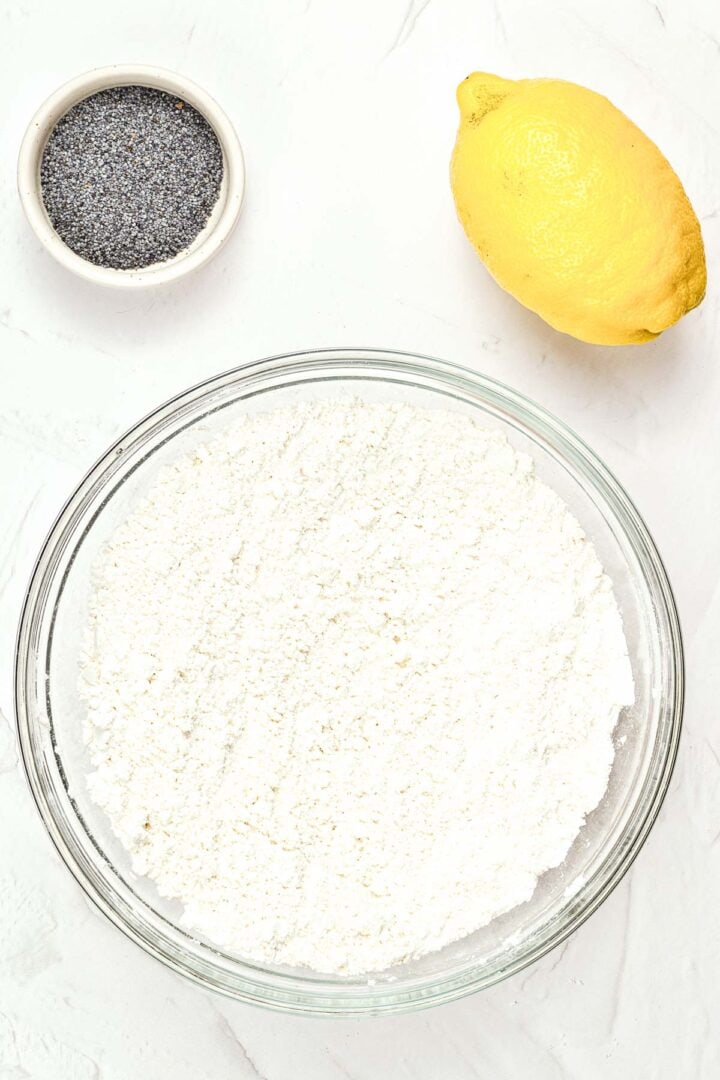
- The mixture should look uniform, with no visible clumps or pockets of flour.
- Gluten-free blends tend to compact in storage, so take an extra moment here. If the dry ingredients are uneven, the cake can rise inconsistently or form dense spots.
Add the Wet Ingredients Together
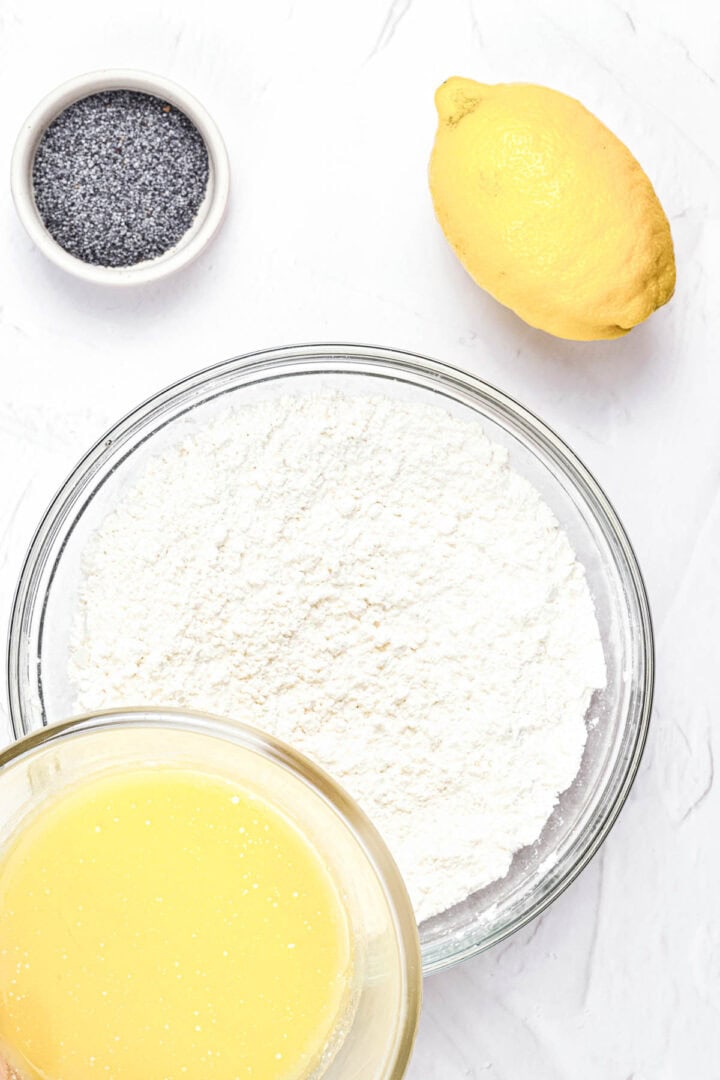
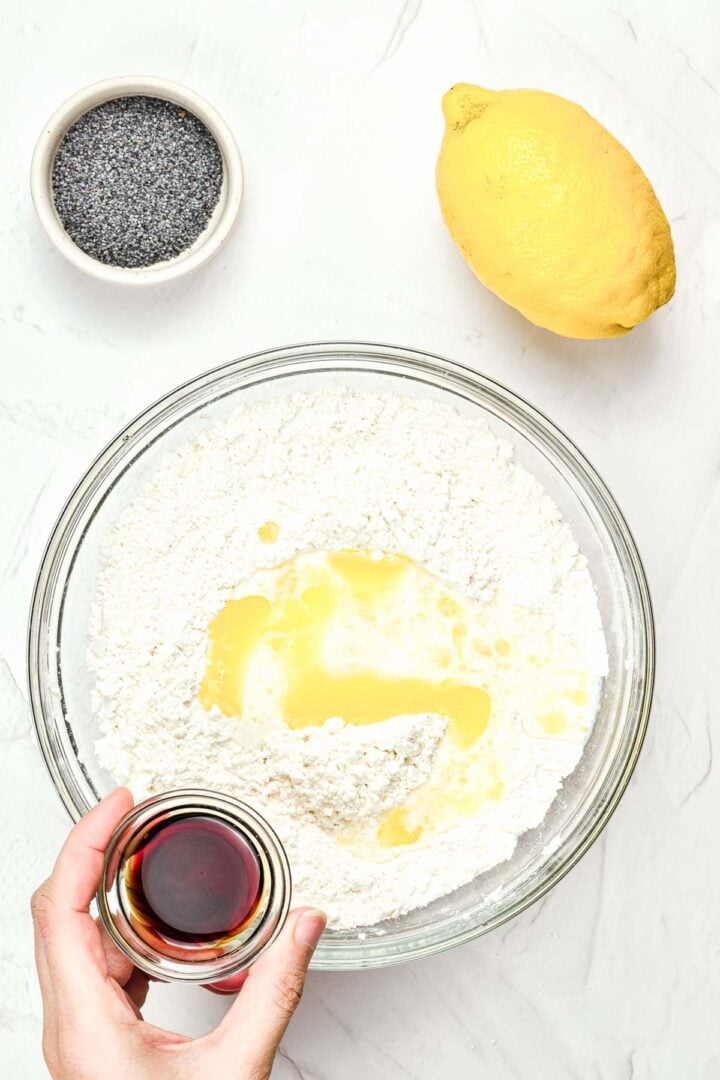
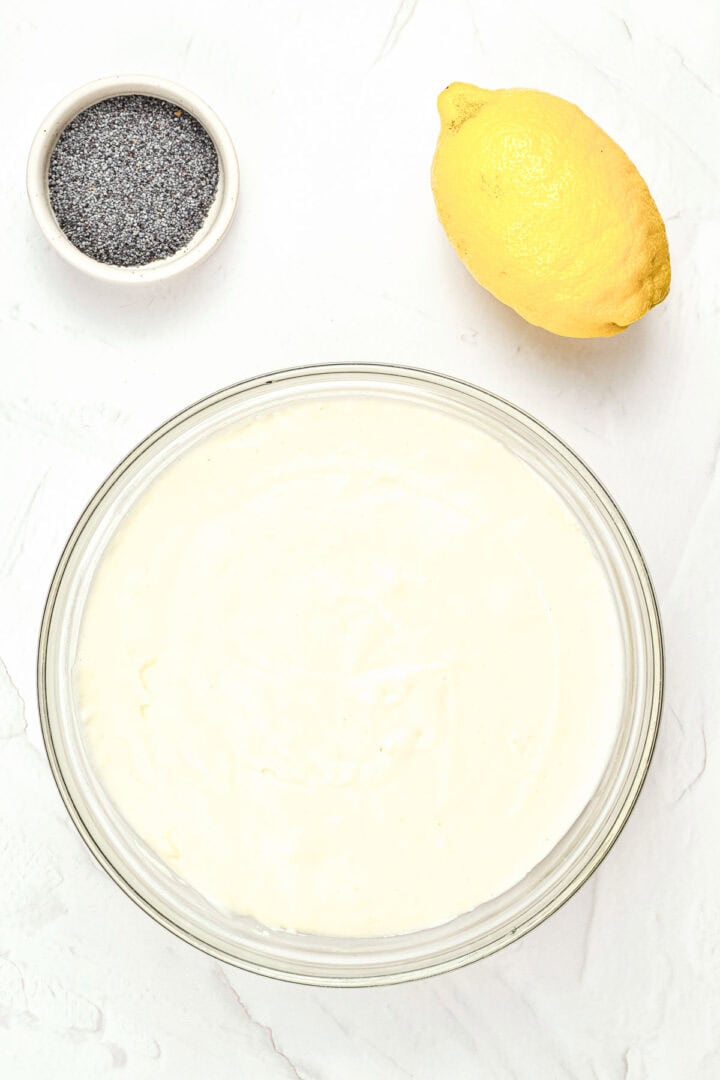
- You're looking for a smooth, cohesive batter that falls off the spoon in a steady ribbon. If it feels overly stiff, check that the butter was fully softened.
- Stop mixing as soon as the batter comes together.
- Overmixing can make the loaf dense instead of tender.
Fold in the Poppy Seeds and Lemon Zest
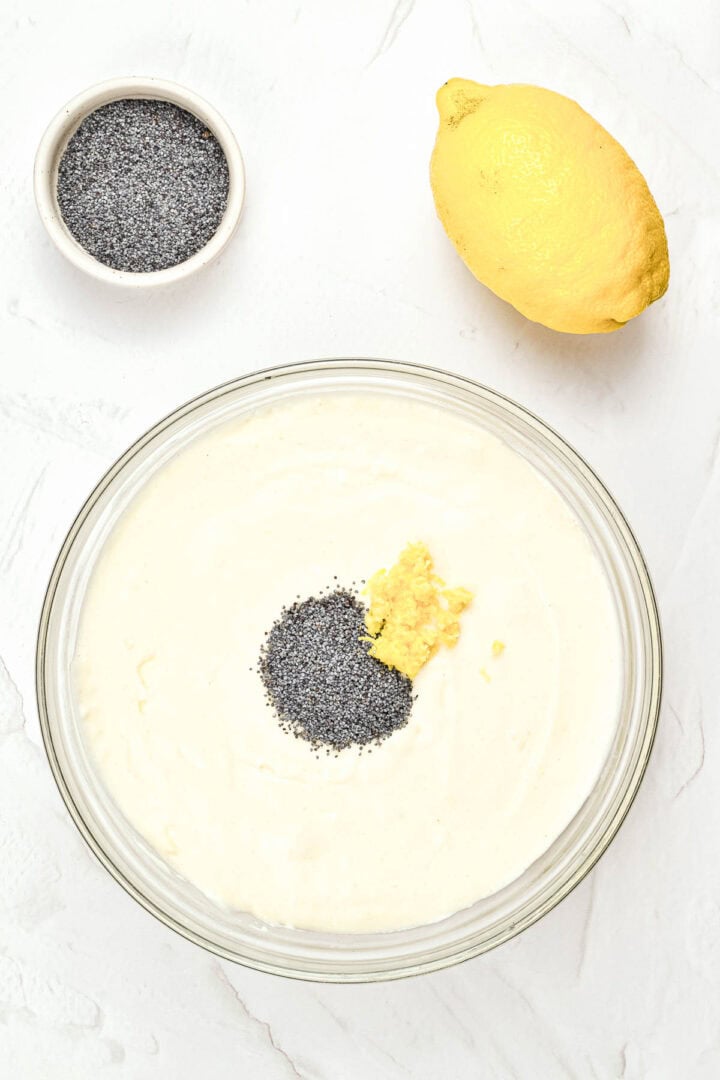
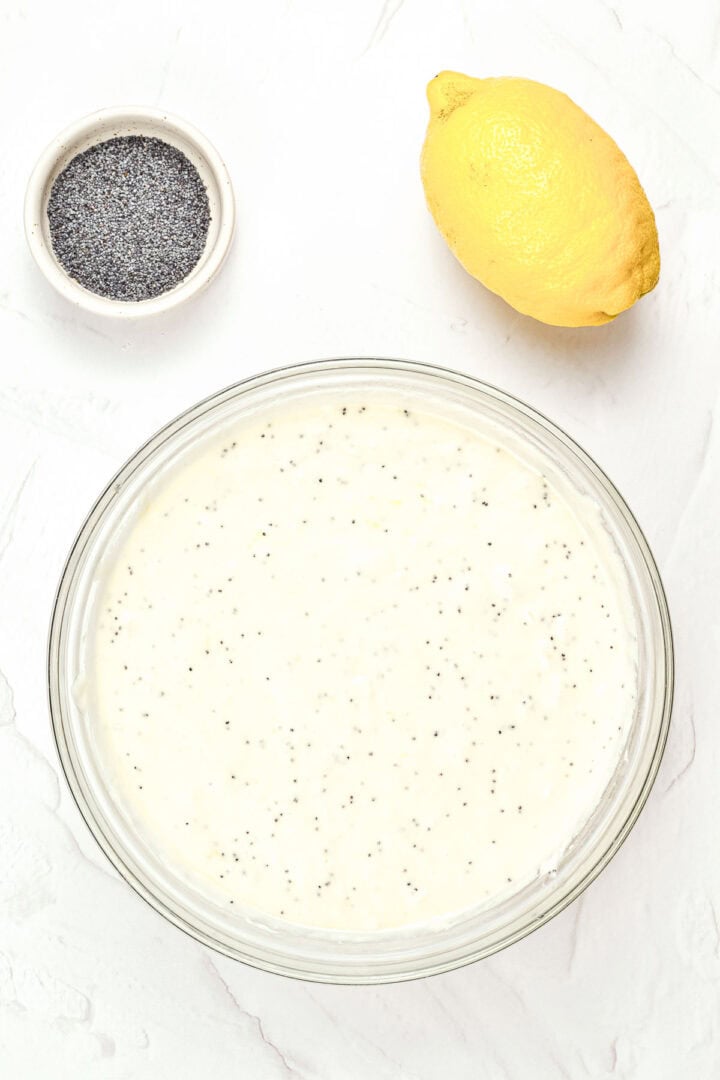
- Take care not to stir too aggressively here. The goal is to keep the batter airy while spreading the seeds throughout.
Transfer to the Pan and Smooth the Top
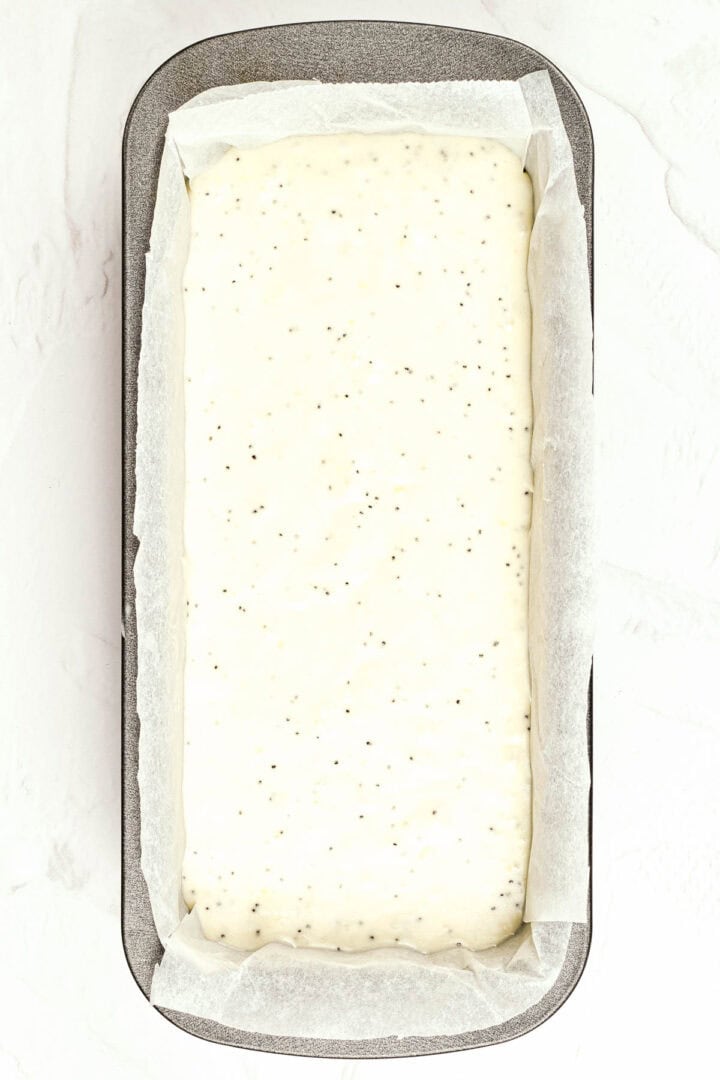
- Use a spatula to smooth the top so it sits evenly. The surface doesn't need to be perfectly flat, though large dips or peaks can cause uneven baking. The batter should fill the pan comfortably without reaching too close to the top edge.
Bake and Watch for the Rise
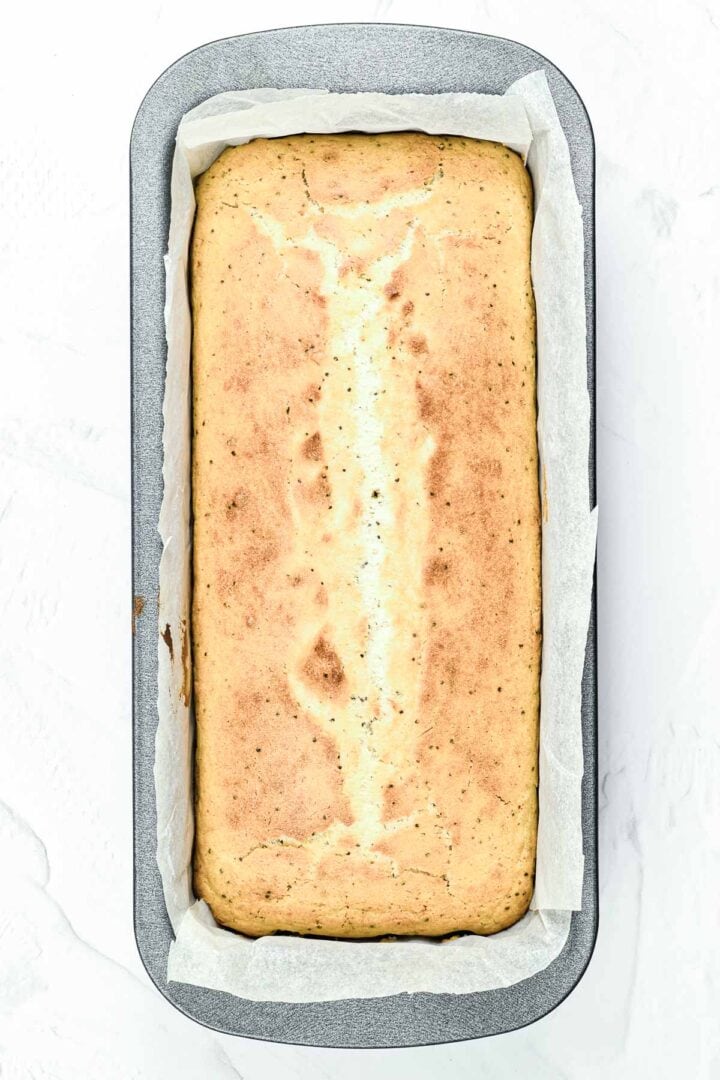
- This guides the rise and helps the cake open evenly instead of cracking unpredictably along the sides.
- As it continues baking, the top will set and begin to turn lightly golden. The center will rise and form a gentle ridge. Around the 45-minute mark, check for doneness by inserting a toothpick into the center. It should come out clean or with a few dry crumbs.
- If you see wet batter, give it more time and check again in a few minutes. Avoid opening the oven too often early on, since that can affect how the loaf rises.
Cool the Cake Completely

- The structure continues to set as it cools, so moving it too early can cause it to break. After it has cooled fully, use the parchment overhang to lift it out. The sides should release easily if the pan was lined well.
Prepare the Vegan Cream Cheese Frosting


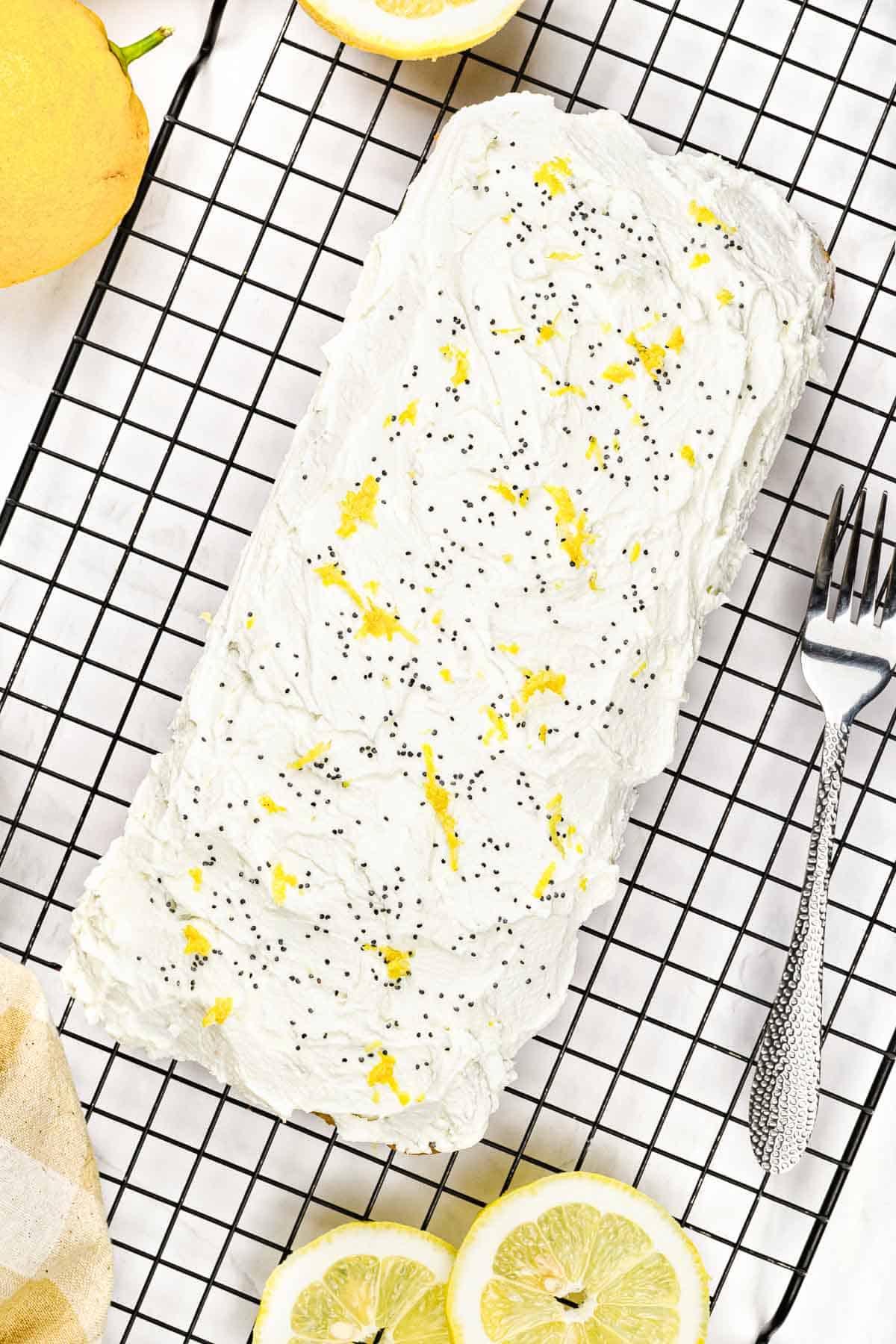
- The frosting should hold soft peaks and feel light, without lumps. If it looks too firm, let it sit at room temperature for a few minutes before mixing again. If it becomes too loose, chilling it briefly will help it firm up.
Frost the Loaf Evenly


- If the cake is even slightly warm, the frosting will soften too quickly and lose its shape, so give the loaf enough time to cool fully.
Finish with Lemon Zest and Poppy Seeds
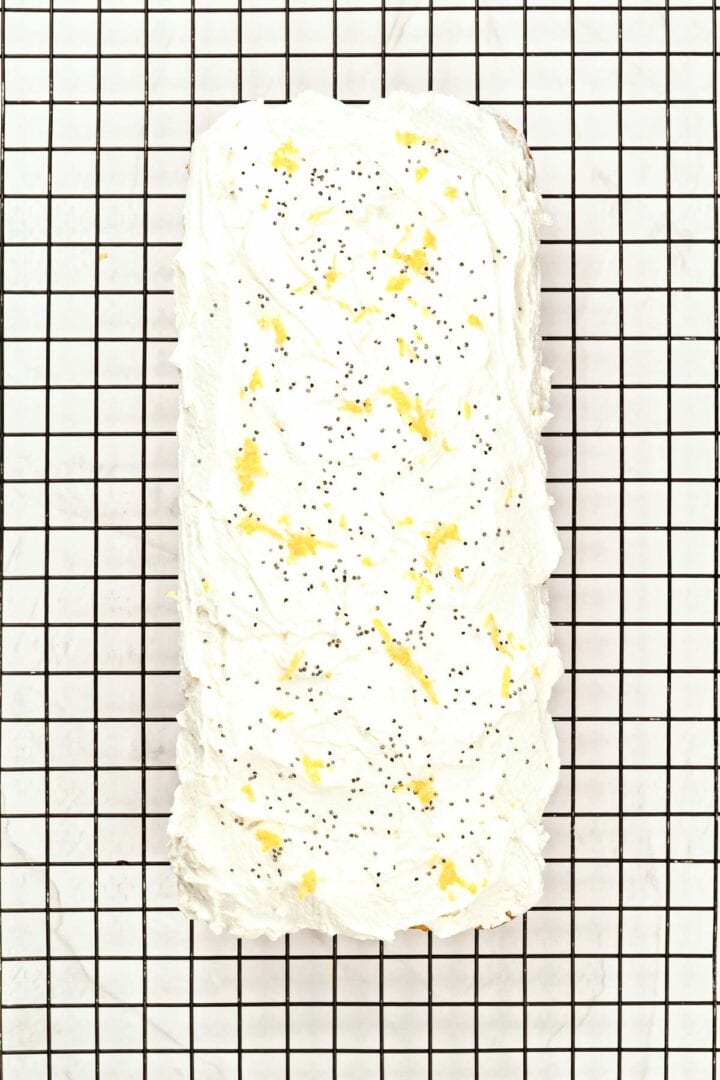
- This step adds texture and brings the look of the cake together with what's inside.
Let the Frosting Set Before Slicing
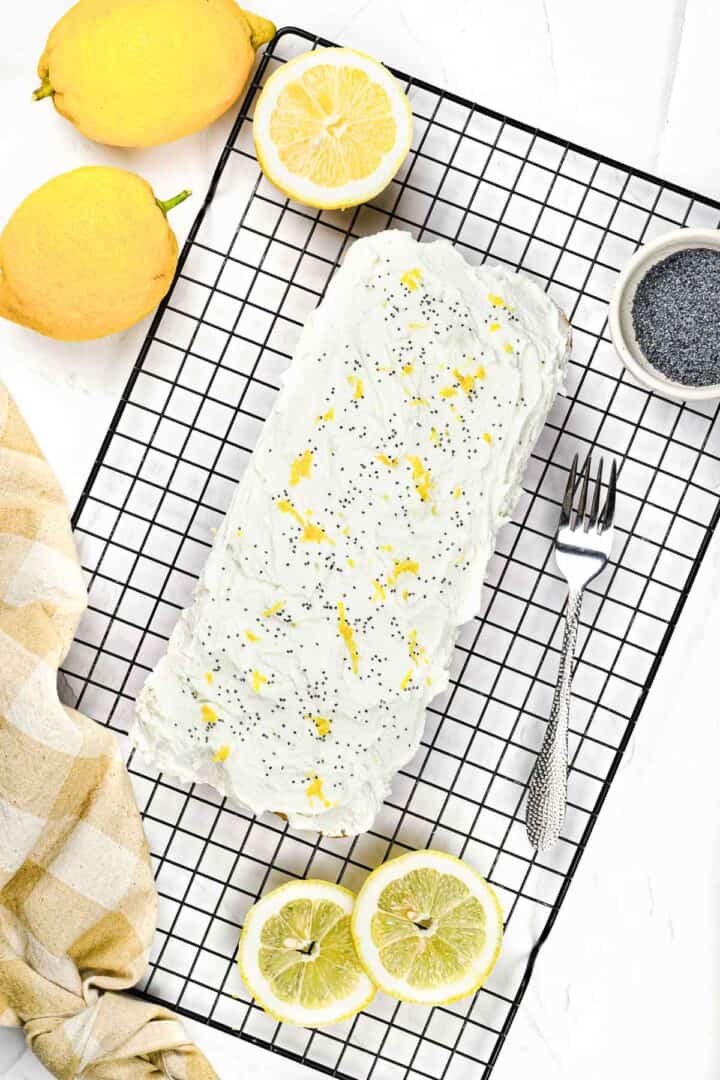
- When slicing, use a sharp knife and wipe it between cuts for neat edges.
- The final loaf should feel light when lifted, with a soft crumb that holds together cleanly. The poppy seeds add a gentle texture throughout, and the lemon carries through in every bite without overpowering the cake.
Storage
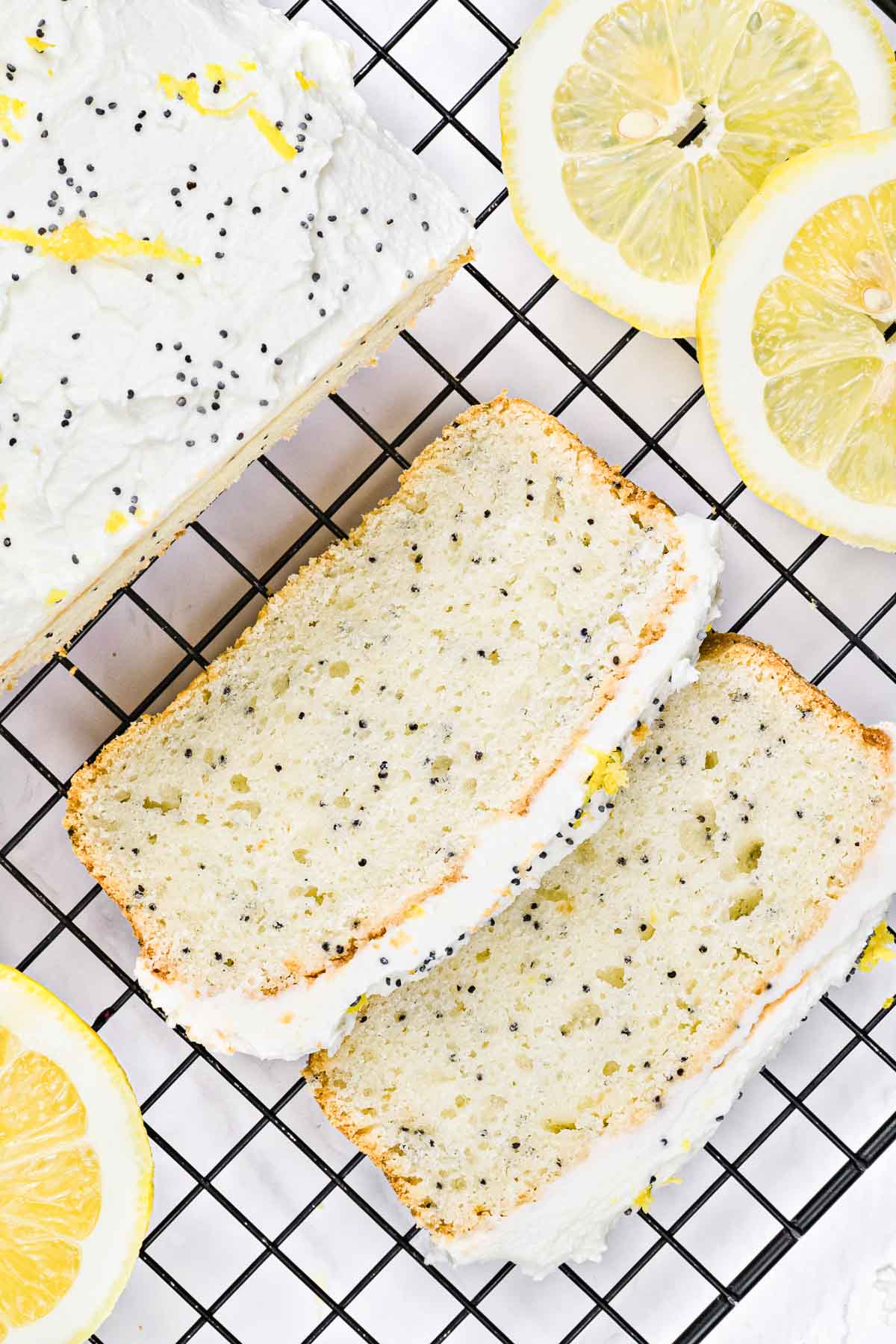
Once fully cooled and frosted, store your gluten-free lemon poppy seed loaf in an airtight container at room temperature for up to 2 days, away from heat or sunlight. In a warm kitchen, refrigerate to prevent the vegan cream cheese frosting from softening.
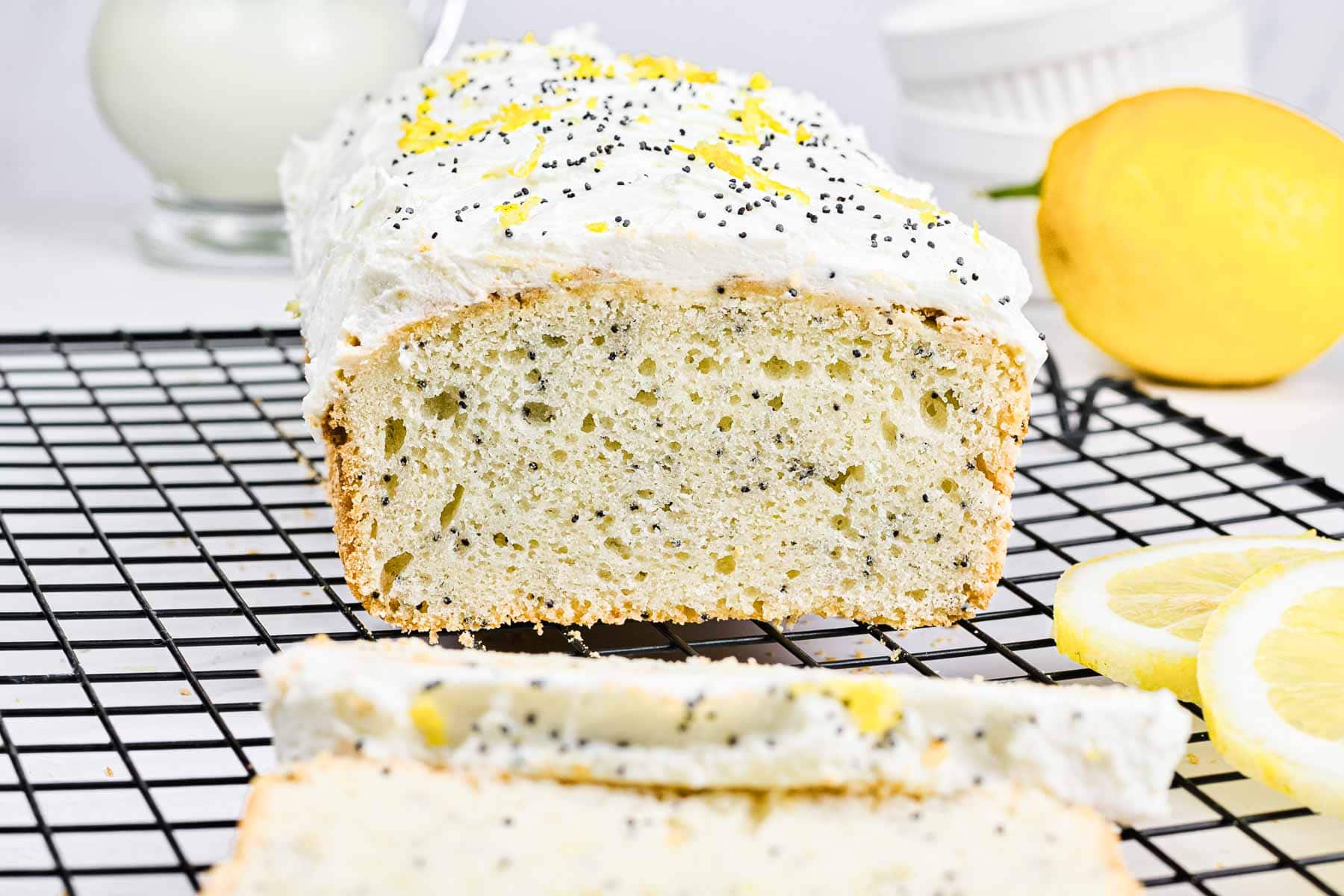
For fridge storage, keep the cake in a sealed container for up to 5 days. Slices may firm up, so let them sit at room temperature for 15-20 minutes before serving for a softer crumb. For longer storage, freeze the loaf unfrosted for up to 1 month. Wrap tightly in plastic, then place in an airtight container or freezer bag. Thaw in the fridge or at room temperature, then freeze before serving. It can be frozen, but may become slightly grainy.
Top Tips
Watch the Batter - when I mix gluten-free flour, the batter can swing from too thick to too thin depending on the blend. I aim for something thick but still pourable. If it feels stiff, a splash of non-dairy milk fixes it. Too loose, and the loaf sometimes sinks in the center. Been there, learned that.
Make the Center Cut - I always make that shallow cut after about 10 minutes. It isn't just for looks, gluten-free loaves like mine tend to crack along the sides if I skip this. The score guides the rise so the loaf opens evenly in the center.
Recipe
Tried and loved this recipe? Please leave a 5-star review below! Your reviews mean a lot to me, so if you've got any questions, please let me know in a comment.

Gluten-Free Lemon Poppy Seed Loaf Cake
Equipment
- 9-inch by 5-inch loaf pan
- Medium mixing bowl
- Whisk or electric mixer
- Measuring Cups and Spoons
- Zester or Grater
- Sharp Knife
- cooling rack
Ingredients
For the Cake:
- 2 cups gluten-free flour (250 g)
- 2 teaspoon baking powder (10 g)
- ½ teaspoon salt (2.5 g)
- ¼ cup poppy seeds (32 g)
- ½ cup vegan butter, softened (113 g)
- ½ cup stevia sugar (96 g)
- Juice and zest of 2 lemons
- ½ cup non-dairy milk (120 mL)
- 1 teaspoon vanilla extract (5 mL)
For the Frosting:
- 8 oz vegan cream cheese, softened (227 g)
- ½ cup stevia powder (96 g)
Instructions
Preheat and Prep
- Preheat your oven to 350°F (175°C). Line a 9x5-inch loaf pan with parchment paper, leaving overhang on both sides for easy removal.
Mix Wet Ingredients
- In a medium bowl, combine softened vegan butter with lemon juice. The mixture should be creamy but slightly tangy.
Combine Dry Ingredients
- In a large bowl, whisk gluten-free flour, baking powder, stevia sugar, and salt until fully mixed and lump-free.
Make the Batter
- Pour wet mixture into dry ingredients. Add non-dairy milk and vanilla extract. Stir gently until smooth. Overmixing can make the loaf dense.
Add Lemon and Poppy Seeds
- Fold in lemon zest and poppy seeds. You want them evenly distributed without overmixing. Batter should be thick but pourable.
Pour into Pan
- Transfer batter into the prepared loaf pan and smooth the top with a spatula.
Score for Even Baking
- Bake for 10 minutes, then make a shallow cut down the center. This helps the gluten-free loaf rise evenly without cracking along the sides.
Bake Completely
- Bake 45-50 minutes. Toothpick inserted in the center should come out clean. The top should be lightly golden and springy to touch.
Cool Before Frosting
- Let cake cool completely in the pan on a cooling rack. Even slight warmth can melt vegan cream cheese frosting.
Prepare Frosting
- Beat vegan cream cheese with stevia powder until smooth using an electric mixer or whisk.
Frost and Garnish
- Lift cake from pan using parchment overhang. Spread frosting evenly over top. Garnish with extra lemon zest and poppy seeds. Optional: fresh mint or lemon wedges for added color.
Serve
- Let frosting set a few minutes. Slice and enjoy your bright, tangy, gluten-free, vegan cake.