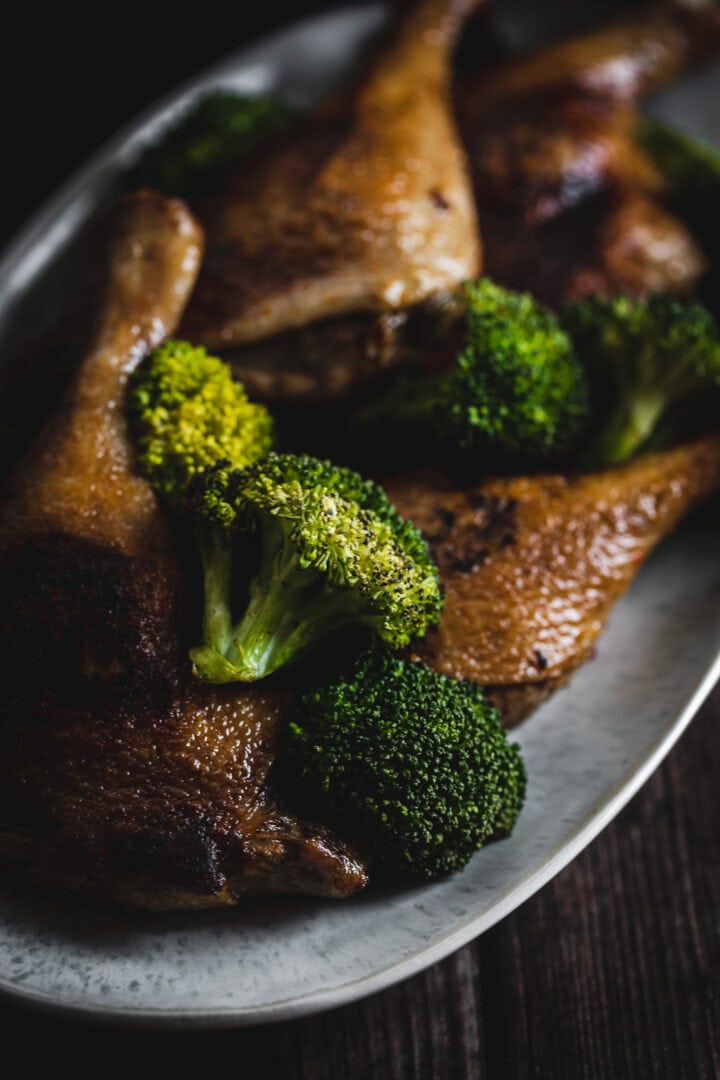
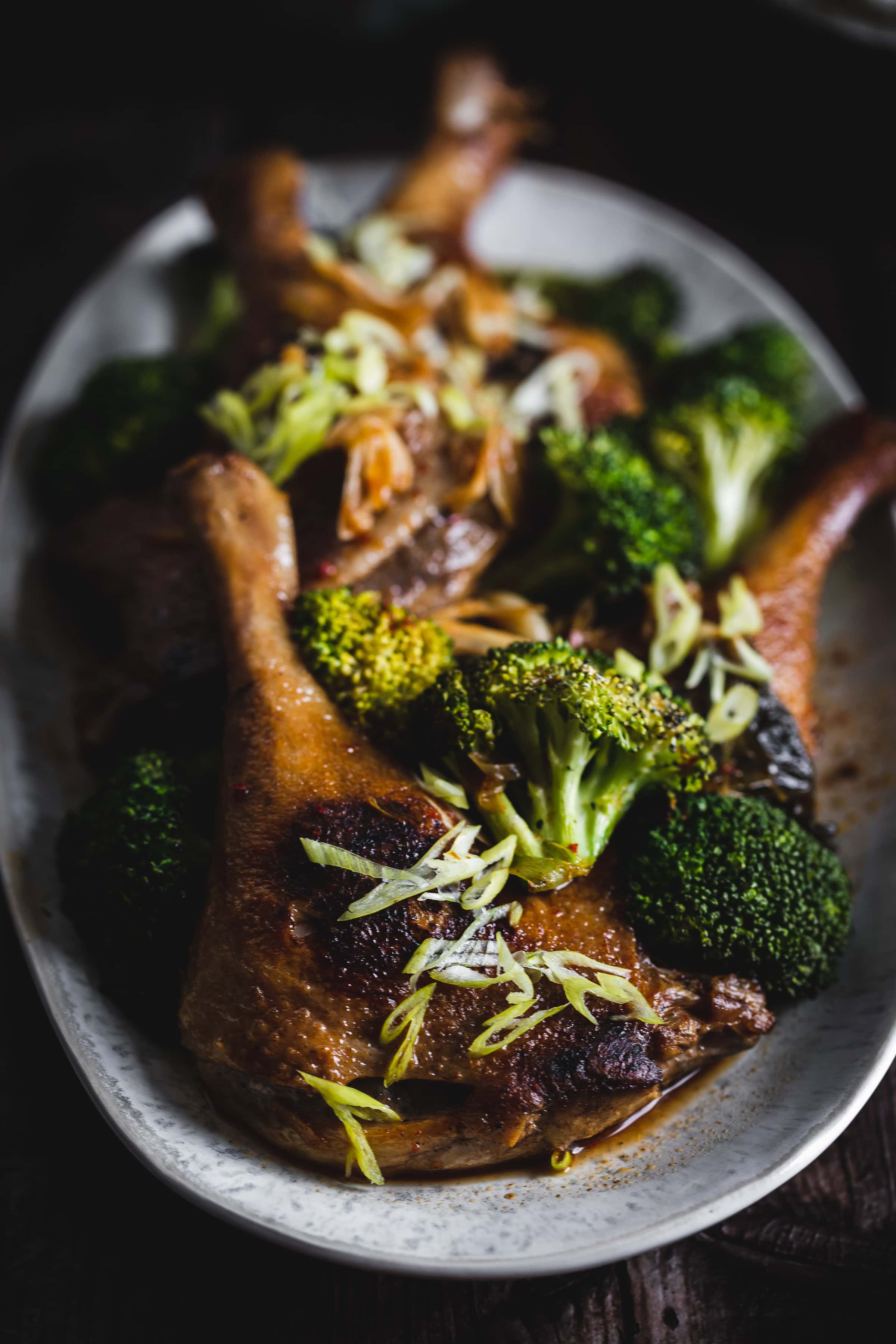
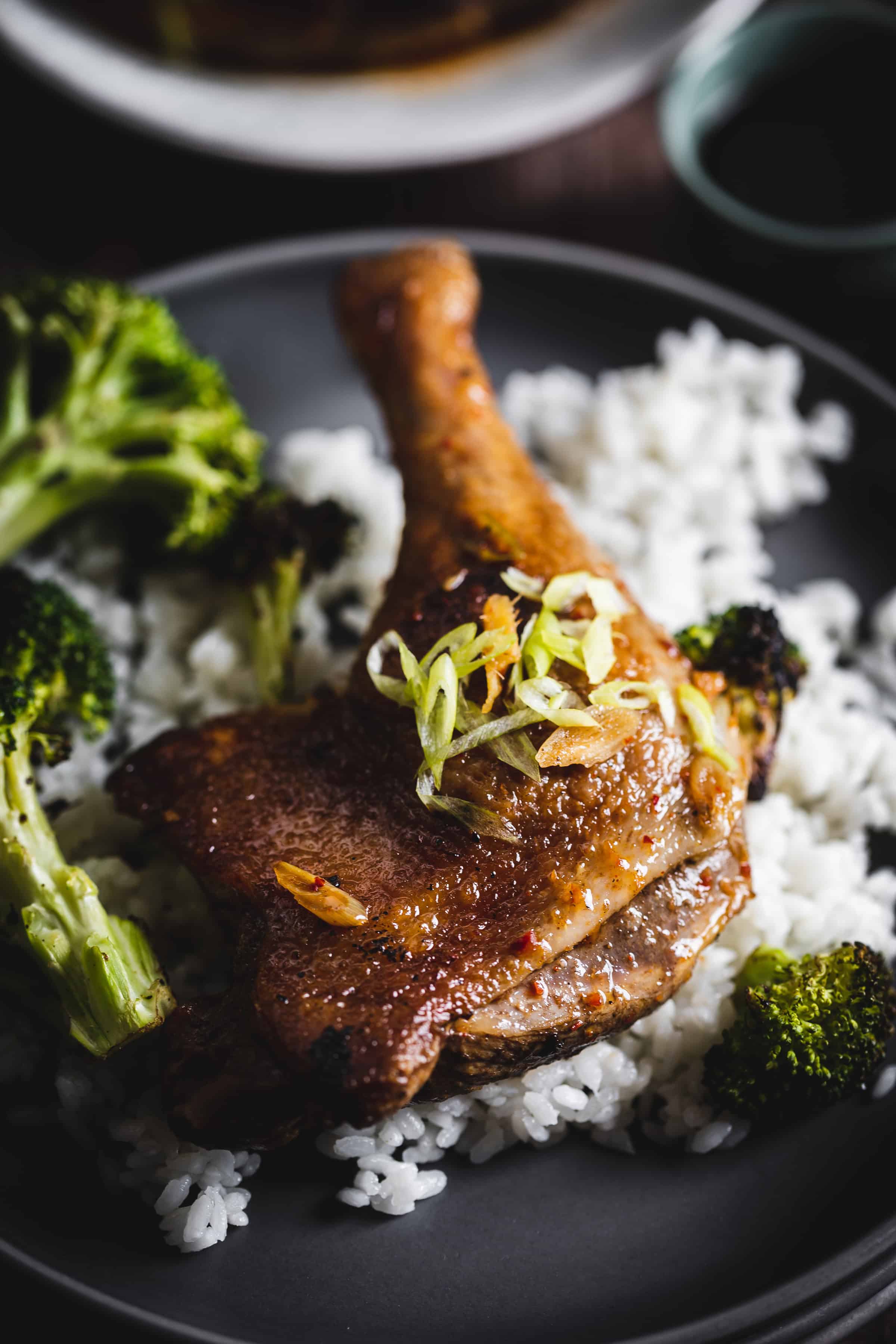
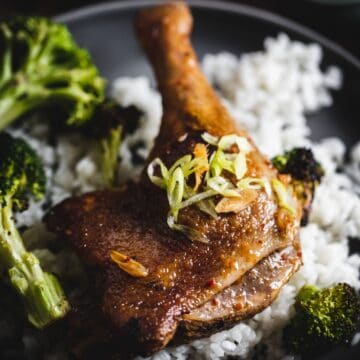
Duck legs braised slowly with plum wine, hoisin, soy sauce, kimchi, Chinese five spice, garlic, and honey turn into this Korean-style duck in wine sauce. The perfect dish made for celebratory evenings, Christmas and Thanksgiving gatherings.

Jump to:
There was a dinner where many threads seemed to weave together. My husband had invited me to meet some of his coworkers, and though he reassured me, I still felt nervous. F often speaks fondly of my cooking, so much so that I sometimes blush at compliments I wasn't there to hear.
That night, the table was full of chatter and introductions, plates being passed, glasses clinking. Somewhere between courses, the conversation turned to food.
They asked me what I like to cook, and I found myself recounting a list that felt like a diary of places I had loved. Recipes from my Russian and Ukrainian roots, flavors from the Middle East and Israel, dishes I picked up along the way in Colombia. Then I surprised myself by mentioning Korean food.
A friend had nudged me into watching mukbangs, and while I wasn't drawn to the performance, I was captivated by the dishes on screen: glossy noodles, bubbling stews, grilled meats laced with spice and smoke.
That month, Korean food seemed to follow me. In my own kitchen, I had been playing with the bright, assertive flavors, starting from a salad I already loved: my Russian-Korean kohlrabi salad. Its crisp bite, dressed with garlic and chili, had long been a favorite on our table.
But I craved more. Watching braised meats and seafood stews seasoned with doenjang, I grew curious about how wine could temper that heat, softening edges while carrying the flavors deeper.
The evening with my husband's colleagues ended warmly, with promises to meet again. Weeks later, he came home with a gift that made me pause. His former intern had heard about my growing interest in Korean food and sent over a bottle of plum wine. A gesture both thoughtful and perfectly timed. It sat on the counter for a few days, catching the light. And when I finally opened it, I knew I wanted it to meet duck.
Uncorking Comfort, One Duck at a Time
Duck has always felt like a dish for slowing down, for leaning into a meal that deserves time. I remember first making duck breast with berry and apple compote, and how the sweet tang of fruit mingled with the richness of the meat in a way that made us linger longer at the table.
Later, when I poached pears in wine, the fragrance of simmering fruit made the whole house feel wrapped in comfort. A simple white fish in white wine sauce once showed me how wine can deepen a dish, lifting and carrying every other flavor with it.
So when I thought of Korean spices and that gifted plum wine, duck felt like the right companion. It's a little unexpected, a little celebratory, but still grounded. The richness of the duck called for something strong, something that could meet it halfway.
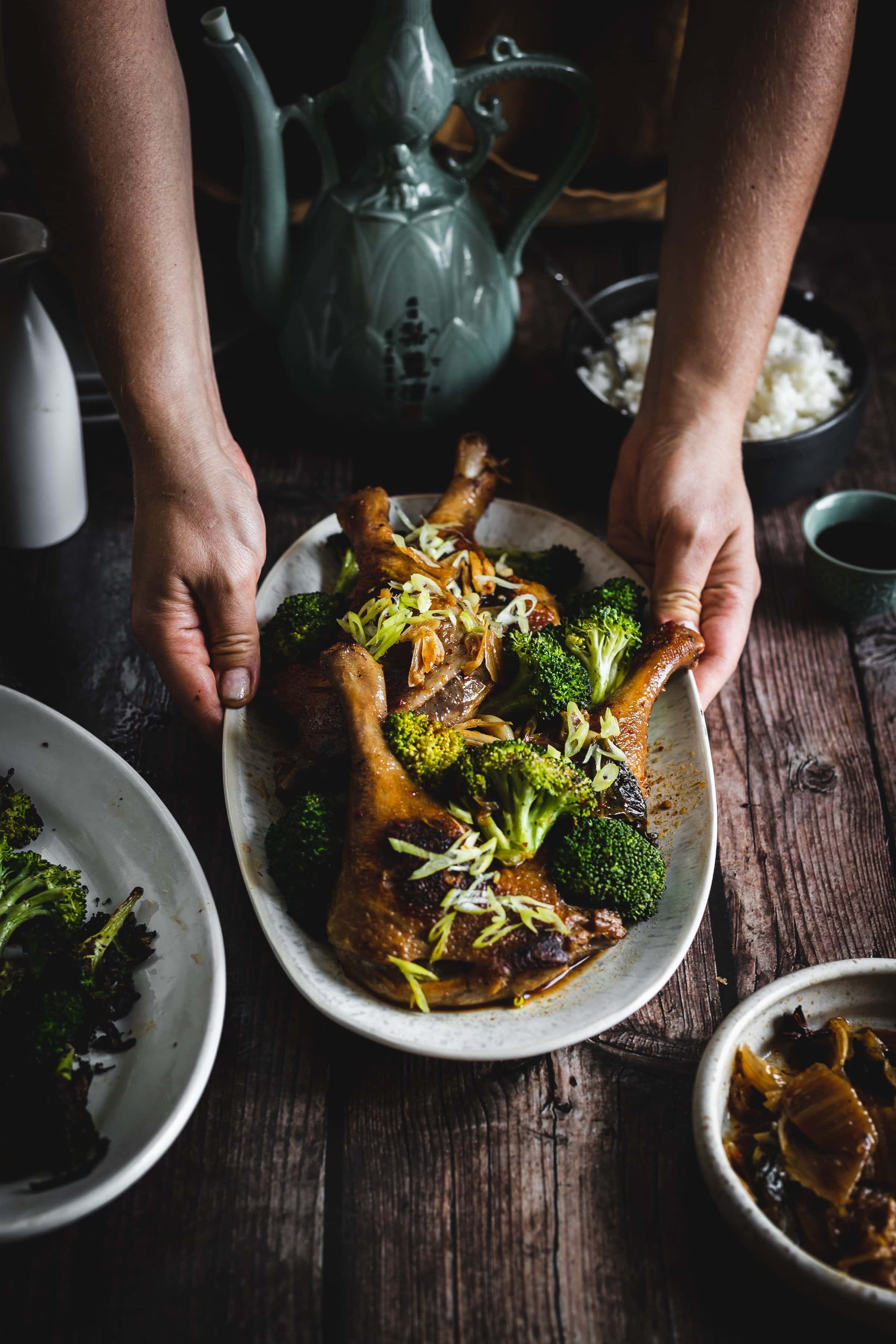
Hoisin and tamarind, with their deep umami, stood ready. Kimchi and Chinese five spice for warmth, soy sauce for salt and depth, ginger and garlic for brightness. And the plum wine, finally opened, poured in with a little ceremony, would round out the pot with its soft fruit and light sweetness.
So here it is, a dish that began as a gift. It carries the taste of slow evenings, shared stories, and the way food moves between cultures. From the crowded tables of my husband's office to the comfort of our own kitchen, where the air still hums with the same anticipation I once felt watching mukbangs.
What started with a bottle of wine and an evening of introductions has become one of those meals that reminds me why I love cooking, and how each recipe can hold both the past and the present at once. And if you want to make a meal out of it, it goes well with my favorite Korean asparagus recipe.

Ingredients
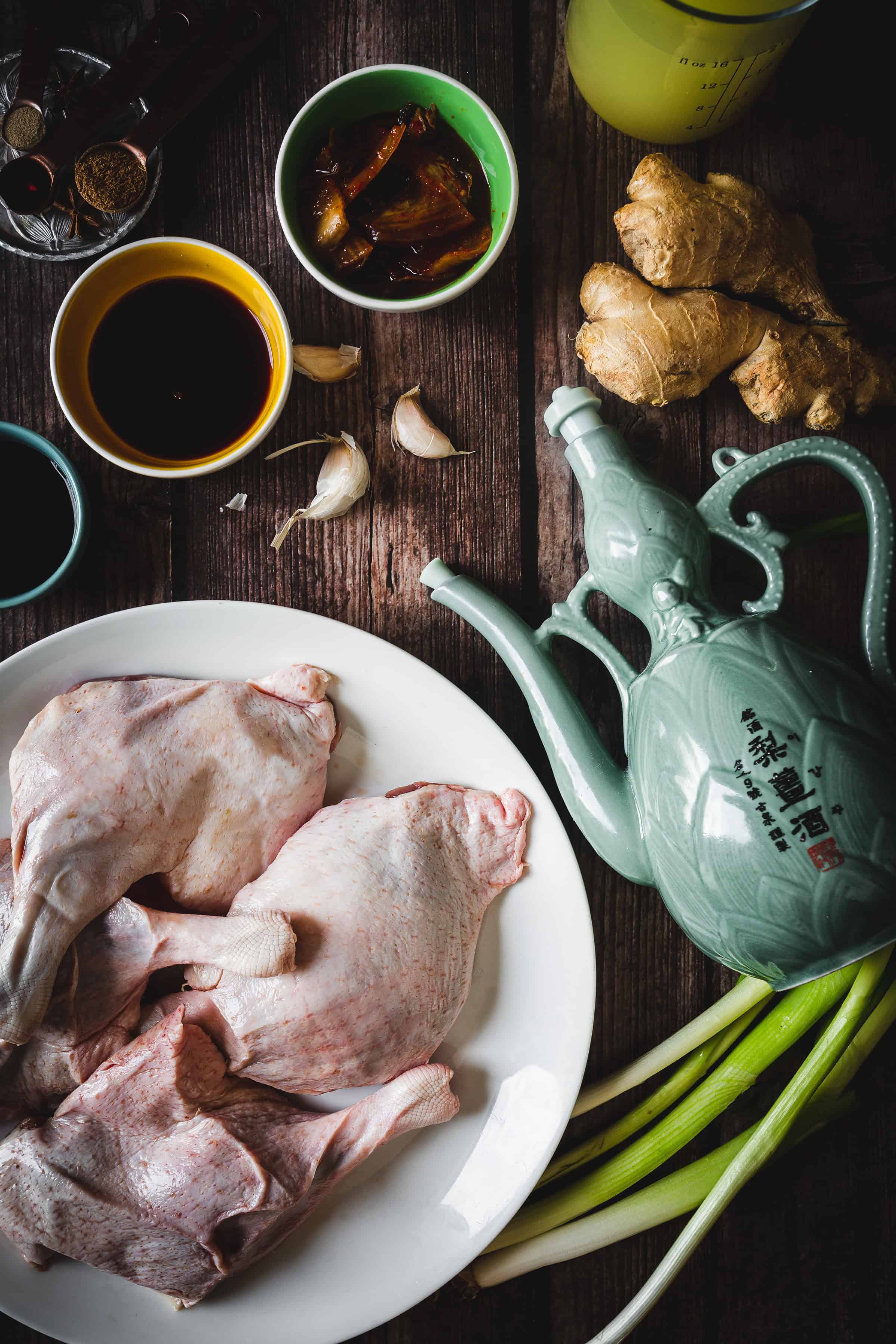
Soy Sauce or Tamari sauce bring salt and brightness, adding a tangy complexity and depth. If gluten free isn't a concer, skip the tamari and stick with soy sauce. Hoisin Sauce is a sweet and savory condiment roots the dish in bold, rich cooking. It brings a deep, complex richness that fills the whole pot. And finally, this recipe uses plum wine or rice wine for the fruitiness that mellows the heat of the spices and deepens the savory notes. If you can't find plum wine, rice wine can step in.
Kimchi is one of the building blocks of this recipe. It's Korean fermented cabbage adds tangy heat and complexity to the dish. Its pungent, spicy character brightens the rich duck and creates layers of flavor. If you don't have kimchi, add extra gochugaru or fresh chilies, though you'll miss the fermented depth. If you want to take a stab at making your own kimchi, this is my favorite homemade kimchi recipe.
For seasoning, Chinese Five Spice is a warming blend of star anise, cloves, cinnamon, Sichuan pepper, and fennel adds aromatic complexity and a subtle sweetness that complements the duck's richness.
See the recipe card for full list and exact quantities.
How to Make Korean-Style Duck in Wine Sauce Recipe
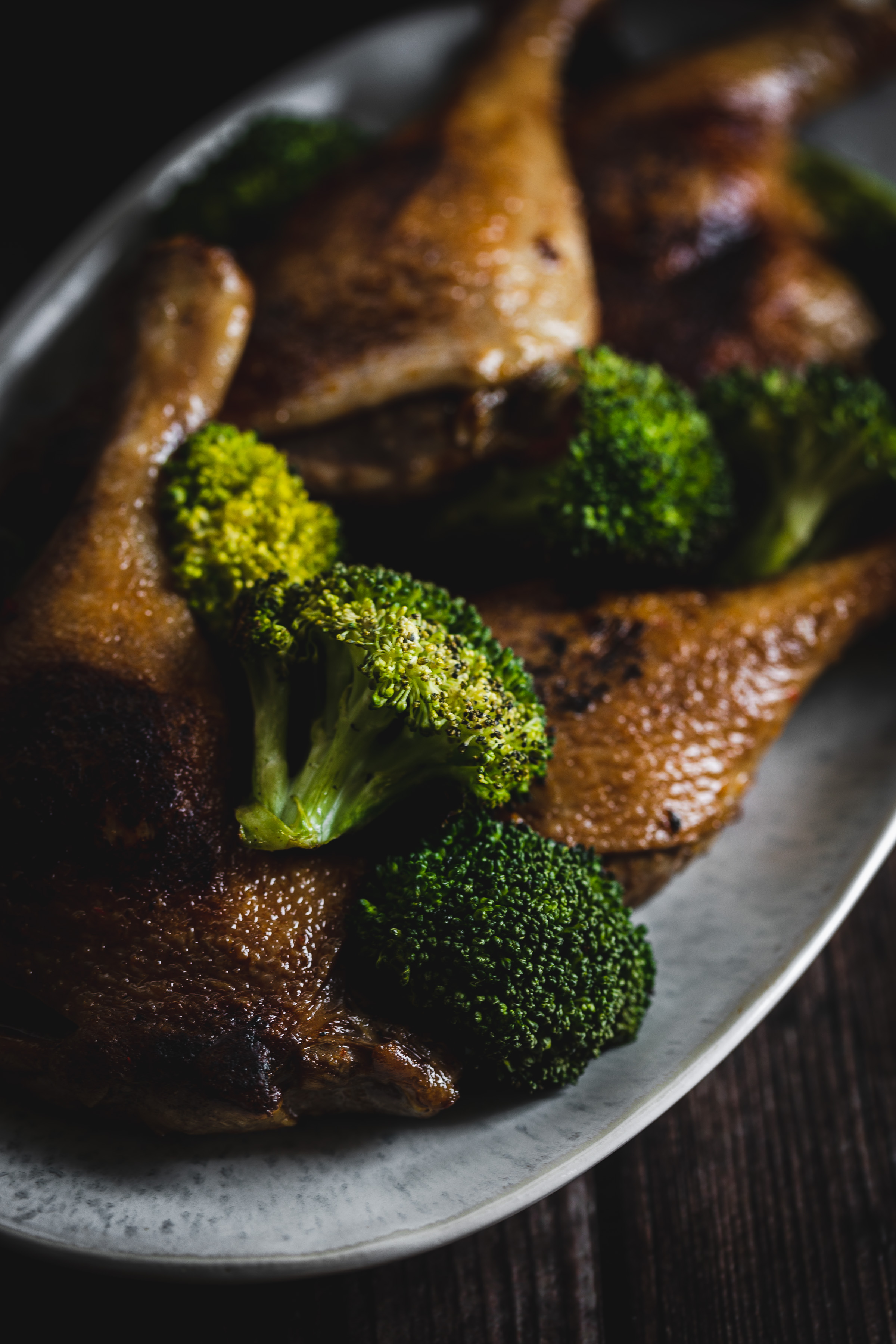
If you're craving a duck recipe that feels rich and comforting yet carries a touch of elegance, this Korean-style duck in wine sauce is it. Tender duck legs are braised slowly with plum wine or rice wine, hoisin, tamarind or soy sauce, kimchi, Chinese five spice, and ginger until the meat nearly falls off the bone. Here's how to make this recipe:
Prepare the Duck
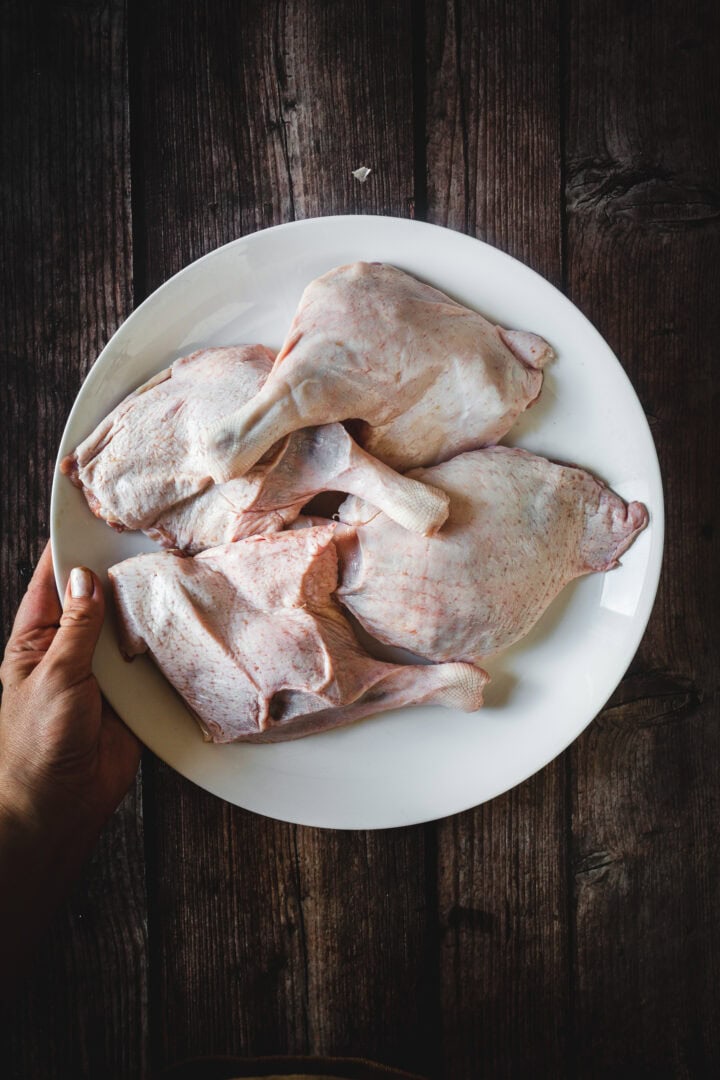
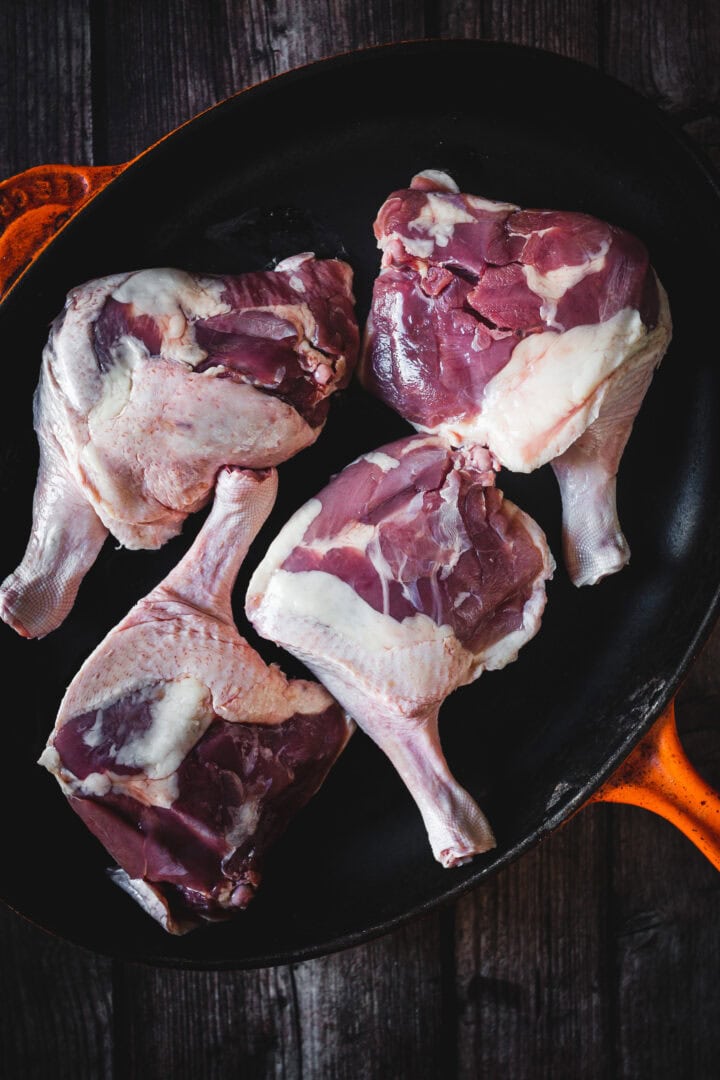
Pat the duck legs dry with paper towels. Using a sharp knife, score the skin in a crosshatch pattern, taking care not to cut into the meat. Season lightly with salt and black pepper.
Sauté the Aromatics
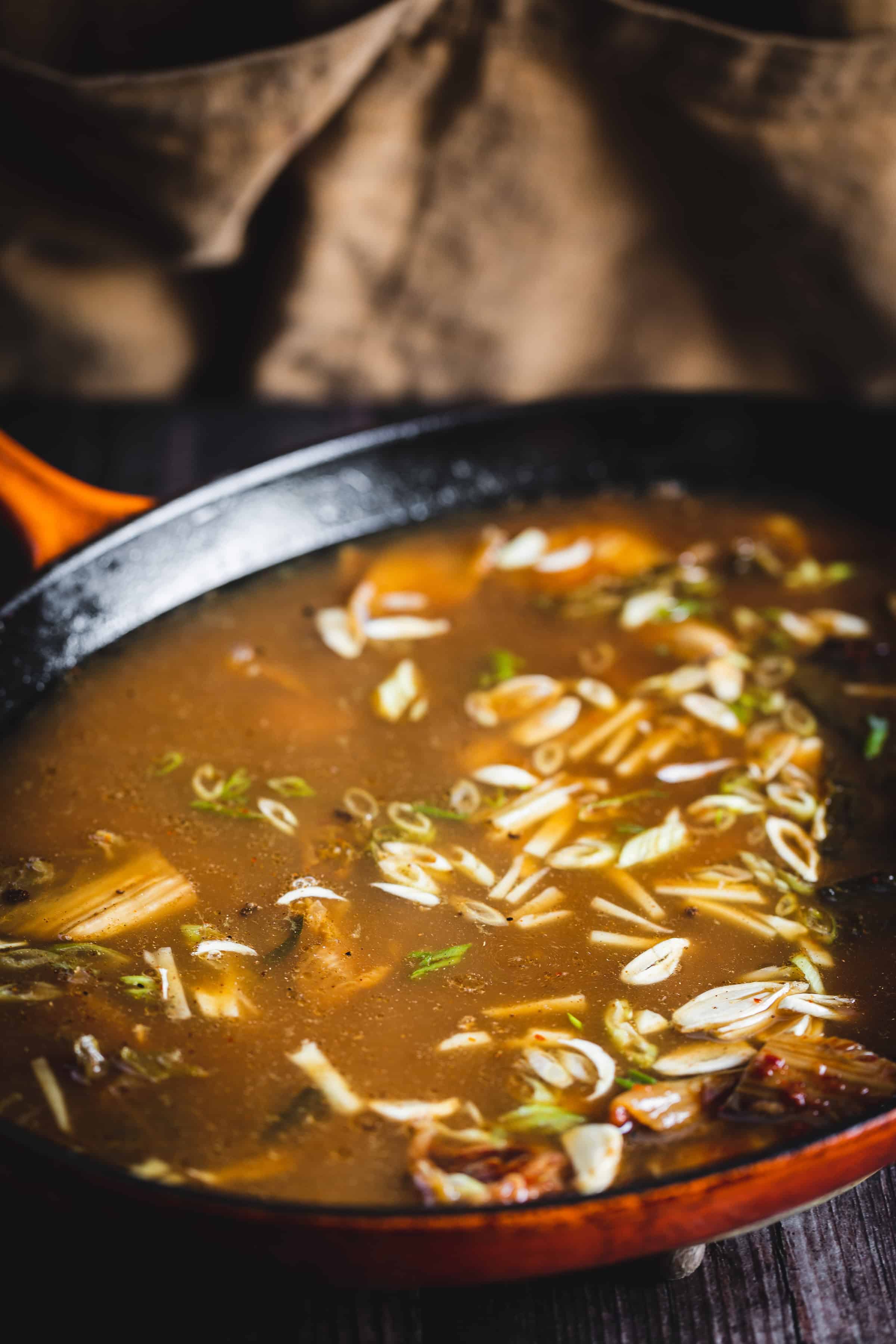
In a separate pan over medium heat, combine the hoisin sauce, tamarind or soy sauce, honey, Chinese five spice, cumin, onion powder, and star anise. Add the minced garlic, sliced ginger, and chopped scallions. Sauté together for 2-3 minutes until fragrant and the spices bloom. Stir in the kimchi and cook another minute. Then add the chicken stock and plum wine or rice wine, stirring to combine. Bring to a simmer, then remove from heat and set aside.
Render the Fat
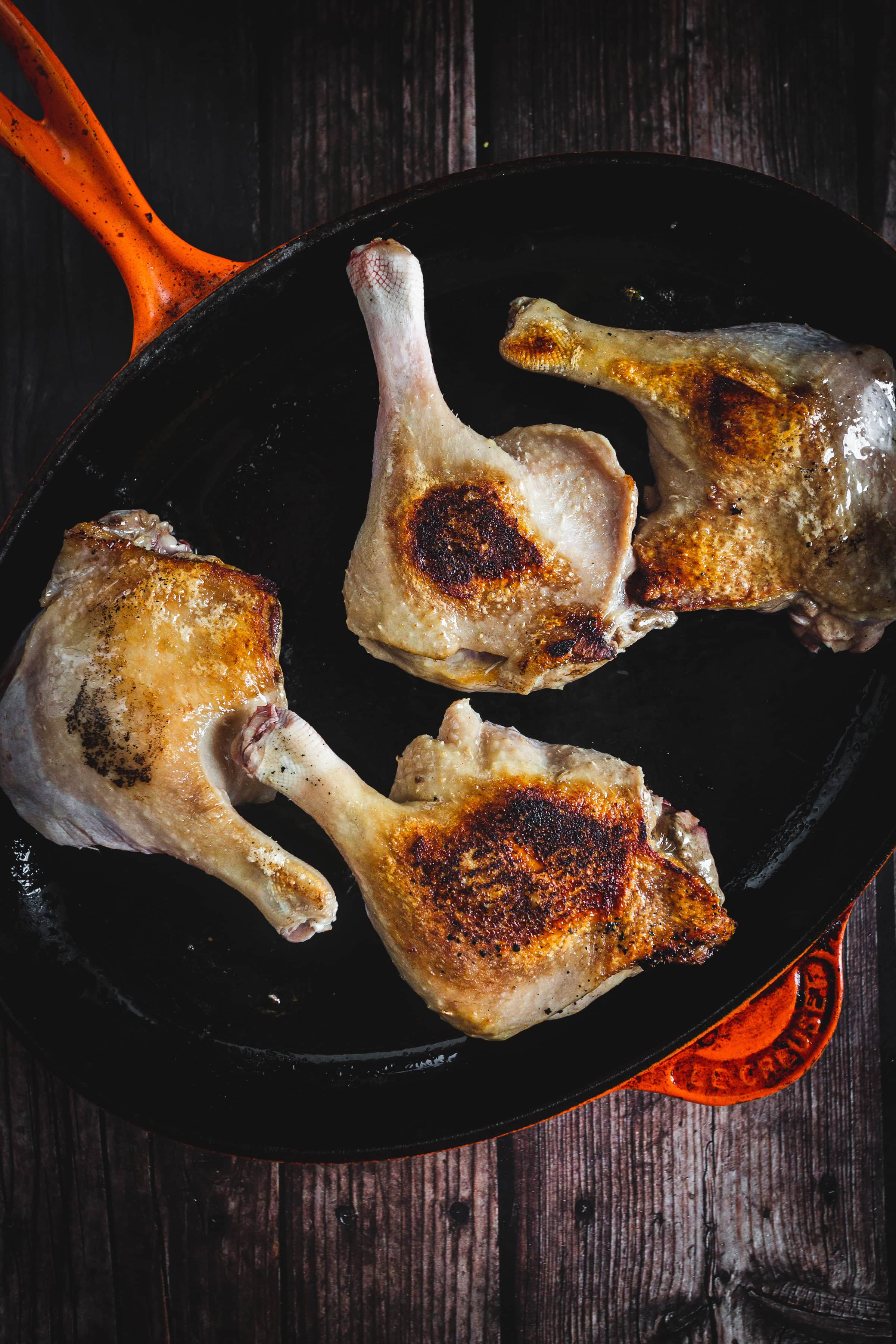
Preheat a cast iron pan over medium-high heat. Once hot, place the duck legs skin side down in the pan. Cook until the skin is golden and crispy, about 6-8 minutes. Remove the duck legs from the pan and set aside.
Combine
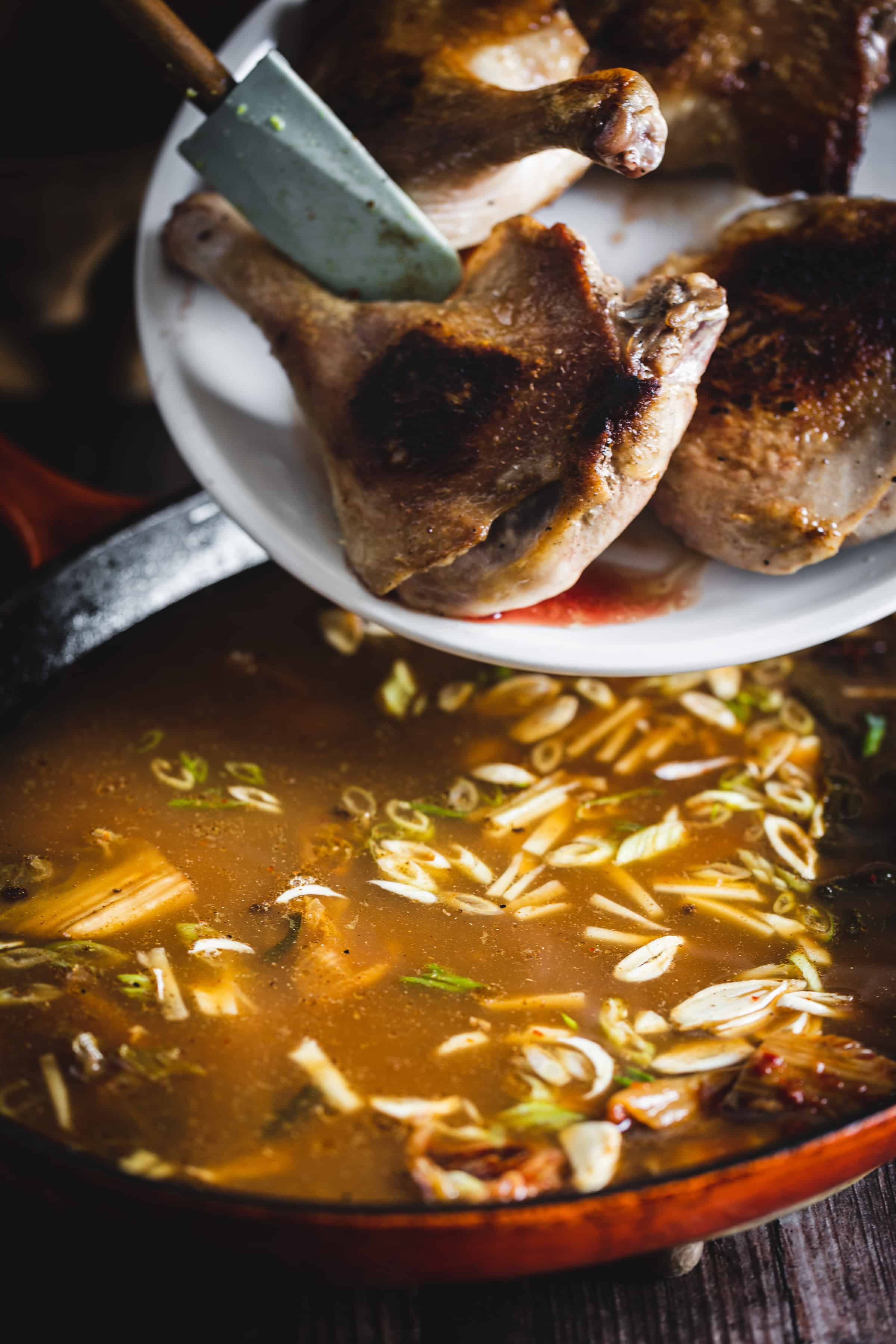
Pour the prepared aromatic sauce mixture into a braising dish or oven-safe pot. Nestle the seared duck legs into the liquid, skin side up.
Braise the Duck
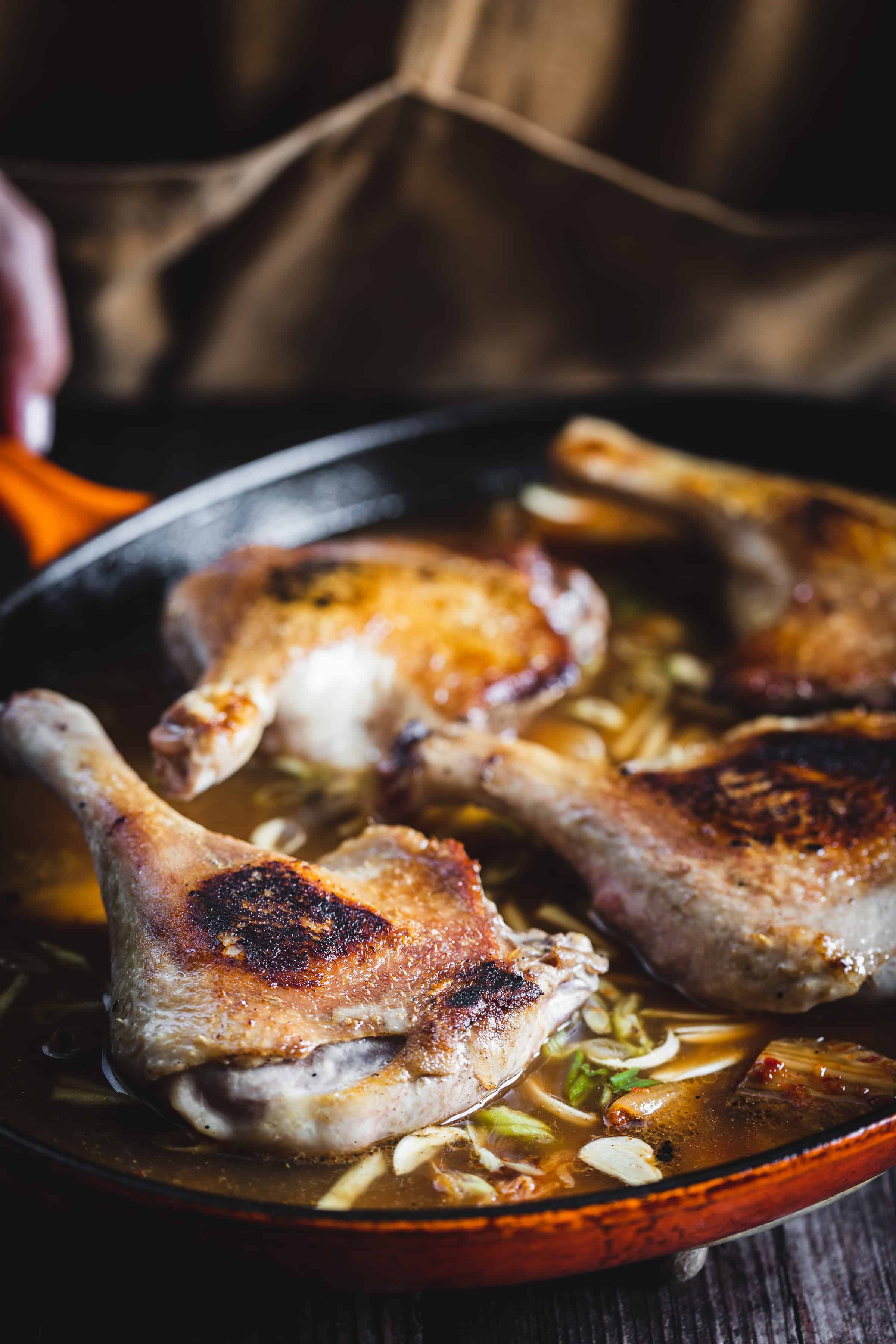
Cover the dish and transfer to a preheated 325°F (160°C) oven. Braise for about 75 minutes, until the meat is tender and nearly falling off the bone.
Finish the Sauce
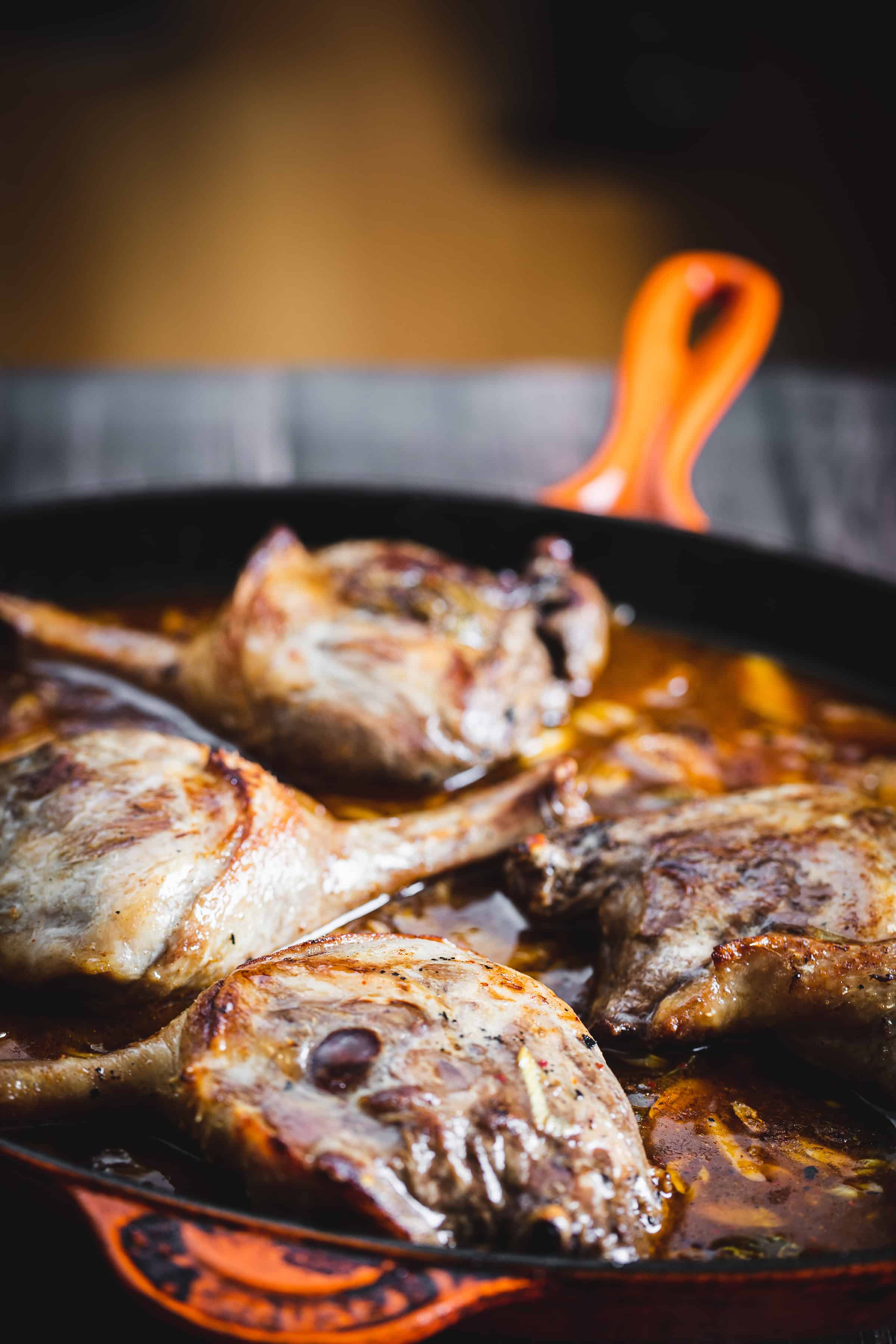
Remove the duck legs and set them aside. Transfer the braising liquid to a saucepan and increase the heat to reduce the sauce until it is glossy and thick enough to coat the back of a spoon, about 10 minutes. Taste and adjust the seasoning if needed.
Serve
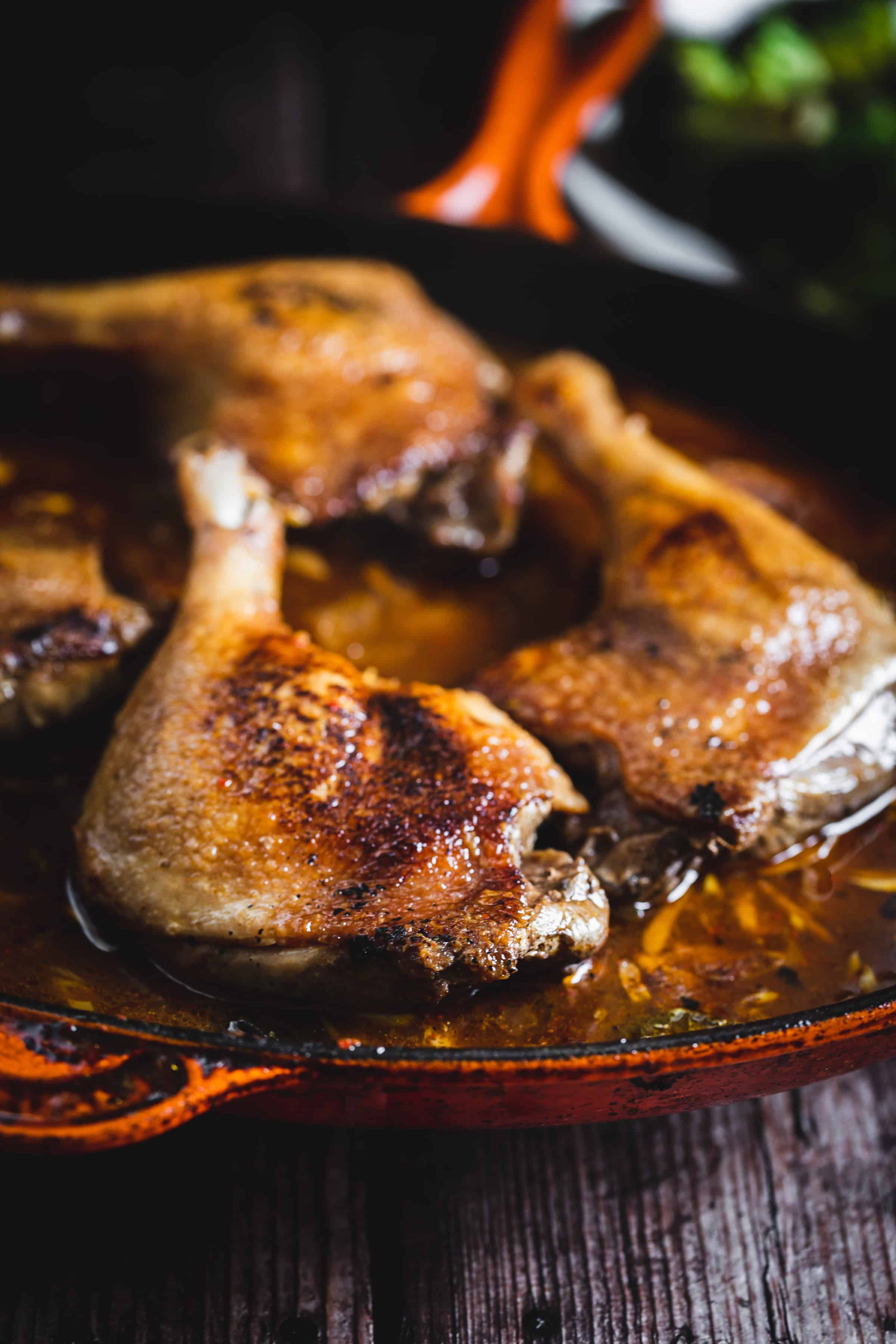
Return the duck legs to the sauce briefly to glaze. Serve hot, spooning extra sauce over the top, and garnish with thinly sliced scallions.
Storage
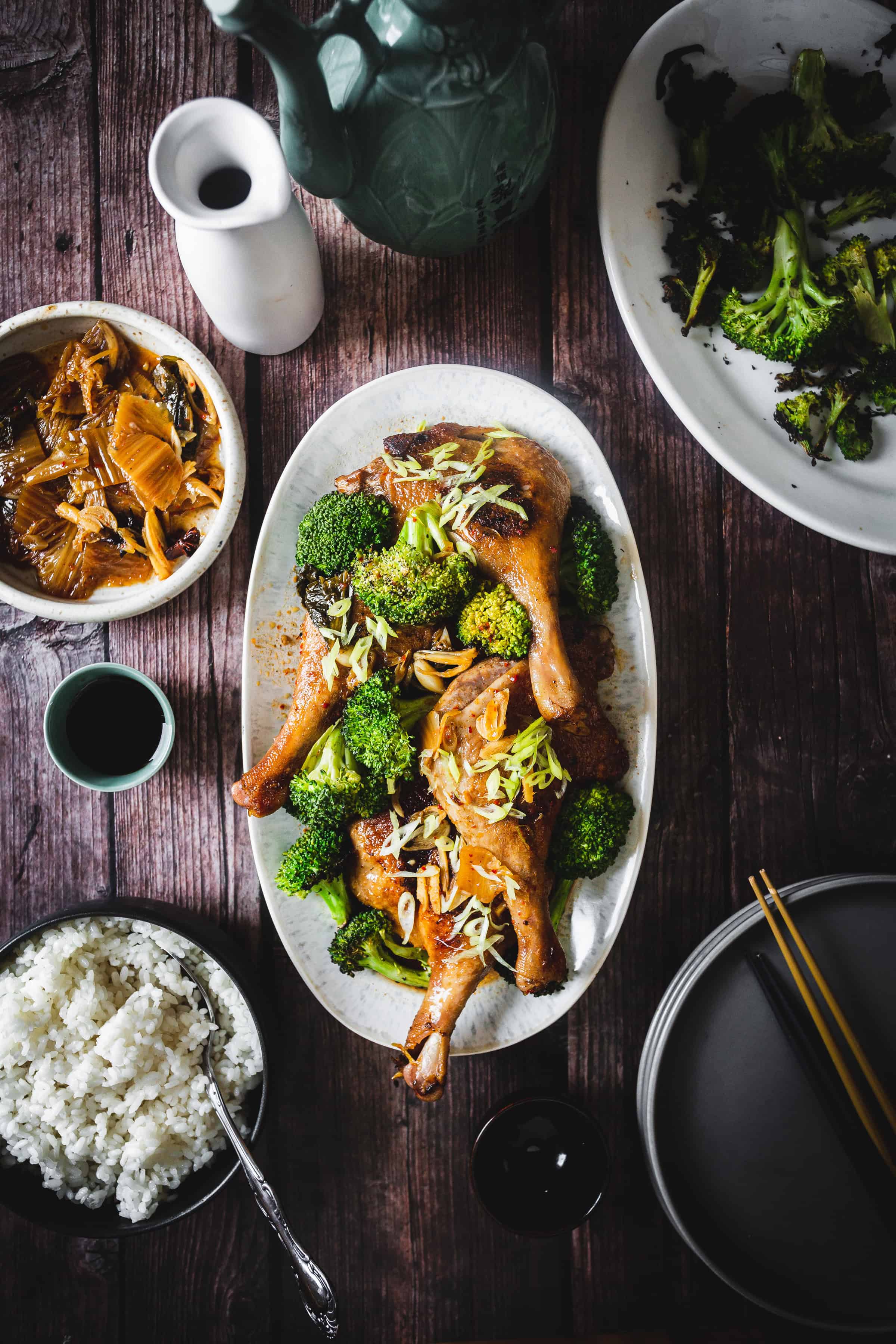
Once cooled, transfer the duck and sauce into an airtight container and refrigerate for up to 3 days. The flavors deepen as they rest, making the second day's meal even richer. To reheat, warm gently on the stovetop over low heat, spooning the sauce over the duck as it heats so the meat stays tender.
This dish doesn't freeze well, as the texture of the duck and sauce changes, but it rarely lasts long enough in our house to need freezing. Leftovers pair beautifully with a simple bowl of steamed rice or tucked into lettuce leaves for an easy next-day meal.
Top Tips
Render Slowly - give the duck skin time to release its fat. I've rushed this step before, and the sauce lost that deep base flavor. When you let it go slowly, the fat turns golden and crisp, and the pan is ready to carry every other ingredient.
Reduce Until Glossy - the sauce should cling to the back of a spoon. Early on, I stopped the reduction too soon, and the duck tasted more like it was swimming than glazed. That last 10 minutes of simmering makes all the difference.
Recipe
Tried and loved this recipe? Please leave a 5-star review below! Your reviews mean a lot to me, so if you've got any questions, please let me know in a comment.
Korean-Style Duck in Wine Sauce
Equipment
- Braising dish or oven-safe pot with lid
- Sharp knife and cutting board
- Tongs and wooden spoon
- Measuring Cups and Spoons
- paper towels
- Ingredients
Ingredients
- 4 duck legs skin on
- 2 tablespoon soy sauce or tamari sauce
- ½ cup plum wine or rice wine
- 1 cup chicken stock
- 3 garlic cloves minced
- 2 inch piece fresh ginger sliced
- 3 scallions chopped
- 2 tablespoon hoisin sauce
- 2 tablespoon honey
- ½ cup kimchi chopped
- 1 tablespoon Chinese five spice
- 2 whole star anise
- 1 teaspoon ground cumin
- 1 teaspoon onion powder
- 1 teaspoon ground black pepper
Instructions
- Pat duck legs dry with paper towels. Lightly score the skin in a crosshatch pattern without cutting into the meat. Season lightly with salt and a little black pepper.
- Preheat a cast iron pan over medium-high heat. Once hot, place duck legs skin side down and sear until the skin turns golden and crispy, 6 to 8 minutes. Remove duck legs from the pan and set aside.
- In a separate medium saucepan over medium heat, combine hoisin sauce, soy sauce or tamari sauce, honey, Chinese five spice, star anise, cumin, and onion powder. Add minced garlic, sliced ginger, and chopped scallions. Sauté together for 2-3 minutes until fragrant and the spices bloom.
- Stir in the chopped kimchi and cook for another minute. Pour in the chicken stock and plum wine or rice wine, stirring to combine. Bring to a simmer, then remove from heat.
- Preheat oven to 325°F (160°C). Pour the prepared sauce mixture into a braising dish or oven-safe pot. Nestle the seared duck legs into the liquid, skin side up.
- Cover the dish and transfer to the preheated oven. Braise for about 75 minutes, until the meat is very tender and nearly falling off the bone.
- Remove duck to a plate. Transfer the braising liquid to a saucepan and simmer over medium-high heat uncovered until glossy and thick enough to coat the back of a spoon, about 10 minutes. Taste and adjust to your preference.
- Return duck to the sauce briefly to glaze. Serve with extra sauce spooned over and a shower of thinly sliced scallions.