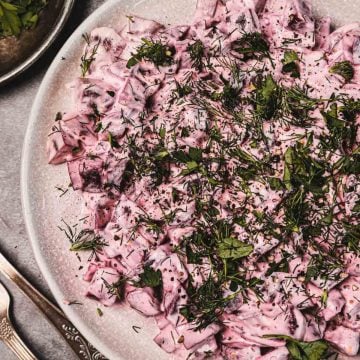

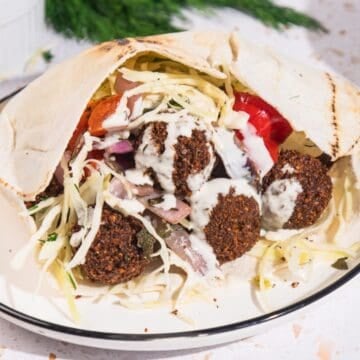
Falafel-style Israeli cabbage salad that lives on our table weekly, with finely chopped cabbage, and fresh herbs, the kind you find beside BBQ and shawarma everywhere.

There was a stretch of time when my sister and I moved around each other more gently, when conversations came easier.
Those were the days we would end up in the same kitchen without planning it, standing side by side, cutting, tasting, passing things back and forth without thinking too much about it. Mor, my sister's friend, would come over sometimes. She brought with her a kind of calm confidence around food, the kind that made even the simplest dish feel grounded and certain.

That's where this salad began for me. No big introduction nor careful explanation. Only a bowl, a head of cabbage, and Mor's hands moving quickly, chopping finer than I expected. I remember watching her squeeze lemon over the cabbage and pause. She told us to let it sit. We waited, talking about everything and nothing in particular, while the cabbage softened and changed in the bowl.
The first bite it felt instantly familiar. It was the kind of salad you find in nearly every falafel or shawarma spot, or at family BBQs, cutting through heavier dishes with something bright and clean
Even when my sister and I slipped back into our busy ways, this recipe stayed between us, something we both reached for without a word. During cabbage season, it becomes part of my weekly cooking almost automatically.

I make it often whenever I have the ingredients, sometimes in tandem with cabbage rolls casserole, or buttered cabbage. On evenings for more texture, I go for spicy air fryer cabbage steaks with tahini, crisp edges and creamy sauce echoing the same flavors.
Still, this salad comes back the most often. I make it weekly like an instinct when cabbage is in season, and it has a way of lifting the entire meal without trying too hard. The first bite always lands the same way, bright, clean, steady.
A kind of flavor that makes everything else on the table feel more complete.
Ingredients

- Green cabbage - Green cabbage is the heart of this salad, and the way it's cut makes all the difference. Finely chopping it gives that familiar texture you find in falafel and shawarma spots, where the cabbage softens and soaks up lemon without turning limp. If green cabbage feels too sharp, napa cabbage works for a softer bite, though it leans more delicate and less crisp.
- Olive oil - Olive oil rounds out the acidity and gives the salad its soft sheen. This is where I use a good bottle, the kind I keep for finishing dishes rather than cooking, since the flavor comes through clearly. If needed, a neutral oil like sunflower oil works, though it leans quieter and lets the lemon take the lead more strongly.
- Fresh herbs (parsley, dill, or a mix) - Herbs bring life to the salad at the very end. Parsley keeps it clean and grassy, while dill adds a slightly deeper note that reminds me of the cabbage dishes I grew up with. I often use both, depending on what's in the fridge. If neither is available, green onions can step in for a different kind of freshness, though the salad will feel a little sharper and less rounded.
See the recipe card for full list and exact quantities.
How to Make Falafel-style Israeli Cabbage Salad Recipe

This Israeli cabbage salad comes together in a single bowl, though each step has its own small cues to watch for. The texture is what sets it apart, soft yet still crisp, lightly glossy, with a clean bite that carries through the whole dish. Here's how to make this recipe:
Combine the Cabbage and Lemon Juice


- At first, the cabbage will feel stiff and a little dry, with the lemon sitting lightly on the surface rather than soaking in. That's expected.
- As you toss it, you'll start to notice the leaves picking up moisture and turning slightly glossy. If the cabbage still looks completely dry after mixing, it may need a bit more lemon, especially if the head was large or particularly dense. The goal here is to coat everything evenly so no dry pockets remain.
Massage and Let It Rest

- As you work through it, the cabbage will begin to soften, releasing a small amount of its own liquid. It should feel slightly more pliable, with less resistance when you squeeze it.
- Once mixed, leave the bowl to stand. During this time, the lemon continues to soften the cabbage. After about 30 minutes, the volume will reduce slightly. The texture will shift from firm and rigid to tender with a light crunch.
- If you skip or shorten this rest, the cabbage will stay harsher and more fibrous. If left too long, it can become overly soft and lose that fresh bite. You're looking for a middle point where it bends easily but still holds shape.
Add Olive Oil, Salt, and Pepper

- When you mix again, you'll notice the texture becoming smoother and more cohesive. The oil gives the cabbage a gentle sheen and rounds out the sharpness from the lemon.
- Taste at this stage. The salad should feel balanced, bright from the lemon, slightly mellowed by the oil. If it leans too sharp, a touch more oil helps. If it feels flat, a small pinch of salt can bring everything forward.
Mix in the Fresh Herbs and Serve

- They should stay vibrant and fresh, sitting lightly among the cabbage rather than wilting into it.
- Serve it soon after mixing for the best texture. The cabbage should feel tender with a soft crunch, carrying that familiar brightness you expect from a falafel or shawarma plate.
Storage

Store your Israeli green cabbage salad in an airtight container in the fridge for up to 2 days. The cabbage will soften and release some liquid, so toss before serving. If it feels too soft, mix in a small handful of fresh cabbage or herbs.

For best texture, enjoy within 24 hours when the cabbage still has a gentle crunch and herbs stay bright. To prep ahead, chop the cabbage and mix with lemon, then add oil, seasoning, and herbs just before serving. Freezing not recommended. The cabbage breaks down too much when thawed, losing its texture and turning watery. Keep chilled and taste before serving, sometimes a squeeze of lemon revives it.
Top Tips
Chop smaller than feels natural - the first instinct is to slice cabbage into thin strips and stop there. For this Israeli green cabbage salad, going back over it with your knife makes a real difference. The finer cut allows the lemon to reach every piece, so the texture turns tender without losing structure. This is what gives that familiar feel from falafel stands, where nothing feels stringy or bulky.
Watch the cabbage as it rests, not the clock - thirty minutes is a guide, though cabbage varies a lot. Some heads soften quickly, others take longer. Check it with your hands. It should bend easily and feel slightly pliable, though still hold a gentle crunch. If it still feels stiff, give it more time. If it starts to feel too soft, move to the next step right away.
Add herbs right before serving if possible - when I mix everything early and let it sit, the herbs lose their brightness and sink into the salad. Adding them closer to serving keeps the color fresh and the flavor more noticeable, especially with dill, which fades faster than parsley.
Recipe
Tried and loved this recipe? Please leave a 5-star review below! Your reviews mean a lot to me, so if you've got any questions, please let me know in a comment.
Falafel-style Israeli Cabbage Salad
Equipment
- Sharp Knife
- Citrus juicer or hands
- Mixing spoon or hands for tossing
Ingredients
- 1 small head green cabbage finely chopped
- Juice of 1 lemon
- 4 tablespoons olive oil
- Salt and pepper to taste
- ½ cup fresh parsley dill, or mixed herbs, finely chopped
Instructions
- Combine chopped cabbage with lemon juice in a bowl.
- Toss well and massage. Let stand 30 minutes.
- Add olive oil, salt, and pepper.
- Mix and serve.