
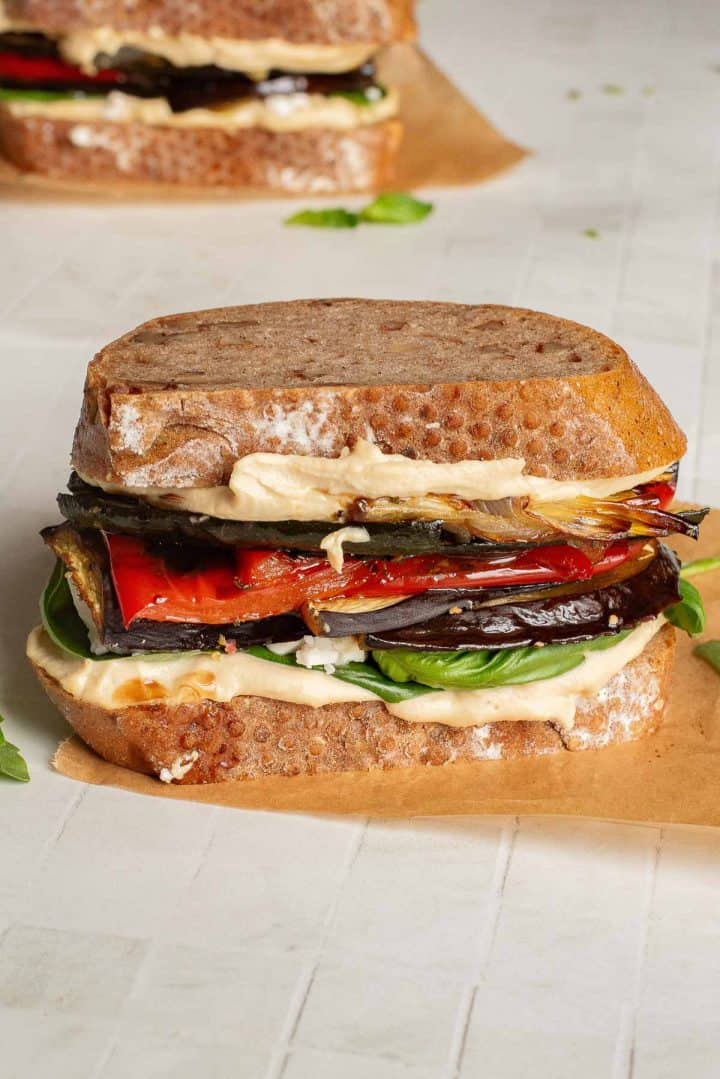
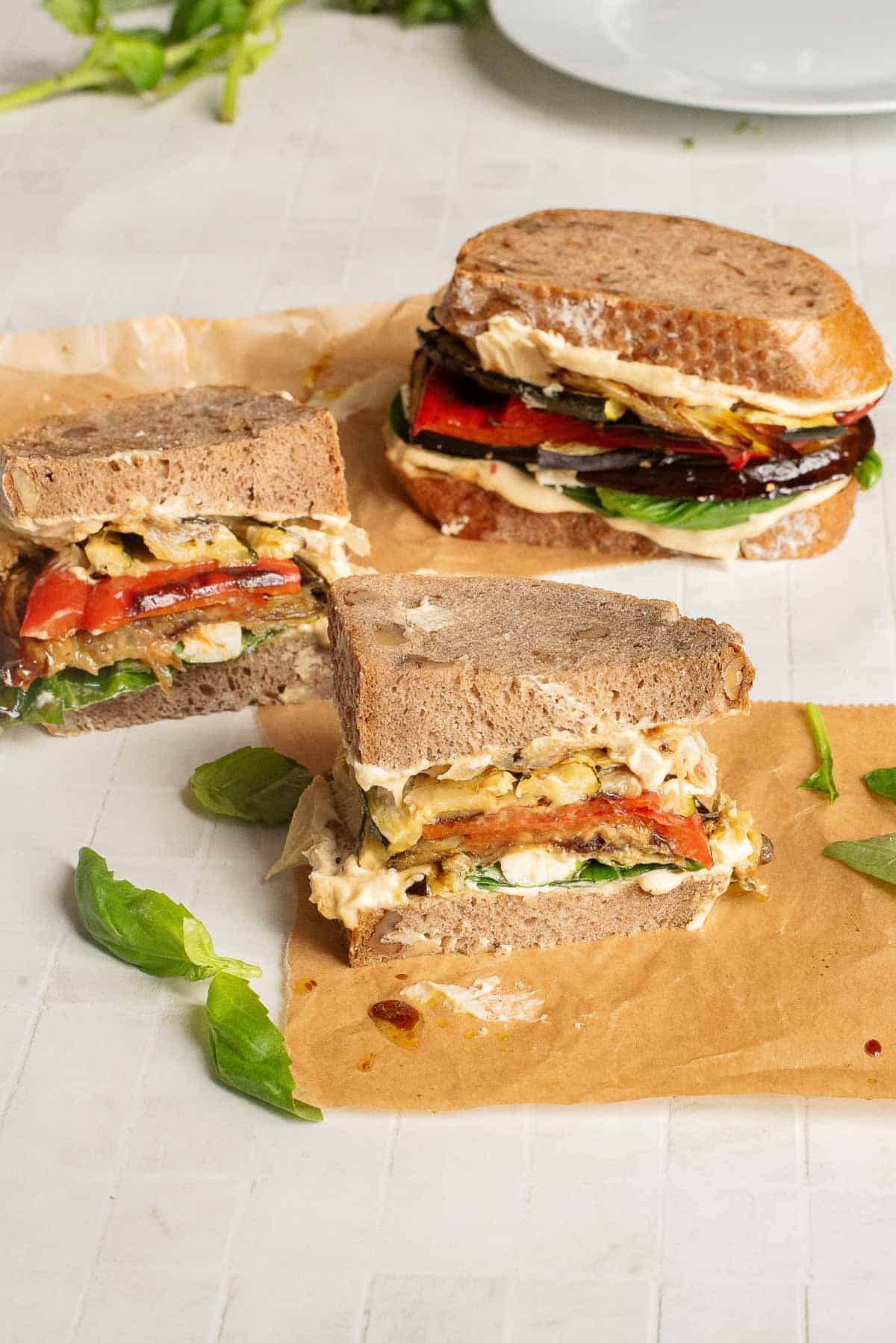
If you love the kind of lunches that make an ordinary afternoon feel like you're sitting near a train station in a city you aren't quite ready to leave, this veggie hummus sandwich belongs on your table. Ready in 30 minutes, it's the Mediterranean roasted vegetable sandwich I've spent years refining for relaxed summer meals.
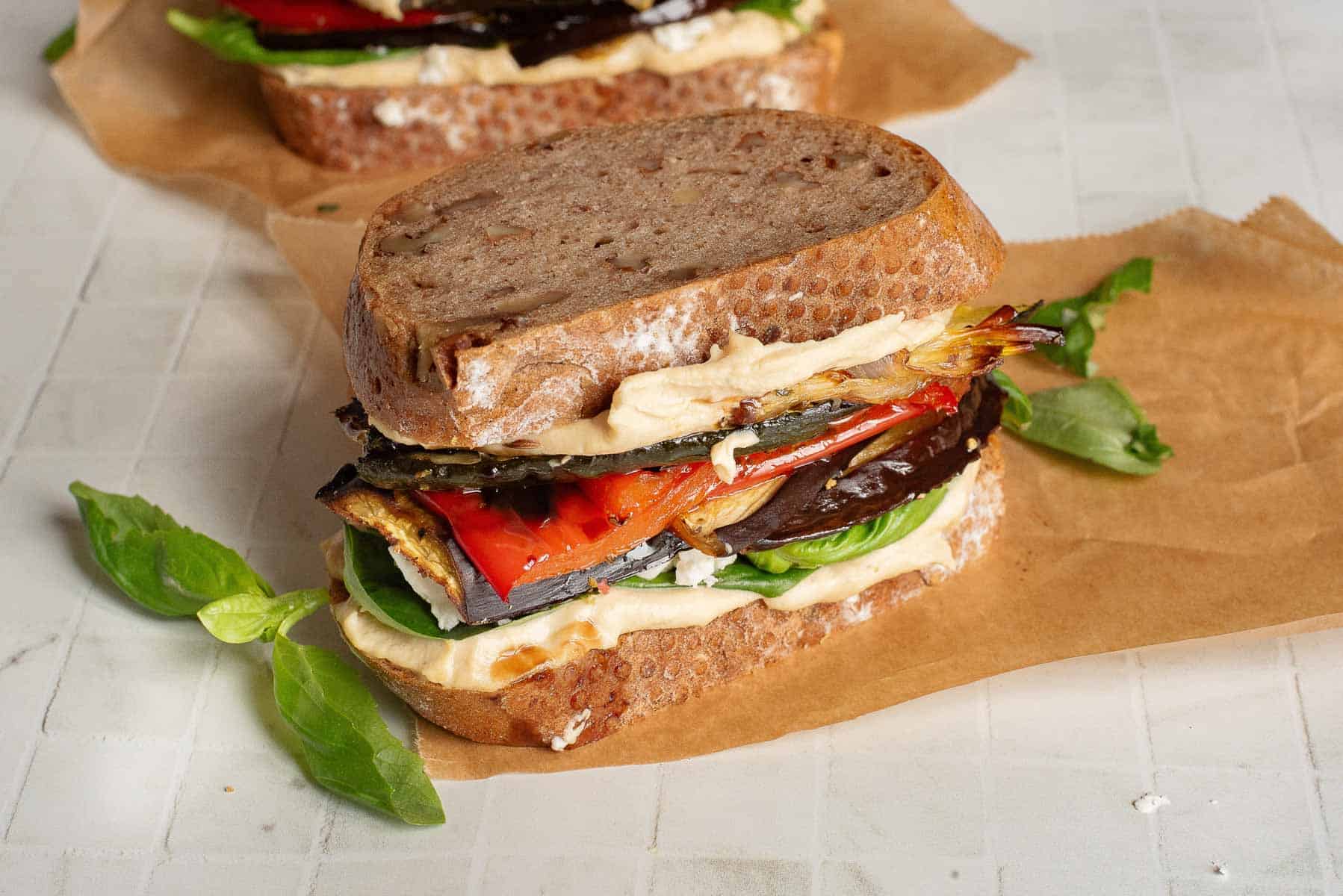
One of my favorite parts of traveling has never been the landmarks. It's the hour before leaving. By then, the sightseeing is done. The maps are folded away. Suitcases sit beside your feet with clothes that somehow don't fit back inside the way they did a week earlier. There is nowhere left to rush to.
Maybe you find yourself sitting near a train station in Europe or waiting by an airport window, watching strangers head toward places you'll never know. Some carry flowers. Others are saying goodbye. Half look tired in that soft summer way that comes after long days spent outdoors. I have always loved that hour.
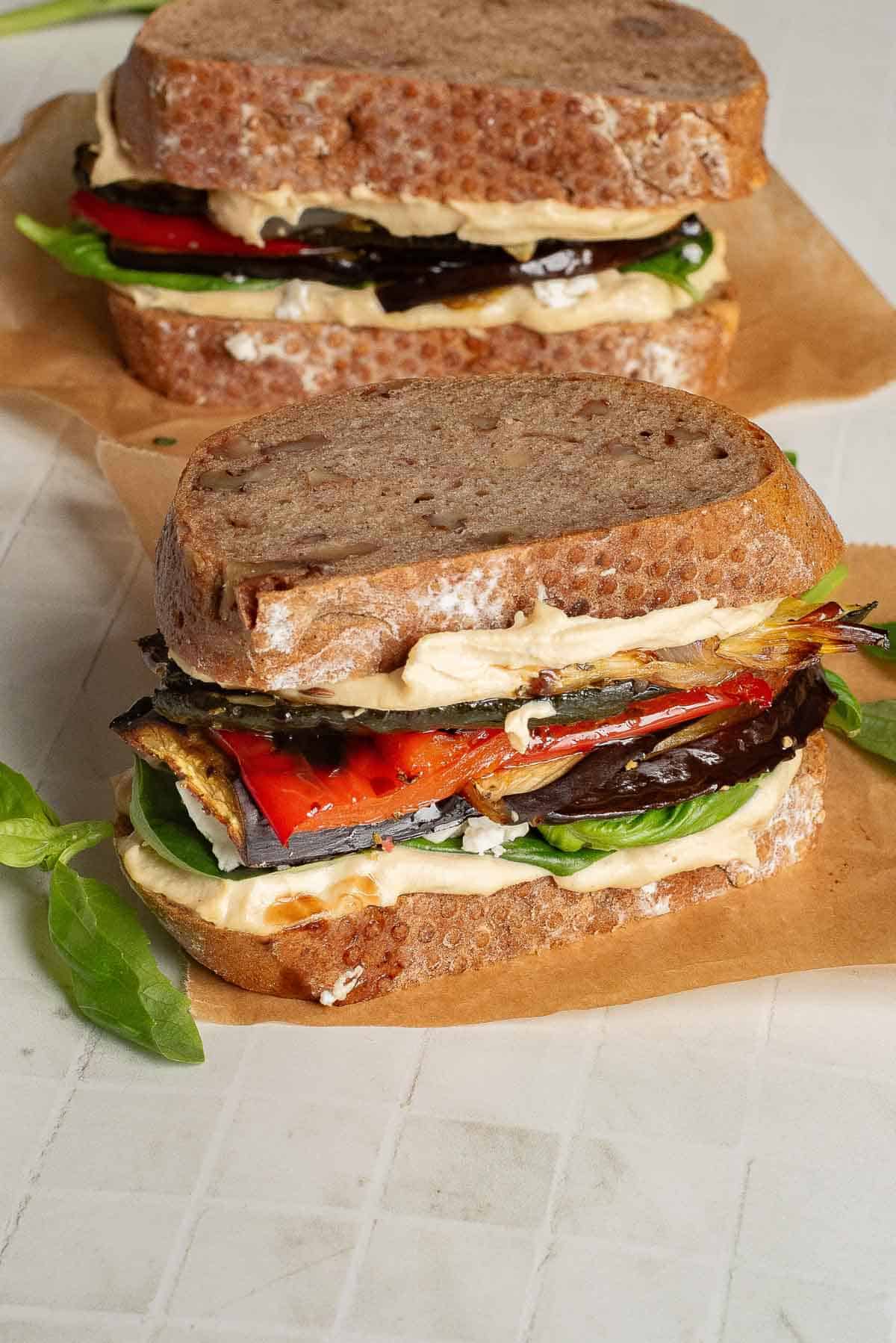
Years ago, after a quick summer trip and a few days wandering Mediterranean markets, I remember sitting near the station with my husband, eating sandwiches wrapped in paper and drinking coffee that had long gone cold. There were roasted vegetables, herbs, bread with a crackling crust, and plenty of hummus. It was nothing fancy, but still I remember the feeling of it. Summer meals at home often bring me back to that afternoon.
When Leo and Lin were younger, lunches appeared in stages. One child asking for watermelon while the other stood on a chair asking whether the food were ready yet. Roasted vegetables waiting in the refrigerator became many things. Sometimes they ended up beside grilled fish. Sometimes spread over toast with labneh.
Eventually, this Mediterranean roasted vegetable sandwich became one of the recipes I made most often. Roasting the vegetables brought out the depth I remembered from Middle Eastern cafés and family tables. A thick layer of hummus and fresh basil completed it.
Hummus has always had a place in our kitchen. When the children were small, I often made creamy avocado hummus for afternoon snacks. During colder months, sweet potato hummus appeared beside vegetables and pita. And on days when everyone wanted something different, I would make a pesto tomato brie croissant sandwich for my husband while assembling these sandwiches for myself.
Those recipes grew from the same place. A love of Mediterranean ingredients and a table shaped by Jewish and Middle Eastern traditions.
This veggie hummus sandwich feels very much like that quiet hour before leaving a city. It's relaxed. Unhurried. A meal that reminds me that some of the nicest parts of summer happen between destinations.
Ingredients
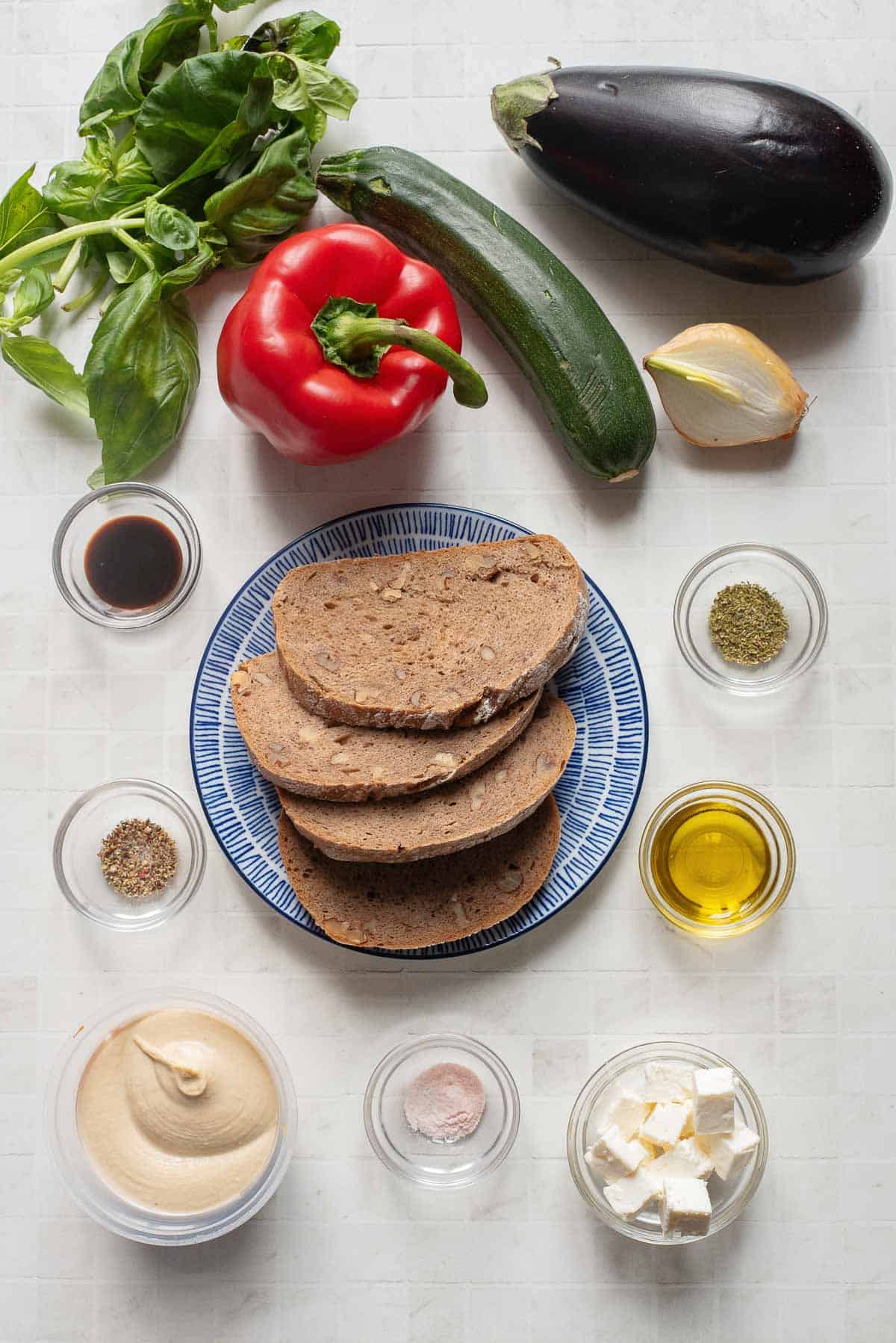
The vegetables are what make this veggie sandwich feel complete. I always use zucchini, eggplant, red bell pepper, and red onion because they roast at roughly the same pace and develop soft centers with lightly browned edges. The peppers become sweet, the onions mellow, and the eggplant turns silky. I've swapped mushrooms for eggplant before when I had some in the refrigerator, and they work nicely, though they bring a more earthy flavor. This combination reminds me of the vegetables served alongside pita and spreads during summer meals in the Mediterreanean.
Hummus is what gives the sandwich its direction. A generous layer keeps everything creamy and ties the vegetables together. After making countless batches at home, I find classic hummus works best because it lets the roasted vegetables stand out. Store-bought hummus works perfectly well, though I often use homemade.
The bread matters more than people think. I reach for ciabatta rolls because the crust turns crisp when toasted while the inside stays soft enough to absorb some of the hummus without falling apart. Whole wheat rolls are another favorite in our house. If ciabatta isn't available, sourdough or a sturdy baguette can stand in, though very soft sandwich bread tends to become soggy.
A little feta cheese adds a salty note that reminds me of breakfasts and light lunches I had in Israel. I like how it softens slightly against the hot vegetables without fully melting. Goat cheese can work if you prefer something creamier, or you can leave the cheese out entirely for a plant-based sandwich.
See the recipe card for the full list and exact quantities.
Top Tips
Roast more than you need - I rarely make a single batch of vegetables for these sandwiches. Extra roasted zucchini, peppers, and eggplant end up in grain bowls, pasta, or spread over toast the next day. Summer lunches become much easier when the vegetables are already waiting in the refrigerator.
Let the vegetables cool slightly - I learned this after packing a few soggy sandwiches for outings with Leo and Lin. Vegetables straight from the oven release steam inside the bread. Giving them five to ten minutes to settle keeps the rolls from becoming too soft while still keeping the sandwich pleasantly warm.
Don't be shy with the hummus - a thin layer tends to disappear beneath the vegetables. I spread more than I think I need because the hummus acts almost like a sauce, keeping each bite creamy and holding the filling together. Homemade hummus works beautifully, though a good store-bought one is perfectly fine.
How to Make a Veggie Hummus Sandwich Recipe
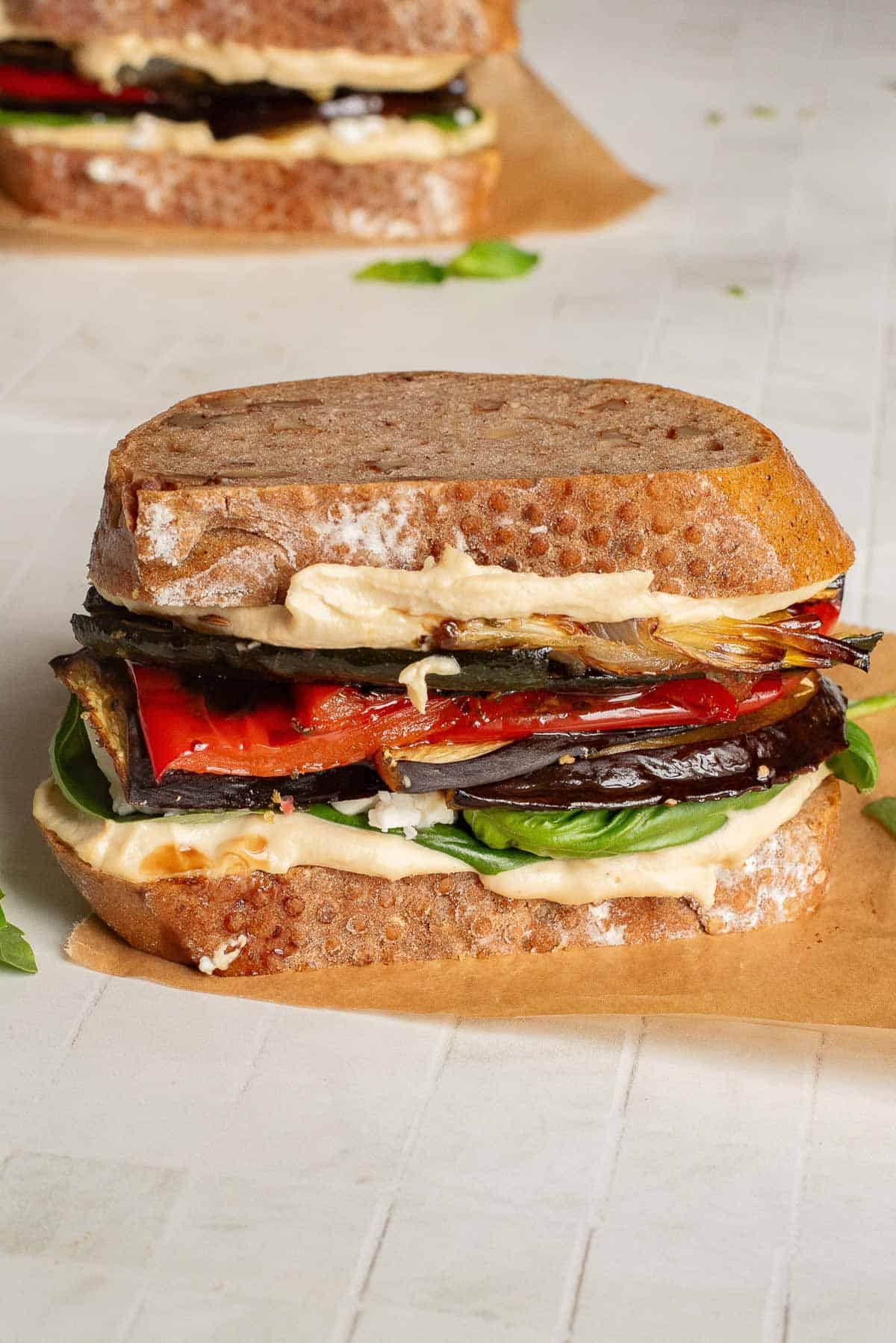
This veggie and hummus sandwich comes together in a straightforward way, though a few small details make the difference between vegetables that roast beautifully and vegetables that steam. Pay attention to how things look and feel as you go rather than relying only on the clock. Here's how to make this Mediterranean roasted vegetable sandwich:
Prepare and Season the Vegetables
- Start by heating the oven to a high temperature. In a large bowl, combine the zucchini, red bell pepper, eggplant, and red onion with the olive oil and seasonings.
- As you toss everything together, the vegetables should look lightly coated rather than drenched.
- You want enough oil to help them roast and brown, though too much causes them to soften before developing any color. I like to use my hands for this step because it helps distribute the oregano evenly and makes it easy to spot any pieces that are much larger than the others.
- Try to keep the slices fairly similar in thickness. Thin pieces will darken quickly while thicker ones may still be firm in the center.
Arrange the Vegetables in a Single Layer
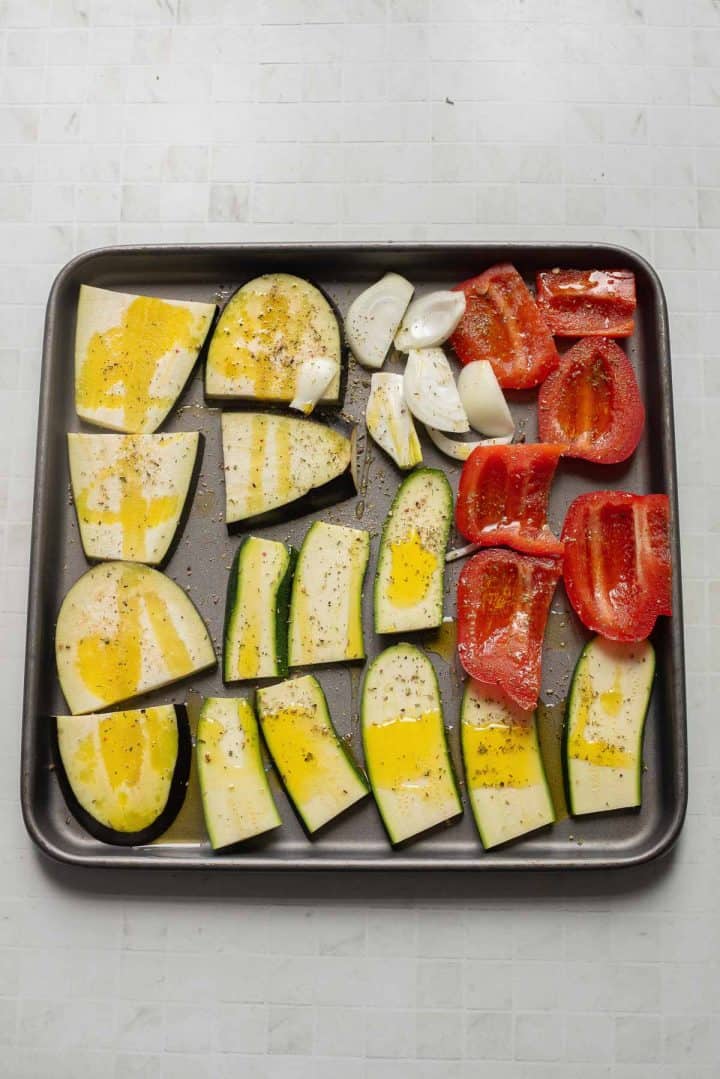
- This step matters more than it seems. If the vegetables overlap or crowd together, they release moisture and steam instead of roasting. I learned this after many trays of pale zucchini that softened long before they developed any color.
- The tray should look almost sparse when you first arrange everything. That space helps the edges caramelize.
Roast Until Tender and Golden
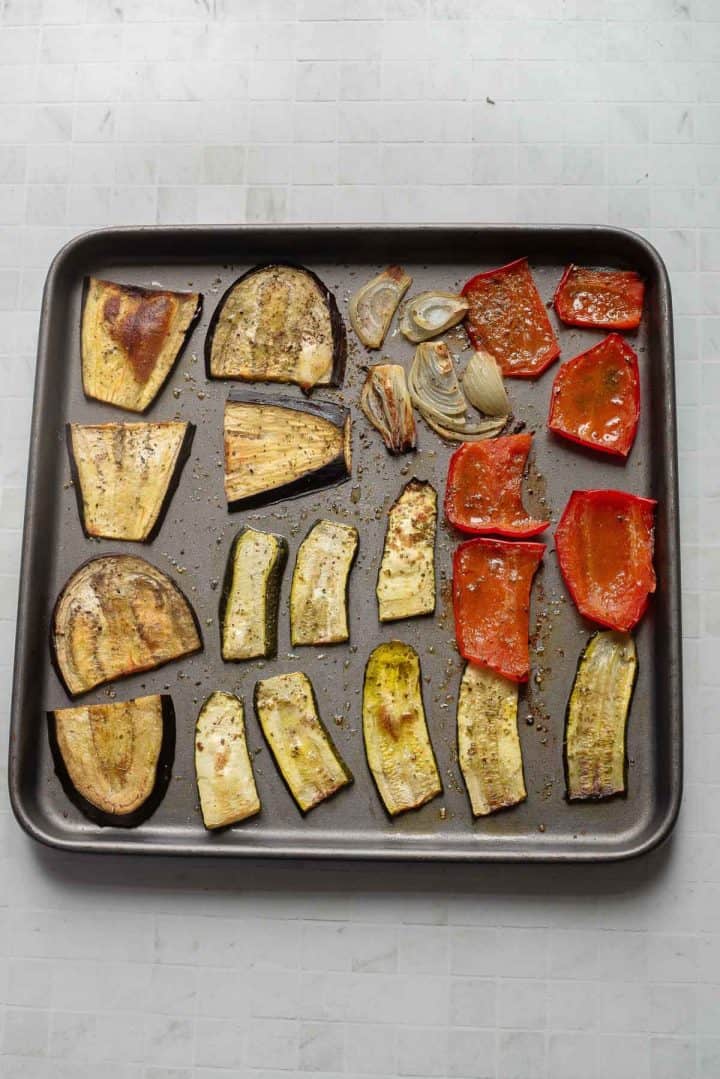
- As they roast, you'll notice the red onions becoming translucent and the peppers beginning to wrinkle slightly. The zucchini should soften without collapsing completely, and the eggplant should become silky inside with lightly browned edges.
- If the vegetables still look pale after the cooking time, give them another few minutes. Every oven behaves differently. You're looking for patches of golden color and vegetables that feel tender when pierced with a fork.
Toast the Bread Until Crisp
- While the vegetables finish cooking, slice the ciabatta rolls and toast them in a dry pan.
- The surface should become lightly golden with a crisp exterior while the inside stays soft. Avoid turning the heat too high. Bread that browns too quickly often remains tough rather than crisp.
- That little bit of texture helps the sandwich hold together and keeps the hummus from soaking into the bread too quickly.
Spread the Hummus Generously
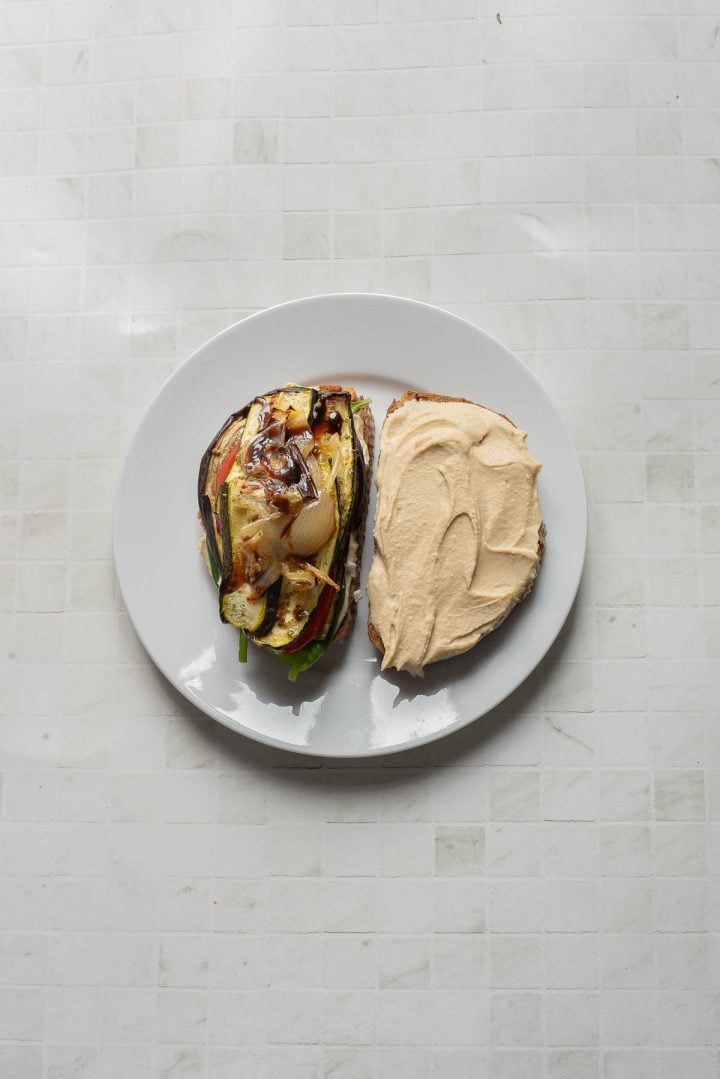
- Don't be afraid to use a thick layer. The hummus acts almost like a sauce and creates a creamy base for the vegetables.
- A thin smear tends to disappear once everything is assembled.
- If the hummus feels stiff straight from the refrigerator, let it sit for a few minutes so it spreads more easily without tearing the bread.
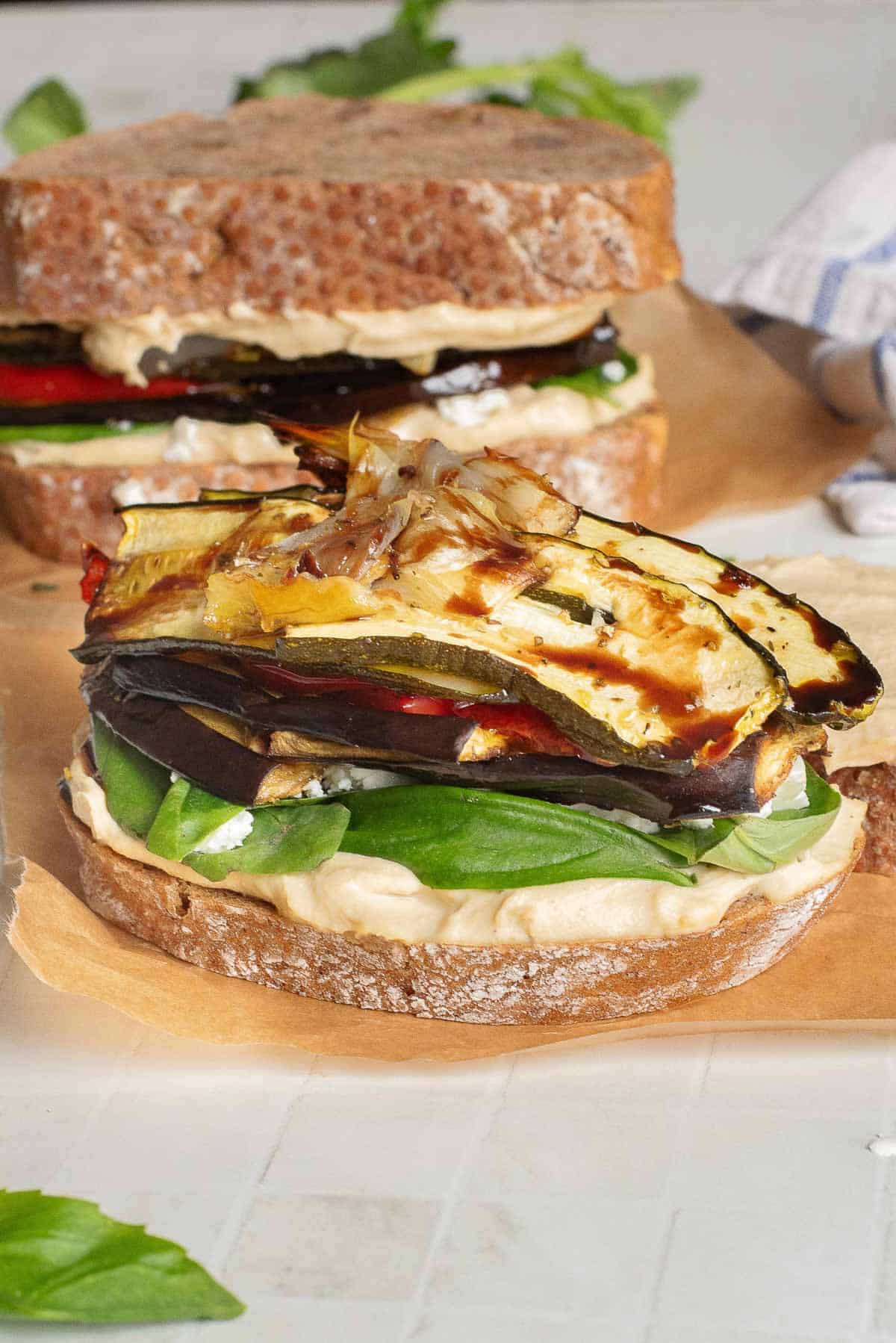
Layer the Vegetables and Finish the Sandwich
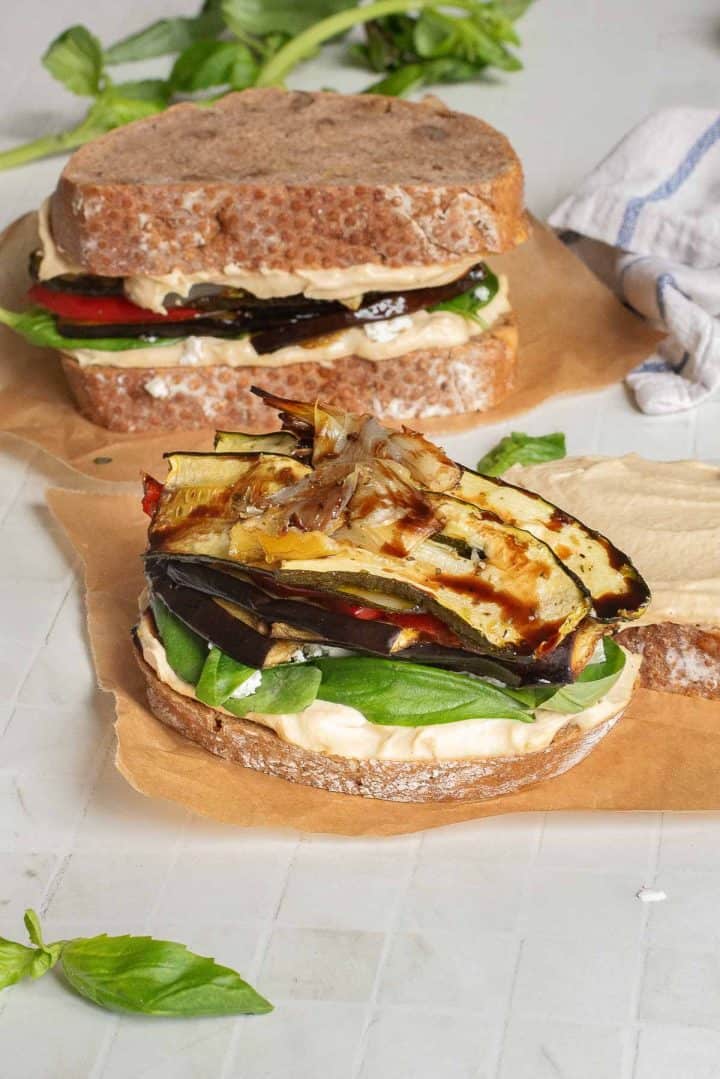
- They should still be slightly warm but no longer steaming heavily. Excess steam can soften the bread too quickly.
- Scatter the feta and basil over the top, then add a small drizzle of balsamic glaze if using. The basil leaves should stay bright and fresh rather than wilt completely from the heat.
- When you close the sandwich, press gently. You want everything to settle together without squeezing the filling out the sides.
Serve While Slightly Warm
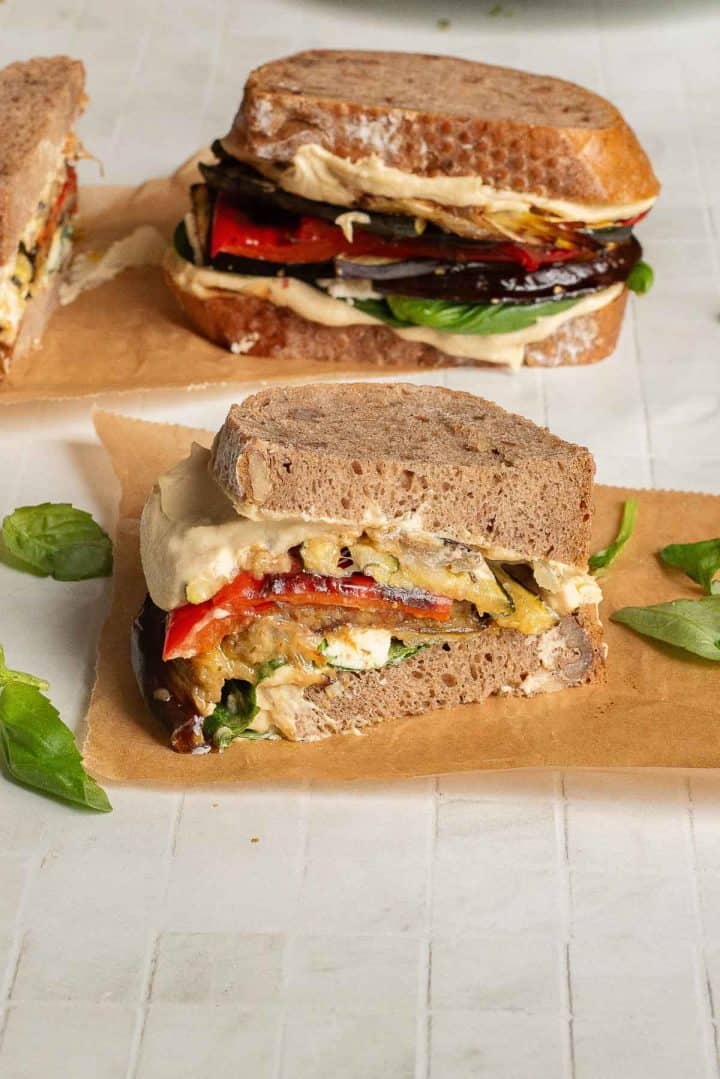
- At this stage, the contrast between the crisp bread, creamy hummus, and soft roasted vegetables is at its best. If the sandwiches sit for too long after assembling, the bread gradually absorbs moisture from the vegetables and loses some of that texture.
- That's why I prefer assembling these right before lunch, especially during the summer when everyone seems to wander into the kitchen at different times.
Storage
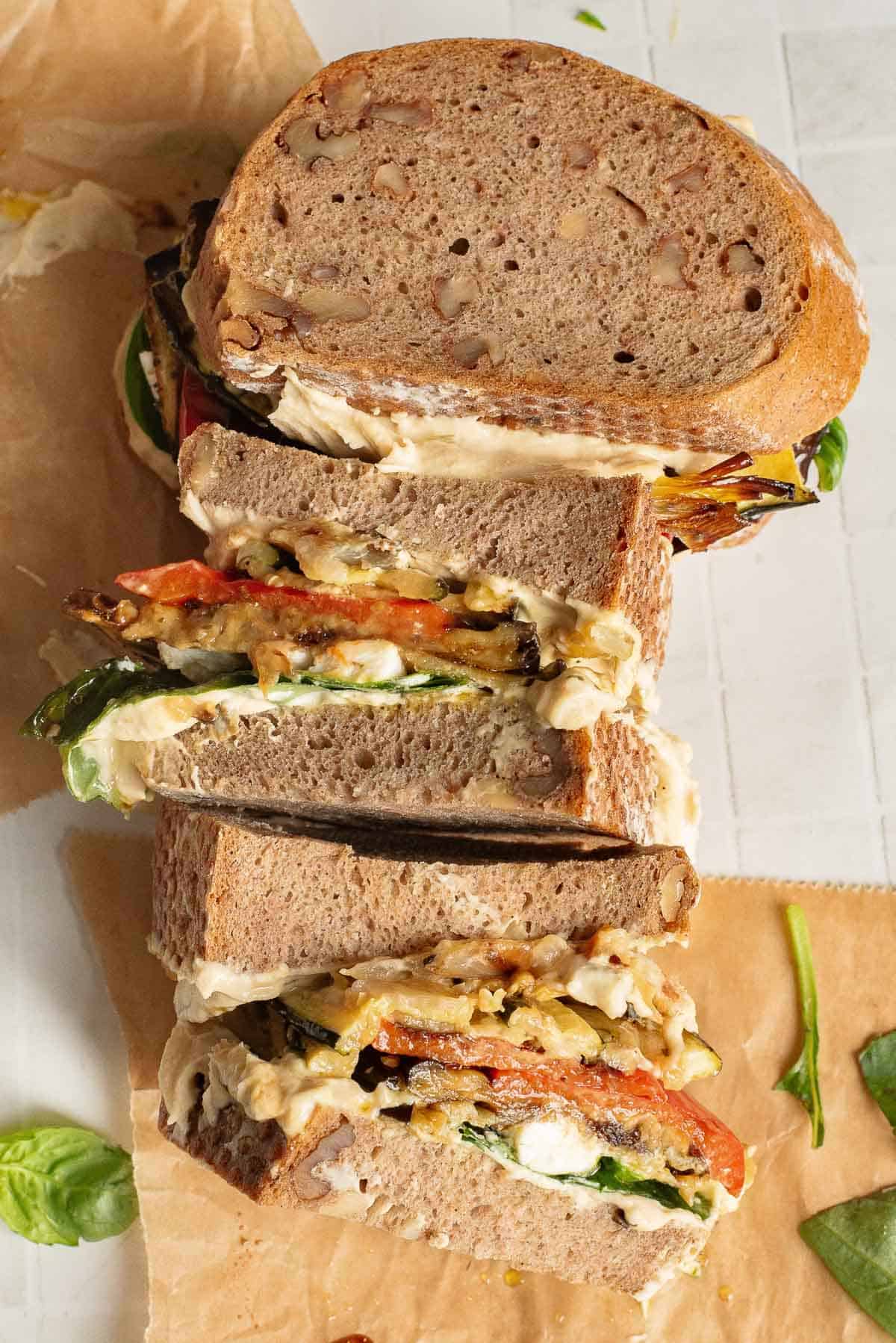
This Mediterranean sandwich is best assembled right before serving. Store the roasted vegetables in an airtight container in the refrigerator for up to 2 days, keeping the bread and hummus separate to maintain their texture. When ready to eat, reheat the vegetables in a skillet or air fryer, toast the bread, and assemble the sandwiches fresh.
For longer storage, freeze the cooled roasted vegetables in a freezer-safe container for up to 1 month. Thaw overnight in the refrigerator before reheating. I don't recommend freezing assembled sandwiches, since the bread softens and the basil loses its freshness.
FAQs
Vegetables that soften and develop color when roasted work especially well. Zucchini, bell peppers, eggplant, and onions are favorites because they become tender without falling apart. Mushrooms, asparagus, and cherry tomatoes are also good additions.
Yes. Skip the feta cheese or replace it with a plant-based alternative. The sandwich still has plenty of richness from the hummus and roasted vegetables.
Yes. The roasted vegetables can be prepared ahead and stored separately from the bread and hummus. Assemble shortly before serving to keep the rolls crisp and the vegetables fresh.
Recipe
Tried and loved this recipe? Please leave a 5-star review below! Your reviews mean a lot to me, so if you've got any questions, please let me know in a comment.
Veggie Hummus Sandwich
Equipment
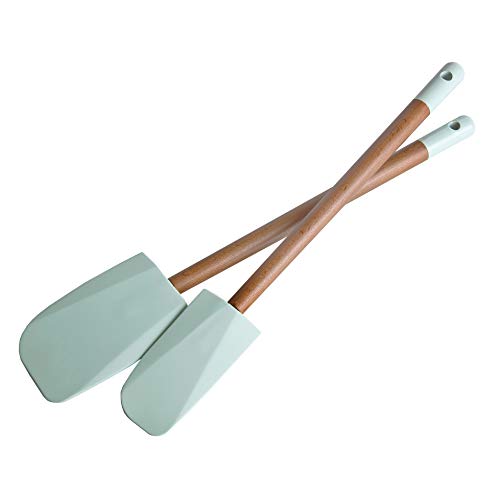
- Knife and cutting board
- Small skillet or frying pan
Ingredients
For the Roasted Vegetables
- 1 medium zucchini sliced
- 1 red bell pepper sliced
- ½ small eggplant sliced
- ½ red onion sliced
- 1½ tablespoons olive oil
- 1 teaspoon dried oregano
- ½ teaspoon sea salt
- ¼ teaspoon black pepper
For the Sandwiches
- 4 ciabatta rolls or whole wheat sandwich rolls
- ½ cup hummus
- ¼ cup crumbled feta cheese optional
- ¼ cup fresh basil leaves
- 1 teaspoon balsamic glaze optional
Instructions
Prepare the Vegetables
- Preheat the oven to 400°F (200°C). In a large bowl, combine the zucchini, bell pepper, eggplant, and red onion with olive oil, oregano, salt, and pepper. Toss until the vegetables are evenly coated.
Roast Until Tender
- Spread the vegetables in a single layer on a parchment-lined baking sheet. Roast for 18 to 20 minutes, turning them halfway through. They should be tender, with lightly browned edges and soft centers.
Toast the Rolls
- While the vegetables roast, slice the rolls in half. Place them cut-side down in a dry skillet over medium heat and toast for 2 to 3 minutes. The surface should become golden and crisp while the inside stays soft.
Build the Sandwiches
- Spread hummus generously over the bottom half of each roll. Divide the roasted vegetables evenly among the sandwiches.
Add the Finishing Touches
- Sprinkle with feta cheese and fresh basil leaves. If using, add a light drizzle of balsamic glaze for extra depth.
Serve
- Close the sandwiches and gently press them together. Slice in half if desired and serve while the vegetables are still slightly warm.



Leslie says
I love this recipe but am curious as to how it has 18 g of sugar?
kseniaprints says
It's all natural sugar, just from sources people don't expect. The biggest culprit is for sure the balsamic glaze, which is concentrated sugar — even 1 teaspoon has ~3-4g. Divided by 4 servings it's less than 1g, but if the calculator used the full teaspoon per serving, that would spike the number. Other factors are the rolls, the sweet peppers, and even hummus. I'm going to check if the portions were calculated correctly!