
You might be familiar with the crunchy, tangy taste of store-bought pickles, but making your own fermented pickles at home is much more satisfying. If you've been looking for the perfect starter kosher dill pickles recipe, this is it!

My entry into the world of homemade fermented pickles began on my grandfather's knee and, technically, in their dark and crowded kitchen. My grandfather's pickled sauerkraut is legendary around our town, as is the my grandmother's raspberry preserves. So naturally I wanted to find my own way towards fermentation.
Kosher dill pickles were the natural starting point. I already have a vinegary spicy dill pickles recipe I love. Fermented pickles were just the natural next step.
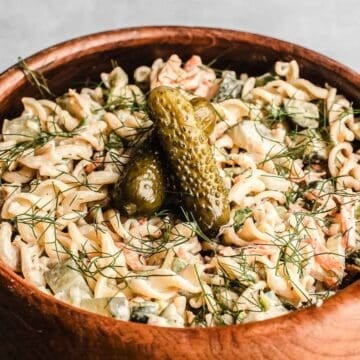
Known throughout the world from Jewish delis, I love the tangy, mild pickled flavor of homemade fermented dill pickles. Any vinaigrette salad, pasta pickle salad, or sabich sandwich would be elevated by their presence, so I had to find my favorite fermented kosher pickles recipe. And happily, my experiments did not disappoint!
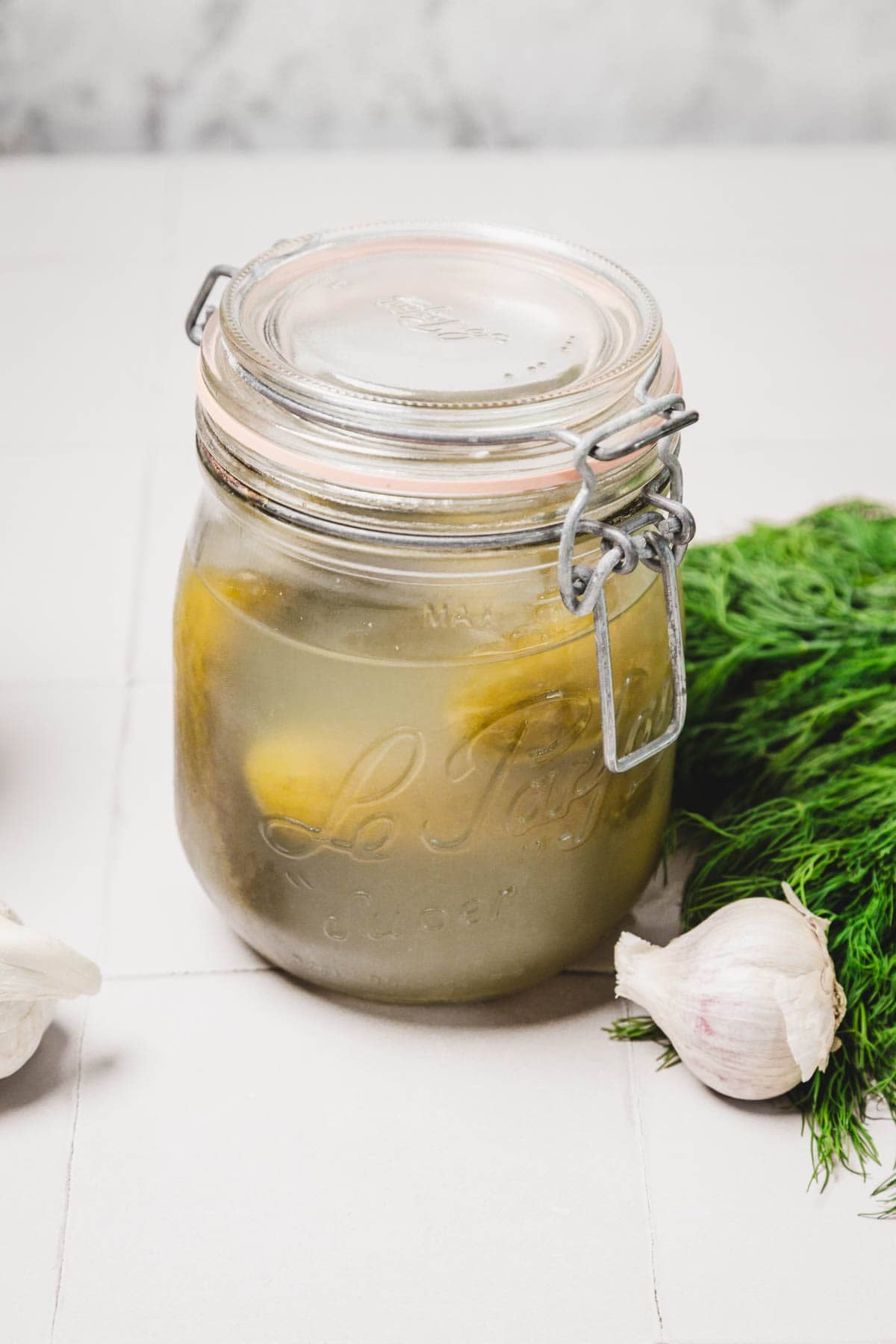
From the classic garlic and dill flavor combination to more adventurous options, these kosher dill pickles are the gateway drugs into making your own fermentation experiments.
Be sure to check out more canning and preserves recipes!

What makes these fermented dill pickles different?
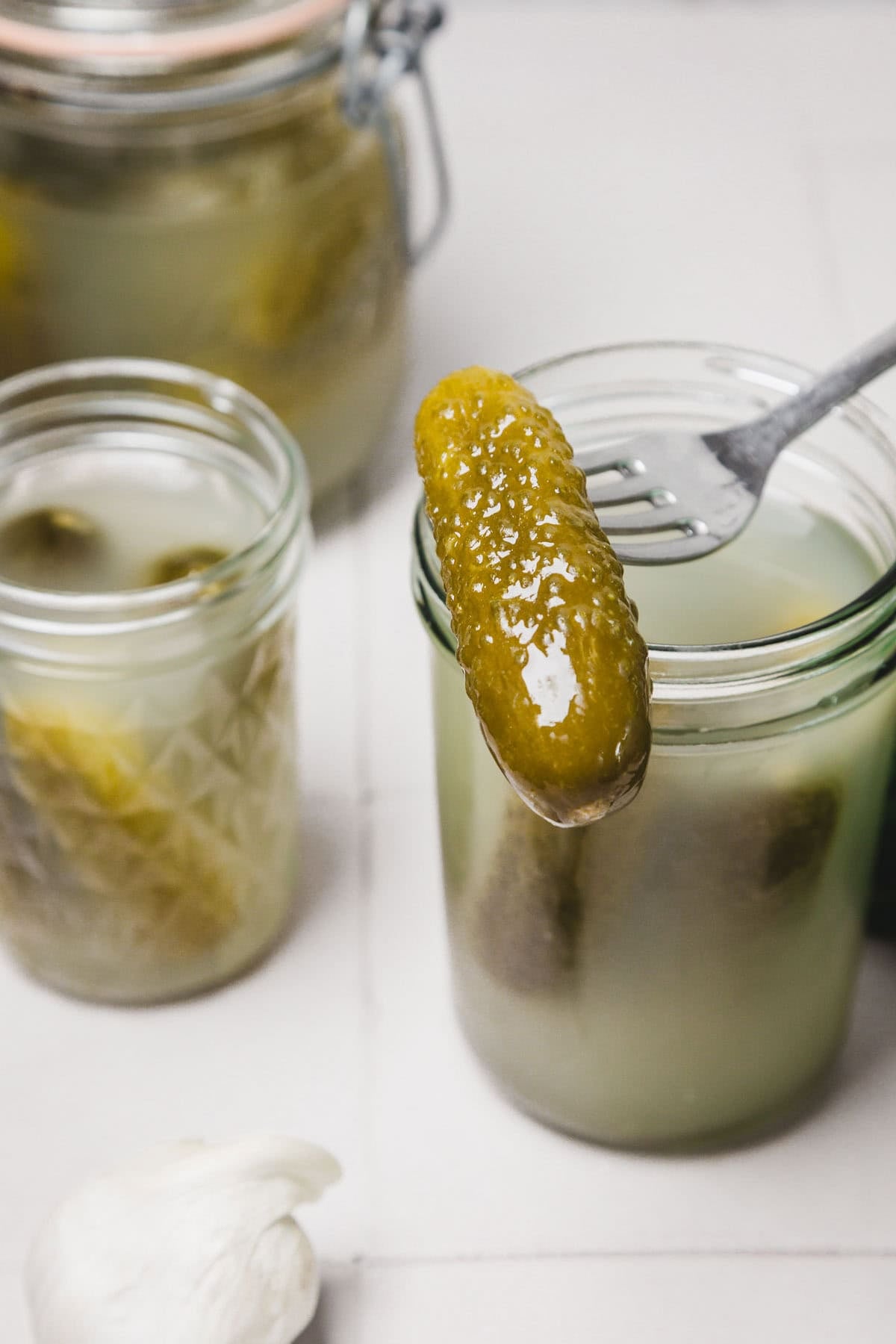
Fermented pickles use the natural bacteria in vegetables and a saltwater brine to transform. During fermentation, the bacteria convert sugars into lactic acid, which acts as a preserver. An example for these ancient pickles are Middle Eastern preserved lemons.
On the other hand, in the case of regular pickles, it's the vinegar that serves as the primary preserving agent. Examples of this include Icelandic pickled beets. They have a much shorter fermentation time but a stronger, less nuanced flavor.
Notes on the Dill Pickle Ingredients:
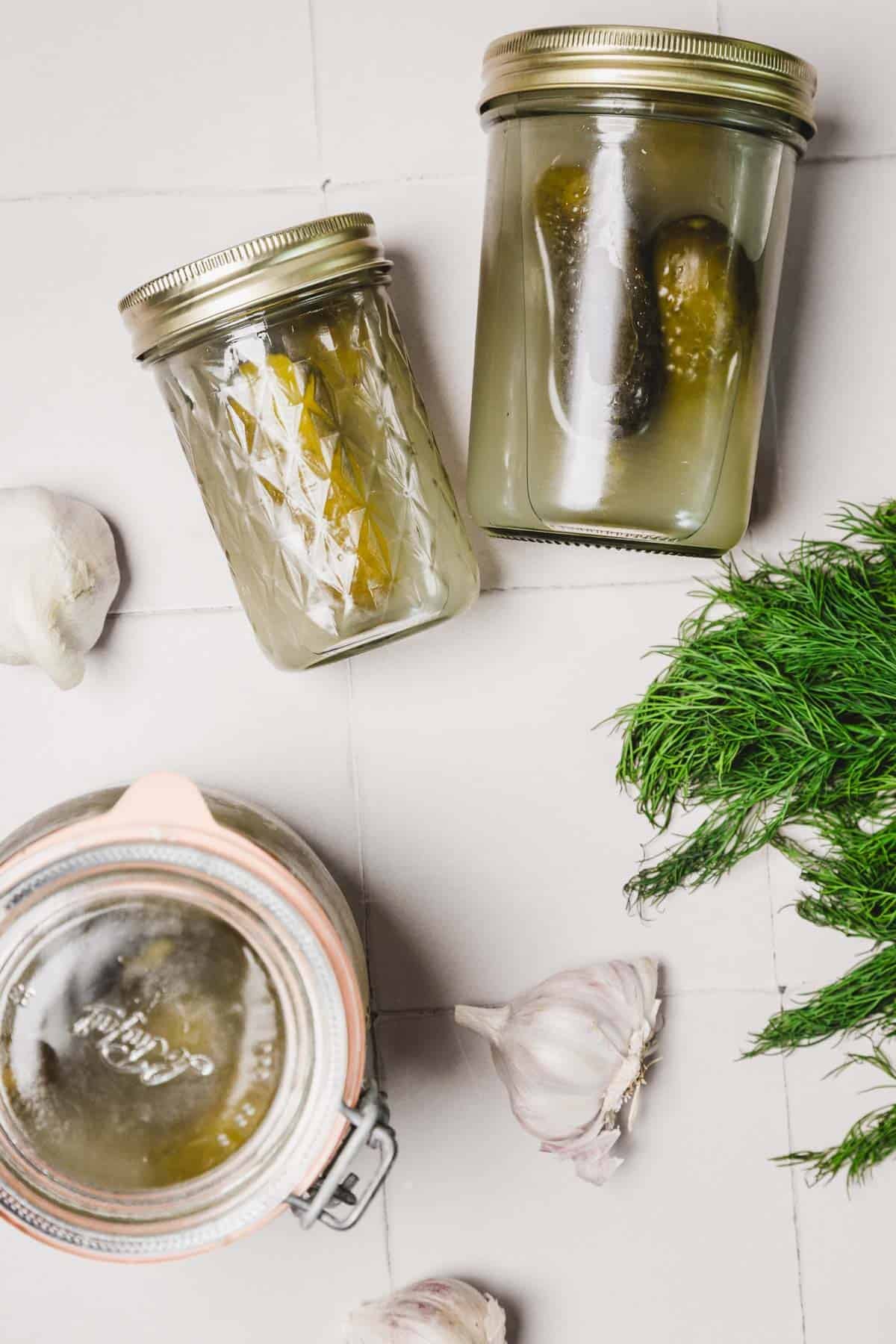
- Cucumbers: Kirby cucumbers, or small and firm cucumbers are best for this. In a pinch, Lebanese cucumbers will do as well. You can also slice your cucumbers before brining them, but the smaller the pieces, the softer they can get. I recommend keeping them whole or slicing them into spears.
- Dill: The blossoms are the sturdiest and have the most flavor, but are hard to find outside out late summer. Use any fresh dill otherwise, or dill seeds or fennel seeds.
- Pickling salt: Kosher salt or pickling salt is best. It must be non-iodized. Pickling salt helps keep pickles crisp.
If you're unsure what constitutes kosher salt, then you should check out this guide!
Essential Canning Equipment
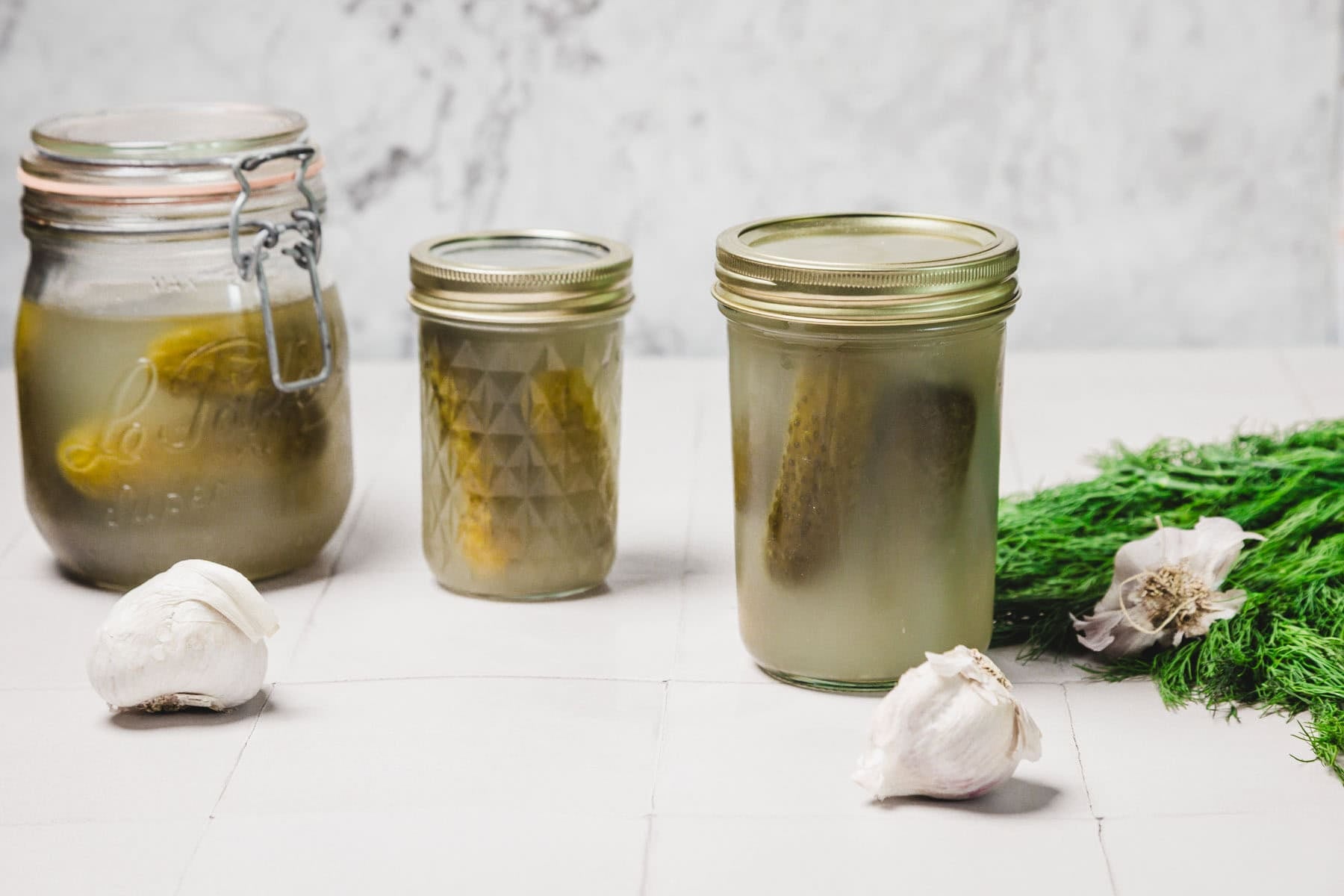
To make these homemade fermented dill pickles, you'll need a few essential tools and equipment.
- First, you'll need a fermentation container. This can be a large stoneware crock, a glass jar or a food-grade plastic container.
- Weights to keep the vegetables submerged in the brine. You can use pie weights, a bag of water or a plate with another jar on it.
If you want to get serious about fermentation, I have a guide for the fermentation supplies that I love!
Top Tips for Fermenting Your Dill Pickles and Canning Process:
Lining the bottom of the fermenting crock with cabbage leaves is important, since it prevents contact with the bare crock bottom and helps keep the pickles crisp, according to legend (and my grandpa).
It is very important to make sure your jars are properly sealed. Otherwise, mold may form and you'll have to toss the entire batch.
For more info on proper canning techniques, check out my handy guide on water bath canning 101!
Long-Term Storage and Refrigeration
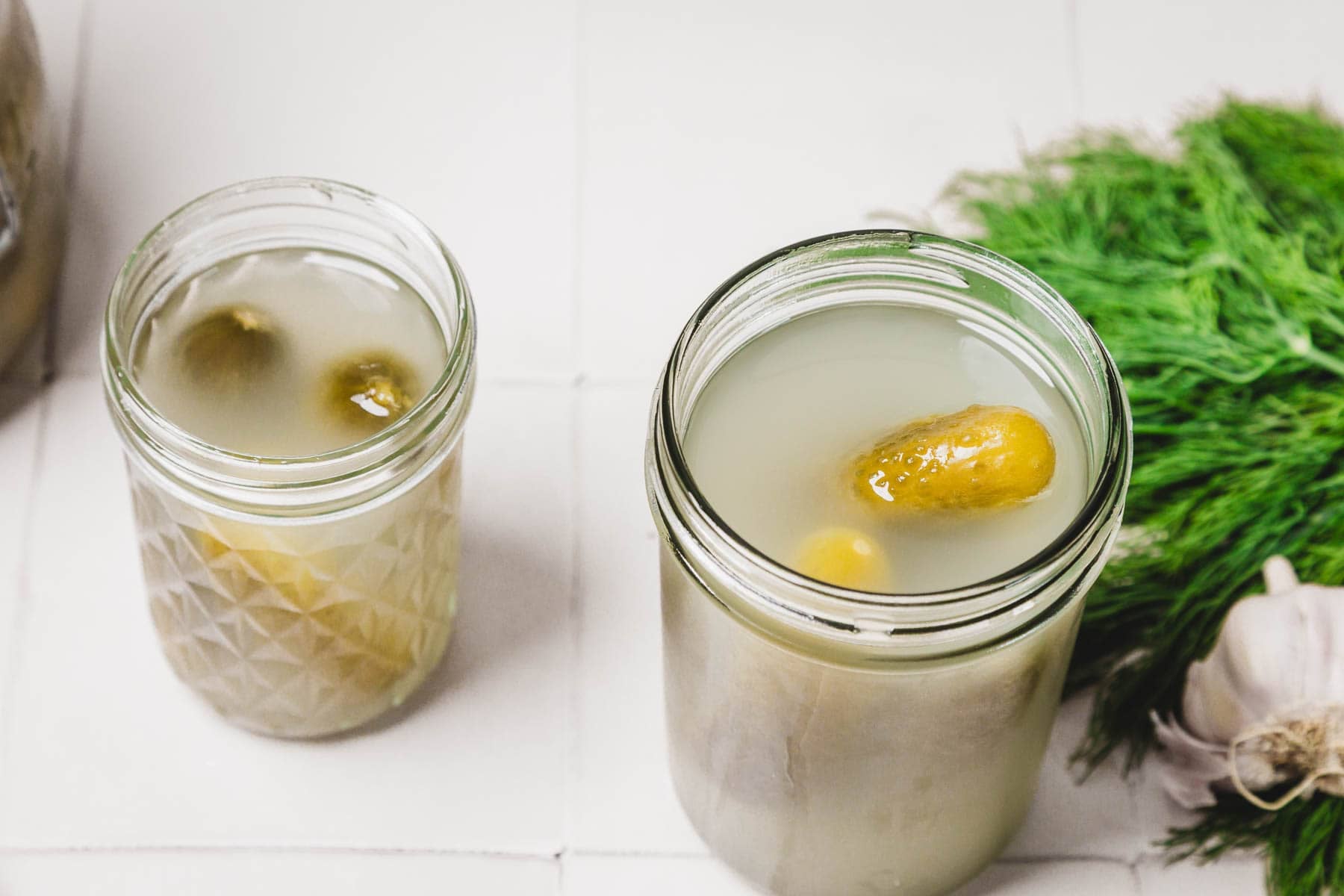
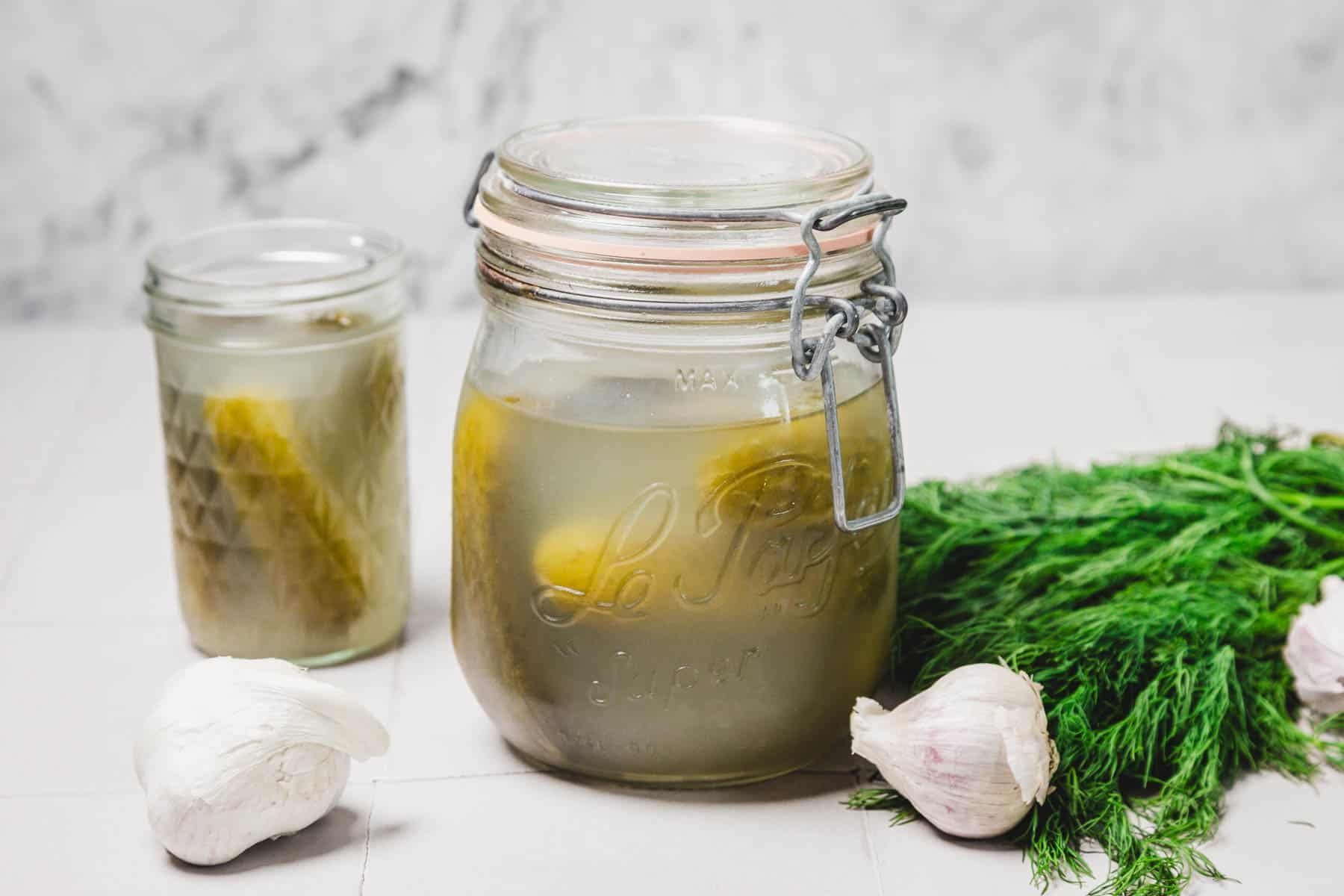
Fermented pickles can last for varying amounts of time, depending on your method and recipe. Transfer them to the fridge once you start consuming them. In general, you should eat the pickles within one to two months.
Using Fermented Kosher Dill Pickles
I love adding pickles to my vegan shawarma, or to my turkey kebab pitas.
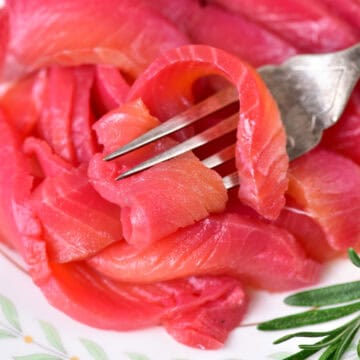
Fermented pickles are also an excellent choice for snacking or as a part of a tasty mezze spread. The pickles are great on their own but are even better when served in a charcuterie board alongside crackers, cheese, and cured meats for a delicious charcuterie board. Try adding them to a lox and bagel spread or charcuterie board for a pickled twist!
- Fire Cider (Natural Flu Remedy)
- Amba Sauce Recipe (Spicy Mango Sauce)
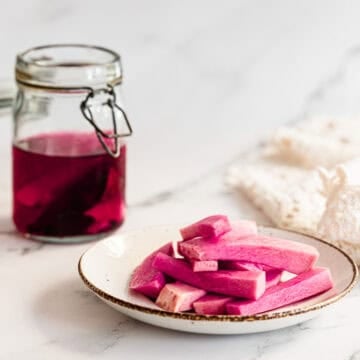
- Middle Eastern Pickled Turnips
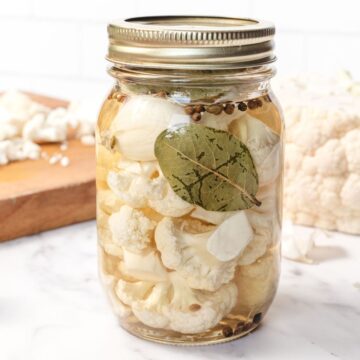
- Pickled Cauliflower
Recipe
Tried and loved this recipe? Please leave a 5-star review below! Your reviews mean a lot to me, so if you've got any questions, please let me know in a comment.
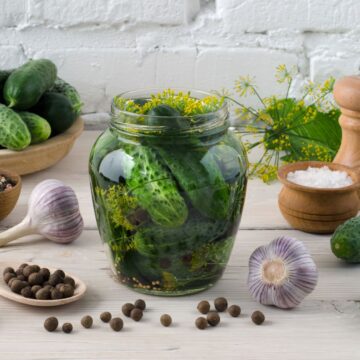
Homemade kosher dill pickles
Ingredients
- 8 lbs small cucumbers
- 9 tablespoon sea salt
- 9 dill blossoms or a bunch of fresh dill
- 1 handful cabbage leaves
- 1 pinch black peppercorns
- 16 cups water
- 1 head garlic cloves peeled and separated
Instructions
- Bring salt and water to boil. Stir to dissolve salt.
- Once dissolved, remove the brine from heat and allow it to fully cool to room temperature.
- Wash cucumbers. Cut off blossom end.
- Layer the cabbage leaves at the bottom of the crock or jar, making a bed to avoid contact with the bare bottom.
- Top with cucumbers, dill, peppercorns and garlic. Layer the ingredients as you add them.
- Pour the cooled salt water brine over the cucumbers until they are completely submerged. Place a plate on top of the cucumbers and weigh it down with a sealed jar or other heavy object to submerge them in the brine.
- Cover the crock with a clean kitchen towel and allow to ferment at room temperature for 2-4 weeks. Check the pickles periodically. They are ready when the cucumbers appear translucent throughout.
- When fully fermented, use a slotted spoon to transfer the pickles, dill, and garlic to sterilized pint jars, packing them in tightly. Pour the brine over the pickles to cover by ½ inch. Seal the jars.
- Refrigerate the sealed pint jars for storage.
Michael Crump says
Hello Ksenia,
I see in a response to "Kelly" that these cannot be water bath processed to be shelf stable. In a later response to "Susan" when asked if these Pickles can be processed to be shelf stable, you respond with "yes!" I am confused. What process is required then, pressure canning?
kseniaprints says
Hi Michael, you're right - I actually misread Susan's question. I'll amend my answer to her.
Danielle Flawn says
When you say, “seal the jars,” do you mean in a water bath? How do you seal the jars?
After reading all the comments I’m still confused as to how to seal the jars!
Also, the description says to ferment for 2-4 weeks, but the recipe in note form says 2 days. Which is correct?
Thanks!
kseniaprints says
So you actually cannot process this in a hot water bath, I have not properly tested the ph here and I can only vouch that this recipe is fridge safe.
So to seal the jars, you just twist the caps. Sorry if that's not clear.
You need to ferment for 2-4 weeks. I find 2 week the best for me.
onlincakeindia says
Love this step-by-step guide to making fermented pickles at home. Fresh, healthy, and so rewarding! Thanks for sharing!
Blissmygift says
Nothing beats the taste of homemade kosher dill pickles! This recipe is a must-try for pickle lovers. Thanks for sharing!